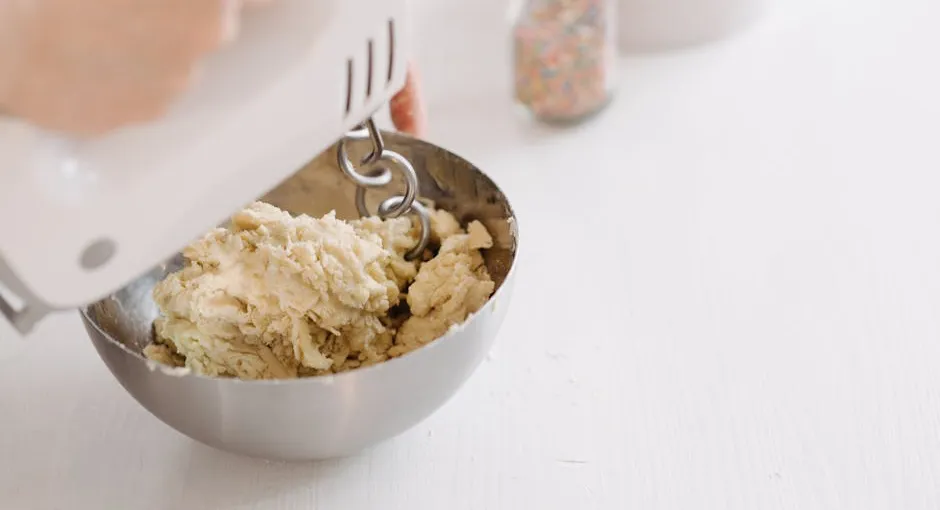
You do not need a stand mixer to make bread. Forkish’s entire method is built around hand mixing. Robertson uses minimal mechanical mixing. Hamelman’s “unkneaded six-fold” method produces excellent bread with zero kneading at all. Some of the best bread in the world is made by hand.
But there are breads that genuinely require a mixer. Brioche, with 50% butter and 50% eggs relative to flour weight, cannot be developed by hand — the fat content inhibits gluten formation until the stand mixer has worked the dough for 15+ minutes. Hamelman confirms this: “Brioche requires a stand mixer — too much butter for hand mixing.” Robertson agrees.
High-volume baking also benefits from a mixer. If you regularly make 2-3 loaves per session or bake enriched breads weekly, a stand mixer saves significant time and physical effort. For standard lean doughs (country bread, baguettes, no-knead), you can go either way.
What Matters in a Bread Mixer
Motor power. Bread dough is heavy, stiff, and resistant. A mixer that handles cake batter effortlessly may stall on a 65% hydration bread dough. The motor needs to sustain torque at low RPMs for 10-15 minutes without overheating. This is the single most important spec for bread, and it is the spec where cheap mixers fail.
Friction factor. Every stand mixer generates heat through friction. Hamelman specifies a friction factor of 24-28°F for planetary mixers — meaning the dough temperature rises 24-28°F during a standard mix. This matters because your desired dough temperature (DDT) calculation must account for this heat gain. Mix too long on a hot day, and your dough finishes at 85°F instead of 76°F, which accelerates fermentation beyond your schedule.
The DDT formula for a planetary mixer: DDT x 4 - (air temp + flour temp + preferment temp + friction factor) = water temperature needed.
Bowl capacity. A 5-quart bowl holds about 1,000g of flour worth of dough (roughly 1,700g total dough weight). A 6-7 quart bowl handles 1,500g of flour comfortably. If you bake two loaves at a time, you need at least 6 quarts. The bowl should also be heavy enough to stay stable during mixing — lightweight bowls walk across the counter.
Dough hook design. There are two approaches: the C-hook (planetary mixers like KitchenAid) that kneads by pushing dough against the bowl wall, and the roller + scraper (Ankarsrum) that stretches dough between a metal roller and a bowl scraper. The roller approach is gentler and more similar to hand kneading, which means less friction and less oxidation.
Speed control. Bread dough should be mixed on low (speed 1-2) for initial incorporation and medium (speed 3-4) for gluten development. High speeds are never appropriate for bread — they overheat the dough, overoxidize the flour (destroying carotenoid pigments and flavor), and can burn out the motor. Hamelman: “First speed: 2.5 minutes; second speed: 5-7 minutes.”
The Best Stand Mixers for Bread
KitchenAid Professional 600 Series (6 Qt) — Best for Most Home Bakers
KitchenAid Professional 600 SeriesThe KitchenAid Pro 600 is the default recommendation for home bread bakers who also want a general-purpose mixer. The 6-quart bowl handles double batches. The 575-watt motor manages most bread doughs without overheating. The planetary mixing action develops gluten in 8-12 minutes on speed 2-4.
Capacity: 6 quarts. Motor: 575 watts. Weight: 29 lbs. Price: $350-450.
Pros: Versatile — handles bread, pastry, pasta, and everything in between. Huge accessory ecosystem (pasta rollers, meat grinders, grain mills). 6-quart bowl is adequate for 2 loaves. Bowl-lift design is more stable than tilt-head models during heavy doughs. Widely available; easy to find parts and accessories.
Cons: The motor can struggle with very stiff doughs (low-hydration bagel dough, heavy rye). The C-hook leaves a dead zone at the bottom of the bowl where dough collects unmixed — you need to stop and scrape occasionally. Higher friction factor than roller-style mixers. The planetary action works the outside of the dough mass more than the center, which can produce uneven development in large batches.
Best for: Bakers who want one mixer for everything. If bread is one of several things you make, the KitchenAid is the right choice.
Ankarsrum Assistent Original — Best for Dedicated Bread Bakers
Ankarsrum Assistent OriginalThe Ankarsrum is a Swedish mixer designed specifically for bread dough. Instead of a stationary hook and rotating bowl, the Ankarsrum rotates the bowl while a metal roller and dough scraper work the dough. This mimics hand kneading — stretching and folding rather than punching and tearing. The result is gentler gluten development with significantly less friction heat.
Capacity: 7.4 quarts. Motor: 600 watts. Weight: 18 lbs. Price: $600-800.
Pros: Gentler on dough — lower friction factor means lower DDT impact. Handles extremely large batches (up to 5 lbs of flour). Quieter than KitchenAid. Virtually indestructible motor (designed for continuous heavy use). The roller + scraper combo incorporates dough more evenly than a C-hook. Does not walk on the counter despite weighing only 18 lbs.
Cons: Expensive. Steep learning curve — the roller/scraper technique is counterintuitive if you are used to planetary mixers. The wide, open bowl design means some doughs crawl up the roller instead of developing. Less versatile for non-bread tasks (adequate for cookies and cakes, but not the natural choice). Smaller accessory ecosystem than KitchenAid.
Best for: Bakers who make bread 2+ times per week and want the best possible tool for dough development. If bread is your primary reason for buying a mixer, the Ankarsrum is the better machine.
Bosch Universal Plus — Best Value for Heavy Doughs
Bosch Universal PlusThe Bosch Universal Plus uses a unique drive system: the bowl rotates while two dough hooks work in opposite directions. This dual-action approach handles very stiff doughs (bagels, pretzels, heavy rye) that make KitchenAids strain. The motor is powerful and nearly impossible to stall.
Capacity: 6.5 quarts. Motor: 800 watts. Weight: 15.4 lbs. Price: $350-450.
Pros: Handles the stiffest doughs without strain. Powerful 800-watt motor. Lightweight for its power. Good value at the same price as the KitchenAid Pro 600. The rotating bowl helps prevent dead zones.
Cons: The lightweight body can walk during heavy mixing — you may need to hold it or place it on a non-slip mat. The dough hooks are effective but not gentle — friction is comparable to KitchenAid. Smaller accessory range. The plastic bowl feels less substantial than KitchenAid’s stainless steel (though it is perfectly functional). Less common — harder to find locally for hands-on evaluation.
Best for: Bakers who regularly make stiff doughs (bagels, low-hydration breads, heavy whole wheat) and want a mixer that will not strain or stall.
KitchenAid Artisan (5 Qt) — Best Budget Option
KitchenAid ArtisanThe Artisan is KitchenAid’s entry-level tilt-head mixer. The 5-quart bowl handles single-loaf batches. The 325-watt motor manages standard bread doughs but struggles with stiff or large batches. It is the most affordable KitchenAid and the most common stand mixer in American kitchens.
Capacity: 5 quarts. Motor: 325 watts. Weight: 24.2 lbs. Price: $280-380.
Pros: Most affordable KitchenAid. Tilt-head makes scraping and adding ingredients easy. Same accessory compatibility as Pro models. Adequate for single-loaf batches of standard bread dough. Available in more colors than you knew existed.
Cons: The 325-watt motor overheats on stiff doughs. The tilt-head design is less stable than bowl-lift during heavy mixing. 5-quart bowl limits you to single-loaf batches. Not recommended for doughs with more than 1,000g flour or hydration below 65%. Will not handle brioche well — the motor strains against butter-heavy doughs.
Best for: Occasional bread bakers who mostly use their mixer for cookies, cakes, and lighter tasks. Adequate for weekly sourdough at standard hydration but not built for heavy bread work.
Stand Mixer Bread Tips
Start on speed 1. Always combine ingredients on the lowest speed for 2-3 minutes before increasing. Starting on medium or high with dry flour creates a dust cloud and can overwork the outside of the dough before the center is incorporated.
Do not exceed speed 4 for bread. Hamelman specifies first speed (2-3 minutes) then second speed (5-7 minutes). On a KitchenAid, “first speed” is 1-2 and “second speed” is 3-4. Speeds 5+ are for whipping cream, not kneading dough. High speeds overheat the dough and destroy flavor compounds through overoxidation.
Account for friction. The 24-28°F friction factor for planetary mixers is significant. On a warm summer day with room temperature flour, you may need ice water to hit your DDT target. Calculate your water temperature: DDT x 4 - (air temp + flour temp + preferment temp + friction factor) = water temp needed.
Do the windowpane test. After mixing, take a small piece of dough and stretch it gently between your fingers. Well-developed gluten stretches thin enough to see light through without tearing. If it tears immediately, mix for 1-2 more minutes and test again.
Know when to skip the mixer. Forkish’s pincer method, Hamelman’s unkneaded six-fold, and Robertson’s stretch-and-fold approach all produce excellent bread without a mixer. High-hydration doughs (75%+) are often better developed through folding during bulk fermentation than through mechanical mixing. The mixer is a tool, not a requirement.
Mixing Times by Dough Type
Different breads need different mixing times, even in the same mixer. These guidelines assume a planetary mixer like the KitchenAid Pro 600 after an autolyse rest.
| Dough Type | First Speed | Second Speed | Total Time | Notes |
|---|---|---|---|---|
| Standard lean (country, white) | 2-3 min | 5-7 min | 7-10 min | Windowpane test to confirm |
| High-hydration (75%+) | 3-4 min | 3-4 min | 6-8 min | Folding during bulk does most of the work |
| Whole wheat | 3 min | 4-6 min | 7-9 min | Bran cuts gluten; do not overmix |
| Rye (40-60%) | 3 min | 2-3 min | 5-6 min | Less mixing as rye % increases |
| Rye (70-100%) | 6-10 min first only | None | 6-10 min | Rye has no functional gluten; mixing just incorporates |
| Enriched (challah) | 3 min | 5-7 min | 8-10 min | Add sugar after initial gluten development |
| Brioche | 3 min | 12-15+ min | 15-18 min | Butter added gradually after gluten develops |
These times assume an autolyse. Without autolyse, add 3-5 minutes to the second speed. Hamelman notes that autolyse reduces mixing time by roughly 50%.
The Overoxidation Warning
Jeffrey Hamelman emphasizes this point more than any other author, and it deserves its own section: excessive mixing destroys bread quality.
When dough is mixed too long, oxygen from the air bleaches the carotenoid pigments in flour. These are the yellow-orange pigments that give artisan bread its creamy, ivory crumb color. Overoxidized bread has a stark white crumb with less flavor and aroma. This was Raymond Calvel’s central insight — the decline of French bread quality in the post-WWII era came from industrial mixers running at high speeds, overoxidizing the dough.
Robertson trained under Calvel’s disciples and explicitly positions his minimal-mixing method as a correction to this problem. His country bread uses almost no mechanical mixing — just a brief hand mix followed by stretch-and-folds during bulk fermentation.
The practical takeaway: mix on the lowest effective speed, stop as soon as the windowpane test passes, and let bulk fermentation with folds finish the job. More mixing is not better mixing. If you can see light through a stretched piece of dough, stop.
For the full equipment list including the tools that work alongside your mixer, see our Complete Bread Baking Equipment Guide. And if you want to understand the science of gluten development that makes mixing work, read How Gluten Actually Works in Bread. For your first loaf, try our beginner sourdough bread recipe.
Frequently Asked Questions
- Can I knead bread dough in a KitchenAid Artisan?
- Yes, but with limitations. The 325-watt motor handles standard bread dough (one loaf, 65-75% hydration) without issues. It struggles with stiff doughs below 65% hydration (bagels, heavy whole wheat), very large batches (more than 1,000g flour), and butter-heavy enriched doughs like brioche. If the motor starts to smell hot or the mixer walks across the counter, stop and let it rest. The Pro 600 series with its bowl-lift design and 575-watt motor is a better choice for regular bread baking.
- How long should I mix bread dough in a stand mixer?
- For a standard lean bread dough: 2-3 minutes on speed 1-2 to combine ingredients, then 5-7 minutes on speed 3-4 to develop gluten. Total time: 7-10 minutes. Enriched doughs with butter (brioche) take 15+ minutes because fat inhibits gluten formation. If you did an autolyse (resting flour and water before adding salt and yeast), you can cut mixing time roughly in half because gluten development begins during the rest.
- Is the Ankarsrum worth the extra money over a KitchenAid?
- If bread is your primary reason for buying a mixer, yes. The Ankarsrum's roller-and-scraper design is gentler on dough (less friction, less oxidation), handles larger batches, and runs quieter. If you want a versatile kitchen appliance that also makes bread, the KitchenAid Pro 600 is the better investment because its accessory ecosystem covers everything from pasta to sausage. The Ankarsrum is the better bread machine; the KitchenAid is the better kitchen machine.
- Why does my stand mixer walk across the counter during bread dough?
- The dough is grabbing the hook and pulling the mixer body. This happens most with stiff, low-hydration doughs. Solutions: use a non-slip mat under the mixer, increase hydration slightly, or reduce the speed. Bowl-lift models (KitchenAid Pro 600, Bosch) are more stable than tilt-head models (KitchenAid Artisan) because their center of gravity is lower and the locking mechanism holds the bowl more securely.