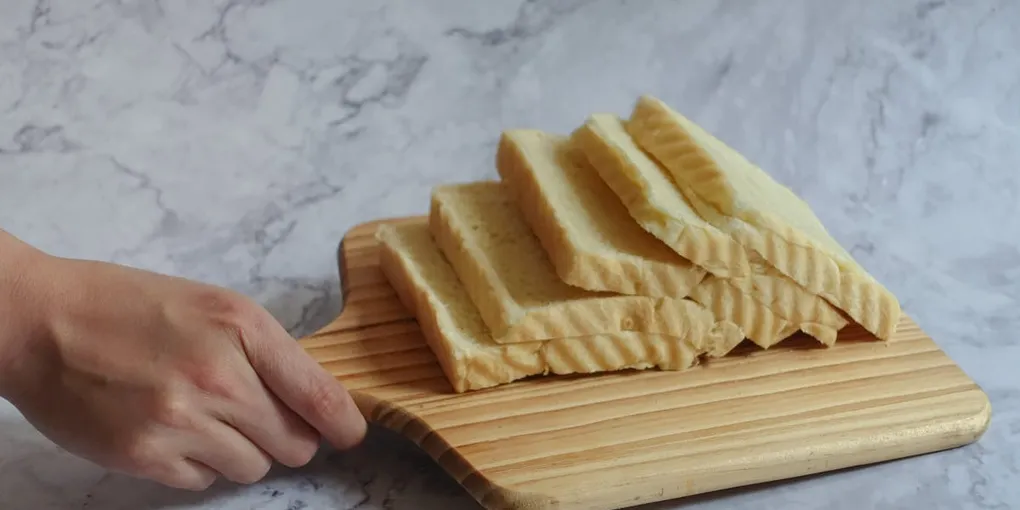
The most common piece of food storage advice in America is wrong. Millions of people store bread in the refrigerator, believing it keeps it fresh longer. It does the opposite. Refrigerator temperature is the single worst environment for bread — it accelerates staling faster than leaving the loaf on your counter.
This isn’t opinion or folk wisdom. It’s thermodynamics. And once you understand the science, you’ll never put bread in the fridge again.
Staling Is Not Drying Out
The persistent myth about stale bread is that it’s gone dry — that moisture has evaporated from the crumb, leaving it hard and crumbly. This is wrong. Stale bread still contains most of its original moisture. The water hasn’t left. It’s moved.
Retrogradation is the actual mechanism of staling. Emily Buehler’s Bread Science provides the definitive explanation:
During baking, starch granules in the dough absorb water and gelatinize — their crystalline structure melts into an amorphous, gel-like state. This is what gives fresh bread its soft, moist crumb. But over time, those starch molecules slowly re-crystallize, reverting from their amorphous gel back toward their original ordered structure.
As the crystals form, they squeeze out the water that was trapped in the gel. That water migrates from the crumb to the crust, which is why stale bread has a soft, leathery crust and a firm, dry-feeling interior. The bread hasn’t lost water — it’s redistributed it.
This distinction matters because it changes how you think about storage. You’re not trying to prevent evaporation. You’re trying to slow (or stop) crystallization.
Temperature and Staling Rate
Retrogradation is highly temperature-dependent. The rate at which starch re-crystallizes varies dramatically with storage temperature:
| Temperature | Retrogradation Rate | Recommendation |
|---|---|---|
| Below 32 degrees F (0 degrees C) | Stopped completely | Freeze for long-term storage |
| 35-40 degrees F (2-4 degrees C / refrigerator) | Maximum — fastest staling | Never store bread here |
| 68-77 degrees F (20-25 degrees C / room temp) | Moderate to slow | Best short-term storage |
| Above 140 degrees F (60 degrees C) | Crystals melt (reversal) | Reheat to temporarily restore freshness |
Read that middle row again. Refrigerator temperature — 35-40 degrees F — is precisely the zone where retrogradation occurs fastest. Bread goes stale in the refrigerator faster than it does sitting on your counter at room temperature.
Buehler: “Do not put bread in the refrigerator.”
All five major bread authors agree on this. It is one of the most consistent principles across the entire bread literature. The refrigerator is for many foods. Bread is not one of them.
Room Temperature Storage
For bread you’ll eat within a few days, room temperature is optimal.
Paper Bag
A paper bag keeps the crust relatively crisp while allowing some moisture exchange with the environment. The trade-off: bread dries out faster than in plastic because the paper is permeable. Best for crusty breads you’ll eat within 1-2 days.
Plastic Bag
A sealed plastic bag traps moisture and dramatically slows drying. The crust softens (the moisture that migrates to the crust can’t evaporate, so it stays there and softens the crust), but the crumb stays moist longer. Forkish, who initially resisted the idea, came around: “I got over my aversion to storing bread in plastic bags many years ago… nothing else keeps the bread as well.”
Plastic is the best option for bread that needs to last 3-5 days at room temperature. The soft crust is a fair trade for extended freshness.
Cut Side Down
The simplest method: slice what you need, then place the loaf cut-side down on a cutting board or plate. This minimizes the exposed surface area where moisture can escape. Works well for large loaves you’re eating over 2-3 days.
Bread Box
A bread box is a middle ground between paper and plastic. It provides an enclosed environment that limits air circulation (slowing drying) while allowing enough airflow to keep the crust from getting completely soft. Traditional wooden bread boxes work slightly better than metal because wood absorbs and releases moisture, creating a more stable humidity environment.
Shelf Life by Bread Type
Not all bread stales at the same rate. The ingredients and fermentation method dramatically affect keeping quality.
| Bread Type | Room-Temp Shelf Life | Why |
|---|---|---|
| Straight dough (commercial yeast only) | 2-3 days | Minimal acid; faster retrogradation |
| Pre-ferment bread (poolish, biga) | 4-5 days | Organic acids from pre-fermentation slow staling |
| Levain/sourdough bread | 5-6 days | Lowest pH; most acid; best mold resistance |
| High-rye bread (60%+) | 5-7+ days | Pentosans hold moisture; acid inhibits mold |
| Enriched bread (brioche, challah) | 3-4 days | Sugar and fat slow staling but encourage mold |
The pattern is clear: sourdough and high-acid breads last longest. The lower pH from organic acids inhibits both mold growth and the starch retrogradation process. Pre-fermented flour also contributes to longer shelf life even in yeasted breads. This is one of the many practical advantages of pre-ferments and sourdough.
Rye bread is the marathon runner of shelf life. The pentosans in rye flour hold water tenaciously, and the mandatory sourdough acidification produces a low-pH environment hostile to both mold and retrogradation. A dense German rye loaf can last a week at room temperature and arguably improves over the first few days.
Freezing: The Long-Term Solution
Freezing stops retrogradation completely. At 32 degrees F and below, starch crystals cannot form. Bread frozen immediately after cooling will taste virtually identical to fresh bread when properly thawed and reheated.
How to Freeze
-
Cool completely first. Bread must reach room temperature before freezing. Warm bread creates condensation inside the wrapping, which forms ice crystals that damage the crumb structure.
-
Wrap tightly. Double wrap: first in plastic wrap (pressed firmly against the surface to eliminate air pockets), then in aluminum foil. The plastic prevents moisture loss; the foil prevents freezer burn.
-
Freeze promptly. The sooner you freeze after cooling, the fresher the bread will be when thawed. Don’t store at room temperature for two days and then freeze — you’re freezing partially stale bread.
-
Slicing option. For bread you’ll eat one or two slices at a time, pre-slice before freezing. Separate slices with parchment paper. This way you can pull individual slices without thawing the entire loaf.
How to Thaw and Revive
Whole loaf: Defrost at room temperature, still wrapped, for 2-4 hours. Then unwrap and heat at 300 degrees F (150 degrees C) for 10 minutes directly on the oven rack. The heat melts any retrogradation crystals that formed during the slow freeze/thaw, restoring the soft crumb. The crust re-crisps in the dry oven heat.
Individual slices: Toast directly from frozen. A toaster does the job perfectly — no thawing needed. The rapid heat melts starch crystals and drives off surface moisture, producing toast that’s arguably better than toast from fresh bread.
Cover any cut surfaces with foil during oven reheating to prevent them from drying out (Buehler).
How Long Can You Freeze Bread?
Properly wrapped bread keeps well for 2-3 months in the freezer. Beyond that, quality degrades — not from retrogradation (which is stopped) but from moisture loss through the wrapping (freezer burn) and absorption of off-flavors from other freezer contents.
Reviving Stale Bread
Retrogradation is reversible. Heating bread above 140 degrees F (60 degrees C) melts the starch crystals, returning the crumb to its original soft, gelatinized state.
Method: Place the stale loaf on the oven rack at 300-350 degrees F for 10-15 minutes. For a stale crust, spritz lightly with water before heating to add surface moisture.
The revival is temporary. Once the bread cools, retrogradation resumes — and it progresses faster the second time. Revived bread should be eaten promptly. You can’t keep re-reviving the same loaf indefinitely.
The Cooling Window
Fresh bread straight from the oven isn’t finished yet. The interior crumb continues to set as the bread cools. Cutting before cooling is complete compresses the still-gelling starch, producing a gummy, damp texture even from a perfectly baked loaf.
Minimum cooling times vary by author:
| Author | Recommendation |
|---|---|
| Robertson | 2-4 hours for country loaves |
| Forkish | 20 minutes minimum |
| Hamelman | 24-48 hours for sourdough; 12-24 hours for rye |
Robertson: the bread “sings” as it cools — crackling sounds from the crust contracting. This is normal and indicates a good bake.
Hamelman’s rye cooling times are not exaggerated. A high-percentage rye bread cut at 2 hours will be gummy and wet inside, not because it’s under-baked but because the pentosan gel hasn’t finished setting. The 24-48 hour wait is structural, not optional.
For everyday lean bread and sourdough country loaves, Robertson’s 2-4 hour guideline is the practical standard. Let it cool completely on a wire rack with air circulation on all sides. Resist the impulse to cut into it early — the smell is intoxicating, but the texture isn’t ready.
Stale Bread as an Ingredient
Robertson devotes an entire chapter to stale bread, arguing that resourceful use of day-old bread is a tradition as old as bread itself. “Wasting it is a modern failure.”
His large country loaves are designed to be eaten over several days. Fresh bread on day one. Toast on day two. Bruschetta on day three. Bread soup on day four. Croutons and breadcrumbs from whatever’s left.
Classic stale-bread uses:
- Panzanella: Tuscan bread salad — chunks of stale bread soaked in tomato juice and vinegar
- Ribollita: Tuscan bread soup — stale bread thickens and structures the soup
- French toast: Stale bread absorbs custard better than fresh because the crumb is firmer
- Bread pudding: Same principle — stale bread holds its structure in liquid
- Croutons: Cube, toss with olive oil and salt, bake at 375 degrees F until golden
- Breadcrumbs: Pulse dried stale bread in a food processor; freeze in bags for months
Thinking of stale bread as a waste product is a failure of imagination. It’s an ingredient with unique properties that fresh bread doesn’t have.
The Complete Storage Decision Tree
Eating within 2 days? Cut side down on the counter, or in a paper bag for crusty breads.
Eating within 3-5 days? Sealed plastic bag at room temperature. Accept the soft crust.
Eating within 1-2 weeks? Don’t. Freeze it instead. Even the best storage method can’t stop retrogradation at room temperature — it can only slow it. After 5-6 days, all bread is noticeably stale.
Not eating for weeks? Freeze immediately after cooling. Double wrap (plastic + foil). Thaw at room temperature, reheat at 300 degrees F. Eat within a day of thawing.
Already stale? Heat at 300-350 degrees F for 10-15 minutes to temporarily reverse retrogradation. Or embrace it — make croutons, breadcrumbs, French toast, or bread pudding.
In the refrigerator? Take it out. Right now. Put it in a plastic bag on the counter or freeze it. The refrigerator is the worst place for bread, and there is no situation where it’s the right choice.
For more on the fermentation science behind why sourdough lasts longest, see the fermentation guide. And for the best flour brands to use in your next bake, the flour guide covers all the options.
Frequently Asked Questions
- Why should you never put bread in the refrigerator?
- Staling is caused by starch retrogradation — starch molecules re-crystallizing after baking — not by drying out. Retrogradation occurs fastest at refrigerator temperatures (35-40 degrees F). Bread stored in the refrigerator goes stale faster than bread left at room temperature. All five major bread authors agree on this. The only cold storage that works is the freezer (below 32 degrees F), which stops retrogradation entirely.
- How long does homemade bread last?
- It depends on the bread type. Straight doughs with commercial yeast last 2-3 days. Breads made with pre-ferments (poolish, biga) last 4-5 days. Sourdough/levain breads last 5-6 days. The lower pH from organic acids inhibits both mold growth and starch retrogradation. High-rye sourdough can last a week or more at room temperature.
- What's the best way to freeze bread?
- Cool the bread completely first (warm bread creates damaging condensation). Double wrap: plastic wrap pressed firmly against the surface to eliminate air pockets, then aluminum foil to prevent freezer burn. Freeze promptly — the sooner after cooling, the fresher it tastes when thawed. For individual slices, pre-slice and separate with parchment paper so you can pull single slices without thawing the loaf.
- Can you revive stale bread?
- Yes. Retrogradation is reversible — heating bread above 140 degrees F melts the starch crystals. Place a stale loaf on the oven rack at 300-350 degrees F for 10-15 minutes. Spritz the crust with water first if it's dried out. The revival is temporary: once the bread cools, retrogradation resumes faster the second time. Eat revived bread promptly. Alternatively, embrace stale bread as an ingredient — it makes superior French toast, breadcrumbs, croutons, and bread pudding.
- How long should I let bread cool before cutting?
- For standard lean bread and country loaves, 2-4 hours (Robertson's guideline). The interior crumb continues setting as it cools, and cutting too early compresses the still-gelling starch, producing a gummy texture. For rye bread, cooling times are much longer: 12-24 hours for moderate rye, 24-48 hours for high-percentage rye. These extended times are structural requirements, not suggestions.