Diastatic malt powder contains live amylase enzymes that break flour starch into sugars during fermentation and baking. At just 0.5% of flour weight (5g per 1,000g flour), it transforms pale crusts into deeply browned, flavorful ones by supplying the reducing sugars that fuel the Maillard reaction. Non-diastatic malt has no live enzymes and is only a flavor additive. Check your flour's ingredient list — if it contains malted barley flour, you already have it.
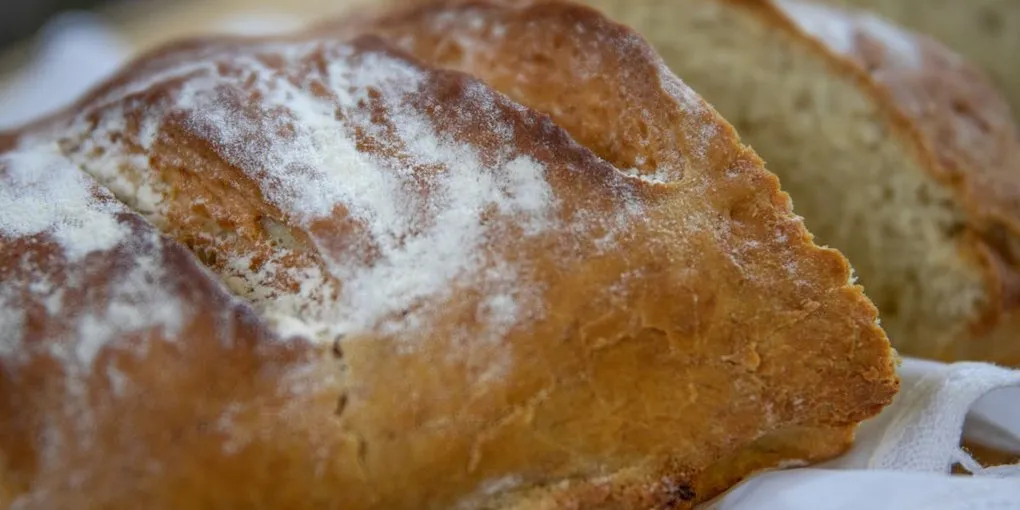
If your bread crust is consistently pale despite adequate baking time and temperature, the problem may not be your oven or your technique. It may be your flour. Specifically, it may lack the enzyme activity needed to produce the sugars that drive browning.
Diastatic malt powder fixes this. A small addition — just 0.5% of flour weight — can transform a pale, anemic crust into a deeply colored, flavorful one. It is one of the simplest and most impactful ingredients a home baker can add.
What Is Diastatic Malt?
Diastatic malt powder is made from barley (or sometimes wheat) that has been germinated, dried at low temperature, and ground into powder. The key word is “diastatic” — it means the malt contains live, active amylase enzymes.
These enzymes — alpha-amylase and beta-amylase — break down starch into sugars. The sugars serve two critical functions:
- Yeast food. The maltose produced by beta-amylase becomes the ongoing food source for yeast during fermentation. More available sugar means more consistent, vigorous fermentation.
- Browning substrates. The reducing sugars produced by enzyme activity react with amino acids at high temperature via the Maillard reaction, producing the brown pigments and complex flavor compounds that define great crust.
Without sufficient enzyme activity, the crust surface runs out of sugars before it can develop full color. The bread bakes through — reaching the right internal temperature — but the outside stays pale and one-dimensional.
Diastatic vs. Non-Diastatic: The Critical Difference
This is the distinction that trips up most bakers. The names sound almost identical, but the products are fundamentally different.
Diastatic vs. Non-Diastatic Malt
One is a functional enzyme source, the other is a flavor additive
| Property | 01Diastatic Malt | 02Non-Diastatic Malt |
|---|---|---|
| Live Enzymes | Yes — active amylase | No — destroyed by heat |
| Function | Breaks starch into sugar during fermentation and baking | Adds flavor and color directly (like adding sugar) |
| When It Works | Throughout fermentation AND in the oven | Only as a flavor/color additive |
| Usage Rate | 0.5% of flour weight | 2-5% of flour weight |
| Common In | Bread flour, artisan bread | Bagels, pretzels, dark beer bread |
| Overdose Risk | Yes — too much destroys starch structure | Minimal — it is inert |
Make sure the label says DIASTATIC — if it just says 'malt powder,' it is probably non-diastatic.
jayarrbread.comNon-diastatic malt has been heated during production, denaturing the enzymes. It is essentially a flavoring ingredient — malty sweetness and dark color without any enzymatic activity. Bagel shops use non-diastatic malt syrup in the boiling water and sometimes in the dough for that characteristic malty, slightly sweet flavor.
Diastatic malt is a functional ingredient. Its value comes from what its enzymes do during the hours of fermentation and the minutes of baking, not from its own flavor.
How Diastatic Malt Works: The Enzyme Cascade
Peter Reinhart explains the mechanism clearly. Here is what happens when you add diastatic malt to bread dough:
From Starch to Golden Crust
How diastatic malt enzymes create the sugars that drive browning
- 01
Starch in Flour
The raw materialFlour contains long chains of starch — stored energy that enzymes can unlock into fermentable sugars.
- 02
Alpha-Amylase Cleaves Starch
Random internal cutsAlpha-amylase breaks starch chains at random internal points, producing smaller fragments called dextrins.
- 03
Beta-Amylase Releases Maltose
End-to-end clippingBeta-amylase works from the ends of those fragments, snipping off maltose units two at a time — the primary sugar yeast consumes.
- 04
Sugars Accumulate at the Crust
Enzymes active up to 176°F (80°C)Rising oven temperatures accelerate enzyme activity. Both amylases produce a final burst of reducing sugars before heat inactivates them at about 176°F.
- 05
Maillard Reaction Produces Color
Begins at 250°F (120°C) surface tempReducing sugars react with amino acids to produce melanoidins (brown pigments) and hundreds of flavor and aroma compounds. More sugar = deeper color.
This is why well-fermented bread browns better — more enzyme time means more sugar available at the crust surface.
jayarrbread.comDuring mixing and fermentation:
- Alpha-amylase cleaves starch chains at random internal points, producing smaller starch fragments called dextrins
- Beta-amylase works from the ends of those fragments, snipping off maltose units two at a time
- Yeast consumes the maltose, producing CO2 (leavening) and ethanol (flavor precursor)
- This process continues throughout bulk fermentation, steadily providing fuel for the yeast
During baking:
- Rising oven temperatures accelerate enzyme activity dramatically
- Both amylases remain active until about 176 degrees Fahrenheit (80 degrees Celsius), producing a final burst of sugars
- Amino acids (from protease activity during fermentation) plus these reducing sugars fuel the Maillard reaction at the crust surface
- The Maillard reaction produces melanoidins (brown pigments) and hundreds of flavor and aroma compounds
- Above 330 degrees Fahrenheit at the surface, caramelization adds additional browning
More available sugar at the crust surface means more Maillard reaction, which means deeper color and more complex flavor. That is the entire mechanism.
How Much to Use
Reinhart recommends 0.5% of flour weight. For a dough with 1,000g of flour, that is just 5 grams — about 1 teaspoon.
This amount is small for a reason. Diastatic malt is powerful. The enzymes continue working throughout fermentation, and too much enzyme activity causes problems:
Overdose symptoms:
- Excessively sticky, slack dough during bulk fermentation
- Weak dough structure (too many starch chains broken down)
- Gummy crumb that never fully sets
- Very dark, almost burnt-looking crust
- Bread that collapses or flattens during baking
At 0.5%, you get the benefits — better color, more flavor, steadier fermentation — without the risks. Some commercial bread flours already contain added diastatic malt (check the ingredient list for “malted barley flour”). If yours does, you may not need any additional malt.
Try It Yourself
The Baker's Bench
Calculate exact ingredient weights for your next bake — including diastatic malt at 0.5% of flour weight.
Open ToolWhen to Use Diastatic Malt
Good candidates for diastatic malt:
- Baguettes and lean hearth breads — where crust color and flavor are paramount
- Pizza dough — for better browning in high-heat ovens
- Any bread that consistently bakes pale despite proper temperature and time
- Long-fermented doughs — where yeast may exhaust available sugars; diastatic malt ensures a continued supply
- Home-milled flour — which may have lower natural enzyme activity than commercial flour
Skip diastatic malt for:
- Enriched breads (brioche, challah) — already have plenty of sugar from recipe additions
- High-rye breads — rye has very high natural amylase activity; adding more risks gummy crumb
- Recipes that already include sugar or honey — additional enzyme-produced sugars are unnecessary
- Very long cold fermentations — extended enzyme activity at even slow rates can over-degrade starch
Diastatic Malt in Commercial Flour
Many commercial bread flours include “malted barley flour” in the ingredients list. This is diastatic malt — the miller has already added it to ensure consistent enzyme activity across different wheat harvests. King Arthur Bread Flour, for example, lists malted barley flour as an ingredient.
If your flour already contains malted barley flour, adding additional diastatic malt is usually unnecessary and could push you toward over-enzymatic activity. Check your flour’s ingredient list before adding malt.
Unmalted flours — typically labeled “no malted barley” or simply lacking it in the ingredients — are the ones that benefit most from diastatic malt addition.
How to Source and Store Diastatic Malt
Diastatic malt powder is available from specialty baking suppliers. King Arthur Flour sells it, as does Bob’s Red Mill and various online suppliers. Make sure the label specifically says “diastatic” — if it just says “malt powder” or “malt extract,” it is almost certainly non-diastatic.
Storage: Keep diastatic malt powder in an airtight container in a cool, dry place. The enzymes degrade over time with heat and moisture exposure. Refrigeration extends shelf life. Do not freeze — moisture from condensation when thawing can activate the enzymes prematurely.
Shelf life: About 12 months at room temperature in a sealed container; longer if refrigerated.
The Science of Crust Browning
Understanding why diastatic malt works requires understanding the two browning reactions that create crust color. For a deep dive, see our full guide to the Maillard reaction in bread.
The Maillard reaction begins around 250 degrees Fahrenheit at the crust surface. It requires both amino acids and reducing sugars. Long-fermented bread has more of both — protease activity during fermentation releases amino acids, and amylase activity releases sugars. This is why well-fermented bread browns better than under-fermented bread, even without added malt.
Caramelization begins around 330 degrees Fahrenheit. This is direct thermal decomposition of sugars — it does not require amino acids. It adds additional browning and sweet/bitter caramel notes.
Both reactions happen simultaneously in a hot oven. Diastatic malt boosts the Maillard reaction specifically by ensuring ample reducing sugars are available at the crust surface when the temperature reaches the reaction threshold. Proper steam during the first phase of baking keeps the surface moist longer, allowing enzymes more time to produce those sugars before the crust dries and sets.
Quick Reference
| Question | Answer |
|---|---|
| What is it? | Malted barley powder with live amylase enzymes |
| How much? | 0.5% of flour weight (5g per 1,000g flour) |
| When to add? | With the flour at the start of mixing |
| What does it do? | Breaks starch into sugar for better browning and fermentation |
| Non-diastatic? | No enzymes — flavor additive only (used in bagels, pretzels) |
| Already in my flour? | Check ingredients for “malted barley flour” |
| Storage? | Airtight, cool, dry; refrigerate for longer shelf life |
The Bottom Line
Diastatic malt is a precision tool: a tiny amount of enzyme-active powder that ensures your flour has enough sugar production capacity for deep crust color and complex flavor. At 0.5% of flour weight, it is barely there by volume but significant by effect. If your bread bakes through but stays pale, diastatic malt is the first thing to try.
Frequently Asked Questions
- What is the difference between diastatic and non-diastatic malt?
- Diastatic malt contains live amylase enzymes that break down starch into sugar during fermentation and baking — it is a functional ingredient that improves crust browning and yeast activity. Non-diastatic malt has been heated to destroy the enzymes and serves only as a flavor additive, contributing malty sweetness and dark color. Bagels and pretzels commonly use non-diastatic malt for flavor; artisan bread uses diastatic malt for enzymatic activity.
- How much diastatic malt should I add to bread?
- Use 0.5% of your total flour weight — that is 5 grams (about 1 teaspoon) per 1,000 grams of flour. This small amount is sufficient because the enzymes are powerful and continue working throughout fermentation and into the early stages of baking. Too much diastatic malt causes sticky, weak dough and gummy crumb from excessive starch breakdown.
- Does my flour already have diastatic malt in it?
- Many commercial bread flours list malted barley flour in their ingredients — this is diastatic malt added by the miller. King Arthur Bread Flour includes it, for example. If your flour already contains malted barley flour, adding more diastatic malt is usually unnecessary and could cause problems from over-enzymatic activity. Check your flour's ingredient label.
- Can I use diastatic malt in sourdough bread?
- Yes, and it works well in sourdough. The enzymes provide a steady supply of fermentable sugars throughout the long fermentation, supporting yeast activity and ensuring enough residual sugar at the crust surface for good browning. Use the same 0.5% rate. However, if your sourdough already browns well, the addition is unnecessary.
- Why is my bread crust always pale?
- Pale crust usually means insufficient sugar at the crust surface for the Maillard reaction. Common causes include under-fermented dough (not enough enzyme activity to release sugars), oven temperature too low, insufficient steam in the first 10-15 minutes, or flour with low natural enzyme activity. Diastatic malt at 0.5% addresses the enzyme and sugar issue specifically. Also verify your oven temperature with an oven thermometer — most home ovens run inaccurate.