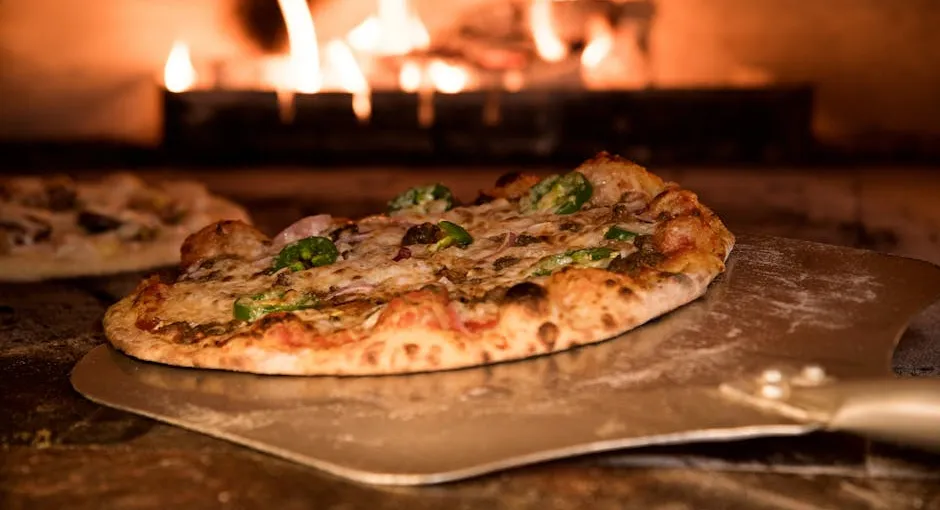
Both baking stones and baking steels exist to solve the same problem: your home oven rack is a terrible surface for baking bread. Wire racks have almost no thermal mass. When you load a cold loaf onto a wire rack, the bottom of the bread barely heats at all during the critical first minutes. The result is weak oven spring, a pale bottom crust, and a loaf that spreads sideways instead of rising upward.
A baking stone or steel stores heat and delivers it rapidly to the bottom of the dough. That burst of bottom heat is what drives oven spring — the explosive expansion that happens when CO2 comes out of solution, ethanol vaporizes, and gas cells inflate during the first 10-15 minutes of baking.
All five major bread authors specify a baking stone or steel for any bread baked outside of a Dutch oven. The question is which one to use, and the answer depends on what you bake.
The Physics: Thermal Conductivity and Thermal Mass
Two properties matter: how fast a material conducts heat (thermal conductivity) and how much heat it can store (thermal mass, which relates to specific heat capacity and density).
Thermal conductivity measures how quickly heat moves through a material. Steel conducts heat roughly 18-20 times faster than cordierite ceramic (the material in most baking stones). Some sources cite even higher ratios depending on the specific steel alloy and ceramic composition.
| Material | Thermal Conductivity (W/m-K) | Relative Speed |
|---|---|---|
| Carbon steel (A36) | ~45 | 18-20x |
| Cast iron | ~50 | 20-22x |
| Cordierite ceramic | ~2-3 | 1x (baseline) |
What this means in practice: When cold dough hits a hot steel, heat transfers to the dough bottom dramatically faster than on a stone. This rapid heat transfer creates a harder initial “kick” that drives more aggressive oven spring and faster crust formation on the bottom.
Thermal mass is about how much heat the surface can store and deliver before its temperature drops. This depends on the material’s density, specific heat capacity, and thickness.
A standard baking steel (1/4-inch thick, 15 lbs) stores significantly more total heat energy than a standard baking stone (3/4-inch thick, 8-10 lbs) because steel is far denser. When you open the oven door and load a cold loaf, the steel’s temperature drops less and recovers faster.
Baking Stone: Strengths and Weaknesses
A baking stone is a flat slab of cordierite ceramic or natural clay, typically 3/4-inch thick, weighing 8-12 pounds. Cordierite is the preferred material because it resists thermal shock (unlike natural soapstone or granite, which can crack).
Strengths:
- Gentler heat transfer. The slower conductivity means less risk of burning the bottom crust during long bakes (40+ minutes). For enriched breads, rye breads, and any loaf that needs extended oven time, a stone is more forgiving.
- Moisture absorption. Cordierite is porous and actively wicks moisture from the dough bottom. This helps create a dry, crispy bottom crust.
- Lower cost. A quality baking stone costs $30-50 — roughly half the price of a comparable steel.
- Lighter. 8-12 lbs vs 15-23 lbs. Easier to handle, especially if you move it in and out of the oven.
Weaknesses:
- Slow preheat. A stone needs 45-60 minutes to fully saturate with heat. Under-preheated stones produce weak oven spring.
- Breakage risk. Cordierite resists thermal shock well, but it can still crack from impact, rapid cooling (do not pour water directly on a hot stone), or manufacturing defects. Cheap stones crack more often.
- Less aggressive oven spring. The slower heat transfer means less of the explosive bottom-heat kick that drives the initial rise.
Baking Steel: Strengths and Weaknesses
A baking steel is a flat slab of carbon steel or food-grade steel, typically 1/4-inch to 3/8-inch thick, weighing 15-23 pounds. The original Baking Steel brand (14x16 inches, 1/4-inch thick, 15 lbs) popularized the concept and remains the benchmark.
Strengths:
- Aggressive oven spring. The rapid heat transfer creates a strong bottom-heat kick that drives more oven spring than a stone. For lean doughs (baguettes, sourdough, country bread), this is a meaningful advantage.
- Faster preheat. Steel reaches equilibrium temperature in 30-45 minutes — faster than a stone.
- Unbreakable. Steel does not crack, chip, or shatter. It is essentially indestructible in a home oven.
- Higher heat storage. The density of steel means it stores more total energy per unit area, holding temperature better when the oven door opens.
Weaknesses:
- Risk of bottom burning. The fast heat transfer that creates great oven spring can also scorch the bottom crust during long bakes. For breads that need 40+ minutes (high-rye, whole wheat, enriched), you may need to reduce oven temperature or place an extra sheet pan below the steel as a heat shield.
- Heavy. The original Baking Steel weighs 15 lbs; the Baking Steel Plus (15x20 inches) weighs 23 lbs. Handling these at oven temperature requires confidence and good oven mitts.
- Expensive. $90-130 for a quality steel. The Baking Steel Original is about $129.
- Rust requires maintenance. Steel must be seasoned (like cast iron) and stored dry. Moisture causes rust. A light coat of food-grade mineral oil between uses prevents this.
- No moisture absorption. Steel is non-porous. It does not wick moisture from the dough bottom the way stone does.
Head-to-Head: Stone vs Steel for Common Bread Types
| Bread Type | Better Surface | Why |
|---|---|---|
| Sourdough boule/batard | Steel (slight edge) | Aggressive oven spring from rapid heat transfer |
| Baguettes | Steel (clear edge) | The fast bottom heat helps create thin, shattering crust |
| No-knead / Dutch oven bread | Neither — Dutch oven is better | The enclosed vessel provides steam; the baking surface matters less |
| High-rye bread | Stone | Long bake times; stone’s gentler heat prevents bottom burning |
| Enriched bread (brioche, challah) | Stone | Lower bake temps (375-380 degrees F); sugar in dough burns easily |
| Pizza | Steel (clear edge) | The fastest possible heat transfer creates the best bottom char |
| Focaccia | Stone | Sheet-pan baked; stone provides even, gentle bottom heat |
The Dutch Oven Factor
If you bake exclusively in a Dutch oven, the baking surface matters less. The Dutch oven sits on the oven rack or stone/steel and creates its own enclosed environment. Placing your Dutch oven on a preheated stone or steel adds a modest boost to bottom heat, but the Dutch oven itself is doing most of the thermal work.
Where a stone or steel becomes essential is when you bake free-form loaves directly on the surface — baguettes, ciabatta, hearth breads, pizza — without an enclosed vessel. For these breads, you need steam injected separately (a pan of water, ice cubes, or a spray bottle) and a hot surface that delivers aggressive bottom heat.
Steam Considerations
Neither a stone nor a steel produces steam on its own. When baking without a Dutch oven, you need to create steam independently:
- Hot water pan: Place a cast-iron skillet or heavy baking pan on a lower rack. When you load the bread, pour 1 cup of boiling water into the pan and close the door quickly. Remove the pan after 15 minutes for crust browning.
- Ice cubes: Drop a handful of ice cubes onto a hot pan on the lower rack at loading time. The ice melts slowly, providing sustained steam.
- Lava rocks: Some bakers fill a cast-iron pan with lava rocks, preheat them, and pour water over them at loading. The rocks hold heat and release steam more gradually than an empty pan.
Steam during the first 10-15 minutes delays crust formation, extends oven spring, and gelatinizes the dough surface for a glossy, crackly crust. After 15 minutes, vent the steam (remove the water pan, crack the oven door briefly) so the crust can dry and brown through Maillard reaction.
Product Recommendations
Best Baking Steel: Baking Steel Original
Baking Steel OriginalThe original. 14x16 inches, 1/4-inch thick, 15 lbs. Pre-seasoned. Made in the USA. $129. The benchmark against which all other baking steels are measured. For baguettes and sourdough baked directly on the surface, nothing beats it.
Best Baking Stone: FibraMent-D Baking Stone
FibraMent-D Baking StoneFibraMent-D is not cordierite — it is a proprietary mineral composite that is denser and more conductive than standard ceramic stones while still being porous. It splits the difference between stone and steel. 3/4-inch thick, available in custom sizes to fit your oven. About $50-80 depending on size. The preferred stone of many serious home bakers.
Budget Stone: Lodge Cast Iron Pizza/Baking Pan
Lodge Cast Iron Baking PanLodge makes a 14-inch round cast-iron baking pan that functions like a budget baking steel. Cast iron has similar thermal conductivity to carbon steel (~50 W/m-K). At about $30-40, it delivers most of the steel’s performance at a fraction of the price. The round shape limits baguette length but works for boules and pizza.
The Verdict
Buy a baking steel if you bake lean doughs (sourdough, baguettes, country bread) directly on the surface and want maximum oven spring and crust character. Accept the weight, the price, and the need to manage bottom-crust browning during longer bakes.
Buy a baking stone if you bake a variety of breads including enriched doughs and rye, prefer a more forgiving surface, and want lower cost and lighter weight. Accept the longer preheat time and the (small) risk of cracking.
Buy both if you are serious about bread and pizza. Use the steel for lean doughs and pizza. Use the stone for enriched breads, rye, and any bake over 40 minutes. Many dedicated home bakers keep both in the oven permanently, stacked on different racks.
For the full equipment breakdown, see our Complete Bread Baking Equipment Guide. If you prefer the enclosed-steam approach, check The Best Dutch Ovens for Bread.
Frequently Asked Questions
- Can I use a baking steel in place of a Dutch oven?
- Not directly. A Dutch oven provides both thermal mass and trapped steam — the steam is what makes it work for bread. A baking steel provides thermal mass only. To bake bread on a steel without a Dutch oven, you need a separate steam source (a pan of boiling water, ice cubes on a hot tray, etc.). The results can be excellent, but the steam setup is more involved than simply putting a lid on a pot.
- Will a baking steel crack like a stone?
- No. Steel is a ductile metal — it bends rather than breaks. You can drop it, heat it unevenly, pour cold water on it (though you should not), and it will not crack, chip, or shatter. The only maintenance concern is rust, which is prevented by keeping the steel dry and lightly oiled between uses, the same way you maintain cast iron.
- How long should I preheat a baking stone or steel?
- A baking stone needs 45-60 minutes at your target baking temperature to fully saturate with heat. A baking steel needs 30-45 minutes. Under-preheating is one of the most common causes of weak oven spring. Set a timer when you turn the oven on and do not load bread until the preheat time has elapsed, even if the oven's thermostat says it has reached temperature — the air heats faster than the stone or steel.
- Can I leave a baking stone or steel in the oven permanently?
- Yes, and many bakers do. A permanent stone or steel acts as thermal ballast — it absorbs heat when the oven cycles on and releases it when the oven cycles off, which reduces temperature fluctuations and makes your oven more even. The only downside is a slightly longer total preheat time, since the oven must heat both the air and the slab.