Brioche uses two-phase mixing: build a basic gluten windowpane before adding butter, then work in cool, pliable butter one piece at a time. Use the mixer maker's approved dough speed — no higher than speed 2 with a KitchenAid dough hook — and pause if the dough approaches 77-78°F. The dough checkpoint and temperature matter more than a fixed mixing clock.
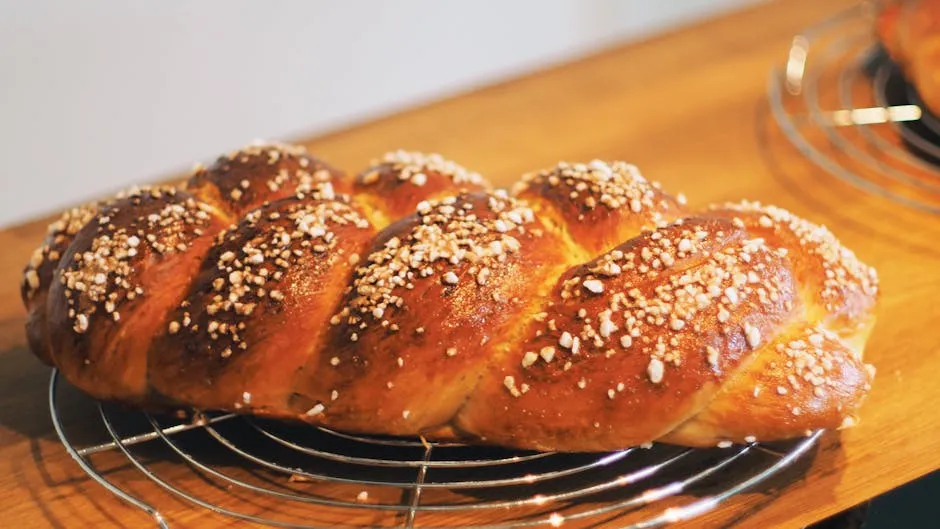
Brioche is among the richest breads in the French tradition: this formula uses 50% butter and 50% eggs relative to flour weight, plus enough sugar to push it toward pastry. When the mixing and fermentation checkpoints are met, the target is a golden, tender loaf with a fine, shreddable crumb.
Method and estimate note: This is a desk-developed teaching version based on the professional formula in Jeffrey Hamelman’s Bread: A Baker’s Book of Techniques and Recipes; JayArr Bread does not claim to have personally test-baked this exact scaled batch. Mixer geometry, flour strength, ingredient temperature, and room temperature can shift the clock, so use the windowpane, dough-temperature, proofing, and internal-temperature checkpoints. Test a half batch before baking for an event. Nutrition fields are intentionally omitted until this exact scaled formula is test-baked and its finished yield is verified.
The challenge is the butter. Half the weight of the flour in butter is an enormous amount of fat, and fat is the enemy of gluten development. Every fat globule coats flour proteins and prevents them from linking into the elastic network that gives bread structure. Making brioche means building a strong gluten network first, then incorporating the butter without destroying it. This process strongly favors a stand mixer, cool ingredients, and patience. If you want the softness of an enriched loaf without half a pound of butter, our milk bread (shokupan) gets there with a tangzhong starch gel instead.
The Formula
The baker’s-percentage base used here is adapted from Hamelman’s professional brioche formula:
- Flour: 100%
- Eggs: 50%
- Butter: 50%
- Sugar: 12%
- Salt: 2.5%
- Yeast: 5% (fresh) or ~1.7% (instant)
All percentages are baker’s percentages relative to flour weight. For a home batch of 500g flour, that’s 250g eggs, 250g butter, 60g sugar, 12.5g salt, and about 8g instant yeast.
Every ingredient must be cold. This is not a suggestion — it’s a structural requirement. Warm butter melts and coats flour proteins before gluten can form. Cold butter remains in discrete pieces that get mechanically dispersed during the long mixing process, allowing gluten to develop around and between them.
Try It Yourself
The Baker's Bench
Calculate egg counts and butter weights for any batch size with the Baker's Bench tool.
Open ToolThe Mixing Process
A stand mixer is strongly recommended for this 50%-butter formula. Skilled bakers can work very rich dough by hand, but it is slow, warm, and difficult to reproduce; a planetary, spiral, or roller-style mixer gives more controlled development. Follow the manual for your exact mixer rather than translating a professional mixer’s “medium” setting directly to a consumer machine.
Phase 1: Build the Gluten (Without Butter)
Combine flour, eggs, sugar, salt, and yeast in the mixer bowl. Mix on low speed (speed 2 on a KitchenAid) for 3-4 minutes until the ingredients come together into a shaggy, sticky mass.
If you are using a KitchenAid with the dough hook, continue at speed 2; KitchenAid says not to exceed speed 2 for yeast dough. Mix to the dough checkpoint rather than forcing the original professional-mixer clock. Depending on the machine, flour, and batch, the dough may need rest intervals and more than 8-10 minutes to become smoother and begin pulling away from the bowl. You’re building the gluten network that will hold the butter.
At this stage, the dough should pass a basic windowpane test — it won’t be as thin and transparent as a lean dough, but it should stretch without immediately tearing.
Do not add butter yet. The gluten must be substantially developed before fat enters. This is the single most important instruction in brioche making.
Phase 2: Incorporate the Butter
Cut cool, pliable butter into 1-tablespoon pieces. With a KitchenAid on speed 2, or the manual-approved dough speed on another machine, add the butter one piece at a time, waiting until each piece is mostly incorporated before adding the next.
This is slow. Adding 250g of butter one tablespoon at a time takes 5-8 minutes. Resist the urge to dump it all in. Each piece needs time to be mechanically worked into the dough matrix.
The dough will look terrible during this phase. It will break apart, become greasy and sloppy, and appear to lose all the structure you built. This is normal. Keep mixing.
After all the butter is added, continue at the manual-approved dough speed until the dough comes back together, becoming smooth, shiny, and elastic. It will slap against the sides of the bowl with a characteristic sound. When the dough is finished, it should be smooth, supple, and slightly tacky — not sticky, not dry.
Total mixing often reaches 15 minutes or more, but the clock is not a command to run a consumer mixer continuously. Follow its duty-cycle and speed limits, pause if the motor or dough heats, and stop when the dough is smooth, elastic, and free of visible butter streaks.
Temperature Management During Mixing
The long mixing time generates significant friction heat, and exact heat gain varies by mixer, batch size, and room temperature.
Monitor the dough temperature. If it climbs above 77-78 degrees F, the butter starts melting and the dough turns into a greasy, structureless mess. If this happens:
- Stop the mixer
- Refrigerate the bowl and dough for 15-20 minutes
- Resume mixing
Some bakers freeze the butter and chill the mixing bowl before starting. In warm kitchens, this is essential.
Bulk Fermentation
Brioche bulk fermentation is different from lean bread. The dough goes into a covered container at room temperature for 1-2 hours, with 2-3 gentle degassing folds. The butter slows fermentation significantly, so don’t expect the dramatic rises you see with lean dough.
After the room-temperature rise, transfer the dough to the refrigerator for a minimum of 4 hours and up to overnight. This cold retard serves two purposes:
- Flavor development: The slow, cold fermentation produces the complex, buttery, slightly yeasty flavor that defines brioche.
- Firmness for shaping: Cold brioche dough is firm enough to handle. Warm brioche dough is a buttery, sticky mess that’s nearly impossible to shape.
Shaping Brioche
The loaf-pan link below is an Amazon affiliate link. If you buy through it, JayArr Bread earns a small commission at no extra cost to you.
Classic brioche shapes:
Brioche a Tete (Parisienne): The iconic mushroom shape. Roll a ball of dough, then form a narrow neck connecting a small top ball to a larger base. Place in a fluted brioche mold. The small ball sits in a depression in the top of the larger ball. This shape requires practice — the neck must be thin enough to create the distinctive “head” silhouette but strong enough not to break during proofing.
Brioche Nanterre: Two rows of dough balls arranged in a standard loaf pan. As they proof and bake, the balls merge into a pull-apart loaf. Easier than a tete and produces an attractive pattern when sliced.
Brioche Loaf: Simply place the dough in a standard loaf pan. The simplest approach and perfectly fine — the taste is identical regardless of shape.
Work quickly with cold dough. If the dough softens too much during shaping, return it to the refrigerator for 15 minutes.
Proofing
Brioche proofs slowly because of the butter and sugar content. At room temperature (75 degrees F), expect 1.5-2.5 hours for the final proof, depending on dough temperature and enrichment level.
The poke test works for brioche: press gently with a floured finger. When the indent springs back slowly and partially, the bread is ready. Brioche over-proofs easily — the fat weakens the gluten network, and once it’s overstretched, there’s no recovery. When in doubt, bake sooner.
Egg wash: Whisk 1 large egg with 1 tablespoon water or cream, then strain it if lumpy. Brush a thin, even coat over the proofed dough without flooding the pan edges. Apply gently — pressing too hard on proofed dough will deflate it.
Baking
Brioche bakes at 380 degrees F — significantly lower than lean bread. The sugar and egg wash brown rapidly at higher temperatures, and you’d have a scorched exterior over raw interior.
Bake until the internal temperature reaches 185-190 degrees F, typically 25-35 minutes depending on the shape and size. The crust should be deep golden brown, not pale gold.
No steam. Unlike lean breads, enriched doughs don’t need or benefit from steam. The egg wash provides the crust characteristics, and steam would interfere with browning.
If the top is browning too fast (especially for larger loaves), tent loosely with aluminum foil for the last 10 minutes of baking.
Why Brioche Fails
Butter added too early. The most common failure. If butter goes into under-developed gluten, it coats the proteins and prevents further development. The result is a greasy, dense bread with no structure. Always build gluten first, then add butter.
Dough or butter too warm. Warm butter melts and smears instead of being mechanically dispersed. Start with cool eggs and cool, pliable butter; rock-hard butter also resists incorporation. Pre-chill the bowl in a warm kitchen and monitor the dough rather than relying on touch alone.
Under-mixed. Rich dough often takes longer than lean dough, but use checkpoints rather than a fixed minimum. The dough must be smooth, elastic, and pulling cleanly from the bowl sides. If butter streaks remain, continue only at the machine’s approved dough speed, with cooling rests as needed.
Over-proofed. The fat in brioche weakens gluten, giving it a narrower proofing window than lean bread. Watch the poke test carefully and err on the side of baking slightly under-proofed rather than over.
Baked too hot. At 450 degrees F, the sugar and egg wash will burn well before the interior is done. Stick to 380 degrees F. If the top colors too fast, tent with foil.
Brioche Variations
Brioche Burger Buns
Divide the cold dough into 100-120g pieces. Round each into a tight ball and place on a parchment-lined sheet pan, spaced 3 inches apart. Proof until nearly doubled (60-90 minutes). Egg wash. Sprinkle with sesame seeds. Bake at 375 degrees F for 15-18 minutes until golden. These buns are rich, soft, and sturdy enough to hold up to a juicy burger without disintegrating.
Brioche Bread Pudding
Day-old brioche makes the best bread pudding in existence. The enriched crumb absorbs custard greedily while maintaining structure. Cube the brioche, pour over a mixture of eggs, cream, sugar, and vanilla, let it soak for 30 minutes, and bake at 350 degrees F until set. The butter already in the bread amplifies the custard’s richness.
Brioche Doughnuts
Use the standard brioche dough, cold from the fridge. Roll to 1/2-inch thickness, cut with a doughnut cutter, proof on parchment until puffy (about 1 hour at room temperature), and fry at 350 degrees F for 90 seconds per side. The high butter content creates doughnuts with an almost croissant-like tenderness. Glaze immediately while warm.
Reduced-Butter Brioche
If 50% butter feels excessive, a 30% butter version still qualifies as brioche and is noticeably easier to handle. The mixing process is the same (develop gluten first, add cold butter gradually), but the shorter mixing time and less greasy dough make it more forgiving. The flavor is less rich but still distinctly brioche. This is a good starting point if your first attempt at full-butter brioche was a disaster.
Rich Dough Principles
Brioche teaches the principles that apply to all enriched doughs: challah, panettone, cinnamon rolls, doughnuts, and brioche-based pastries like pain au chocolat. For a softer pull-apart format on a natural-leavening clock, our sourdough dinner rolls use the same develop-gluten-before-butter principle with an overnight bulk ferment.
The core principle is always the same: fat and sugar inhibit gluten development, so you compensate with longer mixing, higher yeast percentages, and colder temperatures. The richer the dough, the more extreme each of these compensations needs to be.
Brioche sits at the extreme end of the enrichment spectrum. Master it, and every other enriched dough feels straightforward by comparison.
For baker’s percentage calculations and scaling, the Baker’s Bench tool handles enriched dough formulas and will calculate egg and butter weights based on your flour quantity.
Frequently Asked Questions
- Can I make brioche by hand without a stand mixer?
- It is possible for an experienced baker, but this 50%-butter formula is slow, warm, and difficult to reproduce by hand. A stand mixer gives more controlled development. If using a KitchenAid dough hook, stay at the manufacturer's speed 2 limit and mix to the windowpane and dough-temperature checkpoints rather than copying a professional mixer's speed. Challah is a more practical hand-mixed enriched alternative.
- Why did my brioche turn out greasy?
- The butter was likely added before the gluten was sufficiently developed or the dough became too warm. Build a basic windowpane before introducing butter, then add cool, pliable butter gradually. Use the mixer manufacturer's approved dough speed — speed 2 on a KitchenAid dough hook — and pause to cool the bowl if the dough approaches 77-78°F.
- How long should I mix brioche dough?
- Many batches take 15 minutes or more in total, but mixer type and batch size change the clock. First build a basic windowpane, then add butter one piece at a time and continue until the dough is smooth, shiny, and elastic. Follow the machine's speed and duty-cycle limits; for a KitchenAid dough hook, do not exceed speed 2, and use cooling rests rather than forcing a continuous professional-mixer schedule.
- Why does brioche need cold ingredients?
- Long mixing creates friction heat, and cool ingredients give you a buffer before butter softens and smears. Exact heat gain varies by mixer and batch. Monitor the dough rather than relying on one assumed rise; if it warms above about 77-78°F, stop and refrigerate the bowl and dough for 15-20 minutes before resuming.
- What temperature do you bake brioche at?
- 380 degrees F, which is much lower than lean breads (460-480 degrees F). The high sugar content and egg wash brown rapidly, and higher temperatures would burn the exterior before the enriched interior bakes through. Expect 25-35 minutes depending on shape and size. Internal temperature should reach 185-190 degrees F. If the top browns too fast, tent loosely with aluminum foil.