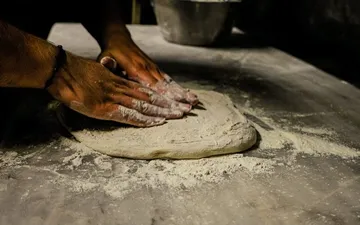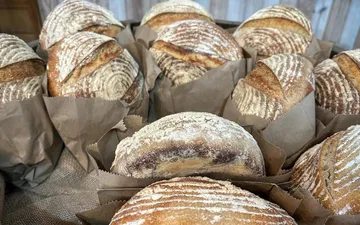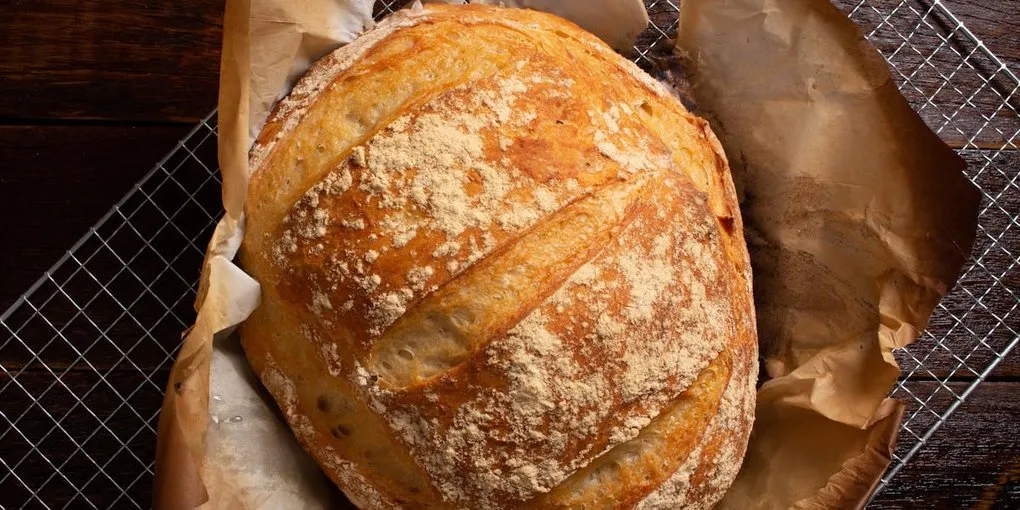
Three variables control every bread schedule: dough temperature (DDT), yeast quantity, and cold retarding. A 75-78 degrees F dough with 0.08% instant yeast ferments 12-14 hours overnight. Increase yeast to 0.4% for a same-day 5-hour bulk. Cold retarding shaped loaves at 37-40 degrees F lets the bread wait 12-18 hours in the fridge, and you bake directly from cold -- no warming needed.
Try It Yourself
The Baker's Bench
Enter your bread style and schedule to get an exact recipe with baker's percentages and a complete baking timeline.
Open ToolThe biggest barrier to baking bread at home isn’t skill — it’s timing. You know the dough needs to rise, but you also need to pick up kids, make dinner, sleep, and get to work. The solution isn’t faster bread. It’s understanding the three variables that control fermentation speed so you can bend the timeline to fit your life.
Those three variables are temperature, yeast quantity, and cold retarding. Master the relationship between them and you can have fresh bread ready at 7am on a Tuesday or 1pm on a Sunday — your choice.
The Three Timing Levers
Every bread schedule comes down to manipulating these three factors. Change any one of them and the entire timeline shifts.
Lever 1: Desired Dough Temperature (DDT)
Dough temperature after mixing is the single biggest predictor of fermentation speed. The target for standard lean bread is 75-78 degrees F. Hit that window and your fermentation times will match the recipe. Miss it, and everything shifts — sometimes by hours.
The formula for controlling DDT is straightforward. For a stand mixer: multiply your target DDT by 4, then subtract the air temperature, flour temperature, preferment temperature (if using one), and friction factor (24-28 degrees F for a planetary mixer, roughly 0 degrees F for hand mixing). The result is your target water temperature.
In practice: if your kitchen is 72 degrees F, your flour is 72 degrees F, and your mixer adds about 26 degrees F of friction heat, you need water at approximately 142 degrees F to hit a DDT of 78 degrees F. Forkish simplifies this by consistently using 90-95 degrees F water, targeting a final mix temperature of 77-78 degrees F.
The key insight from Reinhart: yeast approximately doubles its fermentation rate with every 17 degrees F increase in temperature. A dough that rises in 2 hours at 70 degrees F will rise in about 1 hour at 87 degrees F and take about 4 hours at 53 degrees F. This is why a few degrees matter so much.
For a deeper dive, see our desired dough temperature guide.
Lever 2: Yeast Quantity
Less yeast means longer, slower fermentation — and better flavor. More yeast means faster results with less complexity. Here’s the practical range:
| Instant Yeast (Baker’s %) | Approximate Bulk Time at 75 degrees F | Best For |
|---|---|---|
| 0.08% | 12-14 hours | Forkish’s Overnight White — mix before bed, bake in the morning |
| 0.1-0.25% | 8-12 hours | Pre-ferments (poolish, biga) |
| 0.3-0.5% | 4-6 hours | Afternoon baking — mix at lunch, bake at dinner |
| 0.5-1.0% | 1.5-3 hours | Quick turnaround — mix mid-morning, bake before lunch |
| 1.0-1.5% | 1-1.5 hours | Fastest reasonable timeline for yeasted bread |
Forkish’s “less yeast, more flavor” principle drives his overnight methods. His Overnight White uses just 0.08% yeast — 0.8 grams per 1,000 grams of flour — and produces a 12-14 hour bulk fermentation with extraordinary flavor complexity. On the other end, 1% yeast gets you bread in under 2 hours, but the flavor will be noticeably simpler.
Lever 3: Cold Retarding
Cold retarding is the scheduling tool that makes bread baking compatible with a normal life. Shaped loaves go into the refrigerator at 37-40 degrees F, where fermentation slows nearly to zero. The bread waits for you — not the other way around.
Robertson puts it directly: “Cold retarding is a tool, not a compromise.” The bread doesn’t just survive refrigeration — it improves. The extended time develops flavor, and the cold firms the dough for easier scoring.
The critical detail from Forkish: cold-retarded loaves don’t need to come to room temperature before baking. Pull them from the fridge, score, and bake directly. This saves 1-2 hours of warming time that most recipes incorrectly suggest.
For a full explanation of the science, see our cold fermentation guide.
Schedule 1: The Weeknight Bread (Mix Tonight, Bake Tomorrow Morning)
This is the schedule that makes bread a weeknight activity. Total hands-on time: about 20 minutes spread across two sessions.
Based on Forkish’s Overnight White: 78% hydration, 0.08% instant yeast, 12-14 hour overnight bulk.
| Time | Step | Hands-On |
|---|---|---|
| 7:00 PM | Mix dough (autolyse 20 min, then add salt and yeast, pincer method) | 15 min |
| 7:30 PM | Fold #1 | 1 min |
| 8:00 PM | Fold #2 | 1 min |
| 8:30 PM | Fold #3 (optional) — then leave undisturbed overnight | 1 min |
| 7:00-9:00 AM | Check dough (should be 2.5-3x original volume). Preheat oven with Dutch oven to 475 degrees F. | 2 min |
| 7:45-9:45 AM | Shape, proof 1 hour, or go directly to bake if dough is fully risen | 5 min |
| 8:45-10:45 AM | Bake: lid on 30 min, lid off 15-20 min | — |
| 9:30-11:30 AM | Cool on rack | — |
The flexibility window: Because the yeast quantity is so low, this schedule has a wide tolerance. The dough is fine anywhere from 10 to 16 hours of bulk fermentation, depending on your kitchen temperature. A 68 degree F kitchen pushes toward 16 hours. A 78 degree F kitchen pulls it to 10. You don’t need to set an alarm.
4 Bread Baking Schedules
Pick the one that fits your life
Weeknight Bread
- Mix
- 7:00 PM
- Bake
- 9:00 AM next day
- Yeast
- 0.08%
- Hands-On
- ~20 min
- Forkish Overnight White. Mix before bed, fold 2-3 times, bake in the morning. The dough waits for you.
Saturday Bread
- Mix
- 9:00 AM
- Bake
- 3:30 PM
- Yeast
- 0.4%
- Hands-On
- ~25 min
- Forkish Saturday White. Same-day baking with moderate yeast. 5-hour bulk, shape, proof, bake by mid-afternoon.
Sunday Lunch (Cold Retard)
- Mix
- Sat 10:00 AM
- Shape
- Sat 3:00 PM
- Bake
- Sun 10:45 AM
- Hands-On
- ~30 min
- Shape Saturday, fridge overnight, bake Sunday. Cold retard = scheduling flexibility + better flavor. Bake directly from cold.
Make-Ahead & Freeze
- Bake
- Any schedule
- Freeze
- After 2+ hrs cooling
- Reheat
- 300 degrees F, 10 min
- Keeps
- 2-3 months frozen
- Double any recipe. Freeze extras after cooling. Defrost at room temp, reheat on oven rack. Stops staling completely.
Temperature is the fastest adjustment lever. Yeast doubles its rate every 17 degrees F -- a few degrees shift the whole schedule.
jayarrbread.comSchedule 2: The Saturday Morning Bread (Same-Day, Start to Finish)
For when you want to make bread and eat it the same day. Based on Forkish’s Saturday White — a same-day bread with a compressed timeline.
Forkish’s Saturday White: 72% hydration, 0.4% instant yeast, 5-hour bulk until tripled.
| Time | Step | Hands-On |
|---|---|---|
| 9:00 AM | Autolyse (flour + water, 20 min rest) | 5 min |
| 9:20 AM | Add salt and yeast, mix thoroughly (pincer method) | 5 min |
| 9:50 AM | Fold #1 | 1 min |
| 10:20 AM | Fold #2 | 1 min |
| 10:50 AM | Fold #3 — then undisturbed until bulk is complete | 1 min |
| 2:00-2:30 PM | Dough has tripled. Shape into rounds. Preheat oven with Dutch oven to 475 degrees F. | 10 min |
| 3:00-3:30 PM | Proof complete (about 1 hour). Score. | 2 min |
| 3:00-3:30 PM | Bake: lid on 30 min, lid off 15-20 min | — |
| 4:00-4:15 PM | Cool on rack (20 min minimum, 1-2 hours ideal) | — |
Total elapsed time: About 7 hours, with roughly 25 minutes of hands-on work. You can run errands, clean the house, or do whatever you want during the 5 hours of bulk fermentation. Just check on it occasionally.
Schedule 3: The Sunday Lunch Bread (Cold Retard for Precision Timing)
This schedule lets you do all the work on Saturday and bake fresh bread for Sunday lunch. The cold retard handles the timing.
| Time | Step | Hands-On |
|---|---|---|
| Saturday | ||
| 10:00 AM | Mix dough: autolyse, add salt and yeast, develop | 15 min |
| 10:30-11:30 AM | 2-3 folds during first 1.5 hours of bulk | 3 min total |
| 1:00-3:00 PM | Bulk fermentation complete (3-5 hours depending on yeast %) | — |
| 3:00 PM | Pre-shape, bench rest 20 min, final shape | 10 min |
| 3:30 PM | Place shaped loaves in floured bannetons, cover, refrigerate | 2 min |
| Sunday | ||
| 10:00 AM | Preheat oven with Dutch oven to 475-500 degrees F (at least 45 min) | 1 min |
| 10:45 AM | Pull loaves directly from fridge. Score. Bake: lid on 20-30 min, lid off 15-20 min | 3 min |
| 11:30 AM | Cool on rack | — |
| 12:00-12:30 PM | Ready to eat with lunch | — |
The cold retard gives you a wide window on Sunday morning. The loaves are fine in the fridge for 12-18 hours. If you shaped Saturday afternoon, you can bake anytime from Saturday night through Sunday afternoon.
Schedule 4: The Make-Ahead-and-Freeze
For maximum efficiency, bake a double batch and freeze half. This turns one baking session into a week or more of fresh bread.
| Time | Step |
|---|---|
| Any schedule above | Double the recipe. Bake all loaves. |
| After cooling (2+ hours) | Wrap cooled loaves tightly in plastic, then foil. Freeze. |
| Day of eating | Defrost at room temperature. Reheat at 300 degrees F for 10 minutes directly on oven rack. |
Frozen bread stops retrogradation — the starch re-crystallization process that causes staling — completely. A loaf frozen the day it was baked and thawed two weeks later will taste better than a loaf that sat on the counter for three days. Never refrigerate fresh bread — the fridge temperature (35-40 degrees F) is the zone where retrogradation is fastest. For more on the science, see our bread storage guide.
Sourdough Schedules: Wider Windows, More Flexibility
Sourdough breads run on different timing than yeasted breads, and in a good way. The fermentation is slower and more forgiving. Where a straight yeasted dough might have a proofing window of 10-15 minutes, levain breads have a window of 2 or more hours.
The tradeoff is a longer overall timeline. You need to feed your starter and wait for it to be active before you can mix the dough.
Try It Yourself
The Starter Clock
Track your sourdough starter fermentation -- see when it peaks, when to use it, and what flavor to expect.
Open ToolSourdough Weeknight Schedule
| Time | Step | Hands-On |
|---|---|---|
| Evening 1 | ||
| 7:00 PM | Feed starter (or build a levain: 1 Tbsp starter + 200g flour + 200g water) | 5 min |
| Morning | ||
| 7:00 AM | Levain should pass the float test (12 hours). Mix dough: autolyse, then add levain and salt. | 15 min |
| 7:30-9:00 AM | 3-4 folds every 30 min during first 2 hours | 4 min total |
| 11:00 AM-1:00 PM | Bulk complete (4-6 hours at 78 degrees F). Shape, place in bannetons. | 10 min |
| 1:00 PM | Refrigerate for cold retard | 1 min |
| Evening 2 | ||
| 5:00-6:00 PM | Preheat oven. Bake directly from fridge. | 3 min |
This spreads across two evenings and one morning, but the total hands-on time is under 40 minutes. The cold retard bridges the gap between shaping (midday) and baking (evening), and the bread develops excellent flavor in the fridge.
Robertson’s young leaven concept works well here — use the levain before it reaches peak acidity for bread with complex wheat flavor but without aggressive sourness. For more on levain timing, see our sourdough feeding schedule guide.
Adjusting Any Schedule: The Temperature Shortcut
If your schedule doesn’t quite line up, temperature is the fastest adjustment lever. Remember: fermentation rate doubles with every 17 degrees F increase.
Need it faster? Use warmer water (up to 95 degrees F). Place the dough in a warmer spot — on top of the fridge, inside the oven with just the light on (adds about 5-8 degrees F), or near a radiator.
Need it slower? Use cooler water. Find a cooler spot in the house. In summer, when kitchens run warm, this matters more than you’d think — a dough at 82 degrees F will over-ferment hours before a dough at 72 degrees F.
Emergency brake: If the dough is rising too fast and you’re not ready to shape, punch it down gently and refrigerate it. Cold retarding works at any stage of bulk fermentation, not just after shaping. It’s less ideal than the planned retard, but it saves a lot of bread from over-fermenting while you’re stuck in traffic.
Building Your Personal Schedule
The best bread schedule is the one you’ll actually use. Start with one of the four templates above and adjust based on your routine:
- Identify your baking window. When do you want fresh bread? Work backward from there.
- Choose your yeast lever. Less yeast = longer timeline but more flavor. More yeast = compressed schedule.
- Use cold retarding for any gap longer than 2 hours. Going to work? Out running errands? Shaped loaves in the fridge will wait.
- Track your DDT. Use a probe thermometer after mixing. Once you know your kitchen’s patterns, you can predict fermentation times within 30 minutes.
The goal isn’t to follow a schedule to the minute. It’s to understand the levers well enough that you can improvise. Once you’ve baked the same recipe three or four times, the timing becomes instinctive — you’ll know from the look and feel of the dough whether it’s ready, regardless of what the clock says.
Frequently Asked Questions
- Can I leave bread dough to rise overnight?
- Yes -- overnight fermentation is one of the best scheduling strategies in bread baking. Reduce the yeast to 0.08-0.1% of flour weight and mix the dough in the evening. At room temperature (70-78 degrees F), the dough will rise over 10-14 hours and be ready to shape in the morning. The long, slow fermentation also produces significantly better flavor than a quick 1-2 hour rise with more yeast.
- How long can I keep shaped bread in the fridge before baking?
- Shaped loaves can be cold-retarded in the refrigerator at 37-40 degrees F for 12-18 hours with excellent results. Some bakers push to 24 hours for certain formulas, but beyond 18 hours you risk over-proofing even at refrigerator temperatures. The bread bakes directly from the fridge -- no need to bring it to room temperature first.
- What's the fastest bread I can make from scratch?
- With 1-1.5% instant yeast and a kitchen at 75 degrees F, you can complete a basic white bread in about 3 hours: 15 minutes mixing, 1-1.5 hours bulk fermentation, 10 minutes shaping, 45-60 minutes proofing, 30-40 minutes baking. The bread will be good but won't have the flavor complexity of a longer fermentation. Flatbreads like pita or naan can be done in under 2 hours.
- Does cold dough take longer to rise?
- Significantly. Yeast approximately doubles its fermentation rate with every 17 degrees F increase in temperature. A dough that rises in 2 hours at 70 degrees F will take about 4 hours at 53 degrees F and only 1 hour at 87 degrees F. This is why controlling dough temperature after mixing -- the desired dough temperature -- is so important for hitting your timeline.
- Can I refrigerate dough during bulk fermentation instead of after shaping?
- Yes, though it's less common than retarding shaped loaves. If your dough is rising too fast and you're not ready to deal with it, the fridge will slow everything down. When you're ready, pull it out, let it warm for 30-60 minutes, then shape as normal. The flavor will still benefit from the cold time. Cold retarding works at any stage -- it's a scheduling tool, not a fixed step.