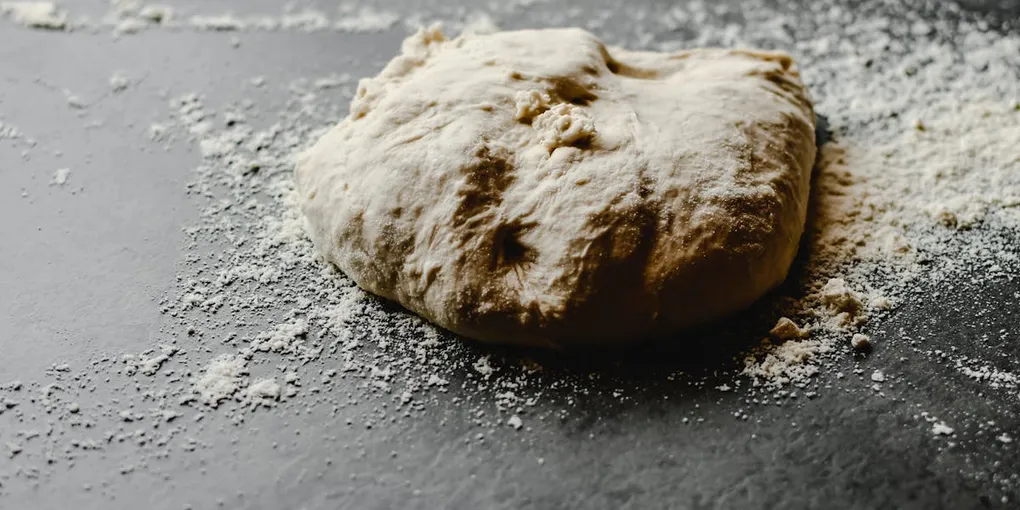
Autolyse is a rest period where flour and water are mixed together and left alone — no salt, no yeast, no kneading — before the remaining ingredients are added and mixing begins. It typically lasts 20-60 minutes.
The technique was developed by French baking professor Raymond Calvel in the 1970s as part of his campaign to reverse the damage that industrial high-speed mixers had done to French bread. His insight was simple: if flour has time to hydrate passively, the dough needs far less mechanical mixing — and less mixing means better flavor, better color, and better crumb.
Every major bread baker uses some version of autolyse. Forkish puts it bluntly: “Every fermented dough in my bakery uses the autolyse method.”
What Happens During Autolyse
Three things occur simultaneously during the rest:
1. Full Hydration
Flour proteins — glutenin and gliadin — must absorb water before they can form gluten. When you dump flour and water together and immediately start kneading, you’re trying to develop gluten in a dough that hasn’t fully hydrated. Some protein is being worked before it’s ready.
During autolyse, every flour particle absorbs water at its own pace. Whole wheat bran, which absorbs water slowly, catches up with the endosperm. By the time you start mixing, the flour is fully hydrated and gluten formation happens faster and more efficiently.
2. Passive Gluten Formation
Gluten begins forming spontaneously once flour proteins hydrate — no mechanical energy required. The glutenin and gliadin molecules find each other, form initial cross-links, and the dough starts developing structure on its own.
This is why a shaggy, rough mixture of flour and water transforms into a smooth, slightly stretchy mass after just 30 minutes of sitting on the counter.
3. Enzyme Activation
Two groups of enzymes become active:
Amylases break down damaged starch into fermentable sugars (maltose), providing food for yeast during the upcoming fermentation. This head start on sugar production means more flavor compounds will develop during bulk fermentation.
Proteases begin snipping peptide bonds in the glutenin chains, gently softening the gluten network. At this stage, the effect is beneficial — the dough becomes more extensible (easier to stretch without tearing). In longer fermentations, protease activity can become excessive, but during a 20-60 minute autolyse, it’s purely helpful.
The Benefits
Hamelman lists four specific benefits from decades of professional experience:
-
Reduces mixing time by about 50%. A dough that needs 10 minutes of kneading after a standard mix might need only 5 after an autolyse. Less mixing means less oxidation.
-
Improves crumb quality. The crumb becomes creamier in color and more open in structure. Flavor and aroma improve because carotenoid pigments (which contribute buttery color and nutty flavor) are preserved instead of being oxidized by extended mixing.
-
Improves cut quality. Dough that has autolysed scores more cleanly and opens more predictably in the oven.
-
Especially effective for: High-protein flours that tend to produce tight, resistant doughs. Sourdough, which benefits from maximizing extensibility before acid tightens the gluten. Whole wheat, where bran needs extra time to hydrate.
How Long to Autolyse
Duration varies by flour type and baker:
| Author | Duration | Notes |
|---|---|---|
| Hamelman | 20-60 minutes | Flour + water only; salt and yeast added after |
| Robertson | 25-40 min (white), 40-60 min (whole grain) | Adds leaven to the autolyse water |
| Forkish | 20-50 minutes | Flour + water only |
| Reinhart | 20 minutes | Reduces additional mixing to 2-4 more minutes |
| Buehler | 20-60 minutes | Flour + water only |
The general rule: 20 minutes is the minimum for a useful autolyse. Whole grain flours benefit from 40-60 minutes because the bran needs more time to absorb water. Going beyond 60 minutes risks excessive protease activity, especially with high-protein flours.
For standard white bread flour at 65-72% hydration, 30 minutes is the sweet spot.
The Salt Debate
All five major bread authors agree on one thing: never add salt during autolyse. Salt tightens gluten and inhibits water absorption — exactly the opposite of what autolyse is designed to achieve. Forkish states it directly: “Salt inhibits water absorption and competes with the goals of the autolyse step.”
Salt goes in after the rest, when you’re ready to begin developing the dough.
The Leaven Debate
This is where the major authors genuinely disagree:
Robertson adds the leaven to the autolyse. He disperses the leaven in the water before combining it with flour. His autolyse contains flour, water, and leaven — only salt is held back.
Hamelman, Reinhart, and Buehler add leaven after the autolyse. Their position: the autolyse should be flour and water only. Adding leaven introduces acid and active organisms that interfere with the passive hydration process.
In practice, both approaches produce excellent bread. If you’re making a long-autolyse whole wheat dough (45-60 minutes), keeping the leaven out prevents the organisms from getting too much of a head start on fermentation. For a standard 25-minute autolyse with white flour, adding the leaven during makes minimal practical difference.
When to Autolyse
Always use it for:
- Sourdough breads (helps compensate for acid’s tightening effect on gluten)
- Whole wheat breads (bran needs extra hydration time)
- High-hydration doughs (easier incorporation of water)
- Hand-mixed doughs (saves significant kneading effort)
Optional for:
- Quick yeasted breads with short bulk fermentation (the time savings may not matter if you’re mixing in a stand mixer)
- Enriched doughs where eggs and butter are added during mixing (though a pre-autolyse of just the flour and water portion still helps)
Skip it for:
- 100% rye doughs (rye has no gluten to develop — the autolyse concept doesn’t apply)
- Very short-timeline breads where every minute counts
Step by Step
-
Weigh flour and water. Use the full amount of water specified in your recipe. If the recipe calls for a specific hydration, hit it now.
-
Mix until shaggy. Combine with a spatula or your hand until no dry flour remains. The dough will look rough, unfinished, and wet. This is correct.
-
Cover and rest. 20-60 minutes at room temperature. Don’t touch it.
-
Add remaining ingredients. Salt goes in now. Leaven goes in now (unless you followed Robertson’s method and added it in step 1). Commercial yeast goes in now.
-
Mix or fold. The dough should feel noticeably smoother and more cohesive than it did before the rest. If mixing by hand, try Forkish’s pincer method — squeeze through the dough with thumb and forefinger. If using a stand mixer, you’ll need significantly less time on second speed.
What the Dough Looks Like: Before and After
The visual transformation is one of the most satisfying things in bread baking.
Before autolyse: A shaggy, rough mass. Visible flour streaks. The dough tears easily if you pull it. It feels wet and uncooperative.
After 20 minutes: The flour streaks are gone. The surface is smoother. The dough has a slight sheen. It still feels soft but it holds together when you lift it.
After 40 minutes: The dough is noticeably cohesive. You can stretch a piece without it tearing right away. It feels alive — slightly elastic, slightly extensible.
After 60 minutes (whole wheat): Bran has fully hydrated. The dough is darker, smoother, and more extensible than at 20 minutes. For whole grain breads, this extended rest makes a genuine difference in the final crumb.
Autolyse for Specific Bread Types
Baguettes: Highly recommended. Hamelman’s baguettes de tradition use a first-speed-only mix — the autolyse does most of the gluten development work.
Sourdough country bread: Essential for Robertson’s method. The 25-40 minute autolyse reduces mixing after adding salt, preserving carotenoid pigments.
Whole wheat bread: Extended autolyse (40-60 minutes) is especially beneficial. Bran needs time to absorb water — without an autolyse, the bran steals water from the gluten network during mixing.
Ciabatta: Useful for managing the extremely high hydration (80%+). After autolyse, the bassinage technique (adding remaining water gradually) is easier because the flour has already absorbed its initial water.
Autolyse vs. Long Rest vs. No-Knead
Autolyse is a specific 20-60 minute rest of flour and water only, before other ingredients are added. It’s a prep step, not a fermentation method.
Long rest refers to extended fermentation (12+ hours) where time replaces kneading. The no-knead method popularized by Jim Lahey uses this approach.
No-knead is a full method: minimal mixing, long fermentation, high hydration. Autolyse can be part of a no-knead approach, but it can also precede traditional kneading.
The point is that autolyse is compatible with every mixing method. It makes hand-mixed doughs easier, machine-mixed doughs faster, and no-knead doughs more extensible.
The Calvel Legacy
Raymond Calvel spent decades fighting for better French bread. His core argument was that the industrialization of bread — faster mixers, more additives, shorter fermentation — had stripped French bread of its flavor, color, and character. The autolyse was his most practical contribution: a simple, zero-cost technique that lets time do the work that machines do badly.
Every time you let flour and water rest together before kneading, you’re continuing that tradition.
Frequently Asked Questions
- Can I autolyse for too long?
- Yes. Beyond 60 minutes, protease enzymes can soften the gluten network excessively, making the dough slack and harder to shape. For white bread flour, 20-40 minutes is ideal. Whole wheat can go 40-60 minutes because the bran needs extra hydration time. If you need to step away longer, refrigerate the mixture to slow enzyme activity.
- Should I add salt during the autolyse?
- No. All five major bread authors agree: salt tightens gluten and inhibits water absorption, which directly counteracts what the autolyse is designed to do. Salt goes in after the rest period, when you're ready to begin developing the dough.
- Does autolyse work for rye flour?
- Rye flour contains almost no gluten-forming proteins — its structure comes from pentosans, not gluten. Since autolyse is specifically about passive gluten development, it doesn't apply to 100% rye doughs. For mixed doughs with both wheat and rye, you can autolyse just the wheat flour portion and add the rye after the rest.
- Can I autolyse overnight?
- A standard autolyse of flour and water only (no yeast, no leaven) can go several hours without problems, but an overnight rest risks excessive protease activity that weakens the gluten. If you want an overnight rest, add a small amount of yeast or leaven to create a slow fermentation instead — that's a preferment, not an autolyse, but it achieves a related goal of flavor development and hydration.