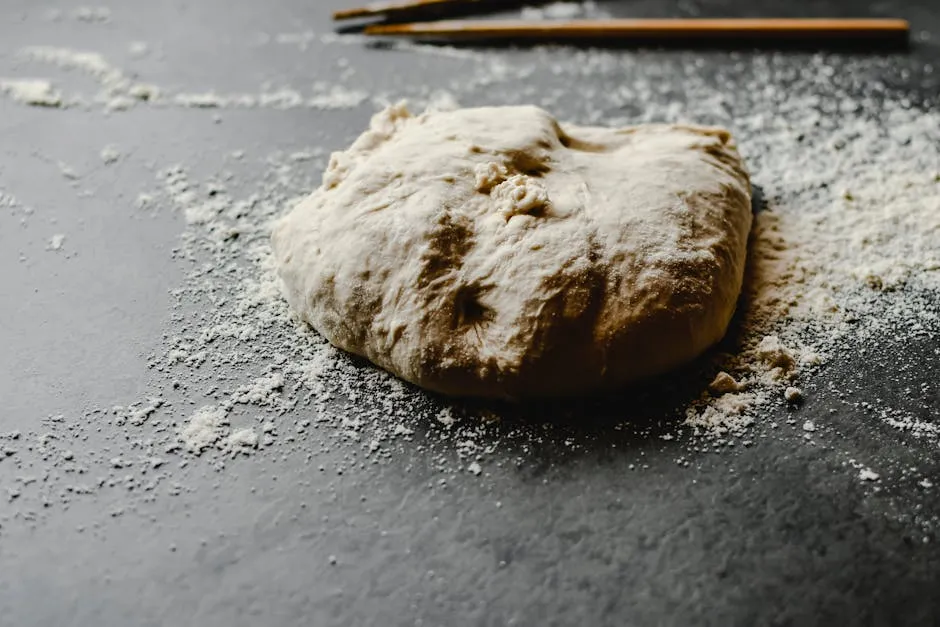
Hydration is the weight of water divided by the weight of flour, expressed as a percentage. A 5% change (e.g. 70% to 75%) produces a noticeably different dough. The same percentage feels different depending on flour protein content, whole grain percentage, and flour origin. Always adjust by feel, not just numbers.
Hydration is the single number that tells you more about a bread dough’s character than any other variable. Before you know the flour type, the yeast percentage, the fermentation schedule, or the shaping method, the hydration percentage tells you whether the dough will be stiff and smooth or slack and sticky, whether it needs kneading or folding, and roughly what the final crumb will look like.
Yet hydration is also the most commonly misunderstood number in bread baking. Home bakers follow a recipe’s hydration blindly, not understanding that the same percentage produces very different doughs depending on the flour, the humidity, and even the country the wheat was grown in.
Try It Yourself
The Baker's Bench
Calculate hydration percentages and adjust formulas with the Baker's Bench tool.
Open ToolWhat Hydration Means
Hydration is expressed as a baker’s percentage: the weight of water divided by the weight of flour, multiplied by 100.
- 700g water / 1,000g flour = 70% hydration
- 750g water / 1,000g flour = 75% hydration
- 800g water / 1,000g flour = 80% hydration
A 5% change in hydration — from 70% to 75% — sounds small but produces a noticeably different dough. That extra 50g of water per kilogram of flour shifts the dough from “workable and slightly tacky” to “slack and sticky.” The difference is dramatic in your hands.
Water’s Six Roles in Bread
- Hydrates flour proteins. Glutenin and gliadin must absorb water to form gluten. No water, no gluten network, no bread structure.
- Activates enzymes. Amylase and protease require an aqueous environment to function.
- Dissolves salt and sugar. These must be in solution for even distribution throughout the dough.
- Controls fermentation rate. Through temperature management. Water temperature is the baker’s primary lever for hitting desired dough temperature.
- Determines dough consistency. The hydration percentage defines whether the dough is stiff, workable, slack, or pourable.
- Creates steam in the oven. Water vapor drives oven spring and contributes to crust formation.
Hydration Ranges and Dough Character
Bread Hydration: What the Numbers Feel Like
Same flour, different water ratios
Stiff (55-65%)
- In your hands
- Smooth, firm, easy to handle
- The crumb
- Tight, uniform, dense
- Best for
- Bagels, sandwich loaves, pretzels
Medium (65-72%)
- In your hands
- Workable, slightly tacky, springs back
- The crumb
- Medium, even holes
- Best for
- French bread, most artisan loaves
Slack (72-80%)
- In your hands
- Sticky, stretchy, needs wet hands
- The crumb
- Open, airy, irregular
- Best for
- Sourdough country bread, ciabatta
Very Wet (80%+)
- In your hands
- Pourable, cannot hold shape alone
- The crumb
- Very open, dramatic holes
- Best for
- High-hydration ciabatta, focaccia
Crumb illustrations show texture, not an exact prediction. Flour, fermentation and handling also shape the result.
This table is a guide, not a law. The actual feel of the dough at any given hydration depends heavily on the flour.
Why the Same Percentage Feels Different
Protein Content
Higher protein flour absorbs more water. Hamelman illustrates this with a specific comparison: 11.5% protein flour at 68% hydration produces a particular consistency, but substituting 12.5% protein flour at the same 68% produces a noticeably stiffer dough. The higher-protein flour soaks up more water, leaving less free water to make the dough feel wet.
The practical rule: when switching flours, always adjust hydration based on the feel of the dough, not the recipe number. Expect to add 2-5% more water for high-protein bread flour compared to all-purpose.
Whole Wheat and Whole Grain
Whole wheat flour absorbs significantly more water than white flour because bran particles act like tiny sponges. Robertson raises hydration to 80% for his whole wheat country loaf to compensate. Forkish notes: “For a mostly whole wheat dough to be considered wet, it would probably need to have at least 82 percent hydration.”
If you’re adapting a white flour recipe for whole wheat, plan on adding 5-8% more water. And give the whole wheat flour longer to hydrate — a 40-60 minute autolyse allows the bran to fully absorb water before you assess the dough’s consistency.
American vs. French Flour
Forkish is explicit: “American wheat flour holds more water and has a different quality of gluten-forming proteins than that used by French and Italian bakers. A wet dough in France would probably contain about 5 percent less water than an American high-hydration dough.”
Why the Same Hydration Feels Different
Adjust for these variables when switching flours or following different recipes
Higher protein flour
Absorbs more water, dough feels stiffer
Lower protein flour
Absorbs less water, dough feels wetter
Whole wheat / whole grain
Bran absorbs aggressively
American vs French flour
American holds more water
High damaged starch (US flour)
Initial absorption high, then releases
Hot/humid environment
Flour pre-absorbs ambient moisture
Always adjust by feel. The recipe number is a starting point, not a destination.
jayarrbread.comDesired Dough Temperature and Water’s Role
Water temperature is your primary tool for controlling dough temperature. Since air temperature and flour temperature are fixed, the water temperature is the variable you adjust.
Target DDT for standard lean bread is 75-78 degrees F according to all authors. Enriched breads target 76-78 degrees F. Rye breads go higher: 78-85 degrees F depending on rye percentage. See the full desired dough temperature guide for the calculation formulas.
How to Adjust Hydration
Start Lower, Add More
If you’re trying a new flour or a new recipe, start at the lower end of the hydration range and reserve 5-10% of the water. Mix the dough, assess the consistency after a few minutes, then add reserved water gradually if the dough feels too stiff.
Use Feel, Not Numbers
After you’ve baked with a specific flour several times, you’ll know its hydration sweet spot by feel. The dough should be tacky but not paste-your-hands-together sticky. It should stretch easily during stretch and fold without tearing.
A good kitchen scale is essential for measuring hydration accurately.
Hydration by Bread Type: Quick Reference
| Bread | Typical Hydration | Notes |
|---|---|---|
| Bagels | 55-58% | Very stiff; stand mixer recommended |
| Sandwich bread | 60-65% | Smooth, easy to shape |
| Baguette | 65-76% | Varies widely by method |
| Artisan country loaf | 72-78% | Robertson: 75%, Forkish: 78% |
| Sourdough country | 72-80% | High end with strong flour |
| Ciabatta | 73-80%+ | Bassinage usually needed |
| Focaccia | 75-85% | Poured and spread, not shaped |
| Whole wheat loaf | 75-85% | Bran absorbs extra water |
| 100% rye | 70-80% | No gluten; pentosan-based structure |
The Hydration Misconception
Higher hydration is not automatically better. Social media has created a “hydration arms race” where bakers chase 85%, 90%, even 95% hydration doughs as if the number itself were a badge of skill.
In reality, each bread type has an optimal hydration range determined by its flour, its structure, and its intended use. A sandwich loaf at 85% hydration would be a pancake. A baguette at 60% would be a breadstick. The goal isn’t maximum hydration — it’s the right hydration for the bread you’re making.
Master the fundamentals at moderate hydration (65-72%) before chasing high-hydration heroics. The techniques scale up smoothly once the basics are solid.
Frequently Asked Questions
- What hydration should a beginner use for bread?
- Start at 65-70% hydration with bread flour. This range produces dough that's workable and slightly tacky -- easy enough to shape on a lightly floured surface, forgiving of handling mistakes, and reliably produces good bread. Build up to 75%+ hydration gradually as your shaping skills improve.
- Why is my high-hydration dough impossible to shape?
- High-hydration dough (75%+) can't be shaped like medium-hydration dough. You need different techniques: shape on an unfloured surface where stickiness provides traction (Robertson's method), use a bench scraper to handle the dough, and rely on surface tension rather than tight folds. If the dough is truly unmanageable, your hydration may be too high for your flour -- drop the hydration by 3-5% and try again.
- Does whole wheat flour need more water than white flour?
- Yes, significantly more. Bran particles in whole wheat absorb water aggressively. Robertson increases hydration from 75% (white country loaf) to 80% (whole wheat country loaf). Forkish notes that mostly whole wheat dough needs at least 82% hydration to feel wet. When adapting a white flour recipe for whole wheat, add 5-8% more water and extend the autolyse to 40-60 minutes.
- What does bread hydration affect most -- crumb or crust?
- Both, but crumb structure shows the most dramatic change. Higher hydration produces more steam inside the dough during baking, which inflates gas cells more aggressively, creating a more open, irregular crumb. Crust is also affected -- more moisture means more steam during baking, which can produce a thinner, crispier final crust.
- Should I use the same hydration when switching flour brands?
- No. Different flours absorb water differently based on protein content, protein quality, and damaged starch levels. Always adjust based on how the dough feels. Reserve 5-10% of the water when trying a new flour, add it gradually, and note the final amount that produces your target consistency.