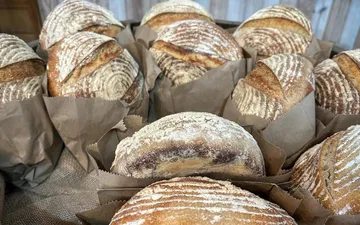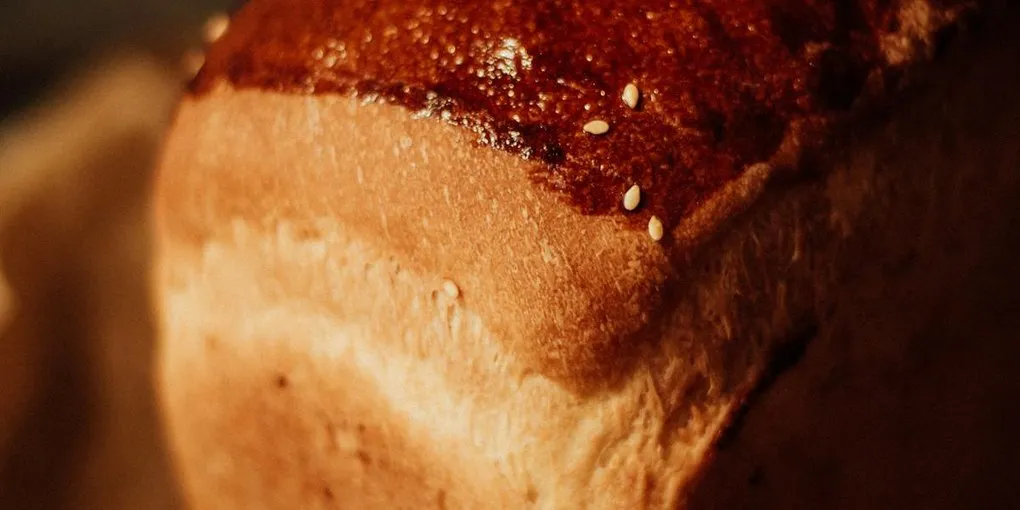
Insert an instant-read thermometer into the center of the loaf. Lean artisan breads are done at 200-210 degrees Fahrenheit; enriched breads at 185-190 degrees. Confirm with deep mahogany crust color, a hollow thump when you tap the bottom, and crackling sounds as the loaf cools. Wait 2-4 hours before slicing — the crumb is still setting.
Pulling bread from the oven too early is one of the most common mistakes home bakers make. The loaf looks golden, smells incredible, and every instinct says it is ready. But bread that appears done on the outside can still be raw and gummy at its center — and once you slice into an under-baked loaf, there is no fixing it.
The good news: you do not have to guess. There are three reliable methods to check whether bread is actually done, and using them together gives you near-certainty every time.
The Internal Temperature Test
An instant-read thermometer is the single most reliable tool for checking doneness. Insert the probe through the bottom or side of the loaf into the center of the crumb. The target temperature depends on the type of bread.
For standard artisan loaves — country bread, sourdough, baguettes — most experts recommend an internal temperature of 190-210 degrees Fahrenheit (88-99 degrees Celsius). Bread scientist Emily Buehler and Peter Reinhart both cite 180-200 degrees Fahrenheit as the done range.
Chad Robertson of Tartine pushes higher. He targets 212 degrees Fahrenheit (100 degrees Celsius) for his country loaves, reasoning that reaching the boiling point of water ensures all interior moisture has converted to steam and the crumb is fully set. This is not a contradiction — Robertson simply bakes darker and more thoroughly than the standard recommendation.
Internal Done Temperatures by Bread Type
Always measure at the center of the loaf
Enriched Breads
Brioche, challah, stollen
Sandwich Bread
White pan loaf, milk bread
Baguette
French lean baguette
Country Bread & Sourdough
Lean hearth loaves
Robertson's Target
Tartine country loaf — fully set crumb
Enriched doughs brown faster due to sugars and fats — use a thermometer to avoid overbaking the crust while the interior catches up.
jayarrbread.comFor enriched breads like brioche or challah, pull at 185-190 degrees Fahrenheit. The fats and sugars in the dough brown faster, so the crust darkens before the interior finishes. A thermometer prevents you from over-baking the exterior while waiting for the center.
For dense rye breads, the rules change entirely. High-percentage rye breads (80-100% rye) bake at lower internal temperatures for much longer times. A 100% rye Vollkornbrot bakes for 60-90 minutes and should rest 24-72 hours before slicing.
If you do not own a probe thermometer yet, it is the single best investment you can make for your baking. Ken Forkish calls it “non-negotiable.”
The Crust Color Test
Bread crust color is a function of two chemical reactions happening simultaneously at the surface: the Maillard reaction and caramelization.
The Maillard reaction begins around 250 degrees Fahrenheit at the crust surface. Amino acids (released by protease activity during fermentation) react with reducing sugars (released by amylase activity) to produce hundreds of flavor compounds and brown pigments called melanoidins. Caramelization kicks in around 330 degrees Fahrenheit — direct thermal decomposition of sugars that adds its own browning and bittersweet notes.
Both Robertson and Forkish insist on baking darker than most home bakers are comfortable with:
- Robertson: “Deep mahogany/amber all over” — thoroughly caramelized, not merely golden.
- Forkish: “I like to bake until there are spots of very dark brown for the full flavors those bits of crust have. At least once, you should try baking a loaf just shy of the point of burning it.”
Robertson identifies the most common home-baker error as pulling the loaf when it looks done. “It is not done. Go darker.”
A pale, blond crust almost always means the bread needs more time. The flavor compounds that make crust delicious — caramel, toast, roasted grain — only develop at higher temperatures and longer bake times.
The Thump Test
Tap the bottom of the loaf with your knuckles. A fully baked loaf sounds hollow — a resonant, drum-like thump. An under-baked loaf sounds dull and dense, like tapping a block of clay.
This test works because the interior structure changes as bread bakes. As starch gelatinizes and gluten coagulates between 140-176 degrees Fahrenheit, the crumb transforms from a wet mass into a set, airy network of cells. A fully set crumb resonates when struck. A still-wet interior absorbs the vibration.
The thump test is useful as a quick check, but it is less precise than a thermometer. Some very dense breads (high rye, whole wheat) never sound particularly hollow even when fully baked. Use it as confirmation alongside temperature, not as your only method.
What Happens Inside the Oven: The Temperature Progression
Understanding what happens at each temperature stage helps you understand why patience matters.
What Happens Inside Your Bread During Baking
Internal temperature progression from raw dough to finished loaf
- 01
77-122°F
Oven SpringYeast kicks into overdrive. Enzymatic activity surges. CO2 production peaks — this is your last burst of rise.
- 02
122-140°F
Yeast DeathYeast reaches its thermal death point around 140°F and dies. The rise stops permanently.
- 03
140-158°F
Structure Begins SettingWheat starch begins gelatinizing. Gluten starts coagulating. Amylase reaches maximum activity.
- 04
158-176°F
Structure Locks InGluten coagulation completes. The dough structure is now permanent. No amount of cooling will fix bread pulled before this point.
- 05
176-194°F
Starch Fully SetStarch gelatinization finishes. Enzyme activity ceases. The crumb is solidifying.
- 06
194-212°F
Maximum Internal TempResidual moisture evaporates. The evaporative ceiling caps internal temperature at 212°F while crust continues climbing.
Surface Reactions (250°F+)
- Maillard reaction: amino acids + sugars produce brown pigments and hundreds of flavor compounds
- Caramelization (330°F+): direct sugar decomposition adds additional browning and bittersweet notes
Internal temperature is capped at 212°F by evaporation. Crust surface temperature climbs much higher, driving the browning reactions.
jayarrbread.comThe crumb cannot fully set until gluten coagulation completes around 158-176 degrees Fahrenheit. Pulling bread before this point means the structure is literally not finished forming. No amount of cooling will fix a crumb that never set.
Confirmation: The Cooling Crust Sings
One of the most satisfying sounds in baking: a loaf fresh from the oven crackling and popping on the cooling rack. Robertson describes how the crust “sings” as it cools — a series of faint crackles as the rigid crust contracts faster than the softer interior.
This is not a test you can use to decide when to pull the loaf — it happens after the fact. But it is a reliable confirmation that the bake was right. The crust must be thoroughly set and dry for these sounds to occur. If your bread does not sing, it may have been under-baked or pulled too soon for full crust development.
Why Cooling Matters as Much as Baking
The bread is not truly done when it leaves the oven. Inside, the crumb is still gelling. The starches that gelatinized during baking need time to set into their final structure as the loaf cools. Cutting before cooling is complete compresses the still-gelling starch, producing gummy, dense texture even if the bake was perfect.
Robertson recommends waiting 2-4 hours before slicing a country loaf. Forkish is less conservative — he says 20 minutes minimum. For sourdough, Jeffrey Hamelman recommends 24-48 hours. For rye bread, the wait extends to 24-72 hours depending on rye percentage. For tips on keeping your bread fresh once it is finally sliced, see the bread storage guide.
If you cut into a loaf and see a gummy or wet-looking interior, the problem might not be your bake at all. It might be your impatience.
Quick Reference: Doneness by Bread Type
| Bread Type | Target Internal Temp | Crust Color | Cooling Time |
|---|---|---|---|
| Lean artisan (country, sourdough) | 200-210°F | Deep mahogany | 2-4 hours |
| Baguette | 200-205°F | Dark golden-brown | 30-60 minutes |
| Sandwich bread | 190-195°F | Golden brown | 1-2 hours |
| Enriched (brioche, challah) | 185-190°F | Medium brown | 1-2 hours |
| Whole wheat | 200-205°F | Dark brown | 2-4 hours |
| High-rye (80%+) | 200°F | Dark, crackled | 24-72 hours |
Common Mistakes
Relying only on time. Recipe times are estimates based on a specific oven at a specific temperature. Your oven is different. Use temperature and color instead.
Opening the oven door too often. Every time you open the door, you lose 25-50 degrees of oven heat and release all your steam. Check once at the earliest expected done time, then close the door and check again in 5 minutes if needed.
Not verifying oven temperature. Most home ovens are inaccurate — some by 25 degrees or more. An oven thermometer costs a few dollars and eliminates a major variable. If your bread consistently under-bakes or over-browns, calibrate first.
Judging by the top only. The bottom and sides of the loaf tell you more than the top. Flip the loaf and check: the bottom should be firm, dark, and hollow-sounding. Pale, soft bottoms mean more time is needed. If you are troubleshooting a recurring problem, start here.
The Bottom Line
Use a thermometer. Go darker than you think. Wait before you slice. Those three principles will fix 90% of the under-baked bread problems that plague home bakers. The thermometer gives you the data, the crust color gives you the flavor, and patience gives you the crumb.
Your bread deserves to finish what it started.
Frequently Asked Questions
- What temperature should bread be when it is done baking?
- Most artisan breads are done at an internal temperature of 190-210 degrees Fahrenheit. Lean loaves like sourdough and country bread should reach 200-210 degrees Fahrenheit, while enriched breads like brioche and challah are done at 185-190 degrees Fahrenheit. The fats and sugars in enriched doughs cause faster browning, so the crust darkens before the interior finishes.
- Can you tell if bread is done without a thermometer?
- Yes, but it is less reliable. Tap the bottom of the loaf — a fully baked loaf sounds hollow, while an under-baked loaf sounds dull and dense. Check the crust color — it should be deep brown, not pale gold. And listen for the crust to crackle and sing as it cools on the rack. Using all three together gives reasonable confidence, but a probe thermometer removes the guesswork entirely.
- Why is my bread gummy even though it looks done?
- Two common causes. First, the loaf may be under-baked — the interior never reached the 140-176 degrees Fahrenheit range where starch fully gelatinizes and gluten coagulates. Second, you may have sliced it too soon. The crumb continues setting as the loaf cools, and cutting before it finishes compresses the still-gelling starch into a gummy texture. Wait at least 2 hours for large loaves.
- How long should bread cool before slicing?
- It depends on the bread. Sandwich bread needs 1-2 hours. Country loaves and sourdough need 2-4 hours. Dense rye breads need 24-72 hours depending on the rye percentage. Cutting too early is one of the most common mistakes — the interior is literally still setting its structure as it cools.
- Should bread be dark brown when done?
- For lean artisan bread, yes. Chad Robertson describes the target as deep mahogany/amber all over, and Ken Forkish recommends baking until there are spots of very dark brown. The flavor compounds that make great crust — from the Maillard reaction and caramelization — only develop at higher temperatures with longer bake times. Pale crust means under-developed flavor.