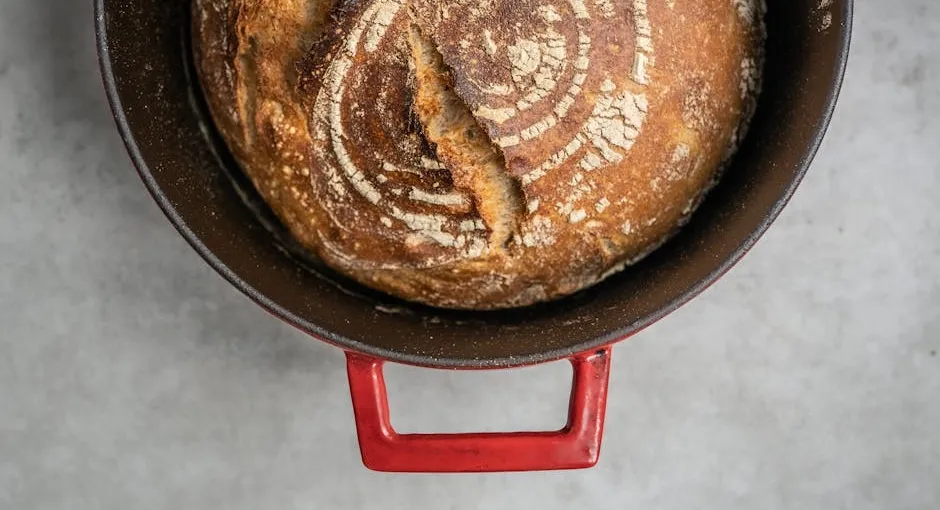
A sourdough starter is a stable microbial ecosystem living in a jar of flour and water. It looks primitive — a bubbly paste that smells somewhere between yogurt and beer. But the biology inside is sophisticated: multiple species of wild yeast and bacteria coexist in a self-regulating community, each occupying a metabolic niche that doesn’t compete directly with the others.
Understanding this biology answers every question you’ve ever had about why your starter behaves the way it does — why it’s sluggish in winter, why it smells different after a feeding, why it can survive weeks in the fridge, and why the popular “San Francisco sourdough culture” mythology is mostly wrong.
The Organisms Inside Your Starter
Lactic Acid Bacteria (LAB)
The bacteria are the dominant organisms in a mature sourdough starter. They produce the organic acids — lactic and acetic — that give sourdough its flavor and preservative properties.
The most commonly identified species is Fructilactobacillus sanfranciscensis (formerly Lactobacillus sanfranciscensis), named after San Francisco but found in sourdoughs worldwide. This species prefers maltose as a food source, which is important: it means the bacteria and yeasts aren’t fighting over the same sugars.
LAB in sourdough fall into two categories:
Homofermentative LAB produce primarily lactic acid. Their metabolism is straightforward: sugar in, lactic acid out.
Heterofermentative LAB produce both lactic acid and acetic acid, plus CO2 and ethanol. They’re metabolically versatile, and their output ratio shifts with environmental conditions — temperature, hydration, and fermentation time all influence whether they produce more lactic or acetic acid.
Wild Yeasts
The yeasts in sourdough are different species from commercial baker’s yeast (Saccharomyces cerevisiae), though S. cerevisiae can also be found in some sourdough cultures.
Common wild yeasts include:
- Kazachstania exigua — prefers maltose
- Kazachstania humilis — prefers maltose
- Saccharomyces cerevisiae — when present, prefers glucose (leaving maltose available for bacteria and other yeasts)
The yeast population produces CO2 (the leavening gas) and ethanol (a flavor precursor). Wild yeasts are generally less vigorous than commercial S. cerevisiae, which is why sourdough ferments slower than yeasted dough — and why Forkish warns: “Commercial yeast is more vigorous than wild yeasts, so adding even a small amount of packaged yeast to start or to maintain a levain culture will ultimately result in the commercial yeast dominating and eventually starving out the wild yeasts.”
Never add commercial yeast to the starter culture itself. If you want to augment rise in a specific bake, add the commercial yeast to the final dough only.
The Geography Myth
One of the most persistent myths in bread baking is that sourdough cultures are tied to their geographic origin — that San Francisco sourdough gets its distinctive flavor from organisms unique to the Bay Area air.
Hamelman is direct: the organisms in a sourdough culture are NOT tied to geography. They are determined by the baker’s maintenance practices, the flour used, and the ambient environment.
The flour matters more than the air. Whole wheat and rye flour carry more diverse microbial populations on their surfaces than white flour. This is why Forkish uses whole wheat flour in his starter feedings and why Hamelman starts his levain with whole rye.
Lactic vs. Acetic Acid: The Flavor Equation
The flavor of sourdough bread — mild and creamy versus sharp and tangy — is determined by the ratio of lactic to acetic acid in the culture. You control this ratio through maintenance decisions.
For milder bread: Keep your starter at 100% hydration, feed in a warm spot (75-80 degrees F), and don’t let it over-ferment before baking. Use Robertson’s “young leaven” approach — build your leaven with just a tablespoon of mature starter and use it before it reaches peak acidity.
For tangier bread: Maintain a stiffer starter (60% hydration), ferment at cooler temperatures, and extend fermentation time. Cold retarding the shaped loaves overnight will further increase acetic acid production.
The Float Test
Robertson’s float test is the standard readiness indicator for leaven.
Drop a small spoonful of leaven into a glass of water:
- Floats: Ready. The leaven has produced sufficient CO2 to be buoyant. Proceed with your dough.
- Sinks: Not ready. Give it more time. Do not proceed.
Note: the float test tells you about your leaven (the portion built for a specific bake), not the overall health of your starter culture. A healthy starter that’s hungry (past peak) will sink because most of its gas has already escaped.
Robertson’s “Young Leaven” Concept
This is Robertson’s most distinctive contribution to sourdough technique. He builds a leaven by seeding just 1 tablespoon of mature starter into 200g flour + 200g water, then uses the leaven when it passes the float test — typically 8-12 hours later, but before it has fully matured.
Why young leaven? It gives lift (yeast is active) without sourness (acid hasn’t accumulated). The result is bread with complex wheat flavor and subtle fermented character, not aggressive tang. This is why Tartine bread doesn’t taste “sourdough” despite being naturally leavened.
Creating a Starter from Scratch
Both Hamelman and Forkish provide detailed methods. The process takes 5-7 days regardless of method. For step-by-step instructions, see the how to make a sourdough starter guide.
The first few days are chaotic. Leuconostoc bacteria (which produce off-flavors) dominate initially before being outcompeted by lactobacilli as the pH drops. The off-putting smell around days 2-3 is normal. Push through it.
Ongoing Maintenance
Recognizing Health
Good signs: Pleasantly sour, yeasty, slightly alcoholic smell. “A hot rush of alcoholic perfume” when you lift the lid (Forkish). Gassy, weblike internal structure. Reliable doubling within 6-8 hours of feeding.
Bad signs: Nail polish remover smell (ethanol dominance — over-fermented, needs feeding). Strong vinegar smell (acetic acid dominance — too sour, needs more frequent feeding or warmer environment). No activity after feeding (culture may be dead).
A pink or orange discoloration indicates contamination and the starter should be discarded. Gray liquid on top (hooch) is normal — stir it back in or pour it off, feed the starter, and it will recover.
For detailed maintenance routines, see the sourdough feeding schedule article.
Storage and Revival
Short-term (daily baking): Room temperature, feed daily.
Long-term (up to 1 month): Store approximately 500g levain in a nonperforated plastic bag, coated with a film of water, refrigerated.
Two-step restoration from fridge:
- Night before baking: remove from fridge, retain 200g, discard rest. Feed 400g white + 100g whole wheat + 400g water at 95 degrees F. Rest in a warm spot overnight.
- Morning of baking: feed again (discard all but 100g, same feeding). Wait 6-8 hours. Use when ripe.
Starters can also be dried (spread thin on parchment, dry completely, store in a sealed jar) for months-long or years-long storage as an insurance backup.
The Connection to Bread Quality
Everything about how you maintain your starter directly affects the bread it produces. Feeding frequency controls vigor. Hydration controls acidity. Flour choice controls microbial diversity. Temperature controls speed and balance.
The starter isn’t a mysterious, temperamental pet. It’s a predictable biological system that responds to inputs in well-understood ways. Feed it consistently, maintain it at a reasonable temperature, and it will produce reliable, flavorful bread for years. Start your beginner sourdough bread journey once your starter is reliably active.
Frequently Asked Questions
- Does the location where you make a sourdough starter affect its flavor?
- No. This is one of the most persistent myths in bread baking. The organisms in a sourdough culture are determined by the baker's maintenance practices, the flour used, and the ambient environment -- not the city. Hamelman is explicit: the organisms are NOT tied to geography.
- Why does my sourdough starter smell like nail polish remover?
- The acetone or nail polish remover smell indicates ethanol dominance from over-fermentation. The yeast has consumed all available food and is producing stress metabolites. The fix is simple: feed the starter. Discard all but a small portion (50-100g), add fresh flour and water, and allow it to ferment normally. This is not a sign that the starter is dead -- just hungry.
- Can I add commercial yeast to my sourdough starter to make it stronger?
- Never add commercial yeast to the starter culture itself. Forkish's warning is unambiguous: commercial yeast is more vigorous than wild yeasts, and adding even a small amount will ultimately result in the commercial yeast dominating and starving out the wild yeasts. If you want a faster rise for a specific bake, add commercial yeast to the final dough -- not to the starter.
- How do I make my sourdough less sour?
- Three adjustments: keep your starter at 100%+ hydration (liquid cultures favor mild lactic acid over sharp acetic). Use the starter when young -- build your leaven and use it when it passes the float test, before peak acidity (Robertson's young leaven approach). Keep fermentation temperatures warm (75-85 degrees F favors lactic acid).
- How long does it take to create a sourdough starter from scratch?
- Five to seven days for a usable starter, though peak performance may take 2-3 weeks of regular feeding. The first few days produce unpleasant off-smells as undesirable bacteria (Leuconostoc) dominate temporarily. By day 4-5, lactic acid bacteria have established dominance and the culture stabilizes. The starter is ready to bake with when it reliably doubles in volume within 6-8 hours of feeding.