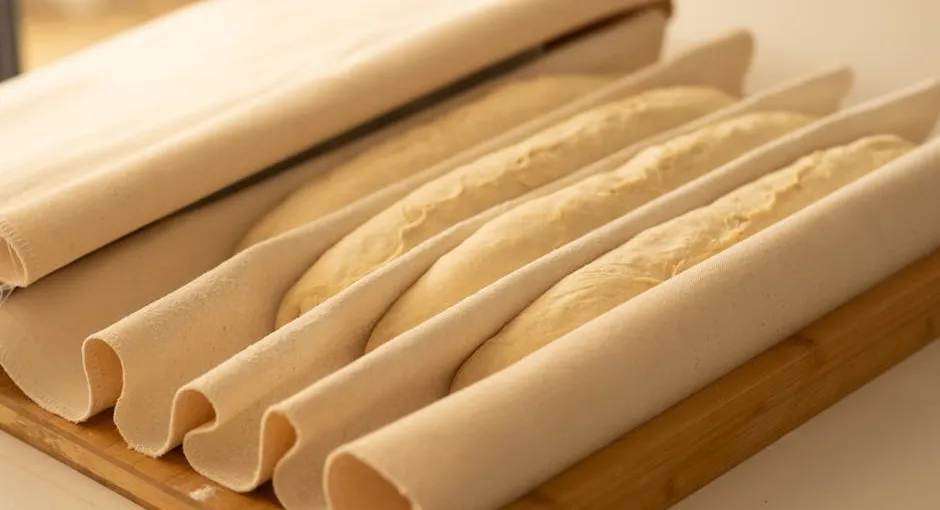
A banneton (also called a brotform or proofing basket) holds shaped dough during its final rise. Without one, a high-hydration sourdough loaf flattens into a disc during proofing. The basket provides structural support while the dough develops the gas pressure it needs for oven spring. It also wicks moisture from the dough surface, which helps form the taut skin that holds the loaf’s shape in the oven.
Robertson, Forkish, and Hamelman all use proofing baskets as standard equipment. Robertson lines his with a mixture of rice flour and wheat flour — the rice flour prevents sticking far better than wheat flour alone. Hamelman uses floured linen liners for most shapes and notes that bannetons are essential for any free-form loaf that proofs longer than 90 minutes.
Banneton Materials: Rattan vs Wood Pulp
Natural Rattan (Cane)
Rattan bannetons are the traditional choice. They are handwoven from natural cane, breathable, and excellent at wicking moisture from the dough surface. After several uses, the flour works into the weave and creates a natural nonstick surface that improves with age. The spiral pattern of the weave imprints a distinctive ring pattern on the finished loaf.
Pros: Best moisture wicking. Improves with use. Beautiful spiral pattern on bread. Lightweight. Durable with proper care (years of heavy use).
Cons: Requires break-in — the first few uses may stick. Can harbor mold if stored damp. Harder to clean (no soap, no dishwasher). Dough can catch in the weave if the banneton is not properly floured.
Wood Pulp (Pressed Fiber)
Wood pulp bannetons are molded from compressed wood fiber. They have a smoother interior surface than rattan and generally release dough more easily from the first use. They do not imprint the classic spiral pattern — the finished loaf has a smooth, flour-dusted surface instead.
Pros: Easier release from day one — no break-in period. Smoother surface means less catching. Can be lightly wiped with a damp cloth. Good option for very wet doughs (80%+ hydration) that tend to stick in rattan.
Cons: Less moisture wicking than rattan. No spiral pattern on the bread. Less durable — the fiber eventually degrades and becomes rough. Heavier than rattan. Cannot be washed with water (same mold risk).
The Verdict
For most bakers, rattan is the better choice. The moisture wicking is noticeably superior, the spiral pattern looks great, and the break-in period is short — three or four well-floured bakes and the basket is seasoned. If you bake very high-hydration doughs and fight with sticking, try a wood pulp banneton or use a linen liner in your rattan basket.
Sizes and Shapes
| Banneton Size | Dough Weight | Baked Loaf | Shape |
|---|---|---|---|
| 8-inch round | 500-700g | Small boule | Boule |
| 9-inch round | 700-1,000g | Standard boule | Boule |
| 10-inch round | 900-1,200g | Large boule | Boule |
| 10-inch oval | 700-1,000g | Standard batard | Batard |
| 12-inch oval | 900-1,300g | Large batard | Batard |
The 9-inch round is the most versatile single banneton. It fits Robertson’s country loaf formula (roughly 900g dough), Forkish’s standard recipes, and most online sourdough recipes without modification. If you buy one banneton, make it a 9-inch round.
If you bake batards (oval loaves), add a 10-inch oval. The slightly longer shape gives the dough room to spread without pressing against the sides.
The Best Bannetons to Buy
Breadtopia Rattan Banneton — Best Overall
Breadtopia Round Rattan BannetonBreadtopia’s rattan bannetons are America’s Test Kitchen’s top pick. They are well-constructed from tight-weave cane, come with matching cotton liners, and hold up through years of use. The 9-inch round (their standard size) fits a standard sourdough loaf perfectly.
Pros: ATK-recommended. Tight, consistent weave. Cotton liner included. Good price ($15-20 for basket + liner). Available in round and oval.
Cons: Like all rattan, needs break-in. The included liner is adequate but could be heavier-weight fabric.
King Arthur Baking Banneton — Best for Beginners
King Arthur Baking BannetonKing Arthur’s banneton comes with a fabric liner and detailed instructions for use and care. It is slightly more expensive than Breadtopia’s but includes better documentation for bakers who have never used a proofing basket before. The cane quality is excellent.
Pros: Best instructions included. High-quality cane. Liner included. King Arthur customer service is outstanding if you have issues.
Cons: More expensive ($20-28). Only available in one size (9-inch round) directly from King Arthur.
Flourside Wood Pulp Banneton — Best for Wet Doughs
Flourside Wood Pulp BannetonIf sticking is your nemesis, Flourside’s wood pulp bannetons release even the wettest doughs without a liner. The smooth interior surface does not grab high-hydration dough the way rattan can. No break-in period.
Pros: Zero sticking from first use. No liner needed. Great for 80%+ hydration doughs (ciabatta, focaccia proofed in a basket).
Cons: No spiral pattern on bread. Less durable than rattan (the fiber degrades over 1-2 years of regular use). Heavier. Less charming.
Budget Option: Amazon Multi-Packs
Banneton Proofing Basket Set of 2Several brands (Kook, Superbaking, and others) sell 2-packs of rattan bannetons with liners for $15-22 total. Quality varies, but most are adequate for home use. If you bake two loaves at a time and want matching baskets without spending $40+, these are fine.
Pros: Low cost per basket. Often include liners, a lame, and a bench scraper as part of a “starter set.” Two baskets let you proof both loaves simultaneously.
Cons: Weave quality is inconsistent. Looser weave means more sticking during break-in. Accessories included are usually low quality (buy a proper lame separately).
How to Season and Use a New Banneton
First use: Mist the interior lightly with water using a spray bottle. Dust generously with a 50/50 blend of rice flour and wheat flour (Robertson’s method). The rice flour is critical — it is far more resistant to hydration than wheat flour alone, which means it stays slippery instead of absorbing moisture and turning into paste.
Loading: After shaping your loaf, place it seam-side up in the floured banneton. (The seam will be on the bottom after you flip the loaf out.) Cover with a damp towel or place the whole basket inside a plastic bag to prevent the dough surface from drying out during the proof.
Releasing: Invert the banneton over a parchment-lined peel or cutting board. The loaf should release cleanly. If it sticks, gently run a flexible bench scraper around the edges. After 3-4 uses with rice flour blend, the basket develops a flour layer in the weave that makes releasing effortless.
After use: Let the banneton dry completely at room temperature with any remaining flour left inside. Do not wash with water or soap. Once dry, knock out excess flour and store in a dry place. The accumulated flour is not unsanitary — it is the seasoning that makes the basket work better over time.
If mold develops: Sun-dry the basket for a full day, then brush out the mold with a stiff brush. If mold persists, a light spray of vinegar solution (1:3 vinegar to water) followed by complete sun-drying usually solves it.
Banneton vs Towel-Lined Bowl
You do not strictly need a banneton. A mixing bowl lined with a well-floured kitchen towel does the same job. The towel wicks moisture, the bowl holds the shape, and the flour prevents sticking. Many bakers (including Forkish in his early recipes) use this method successfully.
The advantage of a dedicated banneton is consistency. The shape is reliable, the flour layer builds up over time, and the moisture wicking is more even than fabric. But if you are baking your first loaf and wondering whether you need to buy a banneton before you start — you do not. A towel and a bowl will work.
Flour Blends for Bannetons
The flour you dust into your banneton matters more than most bakers realize.
Rice flour + wheat flour (50/50). Robertson’s recommendation and the gold standard. Rice flour is far more resistant to hydration than wheat flour — it stays powdery and slippery even against wet dough. Wheat flour alone absorbs moisture from the dough surface and can turn into a sticky paste, especially with high-hydration doughs.
Rice flour alone (100%). Even more nonstick than the blend. Some bakers use straight rice flour for extremely wet doughs (80%+ hydration). The downside is that the spiral pattern is less visible on the finished loaf because rice flour does not brown the same way wheat flour does.
Wheat flour alone. Works for drier doughs (65-70% hydration) but tends to absorb moisture and stick with wetter formulas. If you only have wheat flour, apply a heavier coat and consider using a linen liner as extra insurance.
Semolina or cornmeal. Some bakers dust with semolina or fine cornmeal for a different visual effect. These are coarser than flour and create a more textured surface. They do not wick moisture as well as rice flour.
Caring for Multiple Bannetons
If you bake two loaves at a time (which is what most Dutch oven recipes produce — two pieces from one batch of dough), you need two bannetons. They do not need to match. A 9-inch round and a 10-inch oval gives you the flexibility to shape either boules or batards from the same batch.
Store bannetons stacked inside each other when not in use. They nest naturally due to their tapered shape. Keep them in a dry cabinet, never in a sealed container or plastic bag — trapped moisture is the enemy.
If you bake infrequently (less than weekly), knock out all loose flour before storing to prevent it from absorbing ambient humidity. When you return to baking, dust with fresh flour before loading your shaped dough.
For the full list of what you need (and what you can skip), see our Complete Bread Baking Equipment Guide. To learn how to score bread after it comes out of the banneton, see our scoring guide.
Frequently Asked Questions
- Can I put my banneton in the refrigerator for overnight proofing?
- Yes. Place the dough in the floured banneton, cover it tightly with plastic wrap or slide the basket into a large plastic bag, and refrigerate overnight. The cold retard slows fermentation nearly to zero while continuing flavor development. When ready to bake, take the banneton from the fridge, invert the dough directly onto parchment, score, and bake. No warming needed — cold dough goes straight into the preheated Dutch oven.
- How do I prevent dough from sticking to a new banneton?
- Use a 50/50 blend of rice flour and wheat flour, applied generously. Rice flour resists hydration far better than wheat flour alone, so it stays powdery instead of turning gummy. For the first three or four uses, dust more heavily than you think you need. The flour will build up in the weave and create a natural nonstick surface. If sticking persists, use a linen liner as a barrier.
- Do I need a liner in my banneton?
- Not necessarily. Many bakers prefer the unlined basket because the spiral weave imprints a beautiful pattern on the loaf. Liners make release easier (especially during break-in) and are recommended for very wet doughs or enriched doughs that contain butter or oil. The choice is mostly aesthetic — bread quality is the same either way.
- How long do rattan bannetons last?
- With proper care (no water washing, complete drying between uses, dry storage), a rattan banneton lasts 5-10 years of regular home use. Professional bakeries that use them daily may replace them every 1-2 years. The most common cause of premature failure is mold from storing the basket while still damp.