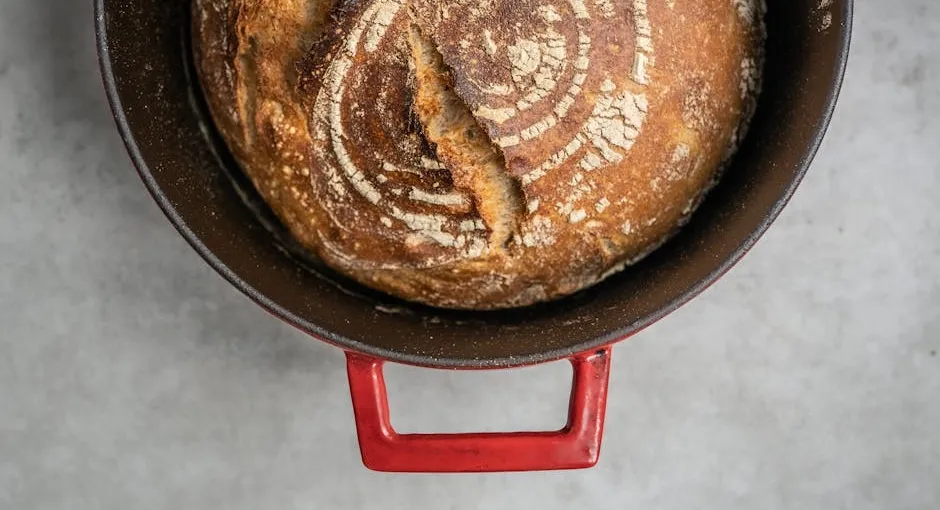
Making a sourdough starter from scratch takes 5-14 days, depending on the method. Forkish’s approach takes 5 days with daily feedings and a full kilogram of flour discarded along the way. Hamelman’s method takes about a week. Both require daily attention and produce a period of genuinely unpleasant smells before the culture stabilizes.
Buying a starter skips all of that. A purchased starter arrives as either a live, active culture or a dried culture that reactivates with feeding. Within 1-3 days of arrival, you can be baking bread.
There is no performance disadvantage to a purchased starter. As Hamelman notes, the organisms in a sourdough culture are determined by the baker’s maintenance practices, the flour used, and the environment — not by geography or lineage. A starter shipped from Vermont and fed with your flour in your kitchen will, within a few weeks, develop a microbial profile unique to your environment. The “San Francisco sourdough” myth — that starters from San Francisco produce uniquely sour bread because of local bacteria — has been thoroughly debunked. Your maintenance routine is what shapes the culture.
What to Look For in a Purchased Starter
Live vs dried. Live starters arrive as active, wet culture in a jar. They are ready to feed and bake with almost immediately (1-2 feedings). Dried starters arrive as a dehydrated flake or powder that must be rehydrated and fed for 3-7 days before reaching baking strength. Live is faster but more perishable during shipping. Dried is more durable but slower to activate.
Culture type. Most purchased starters are wheat-based, maintained at 100% hydration (equal parts flour and water by weight). This is the most versatile format — you can adjust to any hydration or flour type from this baseline. Some sellers offer rye-based starters, which are naturally more robust (Hamelman: rye cultures require only 20g whole-rye flour per day to maintain).
Shipping conditions. Live cultures are perishable. In hot weather (summer shipping), a live starter can over-ferment and weaken during transit. Dried starters are immune to shipping conditions. If you are ordering in July, dried is safer.
No commercial yeast. Forkish issues a critical warning: “Commercial yeast is more vigorous than wild yeasts, so adding even a small amount of packaged yeast to start or to maintain a levain culture will ultimately result in the commercial yeast dominating and eventually starving out the wild yeasts.” Any reputable seller ships pure wild culture with no commercial yeast added.
The Best Sourdough Starters to Buy
King Arthur Fresh Sourdough Starter — Best Overall
King Arthur Fresh Sourdough StarterKing Arthur ships a live, active sourdough starter that has been maintained continuously for over a century. It arrives as a wet culture in a sealed container, ready for its first feeding. The starter is vigorous — most buyers report strong activity after just 1-2 feedings.
King Arthur recommends that no more than 10 days elapse between when the starter ships and when you give it its first feeding. They also include clear instructions for ongoing maintenance.
Pros: Live and active on arrival. Backed by King Arthur’s customer support (they will help you troubleshoot). Consistent quality. Comes with clear feeding instructions. One of the most established purchased starters available.
Cons: Must be fed within days of arrival — time-sensitive. Shipping is faster and more expensive to ensure freshness. Temperature-sensitive during summer shipping. About $10-12 for the starter alone; the full kit with crock, scale, and spatula is $40-50.
Cultures for Health Sourdough Starter — Best Dried Option
Cultures for Health Sourdough StarterCultures for Health sells dried sourdough starter cultures in several varieties, including San Francisco-style, whole wheat, and rye. Their Rapid Sourdough Starter activates in as little as 72 hours. The dried format is shelf-stable, ships well in any weather, and has a long shelf life before activation.
Pros: Shelf-stable — no rush to activate. Ships safely in any weather. Multiple culture varieties available. The Rapid Starter activates faster than traditional dried starters. Good instructions included. About $15-20.
Cons: Takes 3-7 days to reach full baking strength (longer than a live starter). The first few days of activation can be slow and uncertain — is it working, or is it dead? Less vigorous out of the gate than King Arthur’s live culture. You are nurturing a dried culture back to life, which requires patience.
Breadtopia Sourdough Starter — Best Rye Option
Breadtopia Sourdough StarterBreadtopia sells a live sourdough starter maintained on organic whole wheat and rye flour. Rye flour naturally supports a more vigorous culture because bran and germ provide more accessible sugars and minerals for the organisms (Forkish’s rationale for including whole wheat in his levain feedings applies doubly to rye). The starter arrives active and ready to feed.
Pros: Rye-based culture is naturally robust and fast-recovering. Live and active. Organic flour used in maintenance. Good value ($8-12). Breadtopia also sells matching bannetons and lames.
Cons: Ships as a small quantity — you need 2-3 feedings to build up to baking volume. Live culture is temperature-sensitive in transit. Less brand recognition than King Arthur.
Etsy / Local Bakery Starters — Best for Local Culture
Many home bakers and small bakeries sell sourdough starters on Etsy or at farmers markets. These range from live cultures in mason jars to dried flakes in ziplock bags. Quality varies enormously.
Pros: Often very affordable ($5-10). You may get a starter that has been maintained by an experienced baker for years or decades. Supporting small sellers. Some offer unique varieties (whole wheat, spelt, ancient grain).
Cons: No quality control. No customer support. Shipping practices vary. Some sellers make dubious claims about their starter’s provenance or unique properties. Read reviews carefully.
What to Do When Your Starter Arrives
For Live Starters
Day of arrival: Open the container. The starter should smell pleasantly sour — like yogurt or mild cheese. Discard all but about 50g. Feed with 100g flour (all-purpose or bread flour) and 100g water at 78-80°F. Cover loosely and leave at room temperature.
12-24 hours later: The starter should show signs of activity — bubbles on the surface, slight rise, sour smell. Discard all but 50g again and repeat the feeding. If no activity, repeat the feeding and wait another 24 hours. Starters stressed by shipping can take 2-3 feedings to recover.
Ready to bake: When the starter reliably doubles in volume within 6-8 hours of feeding, it is ready. Robertson’s float test confirms it: drop a small spoonful into water. If it floats, the culture is producing enough CO2 to leaven bread.
For Dried Starters
Day 1: Combine the dried culture with 50g flour and 50g water at 80°F. Stir well, cover loosely, and leave at room temperature.
Days 2-3: You may see minimal activity. This is normal — the organisms are rehydrating and multiplying. Feed daily: discard all but 50g, add 100g flour and 100g water.
Days 4-7: Activity should increase — more bubbles, faster rise, more sour smell. Continue daily feedings. When the culture doubles in 6-8 hours, it is ready.
Ongoing Maintenance
Once your purchased starter is active, maintain it the same way you would maintain one made from scratch. Forkish’s single daily feeding is the simplest approach: retain 100g of mature starter, add 400g white flour + 100g whole wheat flour + 400g water at 85-90°F.
For a lighter maintenance schedule, Robertson’s approach works: retain just 1 tablespoon of mature starter, feed with about 200g flour and 200g water.
If you bake less than weekly, store your starter in the refrigerator and feed it once a week. To revive for baking, take it out the night before and give it two room-temperature feedings about 12 hours apart.
What Healthy Looks Like
All five major bread authors describe the same indicators of a healthy, active starter.
Good signs: A pleasantly sour, yeasty smell — like yogurt or mild cheese (Robertson). “A hot rush of alcoholic perfume” when you lift the lid (Forkish). A gassy, weblike internal structure when you pull some out with a spoon. The surface should dome upward after feeding, and the culture should reliably double or triple in 6-8 hours at room temperature.
Warning signs: A nail polish remover smell means the culture has over-fermented and is hungry — feed it. A strong vinegar smell means acetic acid is dominating, usually because the culture is too cool or too stiff — feed with warmer water and maintain at 75-80°F. No activity at all after feeding (no bubbles, no rise) after 24 hours may indicate the culture is dead — give it three more feedings before giving up.
The float test (Robertson). Drop a small spoonful of starter into a glass of water. If it floats, the culture is producing enough CO2 to be buoyant, which means it is ready to leaven bread. If it sinks, give it more time. This is the simplest go/no-go test for determining if your starter is ready to bake with.
Buying vs Building: The Real Trade-Off
The honest trade-off is not about quality. A purchased starter and a homemade starter, both maintained identically, will produce identical bread after a few weeks. The trade-off is time and experience versus convenience.
Building a starter from scratch teaches you something. You watch the culture go through a predictable arc — initial burst of random bacteria activity (days 1-2), a dead zone where nothing seems to happen (days 3-4), the slow emergence of stable wild yeast and lactic acid bacteria (days 5-7+). You learn to read the culture. You develop intuition about when it is hungry, when it is peaking, and when it is over-fermented.
Buying a starter skips all of that learning. You get a working culture immediately, which means you can focus on learning the other skills (mixing, shaping, scoring, baking with steam) without also managing a finicky new culture. For most beginners, this is the smarter path — there are already enough variables to manage.
If you do want to build from scratch, the experience is rewarding. But it is not required. The bread does not know how its leaven was born.
Long-Term Storage
Forkish provides the most detailed storage method for extended breaks from baking. Store about 500g of levain in a nonperforated plastic bag, coated with a film of water, refrigerated. It keeps for up to one month.
To revive after cold storage, use a two-step restoration: the night before baking, discard all but 200g, feed with 400g white flour + 100g whole wheat + 400g water at 95°F. Let it rest overnight in a warm spot. The morning of baking, feed again (discard all but 100g, same proportions), wait 6-8 hours, and use when ripe.
For drying your starter as a backup, spread a thin layer of active starter on parchment paper and let it dry completely at room temperature. Once dry, break it into flakes and store in a sealed jar. Dried starter is shelf-stable for months or years and reactivates like a purchased dried culture — combine with flour and water, feed daily, and wait 3-7 days for full activity.
For feeding schedules tailored to your baking frequency, use our Starter Clock tool. To learn the science behind what is happening inside your culture, see The Science of Sourdough Starters. And for a full walkthrough of building a starter from zero, read How to Make a Sourdough Starter from Scratch. For the complete equipment guide, see what else you need to get started.
Frequently Asked Questions
- Does it matter where I buy my sourdough starter from?
- Not for long-term performance. A starter adapts to its environment within a few weeks of regular feeding. The organisms that thrive depend on your flour, your water, your kitchen temperature, and your feeding schedule — not on where the culture originated. A starter from San Francisco and a starter from Vermont, maintained identically in your kitchen, will converge toward the same microbial profile. Buy from a reputable seller for a vigorous initial culture, then know that your maintenance makes it yours.
- Can I make my own starter instead of buying one?
- Absolutely. Forkish's method takes 5 days; Hamelman's takes about a week. The process requires daily feedings and produces a lot of flour waste (Forkish discards about 75% of the culture at each feeding during the build). Buying a starter saves time and flour but is not necessary. If you enjoy the process of building something from nothing, making your own is deeply satisfying. If you want to bake sourdough this weekend, buying is the practical choice.
- My purchased starter smells like nail polish remover. Is it dead?
- Probably not dead, just hungry. A strong ethanol smell (nail polish remover) means the culture has over-fermented and consumed all available food. Discard all but a tablespoon, feed with fresh flour and water, and wait 12-24 hours. After 1-2 vigorous feedings, the smell should shift to pleasantly sour and yeasty. If the starter shows zero activity (no bubbles, no rise) after 3 consecutive feedings, it may be too far gone.
- How much flour does maintaining a sourdough starter waste?
- It depends on your feeding schedule and discard management. Forkish's daily feeding uses 500g of flour per day during the build phase. For maintenance, most bakers retain 50-100g of starter and feed 100-200g flour per session. You can minimize waste by maintaining a smaller culture (retain 20-30g, feed 40-60g). You can also use discard in pancakes, waffles, crackers, and pizza dough instead of throwing it away.