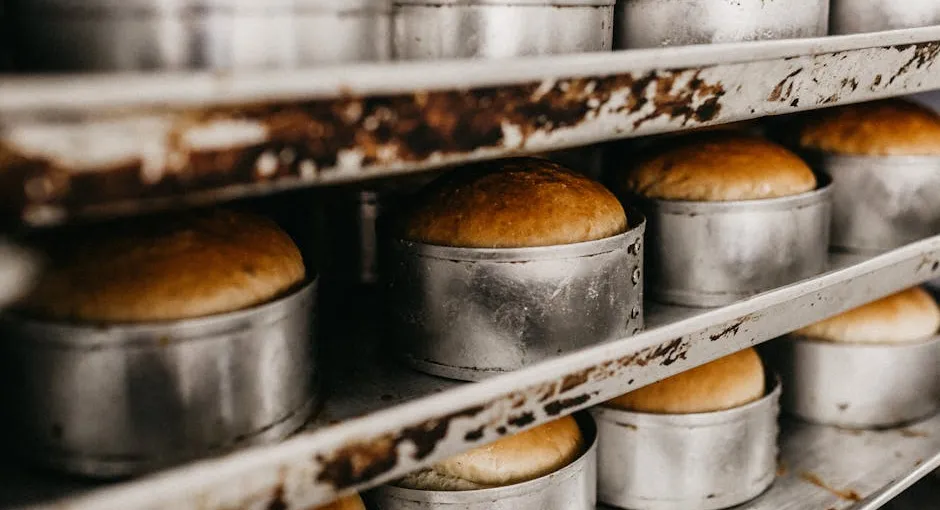
You do not need much to bake bread. Flour, water, salt, yeast, an oven, and something to bake in. That is the minimum. You can make Forkish’s Saturday White bread with equipment that is already in your kitchen.
But the right tools make better bread, and they make the process more enjoyable. This guide covers everything from the essentials (buy these before your first bake) to advanced tools (buy these when bread becomes a serious hobby). Each category links to our in-depth reviews where we test and compare specific products.
Tier 1: The Essentials
These are the tools every bread baker needs. All five major bread authors (Hamelman, Robertson, Forkish, Reinhart, Buehler) agree on this list.
Kitchen Scale
Why it is essential: Every serious bread author insists on weight measurement. Hamelman: “How I wish every baker would become comfortable working exclusively in grams!” A cup of flour varies from 112g to 160g depending on how you scoop. A scale eliminates this variable.
What to buy: The OXO Good Grips 11-Pound Scale ($30-40) for primary measurements, plus an AWS pocket scale ($10-15) for yeast and small quantities at 0.1g precision. Total: $45.
Full review: Best Kitchen Scales for Bread Baking
Dutch Oven
Why it is essential: A Dutch oven is the home baker’s solution to professional steam injection. The sealed cast-iron vessel traps moisture from the dough itself, creating a steam chamber that delays crust formation, extends oven spring, and gelatinizes the surface for a glossy, crackly crust. Robertson and Forkish build their entire home baking methods around the Dutch oven.
What to buy: The Lodge 5-quart cast-iron Dutch oven ($40-50) is the best value in bread baking equipment. It performs within 5% of pots costing five times as much.
Full review: The Best Dutch Ovens for Bread Baking
Probe Thermometer
Why it is essential: You need to know three temperatures: water temperature (for DDT calculation), dough temperature (after mixing), and internal bread temperature (for doneness). Forkish calls a probe thermometer “non-negotiable.”
What to buy: Any instant-read probe thermometer with a range of 32-212°F. The ThermoWorks ThermoPop ($30) and the ThermoWorks Thermapen ($80-100) are both excellent. The ThermoPop is perfectly adequate for bread. The Thermapen is faster and more precise, but that precision is more relevant for meat cooking than bread baking.
Bench Scraper
Why it is essential: A bench scraper divides dough cleanly, scrapes sticky dough off work surfaces, helps shape loaves, and cleans your counter. Every bread author uses one. It is the most underrated tool in baking.
What to buy: Any stainless steel bench scraper with a comfortable handle. $5-10. The OXO bench scraper has a soft grip that is comfortable during extended shaping. Dexter-Russell makes the professional standard.
Mixing Container
Why it is essential: You need a vessel for bulk fermentation that lets you see volume changes. Forkish specifically recommends a 12-quart clear Cambro container — the straight sides and transparent plastic let you mark the starting level with tape and visually track the rise.
What to buy: A 12-quart Cambro round container ($10-15). Mark the starting dough level with a piece of tape or a dry-erase marker, then check periodically during bulk fermentation. When Forkish’s Saturday White has tripled, or Robertson’s country loaf has risen 20-30%, you will see it clearly.
Tier 2: Strongly Recommended
These tools are not strictly required but make bread baking significantly easier and produce better results.
Proofing Basket (Banneton)
A banneton holds shaped dough during its final proof, preventing high-hydration loaves from spreading flat. It wicks surface moisture and creates the spiral pattern that marks artisan bread. A 9-inch round rattan banneton ($10-20) is the standard.
Full review: Best Banneton Proofing Baskets
Bread Lame
A bread lame holds a razor blade at the correct angle for scoring. Scoring creates a controlled weak point that directs oven spring. The Baker of Seville ($15-20) is the best all-around option, with adjustable curved/straight blade mounting.
Full review: Best Bread Lames for Scoring Sourdough
Baking Stone or Steel
For breads baked outside a Dutch oven (baguettes, ciabatta, flatbreads), a stone or steel provides the thermal mass that drives oven spring. A baking steel ($90-130) delivers more aggressive heat transfer; a baking stone ($30-80) is gentler and better for enriched breads and long bakes.
Full comparison: Baking Stone vs Steel for Bread
Oven Thermometer
Home ovens lie. Forkish warns: “Most home ovens run hotter or cooler than set.” A $5 oven thermometer hung on the rack tells you the actual temperature. The difference between 450°F and 475°F matters for crust development and timing.
Bread Flour
Not equipment per se, but choosing the right flour matters as much as any tool. King Arthur Bread Flour ($6-8 per 5 lbs) is the benchmark for consistency. Central Milling offers the best flavor for artisan baking.
Full review: Best Bread Flour: 7 Brands Tested
Tier 3: Nice to Have
These tools are useful but not essential. Buy them as your baking practice develops and you discover what matters to your workflow.
Stand Mixer
A stand mixer is essential for butter-heavy doughs (brioche, stollen) and convenient for high-volume baking. Not necessary for lean doughs — hand mixing and stretch-and-folds develop gluten just as well. The KitchenAid Pro 600 ($350-450) is the best all-purpose option. The Ankarsrum ($600-800) is the best dedicated bread mixer.
Full review: Best Stand Mixers for Bread Dough
Couche (Linen Proofing Cloth)
A couche is a stiff linen cloth used to hold baguettes and batards in shape during proofing. The dough rests in the folds of the fabric, which provides lateral support that a banneton cannot. Essential for baguettes, optional for everything else. About $15-25.
Sourdough Starter
If you want to bake sourdough without the 5-14 day wait of building a starter from scratch, you can buy one. King Arthur’s live starter ($10-12) is the fastest route to sourdough baking.
Full review: Best Sourdough Starters You Can Buy
Spray Bottle
A small spray bottle filled with water, used to mist the oven and dough surface during loading for additional steam when baking without a Dutch oven. Also useful for misting the dough surface before adding toppings (seeds, grains). About $3.
Cooling Rack
A wire cooling rack lets air circulate under the loaf during cooling, preventing the bottom crust from getting soggy from trapped steam. Any wire rack works. $10-15.
Bowl Scraper (Flexible)
A flexible plastic bowl scraper conforms to the curve of your mixing bowl, helping you scrape every bit of dough out. Also useful for gentle folding during bulk fermentation. Different from a bench scraper (which is rigid metal). About $3-5.
Dough Whisk (Danish Whisk)
A stiff wire whisk shaped like an oval spring, designed for mixing shaggy dough without it climbing up a spoon handle. Useful for the initial mix stage. Not essential — your hands work fine — but nice to have. About $8-12.
Tier 4: Specialty / Advanced
These tools serve specific bread styles or advanced techniques.
Dough Docker
A spiked roller for puncturing the surface of high-rye breads (80%+). Rye dough is too weak and sticky for blade scoring. The docker provides controlled weak points for expansion. Only needed if you bake Hamelman’s high-rye formulas. About $10-15.
Digital Timer with Multiple Channels
Bread baking involves overlapping timers: autolyse (20-40 minutes), fold intervals (30 minutes), bulk fermentation (3-14 hours), proof (1-4 hours), preheat (30-60 minutes). A timer with 3-4 independent channels lets you track all of these simultaneously. About $10-15.
Bread Knife
A good serrated bread knife is essential for cutting without crushing the crumb. The Victorinox Fibrox 10.25-inch bread knife ($25-35) is the standard recommendation — sharp, long enough for large boules, and remarkably affordable.
Banneton Liner (Extra)
Additional linen liners for your bannetons, useful if you bake multiple loaves in sequence and need to switch liners between batches. About $5-8 per liner.
Flour Sifter / Dusting Wand
A small fine-mesh sifter or “dusting wand” for applying an even layer of flour to the top of a loaf before scoring. Creates the contrast between the floured surface and the dark scored interior that makes artisan bread look professional. About $5-10.
The Starter Kit: What to Buy for Your First Bake
If you are baking bread for the first time and want to minimize upfront cost, here is the minimum viable equipment list:
| Item | Cost | Notes |
|---|---|---|
| Kitchen scale | $25-30 | Escali Primo (budget) or OXO Good Grips ($35) |
| Dutch oven (Lodge 5 qt) | $40-50 | The single most important piece |
| Bench scraper | $5-10 | Any stainless steel model |
| Instant-read thermometer | $15-30 | ThermoPop or equivalent |
| Clear mixing container | $10-15 | 12-qt Cambro or any clear container |
| Bread flour (5 lbs) | $5-8 | King Arthur or Bob’s Red Mill |
| Instant yeast | $3-5 | SAF Red or Fleischmann’s |
| Total | $103-148 | Everything you need for your first loaf |
You do not need a banneton (use a towel-lined bowl), a lame (use a sharp serrated knife or razor blade), a baking stone (the Dutch oven sits on the oven rack), or a stand mixer (use Forkish’s hand-mixing pincer method). Those can come later.
The Upgrade Path
After 5-10 loaves: Add a banneton ($15), a lame ($10-15), and an oven thermometer ($5). These three upgrades cost $30-35 total and meaningfully improve your results and experience.
After 20-30 loaves: Consider a baking stone or steel for breads baked outside the Dutch oven ($30-130). If you are baking sourdough, you either have a starter or should buy one.
After 50+ loaves: A stand mixer ($280-800) makes sense if you bake enriched breads or bake multiple times per week. A Challenger Bread Pan ($275-295) is the purpose-built upgrade from a Dutch oven. A couche is essential if you bake baguettes.
The best bread bakers in the world started with less equipment than is on this list. The tools help, but the fundamentals are flour, water, salt, time, and attention. Start simple. Upgrade as your practice tells you what you need.
For formula calculations and scaling, use our Baker’s Bench tool. For flour comparisons and selection, check the Baker’s Shelf. For your first recipe, try beginner sourdough bread or learn about baker’s percentages to understand how formulas work.
Frequently Asked Questions
- How much does it cost to start baking bread at home?
- About $100-150 for everything you need: a kitchen scale ($25-35), a Dutch oven ($40-50), a bench scraper ($5-10), a probe thermometer ($15-30), a mixing container ($10-15), and your first bag of flour and yeast ($8-13). You do not need a stand mixer, a banneton, a baking stone, or any specialty tools for your first loaf. Start with the basics and upgrade as your baking practice develops.
- Do I need a stand mixer to make bread?
- No. Ken Forkish's entire method is built around hand mixing. Chad Robertson uses minimal mechanical mixing. Jeffrey Hamelman's unkneaded six-fold produces excellent bread with zero kneading. A stand mixer is essential only for butter-heavy doughs like brioche (50% butter) that cannot be developed by hand. For standard lean breads and sourdough, hand mixing with stretch-and-folds during bulk fermentation works perfectly.
- What is the single most important piece of bread baking equipment?
- A Dutch oven. It solves the biggest problem home bakers face — steam — automatically. Without professional steam injection, your home oven cannot create the glossy, crackly crust and dramatic oven spring that define great artisan bread. A Dutch oven traps the moisture from the dough itself, creating a miniature steam chamber. A Lodge 5-quart cast-iron Dutch oven costs under $50 and delivers professional-quality crust.
- Can I bake good bread with basic kitchen equipment?
- Yes. Before bannetons existed, bakers proofed in cloth-lined bowls. Before lames existed, bakers scored with knives. Before baking steels existed, bakers used hot bricks. Every specialty tool on this list is an optimization, not a requirement. A mixing bowl, a kitchen towel, a sharp knife, and a heavy pot with a lid are enough to bake bread that rivals most bakeries. The technique and the fermentation matter more than the equipment.
- What should I upgrade first after my starter kit?
- A banneton ($15) and a bread lame ($10-15). The banneton gives your shaped loaves structural support during proofing, which translates to better shape and oven spring. The lame gives you clean, controlled scores instead of ragged knife cuts. Together they cost $25-30 and produce the most visible improvement in your finished bread.