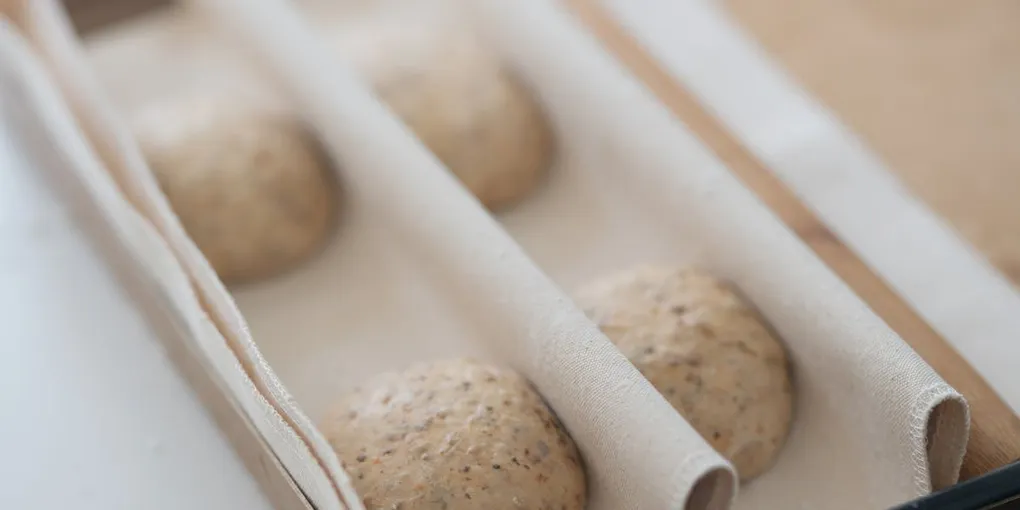
Most bread bakers discover cold fermentation by accident. You run out of time, stick your shaped loaf in the fridge overnight, and the next morning bake the best bread you’ve ever made. It wasn’t luck. The refrigerator did real work while you slept.
Cold fermentation — also called cold retarding — means holding shaped dough at refrigerator temperatures (37-40 degrees F / 3-5 degrees C) for an extended period, usually 8-16 hours overnight. It slows yeast activity nearly to a standstill while lactic acid bacteria remain slightly active, producing flavor compounds that a room-temperature proof can’t match.
What Happens During Cold Fermentation
Yeast activity drops dramatically below 50 degrees F. At refrigerator temperatures, fermentation slows nearly to zero — but it doesn’t stop completely. Lactic acid bacteria remain slightly active even in the cold. This creates a window where flavor compounds accumulate without the dough over-proofing.
Yeast doubles its fermentation rate with every 17 degrees F increase in temperature. Run that equation in reverse: a dough that rises in 2 hours at 70 degrees F takes roughly 4 hours at 53 degrees F and far longer at 38 degrees F.
Acetic acid production — the sharper, more complex flavor — is actually favored by cooler temperatures and stiffer doughs. So cold retarding doesn’t just slow things down. It shifts the flavor balance toward more interesting territory.
The Four Benefits of Overnight Retarding
Better Flavor
Longer fermentation means more flavor. Every hour that dough ferments, enzymes break starches into sugars and proteins into amino acids. Those amino acids and residual sugars become substrates for the Maillard reaction during baking. Cold-retarded bread develops a deeper, more caramelized crust and a more complex crumb flavor.
The acid balance matters here. Warm, fast proofs favor lactic acid (mild, creamy). Cold, slow retards favor acetic acid (sharper, more complex). The combination from a room-temperature bulk followed by a cold overnight proof produces the most nuanced flavor.
Firmer Dough, Better Scoring
Cold dough is stiff dough. Your lame glides through cold dough instead of dragging and catching on a tacky, room-temperature surface.
This matters most for high-hydration doughs. A 75-78% hydration sourdough that’s slack and challenging to score at room temperature becomes cooperative and precise after a night in the fridge.
Scheduling Flexibility
Without retarding, bread baking demands a continuous block of 6-10 hours. With overnight retarding, you split the work across two days: mix and shape in the evening, bake in the morning.
As Ken Forkish puts it, cold-retarded loaves “don’t need to be warmed to room temperature before baking.” Pull them straight from the fridge, score, and load into your preheated Dutch oven.
Wider Proofing Window
Forkish notes that straight doughs with commercial yeast can have a proofing window as narrow as 10-15 minutes at room temperature, while levain breads offer 2+ hours. In the refrigerator, that window expands further. The difference between 10 hours and 14 hours in the fridge is negligible compared to the difference between 2 hours and 3 hours at room temperature.
How to Cold Ferment: Step by Step
1. Complete Your Bulk Fermentation First
Cold retarding works best on shaped dough that has already completed bulk fermentation. The bulk phase does the heavy lifting of gluten development and primary gas production. The cold retard replaces the final proof, not the bulk.
2. Shape Tightly
Because the dough will relax in the fridge over many hours, shape it slightly tighter than you would for a room-temperature proof. Good surface tension is essential.
Place shaped loaves seam-side up in well-floured bannetons. A rice flour and wheat flour blend prevents sticking — especially important for cold dough, where moisture condenses on the surface during refrigeration.
3. Cover and Refrigerate
Slip the banneton into a plastic bag or cover tightly with a reusable shower cap. The goal is preventing the dough surface from drying out and forming a skin.
Set your refrigerator to 37-40 degrees F. Colder than 37 degrees F risks freezing the outer layer. Warmer than 40 degrees F allows too much fermentation — you might wake up to an overproofed loaf.
4. Bake Straight From Cold
Preheat your oven (and Dutch oven) while the loaf is still in the fridge. When ready, invert the banneton onto parchment, score immediately, and load into the hot vessel.
Robertson’s protocol: 500 degrees F with the lid on for 20 minutes (steam phase), then lid off for 20-25 minutes at 450-500 degrees F until deep mahogany. Forkish uses 475 degrees F with 30 minutes lid-on and 15-20 minutes lid-off.
Timing Guidelines
| Dough Type | Minimum Retard | Sweet Spot | Maximum Before Risk |
|---|---|---|---|
| Yeasted (0.5%+ instant yeast) | 6 hours | 8-12 hours | 14-16 hours |
| Low-yeast overnight (0.08%) | 8 hours | 12-16 hours | 18-20 hours |
| Sourdough/levain | 8 hours | 12-18 hours | 24+ hours (monitor) |
Sourdough is the most forgiving. The lower pH and slower fermentation rate mean you can push retarding times longer without over-proofing.
Troubleshooting Cold Retard Problems
Loaf is flat and overproofed after overnight retard. Your refrigerator may be warmer than you think. Use a thermometer to verify. Also check whether you’re retarding dough that’s already near full proof.
Dough skin dried out. Seal more tightly. Plastic bags work better than loose plastic wrap. Some bakers mist the dough surface with water before covering.
Loaf spread sideways instead of holding shape. This is a shaping problem. The dough needed more surface tension before going into the banneton.
Condensation on the dough surface. Normal. The moisture comes from the dough itself as it cools. It usually absorbs back during scoring and the first minutes of baking.
Bread tastes too sour. If the dough spent more than 18-20 hours retarded, acetic acid may have accumulated past the pleasant threshold. Shorten the retard next time.
Cold Retard vs. Room Temperature Proof
| Factor | Cold Retard (37-40 degrees F) | Room Temp Proof (75-78 degrees F) |
|---|---|---|
| Time | 8-18 hours | 2-4 hours |
| Flavor complexity | Higher (more acid, more Maillard substrates) | Moderate |
| Scoring ease | Excellent (firm dough) | Requires practice (tacky dough) |
| Schedule flexibility | Very high | Low (narrow window) |
| Oven spring | Strong (cold dough + hot oven) | Standard |
For most home bakers, cold retarding isn’t a compromise — it’s an upgrade. Chad Robertson calls it “a tool, not a compromise.”
When Cold Fermentation Doesn’t Make Sense
Enriched doughs heavy with butter and eggs (like brioche) can become excessively firm in the cold. High-rye breads (above 70% rye) have a very short fermentation window regardless of temperature.
Same-day breads designed around warm, fast fermentation produce a different but equally valid flavor profile. Speed and warmth favor lactic acid and produce a milder, creamier character.
Start Here
If you’ve never cold-fermented, try it with your next sourdough country bread or beginner sourdough. Complete bulk fermentation as usual, shape, place in a banneton, cover, and refrigerate overnight. Bake straight from cold the next morning. The difference in crust depth, crumb complexity, and scoring precision will make overnight retarding a permanent part of your process.
Frequently Asked Questions
- Can I cold ferment bread dough for 48 hours?
- Sourdough can often handle 24-36 hours, but 48 hours pushes most doughs past their limit. Lactic acid bacteria remain slightly active even at 37-40 degrees F, and excessive acid accumulation degrades gluten structure over time. If you need a two-day retard, use less starter or leaven in your initial mix.
- Do I need to let cold-fermented dough warm up before baking?
- No. Bake straight from the refrigerator. Ken Forkish is explicit: cold loaves don't need to come to room temperature first. The cold dough actually benefits from the temperature contrast with the hot oven — it extends oven spring and gives you more time to develop crust color.
- Does cold fermentation work with commercial yeast or only sourdough?
- Cold fermentation works with both. Commercial yeast slows dramatically at fridge temperatures but doesn't stop completely, so yeasted doughs have a shorter retarding window (roughly 8-16 hours) than sourdough (12-24+ hours).
- Why does my cold-retarded bread have a better crust?
- Two reasons. Longer fermentation produces more amino acids and reducing sugars — the substrates for the Maillard reaction. And cold dough entering a hot oven experiences a longer oven spring phase, which gives the crust more time to develop before the interior sets.
- Should I retard during bulk fermentation or after shaping?
- For most home bakers, retarding after shaping is simpler and more predictable. You get the full benefit of room-temperature bulk fermentation for gluten development, then use the cold retard to replace the final proof.