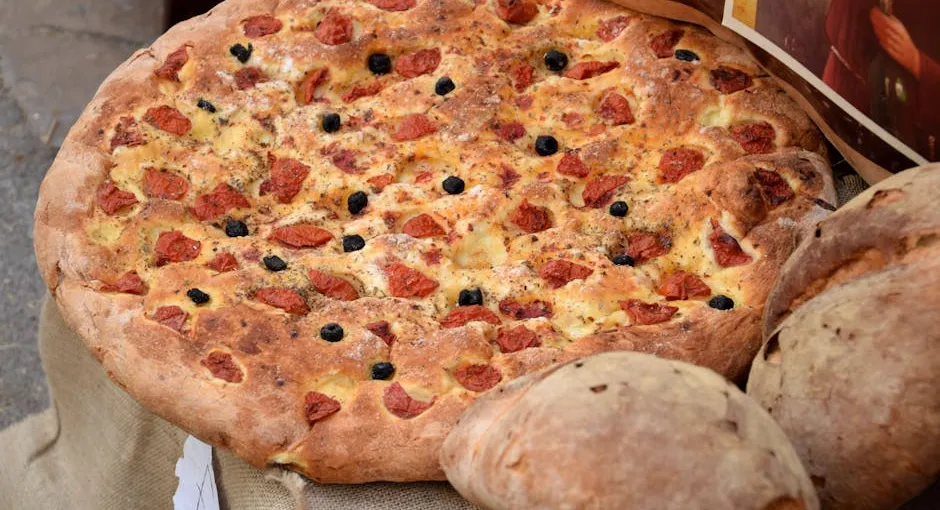
Focaccia is the most forgiving bread you can make and one of the most rewarding. It doesn’t need shaping, scoring, or a Dutch oven. You pour wet dough into an oiled pan, dimple it with your fingers, and bake. The result — crisp on the bottom, pillowy inside, golden and olive-oil-rich on top — is bread that impresses people who have no idea how little effort it took.
That ease is deceptive, though. Great focaccia has specific technical requirements, and the difference between a mediocre version and a great one comes down to hydration, oil incorporation, and how you handle fermentation.
The Science of Focaccia
Focaccia is a flat bread baked at high temperature in an oiled pan. The fundamental science is straightforward: high hydration creates an open, airy interior, generous olive oil creates the crisp-on-outside-soft-inside texture, and high heat drives rapid oven spring and Maillard browning.
Hydration: Focaccia dough runs at 80% or higher — the same territory as ciabatta. This produces a very wet, sticky dough that you handle with oiled hands, not flour. The high water content creates the large, irregular holes that define focaccia’s interior. Below 75% hydration, you get something closer to a thick pizza crust. The texture changes fundamentally.
Oil: Olive oil serves three roles in focaccia. First, it coats the bottom and sides of the pan, creating a fried-crisp base. Second, it’s dimpled into the top surface, pooling in the finger marks and crisping during baking. Third, it’s mixed into the dough itself (usually 3-5% of flour weight), which tenderizes the crumb and contributes flavor.
Temperature: Flat breads bake at 500-700 degrees F. Home focaccia typically bakes at the highest temperature your oven can reach — 475-500 degrees F for most home ovens. The high heat ensures the bottom crisps quickly (especially important with the oil in the pan) and the top develops deep golden color before the interior dries out.
The Formula
This formula produces a classic Ligurian-style focaccia: about 1 inch thick, crisp bottom, airy interior, oil-dimpled top.
Dough:
- Bread flour: 100% (500g)
- Water: 80% (400g, at 90-95 degrees F)
- Olive oil: 4% (20g, in the dough)
- Salt: 2% (10g)
- Instant yeast: 0.8% (4g)
Pan:
- 3-4 tablespoons olive oil in a 9x13-inch or half sheet pan
Topping:
- 2-3 tablespoons olive oil for dimpling
- Flaky salt (Maldon or similar)
- Optional: rosemary, cherry tomatoes, olives, thinly sliced onion
Method
Mix: Combine flour, water, olive oil, salt, and yeast. Mix by hand or on low speed in a stand mixer until a shaggy, wet dough forms — about 3 minutes. This dough will be much wetter than typical bread dough. Don’t add flour. The stickiness is correct.
Bulk ferment: Cover and let rise at room temperature (75-78 degrees F) for 1.5-2 hours, performing 2-3 sets of stretch-and-folds at 30-minute intervals during the first hour. The folds build strength without kneading. After the last fold, leave undisturbed until the dough is puffy and has increased by about 50%.
Pan and cold rest (optional but recommended): Pour 3-4 tablespoons of olive oil into your pan. Transfer the dough into the oiled pan. Gently spread it toward the edges — it won’t reach the corners yet, and that’s fine. Cover with plastic wrap and refrigerate for 8-24 hours.
The cold rest does two things: it develops flavor (the same principle behind cold fermentation for other breads) and it relaxes the gluten, making the dough easier to stretch to the pan edges. This step is optional but dramatically improves both flavor and texture.
Warm and stretch: Remove the pan from the fridge 1-2 hours before baking. After 30-45 minutes, the dough will be pliable enough to gently stretch to the pan edges. Use oiled fingers. If the dough resists, let it rest another 15 minutes and try again. Don’t force it.
Dimple and top: Drizzle 2-3 tablespoons of good olive oil over the surface. Dip all ten fingertips into the dough and press firmly down to the bottom of the pan, creating deep dimples across the entire surface. These dimples serve a functional purpose — they prevent large air pockets from forming during baking and create pools where olive oil and toppings collect.
Add flaky salt and any toppings. Press toppings slightly into the dimples so they don’t slide off.
Bake: 475-500 degrees F for 20-25 minutes, until the top is deeply golden and the bottom is crisp when you lift an edge. Rotate the pan halfway through baking for even color.
Cool: Remove from pan immediately and transfer to a wire rack. The bottom will lose its crispness if it stays in contact with the hot oil for too long. Let cool at least 10-15 minutes before cutting.
The Pan Matters
The pan determines the character of your focaccia more than almost any other variable.
Half sheet pan (18x13 inches): Produces a thinner focaccia (about 3/4 inch). More surface area means more crisp top and bottom relative to soft interior. Best for focaccia that you’ll slice for sandwiches.
9x13 baking pan: The standard. Produces focaccia about 1-1.5 inches thick. Good balance of crisp exterior and airy interior.
Cast iron skillet (10-12 inches): Produces the crispiest bottom of any option. The heavy iron holds heat and browns the olive oil coating aggressively. The focaccia will be thicker and more circular. This method is closest to Genoese bakery focaccia.
Dark metal pans brown the bottom faster than light-colored aluminum. If your focaccia bottom is pale, switch to a darker pan or place the pan on a lower oven rack.
The Oil Controversy
Some focaccia recipes use very little oil. Others practically deep-fry the dough in the pan. Both produce good bread, but the character is completely different.
Light oil (1-2 tablespoons in pan, drizzle on top): Softer bottom, more bread-like character. The focaccia tastes primarily of wheat and fermentation.
Heavy oil (3-4 tablespoons in pan, generous drizzle on top): Crisp, almost fried bottom. Rich and olive-oil-forward. This is the Ligurian tradition and what most people think of as classic focaccia. The dough literally fries in the oil during the first minutes of baking, creating a golden crust that shatters when you bite through it.
Use good olive oil — you’ll taste it. This is not the place for neutral oil or cheap blended olive oil. The oil is a primary flavor component, not a release agent.
Focaccia Variations
Focaccia di Recco (Cheese Focaccia)
The famous Ligurian specialty: two paper-thin layers of dough with stracchino cheese melted between them. This is more technique than formula — the dough is stretched tissue-thin on an oiled surface, filled with soft cheese, and baked at the highest possible temperature until the top blisters and chars. It bears almost no resemblance to standard focaccia despite sharing a name.
Focaccia col Formaggio
Similar to Recco but with a thicker bottom layer and a wider variety of cheeses. The bottom is dimpled like standard focaccia; the cheese goes on top and melts into the dimples during baking.
Potato Focaccia
Boiled, mashed potato (10-15% of flour weight) mixed into the dough. The potato starch adds moisture retention and produces an exceptionally tender, almost cake-like crumb. Popular in Puglia and throughout southern Italy.
No-Knead Overnight Focaccia
The lowest-effort version: mix the dough in the evening with minimal yeast (0.2-0.3%), bulk ferment overnight (10-12 hours), transfer to oiled pan in the morning, rest 1-2 hours, dimple and bake. No folding required. The long fermentation develops both flavor and gluten structure without any mechanical work. This approach borrows directly from the no-knead bread philosophy.
Common Focaccia Mistakes
Not enough oil in the pan. The oil in the pan isn’t just for release — it’s a cooking medium. Skimp on it and you get a soft, pale bottom instead of a crisp, golden one. You should see a visible pool of oil when you tilt the pan.
Low hydration. Focaccia below 75% hydration becomes dense and bread-like rather than airy and open. This is a high-hydration bread. If the dough isn’t genuinely wet and sticky, add more water.
Baking too low. Focaccia needs aggressive heat. At 400 degrees F, the interior dries out before the crust develops properly. Push to 475-500 degrees F. The high heat ensures rapid oven spring, quick crust formation, and the Maillard browning that makes focaccia look and taste right.
Weak dimpling. Gentle pokes won’t do. Press your fingertips all the way down to the bottom of the pan. The dimples prevent tunneling, create oil pools, and give focaccia its characteristic surface texture. Be assertive.
Leaving it in the pan after baking. Transfer to a wire rack immediately. The residual heat and pooled oil will turn the crisp bottom soggy within minutes if the focaccia sits in the pan.
Topping Strategy
Focaccia toppings fall into two categories: those that go on before baking and those that go on after.
Before baking: Anything that benefits from oven heat. Rosemary (releases aromatic oils). Cherry tomatoes (burst and concentrate). Thinly sliced onion (caramelizes). Olives (warm and intensify). Garlic cloves (roast into sweet paste). Coarse salt (always). All of these should be pressed into the dimples so the olive oil pools around them during baking.
After baking: Anything delicate that would burn or wilt. Fresh basil, arugula, prosciutto, burrata, shaved parmesan, a drizzle of high-quality finishing oil. These go on while the focaccia is still warm enough to lightly wilt the greens and soften the cheese, but not so hot that they cook.
The tomato trap: Fresh sliced tomatoes release water during baking, creating a soggy zone. If you want tomato on focaccia, use cherry tomatoes halved (less water release, more structural integrity) or sun-dried tomatoes (zero water release). Full slices of fresh tomato belong on after-baking focaccia only.
Seasoning the dimple oil: Mix a tablespoon of flaky salt into the olive oil you drizzle on top before dimpling. The salt dissolves into the oil, creating a concentrated saline pool in every dimple that seasons each bite. This is more effective than sprinkling salt on the surface, where it can fall off.
Focaccia Sandwich Technique
Focaccia makes outstanding sandwich bread. Slice a cooled sheet horizontally (a long serrated knife helps), creating a top and bottom layer. The dimpled, oil-crisp surface becomes the outside of the sandwich.
The key advantage over sliced bread: focaccia’s high hydration and olive oil content mean the crumb doesn’t dry out or compress under the weight of fillings. A focaccia sandwich holds its structure through lunch without becoming soggy or flattening.
Classic combinations: prosciutto, mozzarella, and arugula with a drizzle of balsamic. Grilled vegetables with herbed goat cheese. Caprese (tomato, fresh mozzarella, basil). The bread’s olive oil flavor and open crumb complement Mediterranean fillings naturally.
Where Focaccia Fits
Focaccia is the ideal bread for bakers who are intimidated by shaping and scoring. It requires neither. It’s also the best introduction to high-hydration dough — the oiled pan contains the dough, so there’s no risk of the slack, wet mass spreading flat on a baking stone.
If you’ve been making Dutch oven breads and want to try something different, focaccia is the natural next step. The same principles of high hydration, long fermentation, and high heat apply — just in a pan instead of a pot.
For baker’s percentage calculations and batch scaling, the Baker’s Bench tool handles flat bread formulas and will adjust pan size recommendations based on your dough quantity.
Frequently Asked Questions
- What hydration should focaccia dough be?
- Focaccia dough should be at least 75-80% hydration -- the same range as ciabatta. This high water content creates the large, irregular holes that define focaccia's interior. Below 75%, the crumb becomes dense and bread-like rather than airy and pillowy. The dough will be very wet and sticky, and you should handle it with oiled hands, not flour.
- Can I make focaccia without a stand mixer?
- Absolutely. Focaccia is one of the easiest breads to mix by hand. The dough is too wet for traditional kneading, so you use stretch-and-fold technique instead -- 2-3 sets at 30-minute intervals during the first hour of bulk fermentation. This builds sufficient gluten strength without any mechanical mixing. Many bakers prefer the hand method because it's harder to over-mix.
- Why is my focaccia bottom not crispy?
- Three likely causes: not enough olive oil in the pan (you need 3-4 tablespoons pooled on the bottom), oven temperature too low (push to 475-500 degrees F), or you left the focaccia sitting in the pan after baking. The oil in the pan acts as a frying medium -- it needs to be hot enough to crisp the dough on contact. Transfer the finished focaccia to a wire rack immediately after removing from the oven to preserve the crisp bottom.
- Should I cold-ferment focaccia dough?
- An overnight cold rest (8-24 hours in the refrigerator, in the oiled pan) dramatically improves both flavor and texture. The cold slows fermentation, developing complex flavor compounds, and relaxes the gluten so the dough stretches easily to fill the pan. It also makes the process more convenient -- prepare the dough in the evening, bake fresh the next day.
- How much olive oil should I use for focaccia?
- More than feels comfortable. The formula itself includes about 4% olive oil (relative to flour weight), the pan needs 3-4 tablespoons for the crisp bottom, and the top gets another 2-3 tablespoons drizzled into the dimples before baking. Use good-quality extra virgin olive oil -- it's a primary flavor component, not just a cooking fat.