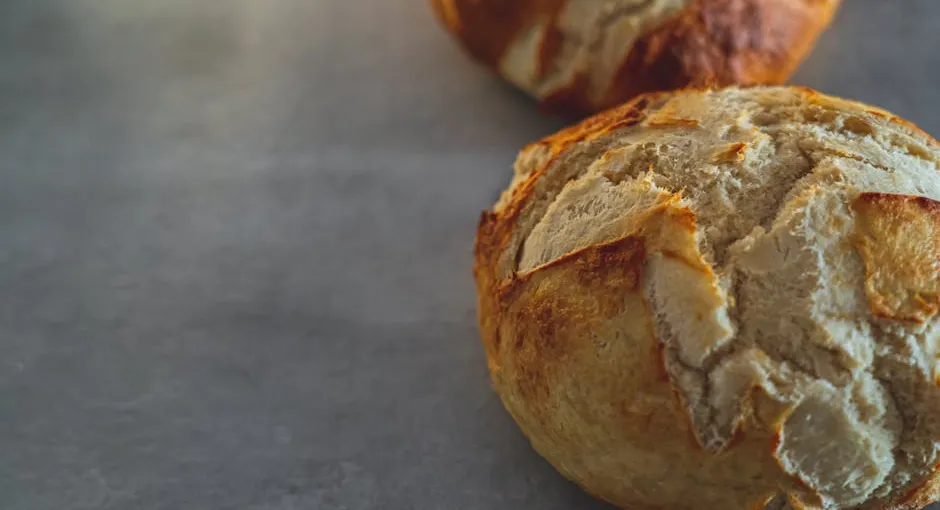
Pull a well-baked loaf from the oven and the smell hits you before you see the crust. That aroma — roasted, complex, slightly sweet, deeply savory — isn’t coming from the flour or the yeast or the water. It’s coming from a cascade of chemical reactions between amino acids and sugars on the bread’s surface, triggered by oven heat.
This is the Maillard reaction, and it’s responsible for most of what makes bread crust taste like bread crust instead of cooked paste.
What the Maillard Reaction Is
The Maillard reaction is a chemical reaction between an amino acid and a reducing sugar in the presence of heat. It produces hundreds of flavor and aroma compounds plus brown pigments called melanoidins. It is not a single reaction — it’s a cascade of reactions that branch into dozens of pathways depending on which amino acid and which sugar are reacting, the temperature, the pH, and the moisture level.
The onset temperature at the crust surface is approximately 250 degrees F (120 degrees C). Below that, the reaction doesn’t proceed at meaningful rates. Above that, the rate increases dramatically with temperature.
This temperature threshold explains why the interior of bread never turns brown. The crumb never exceeds 212 degrees F (100 degrees C) — the boiling point of water. As long as there’s moisture in the crumb, the temperature is capped at that evaporative ceiling. Only the crust surface, which dries out during baking, can reach Maillard temperatures.
The Two Ingredients: Amino Acids and Reducing Sugars
The Maillard reaction requires both reactants. Remove either one and you get a pale, bland crust.
Amino Acids
Amino acids come primarily from protease enzyme activity during fermentation. Proteases in the flour snip peptide bonds in gluten proteins, releasing individual amino acids and small peptides. The longer the fermentation, the more amino acids accumulate.
This is one reason long-fermented bread has better crust flavor. A 12-hour overnight bulk produces substantially more free amino acids than a 2-hour quick rise.
Reducing Sugars
Reducing sugars — glucose, fructose, and maltose — come from two sources. First, free sugars already present in the flour. Second, amylase enzyme activity during fermentation, which breaks damaged starch into maltose.
Again, longer fermentation means more available sugars. Amylase works steadily throughout bulk fermentation and even during the early stages of baking (it’s inactivated around 176 degrees F / 80 degrees C), continuously converting starch to sugar.
Diastatic malt adds extra amylase enzymes. Reinhart recommends 0.5% of flour weight. The additional enzyme activity produces more reducing sugars, which intensifies both fermentation and Maillard browning.
Maillard vs. Caramelization
These are two different reactions that happen simultaneously on the bread crust, and they’re often confused.
Maillard reaction: Requires amino acids + reducing sugars. Onset ~250 degrees F (120 degrees C). Produces complex savory-sweet flavors and brown melanoidin pigments.
Caramelization: Thermal decomposition of sugars alone, without amino acids. Onset ~330 degrees F (165 degrees C). Produces sweet and slightly bitter caramel notes, plus brown pigments.
Both contribute to crust color and flavor. The Maillard reaction starts at a lower temperature and produces a wider range of flavors (including savory, roasted, and nutty notes). Caramelization adds the sweet-bitter dimension that rounds out the crust’s flavor profile.
Why Long Fermentation = Better Crust
This connection deserves emphasis because it’s the most practical takeaway.
During fermentation, two enzyme families are simultaneously building the substrate stockpile for Maillard browning: proteases release amino acids from gluten proteins, and amylases release reducing sugars from damaged starch.
The longer fermentation runs, the more of both substrates accumulate. When the bread hits the oven, a long-fermented loaf has measurably more raw material for the Maillard reaction than a quick-rise loaf from the same flour.
This explains a phenomenon every baker has noticed: overnight breads and sourdough loaves develop deeper, more complex crust color and flavor than same-day yeasted bread. The formula and oven temperature may be identical. The difference is fermentation time and the substrate accumulation it produces.
Pre-ferments — poolish, biga, pate fermentee — exploit this same principle. The 12-16 hours of pre-ferment activity produces a concentrated payload of amino acids and sugars that carries into the final dough.
Steam and the Maillard Reaction
Steam during baking delays the Maillard reaction — and that’s a good thing.
When steam is introduced in the first 10-15 minutes of baking, it condenses on the cool dough surface and keeps it moist. A wet surface can’t exceed 212 degrees F, which is below the Maillard onset temperature. This delays browning and keeps the surface starch enzymes active longer, producing even more sugar substrates.
When the steam is removed (or the Dutch oven lid comes off), the surface dries rapidly and temperature climbs past 250 degrees F. The Maillard reaction begins on a surface that’s loaded with extra sugars from the extended enzyme window. The result: a thinner, crispier, more deeply flavored crust than you’d get without steam.
The Dark Crust Philosophy
Both Robertson and Forkish insist on baking darker than most home bakers instinctively do. Their reasoning is pure Maillard chemistry: the reaction rate increases exponentially with temperature and time at temperature. The difference between “golden” and “deep mahogany” represents significantly more flavor compound development.
Robertson: “Deep mahogany/amber all over” — thoroughly caramelized, not merely golden. He considers the most common home-baker error to be pulling the loaf too early.
Forkish pushes even further: “I like to bake until there are spots of very dark brown for the full flavors those bits of crust have. At least once, you should try baking a loaf just shy of the point of burning it.”
This isn’t machismo. The melanoidins and volatile flavor compounds produced in those final minutes of aggressive browning contribute substantial flavor complexity that simply doesn’t exist in a pale loaf. The difference is one of the biggest flavor upgrades available to a home baker — and it costs nothing.
What Controls the Maillard Reaction
Oven Temperature: Higher temperature = faster Maillard reaction. Robertson bakes at 500 degrees F; Forkish at 475 degrees F. Both produce excellent crust.
pH: Slightly alkaline conditions accelerate the Maillard reaction. Sourdough’s lower pH slightly slows Maillard browning, but its longer fermentation produces more substrates, which more than compensates.
Sugar Availability: More reducing sugars = more browning. Diastatic malt, long fermentation, and amylase-rich flour all increase available sugars. Enriched doughs with added sugar (brioche, challah) brown faster, which is why they bake at lower temperatures.
Moisture: The crust must dry before the Maillard reaction can proceed. This is why steam timing matters: too much steam for too long produces a thick, pale, soft crust. The standard protocol — steam for the first 10-15 minutes, vent for the remaining bake — threads this needle.
Amino Acid Type: Different amino acids produce different flavor compounds. Lysine produces bread-like aromas. Proline produces roasted, cracker-like notes. Cysteine produces meaty, savory flavors. The specific amino acid profile depends on the flour and fermentation conditions.
Beyond Bread
The Maillard reaction is the same chemistry behind the flavor of seared steak, roasted coffee, toasted nuts, and dark beer. Understanding it in bread unlocks an appreciation for why browning matters across all cooking. It’s never “just color” — color is a proxy for hundreds of flavor compounds that only exist above the Maillard threshold.
In bread specifically, the crust is where all the Maillard action happens. The crumb contributes chew, moisture, and fermentation flavor. The crust contributes roasted complexity, aromatic depth, and textural contrast. A great loaf needs both. But if you’re pulling your bread before the crust reaches deep brown, you’re leaving the most interesting chemistry unfinished.
Frequently Asked Questions
- At what temperature does the Maillard reaction start in bread?
- The Maillard reaction begins at approximately 250 degrees F (120 degrees C) at the bread's crust surface. This is why the interior crumb never browns -- it can't exceed 212 degrees F (100 degrees C) as long as moisture is present. The reaction rate increases dramatically with temperature above the onset point, which is why Robertson bakes at 500 degrees F and Forkish at 475 degrees F.
- What's the difference between the Maillard reaction and caramelization?
- The Maillard reaction requires both an amino acid and a reducing sugar; it starts at about 250 degrees F and produces savory, roasted, nutty flavors plus brown melanoidin pigments. Caramelization is the thermal decomposition of sugar alone (no amino acid needed); it starts higher at about 330 degrees F and produces sweet and slightly bitter caramel notes. Both happen simultaneously on bread crust in a hot oven.
- Why does sourdough bread have better crust flavor than quick yeasted bread?
- Long fermentation produces more Maillard reaction substrates. Protease enzymes release amino acids from gluten proteins, and amylase enzymes convert starch into reducing sugars -- both processes accumulate more product with more time. A sourdough loaf that fermented for 12+ hours enters the oven with significantly more amino acids and sugars available for the Maillard reaction.
- Can I make my bread crust darker without burning it?
- Yes. Three approaches: First, extend fermentation time (more Maillard substrates). Second, add 0.5% diastatic malt to the formula (more amylase activity produces more sugar). Third, simply bake longer at the same temperature -- the difference between done and dark is often just 5-8 more minutes. Forkish recommends trying to bake a loaf just shy of the point of burning it at least once.