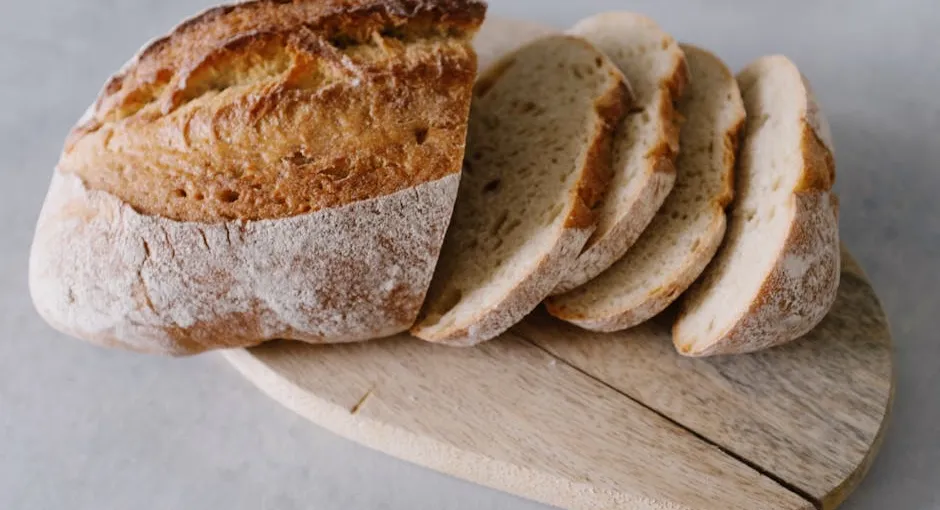
Sourdough country bread is the loaf that everything else in this craft points toward. Open, irregular crumb. Deep, crackling crust. Complex fermentation flavor that no commercial yeast can replicate. Two books defined the modern home version — Chad Robertson’s Tartine Bread and Ken Forkish’s Flour Water Salt Yeast — and their country bread formulas have probably produced more obsessive home bakers than any other recipe in history.
This article gives you both methods, explains where they diverge and why, and offers a synthesized formula that draws on the best of each. If you’re new to sourdough, start with our beginner sourdough loaf first. This recipe assumes you have an active starter, understand bulk fermentation, and can shape a boule.
Robertson vs. Forkish: The Full Comparison
These two formulas share a DNA — 90% white flour, 10% whole wheat, natural leavening, Dutch oven bake — but differ in hydration, fermentation philosophy, and baking approach. Neither is superior. They produce different breads.
| Feature | Robertson Country Bread | Forkish Overnight Country Brown |
|---|---|---|
| Flour | 900g white + 100g WW (1,000g total) | 900g white + 100g WW (1,000g total) |
| Hydration | 75% | 78% |
| Leaven % (of flour) | 20% (200g leaven from 100g flour + 100g water) | ~20% |
| Commercial yeast | None | None (pure levain) |
| Salt | 20g (2%) | 22g (2.2%) |
| Autolyse | Yes — flour + water + leaven, 25-40 min | Yes — flour + water, 20-30 min |
| Bulk fermentation | 3-4 hours at 78-82 degrees F | 12-15 hours overnight at room temp |
| Folds | 4 turns every 30 min in first 2 hours | 3-4 folds in first 1-2 hours |
| Final proof | 3-4 hrs room temp OR cold retard overnight | ~4 hours room temp |
| Bake | 500 degrees F, lid on 20 min, lid off 20-25 min | 475 degrees F, lid on 30 min, lid off 15-20 min |
| Scoring | Yes (single slash) | No (seam-side up, natural splits) |
| Yield | 2 loaves | 2 loaves |
The fundamental difference is timing. Robertson uses an active, warm-temperature bulk (3-4 hours) with precise temperature control. Forkish uses a long overnight bulk at room temperature with time replacing warmth. Robertson’s method demands attention during the day. Forkish’s method demands patience overnight.
Robertson’s Country Bread
The Leaven
The night before baking (around 9 PM), build a young leaven:
- 1 tablespoon (about 20g) mature starter
- 200g bread flour (blend of white and whole wheat)
- 200g water at 78 degrees F
Mix, cover, leave at room temperature. By morning (8-10 hours later), it should be bubbly, domed, and pass the float test — a spoonful dropped in water should float.
Robertson’s defining contribution is the young leaven concept. He uses the leaven before it reaches peak acidity — while yeast activity is high but acid hasn’t accumulated. This is why Tartine bread has complex fermentation character without being aggressively sour.
The Dough
Combine 700g white bread flour + 100g whole wheat flour + 100g whole wheat flour (from the leaven’s flour contribution, already accounted for). Pour in 750g water at 80 degrees F (26 degrees C). Add the leaven and disperse it through the water before combining with flour.
Robertson adds the leaven to the water during the autolyse — this is unusual. Most bakers add leaven after the autolyse rest. His rationale: the leaven becomes evenly distributed from the start.
Autolyse 25-40 minutes. Then add 20g salt with a small splash of water. Pincer-mix until incorporated.
Bulk Fermentation (3-4 Hours)
Temperature target: 78-82 degrees F (25-28 degrees C). This is critical. Below 75 degrees F, bulk stretches to 5-6+ hours. Above 82 degrees F, you risk over-fermentation.
Folds: stretch-and-fold every 30 minutes for the first 2 hours (4 sets total). Each set: wet hand, stretch one side up and over, rotate, repeat on all four sides. After the 4th set, leave undisturbed for the remaining 1-2 hours.
End of bulk indicators (Robertson):
- 20-30% volume increase (not doubled — that’s too far)
- Dough feels airy and holds its shape when tilted
- Subtle bubbles visible on surface and around edges
- The mass jiggles gently when shaken
This is a conservative target compared to Forkish’s triple. Robertson’s sourdough finishes most of its rise during the final proof, not during bulk.
Shape and Proof
Pre-shape into rounds on a lightly floured surface. Bench rest 20-30 minutes. Final shape as a boule on an unfloured surface — Robertson shapes without flour, using the dough’s stickiness as traction to build surface tension.
Place seam-side up in a banneton dusted with a 50/50 mix of rice flour and wheat flour.
Proof options:
- Room temperature: 3-4 hours until the poke test shows slow, partial springback
- Cold retard: Cover and refrigerate overnight (12-18 hours). Bake straight from cold — no warm-up needed
Cold retarding adds scheduling flexibility, deepens flavor (acetic acid bacteria remain slightly active at fridge temps), and firms the dough for cleaner scoring.
Bake
Preheat Dutch oven at 500 degrees F for 20+ minutes. Score with a single decisive slash at 30 degrees using a lame. Bake lid on 20 minutes at 500 degrees F, then lid off 20-25 minutes at 450-500 degrees F.
Target: deep mahogany. Robertson is emphatic — “it is not done” when it looks golden. Go darker.
Forkish’s Overnight Country Brown
The Levain
Morning of bake day (about 7-9 AM), feed your levain:
- 100g mature levain retained
- 400g white flour + 100g whole wheat flour
- 400g water at 85-90 degrees F
Wait 6-8 hours until ripe — bubbly, domed, tangy aroma. Forkish’s levain hydration runs about 80% and includes whole wheat for vigor.
The Dough
In the evening (about 7 PM), combine 900g white flour + 100g whole wheat flour with 780g water at 90-95 degrees F. Autolyse 20-30 minutes.
Add 216g ripe levain and 22g salt. Pincer-mix 3-5 minutes.
Bulk Fermentation (12-15 Hours Overnight)
Fold 3-4 times in the first 1-2 hours. Then cover and leave at room temperature overnight.
Forkish’s overnight bulk produces different flavor chemistry than Robertson’s warm, short bulk. The cooler temperature and longer time favor acetic acid production (sharper tang) over lactic acid (milder, creamy). The result is bread with more pronounced sourdough character.
Morning check: The dough should have risen significantly — Forkish doesn’t specify an exact volume target for his levain breads the way he does for his yeasted breads (which triple). Look for a bubbly, domed surface and a dough that feels airy and alive.
Shape and Proof
Divide, pre-shape, rest 20 minutes, final shape. Place in bannetons seam-side up.
Proof at room temperature for about 4 hours. Forkish proofs longer because his bread goes straight into the oven — no overnight cold retard.
Bake
Preheat Dutch oven at 475 degrees F for 45 minutes. Place dough seam-side up — no scoring. Bake lid on 30 minutes, lid off 15-20 minutes until dark brown.
The Synthesized Formula
This formula takes what we consider the best elements of both approaches and combines them into a single, reliable method.
| Ingredient | Weight | Baker’s % |
|---|---|---|
| Bread flour | 900g | 90% |
| Whole wheat flour | 100g | 10% |
| Water (80 degrees F) | 775g | 77.5% |
| Salt | 20g | 2% |
| Young levain (100% hydration) | 200g | 20% |
Why These Choices
77.5% hydration splits the difference between Robertson (75%) and Forkish (78%). It’s wet enough for an open crumb but manageable for shaping.
Young levain (Robertson-style) because the flavor is more nuanced. Build it the night before: 20g starter + 100g bread flour + 100g water at 78 degrees F. Use when it passes the float test — still domed and rising, not yet collapsing.
Warm bulk (Robertson timing) at 78-80 degrees F for 3.5-4 hours with 4 sets of stretch-and-folds in the first 2 hours. This gives you control and a same-day shaping window.
Cold retard (overnight) for the final proof. This adds Forkish’s complexity advantage — the overnight cold rest deepens flavor without the unpredictability of an overnight bulk.
Score and bake at 475 degrees F — Forkish’s temperature with Robertson’s scoring. Lid on 25 minutes, lid off 20 minutes until deep mahogany.
Timeline
| Time | Step |
|---|---|
| 9 PM (Night Before) | Build levain: 20g starter + 100g flour + 100g water |
| 9:00 AM | Autolyse: flour + water, 30 min |
| 9:30 AM | Add levain + salt, pincer-mix |
| 9:45 AM - 1:15 PM | Bulk fermentation with 4 fold sets (first 2 hrs) |
| 1:15 PM | Pre-shape, bench rest 20 min |
| 1:35 PM | Final shape, into banneton |
| 1:45 PM - Next AM | Cold retard in fridge (12-18 hrs) |
| Next AM | Preheat Dutch oven 475 degrees F for 45 min |
| Score + Bake | Score with lame, lid on 25 min, lid off 20 min |
| Cool | Wire rack, 2-4 hours minimum |
Reading the Crumb
After you slice (2+ hours after baking), the crumb tells you everything about your fermentation:
| What You See | What It Means | Adjustment |
|---|---|---|
| Open, irregular holes throughout | Well-fermented, well-shaped | None — you nailed it |
| Dense, tight, uniform small holes | Under-fermented | Longer bulk; warmer environment |
| Huge tunnels at top, dense bottom | Over-proofed | Shorter proof; colder retard |
| Gummy, wet interior | Under-baked or cut too soon | More time lid-off; wait 3+ hours to cut |
| Dense center, open edges | Under-baked; dough too cold at center | More time overall; ensure preheat is thorough |
| Good holes but very sour | Over-fermented; old leaven | Younger leaven; shorter bulk |
For detailed crumb diagnostics, see Overproofed vs Underproofed and Why Is My Bread Dense?.
Going Further
Once you’re consistently producing good country loaves, explore the variables:
Push hydration to 80%. The crumb opens up dramatically but shaping becomes harder. Work on an unfloured surface (Robertson’s technique) to build surface tension from the dough’s natural tack.
Experiment with flour blends. Replace 5-15% of the white flour with whole wheat, rye, or spelt. Each changes the flavor profile. Whole wheat adds nuttiness, rye adds earthiness, spelt adds sweetness. Increase water by 2-3% per 10% alternative flour added.
Try a stiff levain (60% hydration). This shifts the acid balance toward acetic — more assertive tang. Robertson and Forkish both use liquid levains (80-125% hydration), which favor lactic acid (mild, creamy). A stiff levain is Hamelman’s professional approach and produces a more traditional European sourdough flavor.
Extend the cold retard to 36-48 hours. The flavor continues to deepen. Push beyond 48 hours and you risk protease degradation — the dough becomes slack and over-acidic.
Add inclusions after the last fold. Walnuts, olives, dried fruits, seeds. Fold them in gently during the final stretch-and-fold set. Don’t add during mixing — they’ll shred the developing gluten.
Use Baker’s Bench to scale this formula to any flour weight, and Starter Clock to time your levain build based on your kitchen temperature.
Emile Henry Bread Cloche — a ceramic alternative to the Dutch oven for steam baking.
Frequently Asked Questions
- What's the difference between sourdough country bread and regular sourdough?
- Country bread (pain de campagne) traditionally refers to a hearth loaf made with a blend of white flour and a small percentage of whole grain — usually 10-15% whole wheat or rye. It's leavened with natural sourdough starter, baked free-standing (not in a pan), and produces a thick, dark crust with an open crumb. Regular sourdough is a looser term that can apply to any bread leavened with wild yeast. Country bread is specific in its style: rustic, round or oval, and moderately high hydration.
- Why does Tartine bread not taste very sour?
- Robertson uses a young leaven — he builds it fresh the night before and uses it while yeast is still actively rising, before acid has accumulated. He also keeps bulk fermentation relatively short (3-4 hours at warm temperatures), which limits total acid production. The result is bread with complex fermentation flavor — wheaty, slightly sweet, subtly tangy — without aggressive sourness. If you want more tang, extend fermentation or use a stiffer, older levain.
- Can I do the bulk fermentation overnight instead of during the day?
- Yes — that's essentially the Forkish approach. Mix in the evening, fold 3-4 times in the first 1-2 hours, and let it ferment overnight at room temperature (12-15 hours). Shape in the morning, proof 3-4 hours at room temp, and bake. The overnight bulk produces a more assertive sourdough flavor because the cooler nighttime temperatures favor acetic acid production.
- How do I get a more open crumb in sourdough?
- Four factors control crumb openness: hydration (higher = more open, try 78-80%), fermentation (push bulk to the limit without over-proofing), shaping (gentle handling that preserves gas — don't degas aggressively), and scoring (a single deep slash lets the loaf expand in one direction). Of these, fermentation is the most important. An under-fermented dough will have a tight crumb regardless of hydration.
- Should I use bread flour or all-purpose for sourdough country bread?
- Bread flour (12-14% protein) gives a stronger gluten network, which makes shaping easier at high hydration and provides more oven spring. All-purpose (10-12% protein) works but produces a softer, more tender crumb and requires more careful handling. For country bread at 75%+ hydration with cold retarding, bread flour is the safer choice.