The San Francisco Baking Institute flax linen couche ($30-45) is the best overall — heavy 12 oz/sq yd French linen at a 26-inch width, hemmed edges, decades of life with proper care. For occasional bakers, Bob's Red Mill ($18-25) is a serviceable lighter linen. King Arthur's cotton couche ($20-26) is a reasonable starter. Never wash a couche — washing strips the flour seasoning that makes it work. Rub flour into the weave before first use, shake out between bakes, and store dry.
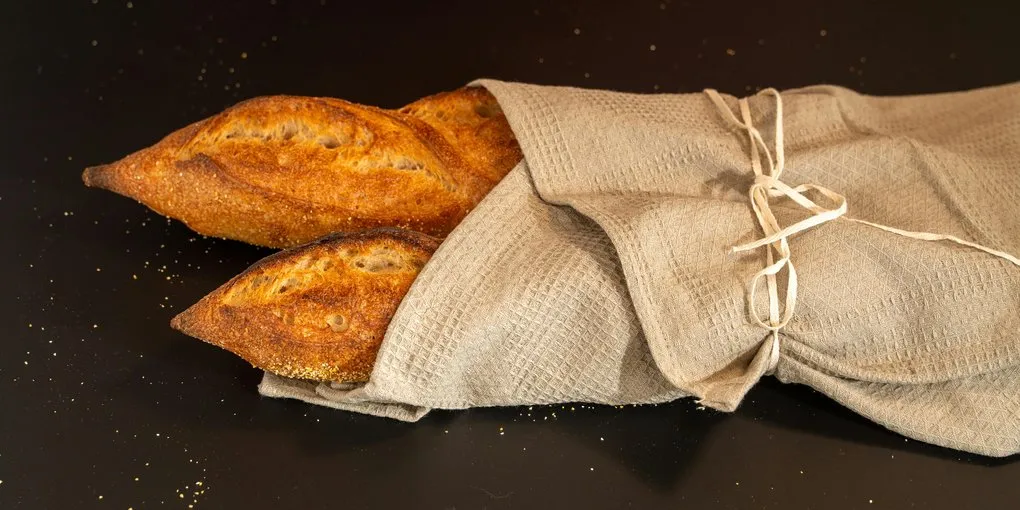
A couche is a heavy linen or cotton cloth used to support long, slender loaves during their final proof. The word itself is French for “bed” — the cloth holds the loaves in parallel folds, each one cradled between ridges of fabric that keep the dough from spreading sideways while it rises. Without a couche, a baguette proofed on a flat pan flattens into an ellipse. With one, the dough holds its pointed, tapered shape right up to the moment of scoring.
Most couches cost $20-40, and with proper care they last decades. This is a once-in-a-baking-lifetime purchase.
Why a Couche Matters for Baguettes and Batards
A couche works in three ways. First, it provides lateral support: the cloth folds form ridges between loaves, and those ridges keep each baguette from collapsing sideways during a 45-75 minute final proof. Second, natural fibers — especially flax linen — wick moisture from the dough surface, producing a faintly tacky skin that scores cleanly and crackles in the oven. A plastic-wrapped baguette traps that moisture against the dough and ends up with a gummy, hard-to-score surface. Third, a thick couche insulates the dough from drafts and cold counter spots, keeping the proof temperature even.
Hamelman uses a couche as the standard proofing surface for baguettes and notes that the pleats in the cloth are what keep the loaves from merging during their final rise. The same cloth used between loaves in a basket forms a flexible, reusable support that a sheet pan cannot match.
What to Look For in a Couche
Fiber. Flax linen is the traditional choice and still the best. Linen is more absorbent than cotton (key for that wicked dough skin), more breathable, and develops a flour patina over time that releases dough cleanly. Cotton is cheaper but less absorbent, and it tends to stick more even when well-seasoned.
Weight. A proper couche is heavy — 10 to 12 ounces per square yard. Light fabric will not stand up in ridges; you get sagging folds that merge, and your baguettes touch each other during proof. Thick fabric holds its shape.
Weave. Tight but not smooth. A twill or plain weave with visible texture grabs flour and prevents sticking. Smooth-finished linens look pretty but release dough poorly.
Width and length. You want at least 18 inches wide (20-26 is standard for home use) to fit three or four baguettes in parallel folds. Length at least 35 inches, ideally 50+. A short couche limits you to two or three baguettes per bake.
Edge finish. Look for bound or hemmed edges. Raw edges fray every wash and shed fibers onto the dough.
The Best Bread Couches to Buy
San Francisco Baking Institute Flax Linen Couche — Editor’s Choice
San Francisco Baking Institute Flax Linen CoucheSFBI sells the professional standard — heavy flax linen woven in France, sized for bakery use, finished with clean hems. This is the couche you find in professional French-style bakeries; SFBI simply retails it at a fair price. 26 inches wide by 36, 48, or 60 inches long. Heavy 12-ounce-per-square-yard weight that stands up in ridges without sagging. Price about $30-45 depending on size.
Who it is for: the serious baker who bakes baguettes or batards weekly. At this price the cost-per-bake is effectively zero after the first year, and the cloth lasts a lifetime.
Pros: Professional French linen. Proper weight and weave. Multiple sizes. Retailer with bakery credibility (SFBI is a working culinary school). Hemmed edges.
Cons: Not available in small/beginner sizes. Shipping adds to the already-higher price. Requires seasoning before first use.
Bottom line: The couche you will still be using in twenty years. Check price on Amazon →
Bob’s Red Mill Baker’s Couche — Best Value
Bob’s Red Mill Baker’s CoucheBob’s Red Mill, known for flour, also sells a serviceable linen couche at a gentler price. It is lighter than the SFBI (about 9-10 ounces per square yard versus 12), somewhat smaller (18 by 36 inches is typical), and the weave is less tight, but for a home baker doing one or two baguettes a week it is entirely adequate. Price typically about $18-25.
Who it is for: the home baker who bakes baguettes occasionally and does not need a professional-grade cloth.
Pros: Readily available at bakery supply and grocery stores. Reasonable price. Known brand. Good starter couche.
Cons: Lighter than ideal — ridges sag under wet dough. Smaller footprint limits to 2-3 baguettes at once. Release is less clean than heavier professional options.
Bottom line: The right couche for learning; upgrade when you bake baguettes weekly. Check price on Amazon →
Breadtopia Heavy Linen Couche — Best Retail Availability
Breadtopia Heavy Linen CoucheBreadtopia imports a European-woven flax linen couche and retails it through their online baking-supply shop. Weight is roughly 11 ounces per square yard, width 20 inches, lengths available from 35 to 60 inches. Build quality is genuinely close to the SFBI at a slightly lower price. Price about $25-35.
Who it is for: the home baker who wants near-SFBI quality without routing through a culinary school supply shop.
Pros: Quality flax linen. Multiple sizes including shorter options. Breadtopia’s customer service is strong. Arrives pre-washed (less initial shedding).
Cons: Stock is sometimes limited. The 20-inch width is narrower than SFBI’s 26. Seasoning still required for best release.
Bottom line: The easiest-to-buy of the professional-grade options. Check price on Amazon →
King Arthur Baking Bakers Couche — Best for Beginners
King Arthur Baking Bakers CoucheKing Arthur’s own couche is aimed squarely at home bakers. 100% cotton duck canvas (not linen), 18 by 35 inches, about 10 ounces per square yard. Comes with printed guidance on first-time seasoning. Price about $20-26.
Who it is for: the beginner who wants a known-brand product with clear instructions.
Pros: Clear first-time-user packaging. Readily available at King Arthur retail and their website. Reasonable price. Washes well.
Cons: Cotton, not linen — less absorbent, tendency to stick more even after seasoning. Smaller than ideal for multi-baguette bakes. Release is noticeably worse than linen-based couches.
Bottom line: A legitimate beginner choice, but plan to upgrade to linen when you get serious. Check price on Amazon →
Generic Linen Pro-Couche — If You Want to Shop Around
Generic Professional Linen CoucheAmazon and bakery-supply retailers stock various “professional linen couche” products in the $15-25 range, often imported from France or Eastern Europe. Quality varies; some are genuine heavy linen and some are labeled linen but are actually cotton or blends. Read fabric descriptions carefully — look for “100% flax linen” and a stated weight in ounces per square yard.
Who it is for: the shopper who wants to compare multiple options and read buyer reviews before committing.
Pros: Wide selection. Often on sale. Some are excellent values.
Cons: Quality is variable. “Linen” labeling is loose on many listings — check fiber content. Some arrive with thin, unbound edges. Returns can be a hassle if fabric is misrepresented.
Bottom line: Worth watching if you know what to look for; risky as a blind purchase. Check price on Amazon →
Honest Comparison
For the baker who is committed to baguettes and batards, buy the SFBI once and forget about it. For the baker who bakes baguettes occasionally, Bob’s or Breadtopia are honest mid-tier picks. For true beginners, King Arthur’s cotton version is a reasonable starter with the understanding that linen is the upgrade path.
Bread Couches Compared
SFBI is the editor's pick for serious baguette bakers; King Arthur cotton is the easiest beginner buy.
| Feature | 01SFBI Flax Linen | 02Bob's Red Mill | 03Breadtopia Heavy Linen | 04King Arthur Cotton | 05Generic Linen |
|---|---|---|---|---|---|
| Price | $30-45 | $18-25 | $25-35 | $20-26 | $15-25 |
| Fiber | 100% flax linen | Linen | 100% flax linen | 100% cotton | Variable |
| Weight (oz/sq yd) | 12 | 9-10 | 11 | 10 | Variable |
| Size | 26 x 36-60 in | 18 x 36 in | 20 x 35-60 in | 18 x 35 in | Variable |
| Edge | Hemmed | Bound | Hemmed | Bound | Variable |
| Best For | Serious baguette bakers | Occasional home bakers | Near-pro home use | Beginners | Comparison shoppers |
How to Season and Care for a Couche
A new couche must be seasoned before first use. The seasoning is simple: rub flour into the fabric aggressively on both sides, working it into the weave. The flour fills the tiny voids in the cloth structure, which is what actually prevents dough from sticking. A freshly-seasoned couche will still stick a little on first use; by the third or fourth bake, the release becomes flawless.
Do not wash the couche. This is the single most common mistake. Washing strips the flour seasoning and undoes months of use-conditioning. After each bake, shake out excess flour, brush loose crumbs with a dry pastry brush, and fold the couche loosely for storage. If dough genuinely crusts onto the fabric, scrape it off with a bench scraper once dry; never introduce water.
Store dry, ideally hanging or loosely folded. Humidity encourages mold and mildew. A fabric shopping bag with airflow is ideal; a plastic bin is a disaster.
A well-cared-for couche lasts for decades. Bakeries hand them down through generations. The older and more flour-patina’d the cloth, the better it releases dough — the opposite of almost every other kitchen tool.
Couche Seasoning and Care
Seven steps from new cloth to decades-old patina.
- 01
Buy
Heavy (10-12 oz/sq yd) flax linen preferred; bound or hemmed edges.
- 02
Season
Rub flour into both sides, working into the weave. Fill the voids in the fabric.
- 03
First Bakes
Minor sticking is normal. Dough releases cleaner after 3-4 uses.
- 04
Between Bakes
Shake out excess flour; brush with dry pastry brush; never wash.
- 05
Stubborn Dough
Dry completely, scrape with bench scraper, re-flour. No water.
- 06
Storage
Hang or loosely fold. Airflow prevents mildew. Plastic bin is a disaster.
- 07
Lifespan
20-40 years with proper care. Older cloth releases better, not worse.
How a Couche Fits Into the Rest of Your Baguette Workflow
A couche is one piece of a longer toolkit. You also need a bread lame for scoring (curved blade for baguette ears), a baking stone or steel for the bottom heat that drives oven spring, and a way to generate steam in the first ten minutes of the bake. For the shaping technique that makes the couche work in the first place, see our how to shape bread guide. For the full baguette method end-to-end, see baguette at home. And if you are still figuring out which equipment matters most, the bread baking equipment guide ranks every tool by how much difference it actually makes.
For loaves that are not long and slender — boules and round sourdoughs — a couche is the wrong tool. You want a banneton instead, which holds round dough in a basket shape during proof.
Frequently Asked Questions
- Is the SFBI linen couche worth the price over Bob's Red Mill?
- If you bake baguettes weekly, yes. The heavier weight stands up in ridges that actually support the dough, the linen releases cleaner, and the larger footprint lets you proof four baguettes at once. For occasional baguette bakers, Bob's is sufficient and saves $15-20. The performance difference is meaningful only at volume.
- How long should a linen couche last?
- A well-cared-for flax linen couche lasts 20-40 years. Professional bakeries routinely use couches that are older than their current bakers. The only things that kill a couche are washing (strips seasoning), storing wet (mildew), and fraying from unbound edges. If you keep the couche dry, flour-seasoned, and loosely stored, you may hand it down.
- Can I use a tea towel or kitchen cloth instead of a couche?
- For occasional bakes, yes — a flour-dusted tea towel works in a pinch. The limitations: tea towels are thinner, so they do not hold ridges well, and they absorb less moisture, so the dough skin develops less cleanly. For a boule or a single batard, a tea towel in a colander works fine. For multi-baguette bakes, you need a proper couche.
- How do I clean a couche that has stubborn dough stuck to it?
- Let it dry completely, then scrape the dough off with a bench scraper or the back of a knife. Never use water — water strips the flour seasoning that makes the couche work. After scraping, re-flour aggressively and the couche will perform better than ever.
- Linen or cotton — which should I buy?
- Linen, every time, if you can afford it. Linen absorbs more moisture (produces a cleaner dough skin), releases better (cotton sticks more even seasoned), and lasts longer. Cotton is the budget choice for beginners. Upgrade to linen when the couche becomes a regular part of your workflow.
- What size couche do I need for home baking?
- At least 18 inches wide and 35 inches long for two to three baguettes. The 20-26 inch width range is standard for home use; SFBI's 26-inch is the most flexible because you can fold over the trailing edge to make supporting walls for the outermost loaves. If you bake batards (oval loaves), longer is better — 48-60 inches lets you fit four loaves with proper spacing.
- Do I need to wash a new couche before first use?
- No. Most professional couches arrive ready to season — some are pre-washed by the manufacturer (Breadtopia advertises this). Even if yours is not, skip the wash and go straight to flour-seasoning. Washing introduces water, which the cloth absorbs into its weave, and that is the opposite of what you want. The flour-rub seasoning step does the conditioning that washing would, without the moisture problem.
Some links above are affiliate links. If you buy through them, we earn a small commission at no extra cost to you. We only recommend tools we have personally used or that have consistent feedback from working bakers.