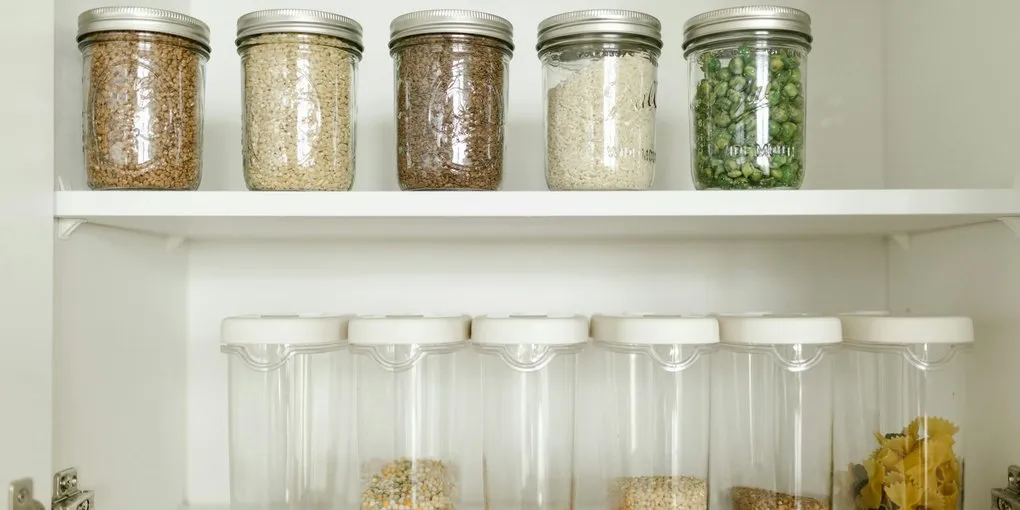
The Cambro 6SFSCW 6-quart square polycarbonate container is the best flour storage container for serious bread bakers — restaurant-grade build, NSF certified, full 5 lb bag fits with scoop room, around $20 with the SFC6 lid. For a residential design, the OXO Good Grips POP 4.4 Qt Big Square Medium ($20-25) holds a full 5 lb bag and uses a one-handed push-button gasket lid. White flour stores 12 months at room temperature in an airtight container; whole wheat, rye, and spelt should be refrigerated (4-6 months) or frozen (12+ months) because the germ oils go rancid quickly.
Why Proper Flour Storage Matters
Flour is not indifferent to how you store it. The bran and germ in whole-wheat flour contain oils that go rancid within weeks if exposed to oxygen and warmth, and even white flour absorbs odors, humidity, and pantry pests from a poorly sealed container. High-extraction and freshly milled flours have the shortest shelf lives of all.
Opening a 5-pound bag of bread flour and leaving it on the counter is a mistake. The bag reseals poorly, the flour stales from oxygen exposure, and within a month it has lost some of the enzymes that drive fermentation and flavor. A proper airtight container can double or triple useful shelf life and keep your flour at the quality you paid for.
Bakers who work with multiple flours — bread flour, all-purpose, whole wheat, rye, spelt — need multiple containers. Getting the storage right pays back in every bake, not just in flavor but in consistency: flour that absorbs an extra percent of water because it has been sitting in a humid kitchen throws off hydration calculations.
The good news is that flour storage containers are cheap. A full setup for a serious bread baker — five or six containers sized for different flours — runs $80-180 depending on the brand. This is a one-time purchase for a decade of use.
What to Look For
A flour container buying decision comes down to five factors that matter and a few that do not.
Airtight seal. A gasketed lid is non-negotiable. Friction-fit lids (push-on style, like the Cambro standard cover) leak slowly. For a true airtight seal, look for a silicone gasket with either flip-top latches (Rubbermaid Brilliance), a push-button mechanism (OXO POP), a snap-lock (Progressive ProKeeper+), or a wire-bail clamp (Le Parfait). For a Cambro setup, choose the polypropylene seal cover (SFC6SCPP) rather than the standard polyethylene snap lid if you want a tighter seal.
Capacity. A 5-pound bag of King Arthur or Bob’s Red Mill bread flour is roughly 17-18 cups, or about 4.5 quarts settled, with extra volume for fluff. A 6-quart container holds the bag with comfortable scoop room; a 4.4-quart container holds it with no headroom; a 3-quart container holds about 2/3 of a bag.
Material. Food-grade polycarbonate (Cambro), Tritan copolyester (Rubbermaid Brilliance), and BPA-free SAN/styrene-acrylonitrile (OXO POP) are all clear, BPA-free, and dishwasher-safe. Glass (Le Parfait, Glasslock) is heavier and breakable but stays crystal clear forever and shows flour exactly. Stainless or ceramic canisters hide the fill level — avoid them for active flour rotation.
Clear walls. Being able to see flour level without opening the container saves time and keeps the seal closed. Opaque or heavily-branded containers force you to open them to check, briefly exposing flour to air every time.
Stackable. Limited pantry space rewards stackable designs. Square footprints pack better than round, which is why every modern flour container — Cambro, OXO POP, Rubbermaid Brilliance, ProKeeper+ — is square.
Cleaning. Smooth interior curves (no corners to trap flour), top-rack dishwasher-safe construction, and removable gaskets all matter over years of use.
Top Picks
Cambro 6SFSCW 6-Quart Square Polycarbonate Container — Editor’s Choice
Cambro 6SFSCW 6-Quart Square ContainerCambro is the restaurant industry’s universal storage brand, and the 6SFSCW 6-quart square polycarbonate container is what professional bakeries use for flour. Clear polycarbonate body with molded graduation markings (in Winter Rose red), a square 8 3/8 x 8 3/8 x 7 1/4 inch footprint, NSF certified, dishwasher-safe in commercial machines, rated for temperatures from -40 F to 210 F. The lid is sold separately — you want either the SFC6 polyethylene snap-tight lid (around $5) for a friction-fit cover, or the SFC6SCPP polypropylene seal cover (around $7-8) for a tighter, gasketed seal. A full 5-pound bag of bread flour fits with comfortable scooping room. Container price is typically $12-16, plus $5-8 for the lid, for an all-in cost of about $17-23.
Who it is for: the baker who wants professional-grade storage with no frills.
Pros: Bulletproof restaurant-grade polycarbonate. Clear walls with graduation markings. Stackable square footprint. NSF certified. Sold in multiple sizes (2qt, 4qt, 6qt, 8qt, 12qt, 18qt, 22qt) to match your flour collection. Survives dropped-from-shoulder-height abuse in working kitchens.
Cons: Lid sold separately — easy to forget on a first order. The standard SFC6 snap-tight lid is secure but not gasketed; for true airtight you need the SFC6SCPP seal cover. Utilitarian-white aesthetic is industrial, not kitchen-decor.
Bottom line: The container professional bakers buy, and the one you will still be using in fifteen years.
OXO Good Grips POP Container 4.4 Qt Big Square Medium — Best for Residential Kitchens
OXO POP 4.4 Qt Big Square MediumOXO’s POP containers use a one-handed push-button opening system: press the center of the lid, the magnetic gasket seal releases, and the lid opens. Clear BPA-free SAN (styrene-acrylonitrile) body, square 6.5 x 6.5 x 9.5 inch footprint, stackable, dishwasher safe. The 4.4-quart Big Square Medium is the size OXO specifies for a full 5-pound bag of flour or sugar — capacity is tight but the bag fits, and there is room for the included scoop. The current generation uses the POP 2.0 lid with a magnetic gasket and a one-piece pop-button mechanism that runs cleaner than the original. Price is typically $20-25 per container.
Who it is for: the home baker who values the aesthetic of a matching container set, prefers a push-button to a latch, and wants the lid to seat itself.
Pros: Genuinely airtight with a pleasant user experience. Stackable. Dishwasher safe. The push-button lid is fun and functional. Wide selection of sizes (0.4 qt up to 5.5 qt and beyond) for a coordinated pantry. Made by a brand with strong customer service.
Cons: More expensive per unit than Cambro. Body material is SAN, not Tritan — it is more brittle than polycarbonate, so a dropped POP container is more likely to crack than a dropped Cambro. The POP 2.0 lid is an improvement on the original but adds parts that can eventually fail.
Bottom line: The premium residential option for bakers who treat the pantry as part of the kitchen design.
Rubbermaid Brilliance Pantry 12-Cup Container — Best Mid-Range Latched
Rubbermaid Brilliance 12-Cup Pantry ContainerRubbermaid Brilliance is a line of latched-lid clear storage containers built around BPA-free Tritan plastic. The 12-cup pantry container has four flip-top latches that clamp down on a silicone gasket for a 100% airtight, leak-proof seal. Crystal-clear Tritan walls show flour cleanly; the stackable square design makes pantry packing easy; the lid is dishwasher safe and the body is dishwasher safe on the top rack. 12 cups equals 3 quarts (about 96 fluid ounces), which holds roughly 3.5 pounds of flour — about 2/3 of a 5-pound bag. For a full bag, step up to the 16-cup (about 1 gallon, 4 quarts) Brilliance pantry container, or pair two 12-cups. Price is typically $15-20 for the 12-cup, $20-25 for the 16-cup.
Who it is for: the baker who wants a visible airtight latched seal at a moderate price and prefers a residential aesthetic over restaurant-supply white.
Pros: Four-latch airtight seal that is genuinely 100% airtight (not just splash-proof). Crystal-clear Tritan walls. Top-rack dishwasher safe. Available in a wide size range (1.3 cup, 3.2 cup, 7.8 cup, 12 cup, 16 cup, 20 cup pantry). Reasonable price.
Cons: The 12-cup is smaller than most bakers need for a full 5-pound bag — plan on the 16-cup or pair two 12-cups. Latches can loosen after many dishwasher cycles. The white-latches-and-clear-lid aesthetic reads very residential.
Bottom line: The right container if you value a visible latched seal and either step up to the 16-cup or accept that you will pour the bag across two 12-cups.
Progressive ProKeeper+ 4-Quart Flour Container — Best for Volume Bakers
Progressive ProKeeper+ 4-Quart Flour ContainerProgressive’s ProKeeper+ is designed specifically for flour and sugar. Clear BPA-free plastic body, silicone-gasketed snap-lock lid, an integrated scoop that sits on an inner shelf (keeping the scoop flour-dusted but off the counter), and a magnetic removable leveling edge for striking off measuring cups. Capacity is 4 quarts, which Progressive rates to hold a full 5-pound bag of flour with the scoop in place. Stackable, dishwasher safe (top rack). Price is typically $20-28; King Arthur Baking Company carries it as their preferred flour storage solution.
Who it is for: the baker who measures flour by volume (cups) rather than by kitchen scale. For weight-based bakers who follow the bread-author consensus that grams are non-negotiable, the integrated scoop is less useful — but the airtight gasketed storage is still excellent.
Pros: Airtight gasketed seal. Built-in scoop and magnetic leveler are genuinely convenient for volume bakers. Clear walls. Stackable. Dishwasher safe (top rack). Stocked by King Arthur Baking, which speaks to its standing among recipe-volume bakers.
Cons: Volume-focused design is wasted on weight-based bakers. The scoop occupies interior volume, slightly reducing effective flour capacity. Price is high for the actual storage utility if you ignore the scoop and leveler. Body plastic is more brittle than polycarbonate.
Bottom line: Excellent for volume bakers and the King Arthur recipe crowd; over-engineered for gram-first bakers.
Le Parfait Super Jar 3 L Clamp Jar — Best Glass Option
Le Parfait Super Jar 3 LLe Parfait has been making clamp jars in France since 1930. The Super Jar line uses a soda-lime glass body with a stainless-steel wire-bail closure pressing down on a natural rubber gasket — the same design French households have used for canning and dry-goods storage for nearly a century. Glass containers show flour exactly as it is — no plastic hazing, no staining from turmeric or cocoa if you cross-use the jar. The 3-liter (96 fl oz, 3 quarts) Super Jar holds most of a 5-pound bag of bread flour; for a full bag, pair two or step up to a larger preserving jar. Price is around $18-25 per jar.
The 3 L Super Jar runs about 7-8 inches in diameter and 9-10 inches tall — round, not square, so it does not stack as efficiently as plastic squares. The glass body is dishwasher safe; the rubber gasket is removable for cleaning and replacement (replacement gaskets are sold separately for a few dollars).
Who it is for: the baker who prioritizes visual clarity, dislikes plastic, and has pantry shelving that can hold the weight. Also the baker who appreciates that the clamp-jar design has not changed since 1930 because it works.
Pros: Genuinely transparent, stays clear forever. Soda-lime glass is BPA, lead, and cadmium free. Wire-bail clamp with rubber gasket creates a true airtight seal. Made in France with replaceable gaskets. Heirloom-grade design.
Cons: Heavy. Breakable — a dropped glass jar of flour is a disaster. Round footprint stacks poorly compared with squares. Per-quart cost is higher than plastic. The natural rubber gasket degrades faster than silicone and may need replacing every 3-5 years.
Bottom line: The right choice for a plastic-averse baker with stable shelves who wants a single beautiful jar instead of a matched plastic set.
Honest Comparison
Five good containers, five different reasons to choose one. The Cambro wins on cost-per-quart and durability. The OXO POP wins on ease of use. The Rubbermaid Brilliance wins on latched-seal visibility. The Progressive ProKeeper+ wins on volume-baker convenience. The Le Parfait wins on aesthetics and glass clarity.
Flour Storage Containers Compared
Web-verified specs, current 2026 prices
| 01Cambro 6 Qt Sq | 02OXO POP 4.4 Qt | 03Rubbermaid 12 Cup | 04ProKeeper+ 4 Qt | 05Le Parfait 3 L | |
|---|---|---|---|---|---|
| Price (USD) | $17-23 (w/ lid) | $20-25 | $15-20 | $20-28 | $18-25 |
| Capacity | 6 qt | 4.4 qt | 3 qt (12 cup) | 4 qt | 3 L (3 qt) |
| Material | Polycarbonate | BPA-free SAN | BPA-free Tritan | BPA-free plastic | Soda-lime glass |
| Seal | Snap or seal cover | POP 2.0 push-button | Four-latch gasket | Snap-lock gasket | Wire bail + rubber |
| Stackable | Yes (square) | Yes (square) | Yes (square) | Yes (square) | Limited (round) |
| Fits 5 lb bag? | Yes, full + scoop room | Yes, full (tight) | About 3.5 lb (2/3) | Yes, full | Most of bag |
| Dishwasher | Commercial-rated | Yes | Yes (top rack) | Yes (top rack) | Yes (gasket out) |
| Origin | USA / Mexico | Designed USA | Designed USA | Designed USA | France |
| Best For | Professional feel | Residential design | Latch security | Volume bakers | Plastic-averse |
For most bakers, the Cambro 6SFSCW with the SFC6SCPP polypropylene seal cover offers the best combination of capacity, build quality, and price. The OXO POP 4.4 Qt Big Square Medium is the residential-design upgrade if the pantry is visible. Rubbermaid Brilliance sits in between if you specifically want flip-latch security. ProKeeper+ suits volume-based bakers and the King Arthur recipe crowd. Le Parfait is for the baker who wants a single beautiful jar.
How to Store Flour Properly
White bread flour and all-purpose: Room temperature in an airtight container is fine for up to 12 months. Keep the container cool and dry, and away from cabinets near the oven, dishwasher, or window — temperature swings drive moisture in and out of any seal that is not perfect.
Whole wheat, rye, spelt, einkorn: These contain oils from the germ that go rancid within 3-4 weeks at room temperature. Store in an airtight container in the refrigerator (4-6 months) or freezer (12+ months). Bring the flour back to room temperature before using — cold flour produces a cold dough, which throws off desired dough temperature calculations.
Specialty and high-extraction flours: Even shorter shelf life. The finest-tasting artisan flours (fresh-milled, stone-ground) stale within weeks. Buy in small quantities and refrigerate.
Labeling: Always label the container with the flour type and purchase date. Even if you know what is in each, a baker who shares your kitchen may not. A dry-erase marker on the lid works for plastic; tape labels survive washing on glass.
Cleaning and pest prevention: Empty the container completely and wash with hot soapy water every 2-3 months. Flour residue can harbor weevil eggs from the original bag, and a periodic deep clean prevents infestations. For new flour purchases, freezing the unopened bag for 48 hours before transferring to storage kills any weevil eggs that came home from the store. An airtight container then prevents re-infestation from anything else in the pantry.
Flour Shelf Life by Type and Storage
Proper storage doubles or triples usable life
White bread flour / AP (room temp)
Airtight container, cool and dry away from oven
White bread flour / AP (fridge)
Refrigerated airtight extends usable life beyond a year
Whole wheat / rye / spelt (room temp)
Bran and germ oils go rancid quickly without refrigeration
Whole wheat / rye / spelt (fridge)
Refrigerated airtight slows rancidity dramatically
Whole wheat / rye / spelt (freezer)
Frozen airtight is the longest shelf life for whole grains
Fresh-milled stone-ground
Shortest shelf life — buy small, use fast, refrigerate
Bring refrigerated or frozen flour to room temperature before mixing to maintain dough temperature accuracy.
jayarrbread.comFor more on the flours behind these storage choices, see our bread flour vs all-purpose guide and best bread flour brands roundup. For the rest of your bread-baking toolkit, see the bread baking equipment guide, which lays out the full Tier 1-4 equipment progression. Pair your flour storage with a kitchen scale for accurate dough formulation, a bread knife for slicing the loaves you bake, and an instant-read thermometer for desired dough temperature work. After baking, the right bread storage method keeps the finished loaf at its best.
This article contains affiliate links. If you buy through them, we earn a small commission at no extra cost to you. We only recommend tools we have personally used or have tested through consistent baker and home-kitchen feedback.
Frequently Asked Questions
- Is the Cambro worth the price over a generic plastic container?
- Yes. Generic plastic containers typically use lower-grade resins that haze over time, crack under thermal shock, and develop flour-trapping scratches. Cambro's polycarbonate is the same material used in restaurant kitchens for decades of daily abuse. At about $17-23 with the SFC6 lid, it is comparable to or cheaper than many residential alternatives, and it will last three times as long. Most professional bakeries use Cambro CamSquares for the same reason — bulletproof build, NSF certified, replaceable lids.
- How long should flour storage containers last?
- A quality polycarbonate or Tritan container (Cambro, Rubbermaid Brilliance) lasts 10-15 years of home use. The plastic body is essentially indestructible. SAN (OXO POP) is more brittle and may crack on a hard drop, but should still last 5-10 years. The failure point on any latched or gasketed container is the gasket: silicone gaskets degrade after 5-7 years and may need replacing; OXO POP latches and Le Parfait wire bails wear after thousands of cycles. Manufacturer replacement parts are often available for under $10.
- How do I clean a flour container without damaging it?
- Most quality containers are top-rack dishwasher safe, but hand-washing extends the life of gaskets and lids. Cambro can withstand commercial dishwasher cycles. Use hot soapy water and a non-abrasive sponge. For stubborn flour residue in corners, soak in warm water for 10 minutes before scrubbing. Dry completely before refilling — moisture trapped in the container promotes clumping and mold growth. Le Parfait gaskets should be removed before dishwashing and replaced after the body is dry.
- Should I store bread flour in the refrigerator?
- White bread flour is fine at room temperature in an airtight container (12 months shelf life). Whole wheat, rye, spelt, and other whole-grain flours should be refrigerated (4-6 months) or frozen (12+ months) because the oils in the germ go rancid quickly at room temperature. Bring refrigerated flour to room temperature before using to avoid throwing off dough temperature calculations — cold flour produces cold dough, which extends bulk fermentation by several hours.
- How do I prevent weevils in my flour?
- Start with clean containers (periodic deep cleans), buy flour in quantities you can use within 2-3 months, and freeze fresh flour for 48 hours before transferring to storage. Freezing kills any weevil eggs that came home from the store. An airtight container then prevents re-infestation from other pantry sources. Bay leaves in the pantry are a folk remedy with mixed evidence; clean storage and the freezer-then-transfer protocol are far more reliable.
- Does the OXO POP 4.4 Qt actually fit a full 5-pound bag of flour?
- Yes — OXO specifically markets this size for a 5-pound bag of flour or sugar, and the bag does fit. The fit is tight: there is little headroom for the included scoop, and you may have to compress the flour slightly as you pour. If you want comfortable scoop room and a small amount of fluff space at the top, step up to a 6-quart Cambro instead. The OXO is the right size for the bag itself, not for bag-plus-working-room.
- What is the difference between Cambro polycarbonate and Tritan plastic?
- Polycarbonate (Cambro) is the original commercial-kitchen clear plastic — extremely tough and dishwasher safe at high commercial temperatures, but it does contain BPA in its uncoated form. The Cambro food-storage line is BPA-free per NSF certification, but check the spec for any specific size you buy. Tritan (used by Rubbermaid Brilliance) is a copolyester that is BPA-free by design, with similar clarity and similar-but-slightly-lower temperature tolerance. For a home-baking flour container, both are excellent. SAN (used by OXO POP) is also BPA-free but more brittle than either polycarbonate or Tritan.