The Dexter-Russell S196 ($14-18) is the bench knife professional bakeries actually buy — US-made since 1818, NSF-certified, with a sealed polypropylene Sani-Safe handle. For best value, the Ateco 1318 ($8-12) delivers nearly identical performance at half the price. You also need a flexible plastic bowl scraper ($3-6) for sticky high-hydration dough — the two tools do different jobs and together cost under $25.
Why Every Bread Baker Needs Both a Bench Knife and a Bowl Scraper
Serious bread bakers keep two distinct tools for dough handling: a flexible plastic bowl scraper and a rigid metal bench knife (also called a bench scraper or dough cutter). They look similar, but they do different jobs, and trying to use one for the other costs you either speed or cleanliness at the worst possible moment in a bake. Hamelman, Robertson, Forkish, Reinhart, and Buehler all list a bench scraper as essential equipment.
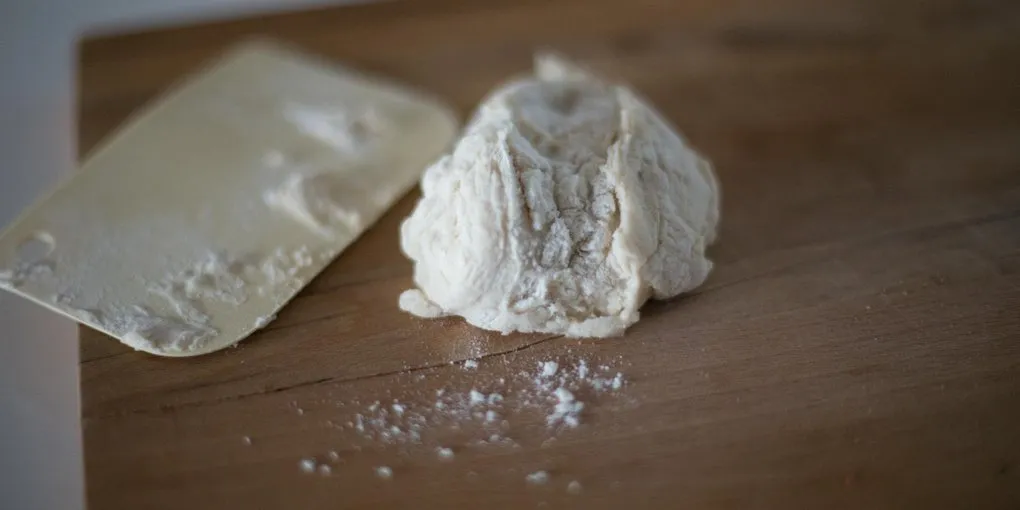
A flexible plastic bowl scraper — the soft, curved one with a semicircular edge — is for pulling sticky dough out of a mixing bowl, clearing dough off a proofing container, and working high-hydration loose doughs. The flexibility lets the blade conform to the curve of a bowl and the sticky surface of a 78 percent hydration ciabatta.
A rigid metal bench knife is for dividing dough, pre-shaping rounds, cleaning flour and scraps off a counter, and scooping pre-shapes off a floured work surface without compressing them. The rigid edge cuts cleanly through dough without tearing, and the thin blade glides under pre-shapes where a plastic scraper would squish.
Both tools are cheap — $5–18 each — and both are essential. The decision is less about price and more about which models hold up to daily use without bending, dulling, or rusting.
Bowl Scraper vs Bench Knife
When to reach for which tool
Flexible Plastic Bowl Scraper
- Material
- Rigid plastic (Lexan / polypropylene)
- Best for
- Bowls, sticky dough, high-hydration work
- Cost
- $3-6
- Conforms to bowl curves; pulls every gram of dough out clean.
- Use during mixing, stretch-and-fold, and pulling bulk dough onto the bench.
- Cannot cut shaped dough cleanly — for that you need the bench knife.
Rigid Metal Bench Knife
- Material
- Stainless steel blade + sealed handle
- Best for
- Dividing, pre-shaping, counter cleanup
- Cost
- $10-29
- Square edge cuts dough without compressing or tearing.
- Thin blade slides under pre-shaped rounds without squashing them.
- Cannot scrape inside a bowl — for that you need the bowl scraper.
What to Look For
A bench knife buying decision comes down to four factors. Everything else is finish and feel.
Blade material. Stainless steel is the only sensible choice. Carbon steel rusts if left wet for even an hour on a humid kitchen counter. Plastic bench knives exist, but they flex too much to cut shaped dough cleanly.
Handle and seal. The single most failure-prone part of a bench knife is the seam where the handle joins the blade. Cheap knives leave a visible gap that fills with dough over time and turns into a miniature sourdough colony. Look for NSF-certified sealed handles (Dexter-Russell’s Sani-Safe, Ateco’s molded polypropylene, OXO’s Santoprene) where the seal is fused, not glued.
Edge geometry. A clean square corner is better than a rolled or beveled edge. The square cuts cleanly; a bevel compresses dough before it cuts. The edge is not a cutting bevel like a chef’s knife — it works as a chisel against the work surface, so it never needs sharpening.
Size. Bench knife blade should be about 6 inches wide and 3-4 inches tall — enough to span a divided dough portion in one cut. Bowl scrapers should be roughly 4 inches across the curve.
For the bowl scraper, the only thing that matters is material: rigid plastic (Lexan or polypropylene), not silicone. Silicone scrapers are too floppy for serious dough work.
Top Picks — Bench Knives
Dexter-Russell S196 Sani-Safe Dough Cutter/Scraper — Editor’s Choice
Dexter-Russell S196 Sani-Safe Dough Cutter/ScraperDexter-Russell is America’s oldest cutlery brand — the Harrington Cutlery Company was founded in Southbridge, Massachusetts in 1818, merged with the John Russell Cutlery Company in 1933, and has been making knives in Massachusetts ever since. Their S196 Sani-Safe dough cutter is what most professional bakeries actually buy. The 6 by 3 inch stainless blade has a true square edge that cuts dough cleanly without compressing, and the molded polypropylene handle is fused to the blade with an impervious seal — no gap to trap dough, no joint to loosen. NSF-certified, made in the USA, available with white, red, or black handles. Price runs $14-18 at most professional supply stores.
Who it is for: the baker who wants one bench knife that will last a career. This is the model line you see in working bakeries.
Pros: Professional build quality. Sealed Sani-Safe handle joint. NSF certified. US-made by a company that has been forging cutlery for over two hundred years.
Cons: The polypropylene handle is utilitarian — no wood or premium finish. White handles show stains over time (red or black hides this better). Slightly heavier than amateur bench knives.
Bottom line: The bench knife professional bakers actually own.
Ateco 1318 Bench Scraper — Best Value
Ateco 1318 Bench ScraperAteco is a professional pastry-tool brand that has been supplying bakeries since 1905, and the 1318 is their workhorse bench scraper. The 6 by 4.25 inch stainless steel blade has a clean edge and a textured polypropylene handle that is sealed to the blade and easy to grip. For ninety percent of what a home baker asks of a bench knife, this is functionally indistinguishable from the premium Dexter or King Arthur options at roughly half the price. Typically $8-12.
Who it is for: the home baker who wants pastry-professional performance at an amateur-grade price.
Pros: Affordable. Ateco brand reliability. Sealed plastic handle. Generous 6-inch blade.
Cons: Plastic handle is utilitarian-looking. Not NSF-certified like the Dexter S196. Some reports of the handle loosening after years of dishwasher abuse (which you should not be doing anyway).
Bottom line: The smart-money pick for serious home bakers.
OXO Good Grips Multi-Purpose Scraper and Chopper — Best for Home Cooks
OXO Good Grips Multi-Purpose Scraper and ChopperOXO’s bench scraper is the consumer-kitchen favorite for a reason. The 6 by 4 inch stainless blade has quarter-inch ruler markings etched along the front face (useful for dividing dough into equal portions), and the soft black Santoprene handle is fused to the blade for a clean, dishwasher-safe joint. It is slightly thicker and heavier than the Ateco or Dexter pro options, but the wide ergonomic grip is more comfortable for long shaping sessions. About $12-15 and backed by OXO’s lifetime satisfaction guarantee.
Who it is for: the home cook who uses a bench knife for bread, pastry, chopping vegetables, and general kitchen tasks — not just bread.
Pros: Comfortable wide grip. Quarter-inch ruler markings on blade. OXO’s excellent warranty support. Sealed Santoprene handle, dishwasher-safe.
Cons: Thicker blade compresses soft dough slightly more than thinner professional options. Rubber handle picks up kitchen odors over time. Not NSF-certified.
Bottom line: The best choice if the bench knife is also a general kitchen tool.
King Arthur Baking Bench Knife — Best Bread-Specific
King Arthur Baking Bench KnifeKing Arthur’s own bench knife is designed for bread bakers specifically and made exclusively for them by an unnamed Massachusetts cutlery company that has been in business since the 1800s (the obvious candidate is Dexter-Russell, though King Arthur does not confirm the OEM publicly). The 6-inch stainless steel blade is set into a comfortable walnut handle stamped with the King Arthur logo. The premium price — $29 direct from King Arthur — buys the wood handle and the brand cachet rather than performance.
Who it is for: the bread-specific baker who wants the wooden handle and supports the King Arthur Baking Company employee-owned ecosystem.
Pros: Beautiful walnut handle. King Arthur’s customer service. Bread-specific design. The wood handle feels significantly better in hand than utilitarian plastic.
Cons: Twice the price of Ateco 1318 for similar cutting performance. Wood handle requires hand-wash only (no dishwasher) and oiling every few months to prevent drying. The edge thickness is essentially identical to the cheaper plastic-handle options.
Bottom line: The bench knife you buy for the look and the brand — performance is not the deciding factor at this price.
Mercer Culinary M18370 Hell’s Handle Bench Scraper — Best for Heavy Use
Mercer Culinary M18370 Hell’s Handle Bench ScraperMercer’s M18370 uses their Hell’s Handle grip — a textured polymer handle that withstands 450°F and absorbs 50 percent less heat than standard polypropylene. The 5⅞ by 3½ inch high-carbon stainless blade has inches on one side and centimeters on the other for portioning. It is built like it expects to live in a pizza shop, but it is just as useful in a home kitchen if you treat your tools roughly. Burgundy handle is the most common color; the brown variant is also widely sold. Price runs $14-18.
Who it is for: the baker who wants a bench knife that can take abuse — dropped, dishwasher-cycled, left in a hot oven by accident, used to flip browning meat off a grill.
Pros: Heat-resistant to 450°F (rare among bench scrapers). Commercial-grade build. Measurement scales in two unit systems. Burgundy handle hides stains.
Cons: Aesthetic is industrial-utilitarian — clashes with farmhouse-style kitchens. Slightly smaller blade than the 6×4 options.
Bottom line: The bench knife for people who are hard on their tools — or who use the same scraper for bread, pizza, and grilling.
Bowl Scraper Recommendation
For the flexible plastic bowl scraper, the professional standard is a simple unbranded rigid plastic scraper with a curved edge, sold by bakery-supply retailers for $3-5. OXO, Ateco, and Matfer all make acceptable branded versions at $5-8 if you want color coding. The specific brand matters less than the material: rigid plastic (Lexan or polypropylene), not silicone. Silicone scrapers are too flexible for serious dough work — they fold against the dough instead of pushing it.
Keep at least two in your kitchen — one for wet dough out of the mixer, one for scraping dry flour off the counter. At $3-5 each, there is no reason to cheap out on quantity.
Honest Comparison
Bench Knives Compared
Five bench scrapers ranked by build, edge, handle, and value
| Feature | 01Dexter-Russell S196 | 02Ateco 1318 | 03OXO Good Grips | 04King Arthur Bench Knife | 05Mercer M18370 |
|---|---|---|---|---|---|
| Price | $14-18 | $8-12 | $12-15 | $29 | $14-18 |
| Blade | 6×3" stainless | 6×4.25" stainless | 6×4" w/ ruler | 6×3" stainless | 5⅞×3½" w/ ruler |
| Handle | Sani-Safe polymer | Polypropylene | Soft Santoprene | Walnut | Hell's Handle polymer |
| NSF Certified | Yes | No | No | No | Yes |
| Heat Resistant | Std | Std | Std | Low (wood) | 450°F |
| Origin | USA | Made for Ateco (China) | China | USA (1800s maker) | Imported |
| Best For | Lifelong buy | Smart value | General kitchen | Bread-specific aesthetic | Heavy/rough use |
All five will last a decade of home use with hand washing. Choose by handle preference and price.
jayarrbread.comFor bench knives: Dexter-Russell if you want what professionals use; Ateco if you want the best value; OXO if the tool also chops vegetables; King Arthur if you want the walnut aesthetic and brand loyalty; Mercer Hell’s Handle if you abuse your tools. All five cut shaped dough cleanly and last years.
Care and Use
Hand-wash bench knives. The dishwasher is hard on sealed handles, and over 3-5 years it will loosen even the best ones. Dry immediately after washing — stainless can develop surface spots if left wet, and any wooden handle (like King Arthur’s walnut) will dry out and crack without occasional mineral oil.
The edge does not need sharpening for dough work. The square corner will eventually round off after years of cutting against countertops, at which point the scraper still works for moving dough but makes less crisp cuts. At that point, replace the knife rather than trying to re-square the edge — it is a $10-30 replacement, and the worn handle is usually due for retirement anyway.
For technique on using these tools in pre-shaping and final shaping, see our how to shape bread guide, which covers dividing, pre-shaping, and bench rest. For the complete bread toolkit including scales, Dutch ovens, and thermometers, see the bread baking equipment guide. For technique on the second knife every bread baker eventually wants — a serrated slicer — see the best bread knives for 2026. And for the foundational mixing techniques that determine how often you reach for a scraper, see how gluten works and the bulk fermentation guide.
Frequently Asked Questions
- Is the Dexter-Russell worth the price over the Ateco?
- Only slightly. Both knives will outlast typical home-baker use. Dexter-Russell's NSF certification and US manufacturing justify a $5-10 premium for bakers who value those credentials, but the Ateco 1318 has nearly identical cutting performance. If you plan to own one bench knife for your entire baking life, Dexter is the upgrade. For most home bakers, Ateco is the smart-money choice.
- How long should a bench knife last?
- Professional bakers use the same bench knife for 10-20 years. The blade rarely fails; it is always the handle seal that gives out first, usually after years of dishwasher abuse. Hand-wash and dry, and a quality bench knife will outlast its owner's career. The rolled-over square edge eventually develops a small radius from cutting against counters, but the knife still works for moving dough even then.
- Can I sharpen a bench knife?
- You should not. The edge of a bench knife is a square corner, not a cutting bevel like a chef's knife. Sharpening on a whetstone rounds the corner and makes the knife worse at its primary job. If the edge eventually rounds off from years of use, replace the knife. It is a $10-30 replacement.
- What is the difference between a bowl scraper and a bench scraper?
- A bowl scraper is a flexible plastic tool with a curved edge, designed to conform to bowl curves and pull sticky dough out cleanly. A bench scraper (or bench knife) is a rigid metal tool for cutting, dividing, and moving dough on a flat surface. Most bakers own both — they do different jobs and cost less than $25 together.
- Can I use one tool for all dough tasks?
- Not well. A rigid metal bench knife cannot scrape the inside of a bowl cleanly; a flexible plastic bowl scraper cannot cut dough into clean portions. The two tools are complementary, not interchangeable. Both are cheap enough that there is no reason to compromise.
- Are stainless steel handles better than plastic on a bench knife?
- No. All-metal bench knives transmit heat to your hand if the blade is hot (a hazard near a steaming Dutch oven) and feel colder in winter kitchens. The professional standard is a sealed polypropylene or Santoprene handle — Dexter-Russell, Ateco, and OXO all use plastic for the same reason commercial kitchens prefer it: cheaper to manufacture cleanly, easier to seal sanitarily, and more comfortable in the hand.
- Do I need a bench knife for high-hydration sourdough?
- Yes, especially for high-hydration sourdough. Doughs above 75 percent hydration are too sticky to divide cleanly with a chef's knife, and pre-shaping rounds requires sliding a thin rigid edge under the dough without compressing it. The bench knife is more important for wet artisan-style breads than for stiffer enriched doughs like brioche or challah.
Some links above are affiliate links. If you buy through them, we earn a small commission at no extra cost to you. We only recommend tools we have personally used or tested through consistent baker feedback.