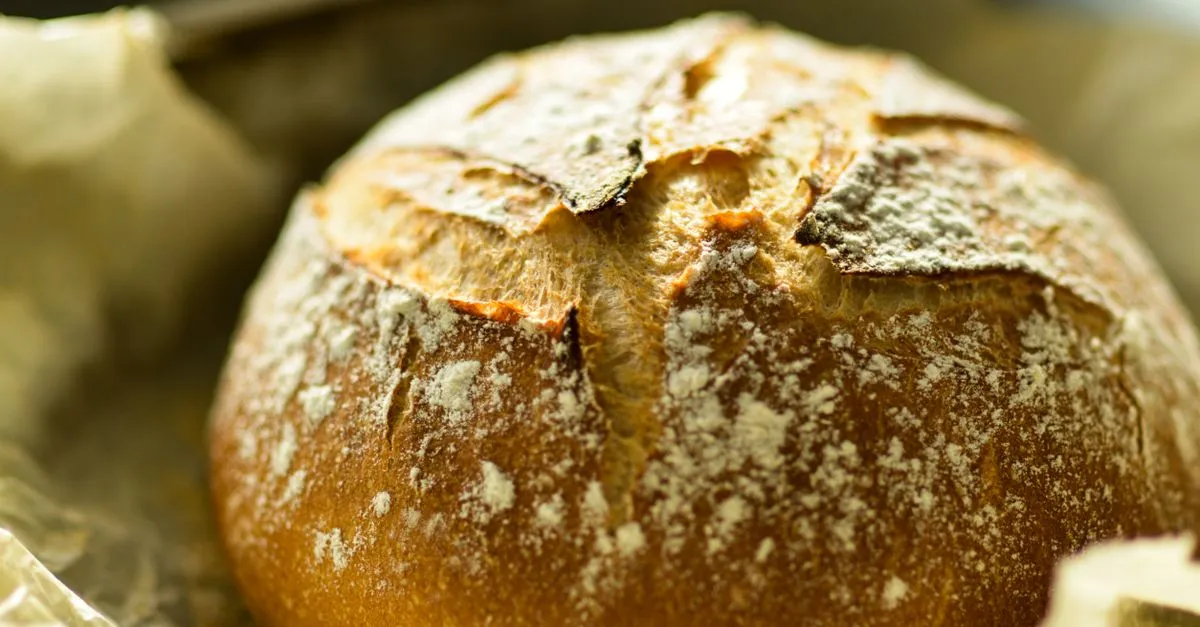
A bread cloche is a domed ceramic or stoneware baker that traps a loaf's own steam to gelatinize its surface starch, delaying crust set and extending oven spring — the same physics as a Dutch oven, minus the deep pot. For most home bakers, the Emile Henry Bread Cloche is the best overall pick for its even, refractory-ceramic heat and easy-load flat base; the Sassafras Superstone La Cloche is the best value for bakers who don't mind unglazed stoneware and hand-washing.
What Is a Bread Cloche?
A bread cloche is a two-piece ceramic or stoneware dome — a shallow base and a domed lid — that seals a loaf inside its own escaping steam during the first phase of baking. That trapped moisture keeps the crust soft and extensible just long enough for the dough to finish expanding in the oven (oven spring), then gelatinizes the surface starch so the crust turns glossy and eventually crackles as the lid comes off. It’s the same baking-with-steam principle that makes a Dutch oven work for home bread — a cloche just does it in unglazed or glazed clay instead of cast iron, at a fraction of the weight.
The name comes from the French word for “bell” or “cover,” and the design predates the Dutch-oven-for-bread trend by decades — French home bakers used ceramic domes to fake a wood-fired hearth long before “no-knead” recipes made cast iron popular. If you already own a Dutch oven and are wondering whether a second vessel is worth it, the honest answer is: only if the Dutch oven’s depth or weight is the actual problem you’re solving.
What to Look For in a Bread Cloche
Glazed vs. unglazed interior is the first fork in the road. A glazed interior releases dough more easily and wipes clean with a damp cloth; unglazed (raw) stoneware, like a baking stone, draws moisture out of the dough’s exterior a little faster and can bake a drier, more matte crust, but it needs a light flour or cornmeal dusting to prevent sticking and can’t be scrubbed with soap.
Round vs. long (batard) shape determines what you can bake. A round cloche is built for boules and country loaves; a long or “Pullman” cloche is built for batards, baguette-adjacent shapes, and sandwich loaves that won’t fit under a round dome.
Base depth matters more than most buyers expect. Many cloches — unlike a deep Dutch oven — have a flat or shallow base, which means you can load a wet, slack dough by sliding it off a peel or bench instead of lowering it into a 6-inch-deep pot. If you’ve ever burned a knuckle dropping dough into a preheated Dutch oven, this is the actual selling point of a cloche.
Wall thickness and thermal mass affect how evenly the crust browns. Thicker refractory ceramic (Emile Henry’s construction) holds heat more evenly than thin stoneware, which can develop hot spots.
Thermal-shock tolerance varies by brand and is not optional reading — see the care section below before your first bake.
Size versus your oven is the last practical check. A cloche with handles can run 12-13 inches tip-to-tip; measure your oven’s rack clearance, especially if you also use a baking stone underneath.
Bread Cloche vs. Dutch Oven: What’s Actually Different
A bread cloche and a Dutch oven trap the same steam for the same reason, but they get there differently. Cast iron heats aggressively and holds a huge amount of thermal mass, which is why Forkish and Robertson both treat a 4-quart-plus Dutch oven as their primary steam-injection substitute for home ovens — it produces the most aggressive oven spring of any home method. A ceramic cloche heats more gently and evenly, trading a little of that aggression for a shallower base that’s dramatically easier to load and a lighter body that’s easier to lift one-handed.
In practice: choose a Dutch oven if you want the maximum possible oven spring and don’t mind the weight and depth. Choose a cloche if you bake often enough that ease of loading matters, if a heavy pot is a real physical obstacle, or if you want a dedicated vessel that never doubles as a soup pot smelling faintly of last week’s stew.
The 6 Best Bread Cloches, Ranked
We compared these six on interior finish, shape options, base depth, thermal-shock guidance, and price. Every product below is currently sold new by its maker or a major bakeware retailer.
1. Emile Henry Bread Cloche — Best Overall
Emile Henry Bread ClocheEmile Henry’s cloche is made from the same refractory ceramic the French company has produced since 1850, which is engineered specifically to tolerate direct oven-to-freezer temperature swings — a real advantage over stoneware that cracks under thermal shock. The base runs about 10 inches across with a 4.5-inch dome, enough for a generous boule, and its glazed exterior wipes clean. It’s the most expensive cloche on this list, and that price buys the widest safety margin for preheating and loading mistakes.
2. Emile Henry Pullman/Long Loaf Baker — Best for Batards & Sandwich Loaves
Emile Henry Pullman/Long Loaf BakerThis is the same refractory ceramic and the same steam-trapping dome, stretched into an oblong footprint for batards, torpedo-shaped loaves, and pan-style sandwich bread that a round cloche simply can’t accommodate. If you bake more oblong loaves than boules, this is the more useful shape to own, and its ridged base helps release the loaf without sticking.
3. Sassafras Superstone La Cloche — Best Value
Sassafras Superstone La ClocheSuperstone’s unglazed stoneware interior costs a third of Emile Henry’s price and still produces the crackling crust the category is known for, but it comes with a firmer care rule: Sassafras explicitly recommends starting the cloche and dough together in a cold oven, or loading it into an already-hot oven — never subjecting a cold cloche to a sudden hot-oven temperature spike, and never setting a just-baked cloche on a cold counter. Follow that rule and it’s an excellent, durable baker; ignore it and unglazed stoneware is the piece most likely on this list to crack.
4. King Arthur Cloche Bread Baker with Handle — Best Budget Pick
King Arthur Baking Company King Arthur Cloche Bread Baker with HandleKing Arthur’s cloche is a no-frills glazed-exterior, unglazed-interior dome built around the same principle: the lid traps steam generated by the dough itself to emulate a steam-injected oven, and a handle on the dome makes it easy to lift with an oven mitt mid-bake. It’s a sensible first cloche for a baker who wants to try the format without committing to Emile Henry pricing.
5. Breadtopia Cloche Bread Baker (Round) — Best for Sourdough Purists
Breadtopia Cloche Bread Baker (Round)Breadtopia designs almost nothing but bread equipment, and its round cloche — now in its third iteration after more than a decade of the company selling the format — is made from German clay with a deep, 6.5-inch interior baking area that gives a tall sourdough boule room to expand upward instead of spreading. It’s a good match for bakers already following a sourdough country bread formula that produces a wetter, higher-rising dough.
6. Römertopf Pane Clay Bread Form — Best Traditional Design
Römertopf Pane Clay Bread FormRömertopf has made clay cooking vessels in Germany since the 1960s, and its compact Pane bread form brings that heritage glazed-clay construction to a smaller, more traditional footprint than the other cloches here. The glazed interior releases bread more easily than raw stoneware, though the smaller capacity suits a modest loaf rather than a large boule.
The Ranking
| Rank | Product | Best For | Interior Finish | Price |
|---|---|---|---|---|
| 1 | Emile Henry Bread Cloche | Overall pick | Glazed exterior / unglazed interior | $150-200 |
| 2 | Emile Henry Pullman/Long Loaf Baker | Batards & sandwich loaves | Glazed exterior / unglazed interior | $140-180 |
| 3 | Sassafras Superstone La Cloche | Best value | Unglazed stoneware | $72-85 |
| 4 | King Arthur Cloche Bread Baker | Budget entry point | Glazed exterior / unglazed interior | $65 |
| 5 | Breadtopia Cloche Bread Baker | Sourdough purists | Unglazed clay | $75-95 |
| 6 | Römertopf Pane Clay Bread Form | Traditional/compact loaves | Glazed interior | $55-75 |
Thermal Shock and Care: What Every Cloche Owner Needs to Know
Thermal shock, not everyday baking, is what actually breaks a bread cloche. Unglazed stoneware pieces like the Superstone La Cloche should never go from a cold state straight into a fully preheated oven, and a just-baked cloche should never land on a cold counter or wet surface — both moves can crack or shatter it. The safest habit is either a true cold start (dough and cloche go into the oven together, then it heats up as one unit) or loading room-temperature dough into an already-hot cloche that’s been preheating on the same rack — never the reverse. Refractory ceramics like Emile Henry’s are engineered with a wider thermal-shock tolerance and can typically go from freezer to a 500°F oven, but “typically can” isn’t a substitute for reading your specific maker’s care card, since formulations differ.
Cleaning is simple regardless of finish: let the cloche cool fully, then hand-wash. Glazed interiors wipe out with warm water and a non-abrasive sponge; unglazed stoneware should be scraped of stuck flour or bran with a stiff brush and rinsed without soap, since raw clay can absorb detergent residue and off-flavor the next loaf. Score your dough with a lame or blade before it goes into the cloche, exactly as you would for any hearth loaf — see our scoring guide for cut angle and depth — because you won’t get a second chance to slash it once the dome is sealed on.
What to Actually Buy
If you bake one boule a week and want the least fragile, longest-lasting option, buy the Emile Henry Bread Cloche — the price premium buys real thermal-shock margin along with the crust quality. If you bake mostly batards, sandwich loaves, or Pullman-style bread, skip the round cloche entirely and get the Emile Henry Pullman/Long Loaf Baker. If budget is the deciding factor and you’re willing to follow a cold-start routine, the Sassafras Superstone La Cloche or the King Arthur Cloche both deliver a genuinely good crust for well under $100. And if you already have a Dutch oven and are only cloche-curious because loading a heavy pot has become a chore, start with the cheapest option on this list before upgrading — the steam physics are the same across all six.
The Best Bread Cloches, Ranked
6 ceramic and stoneware bakers compared on finish, shape, and price
- 01
Emile Henry Bread Cloche
Refractory ceramic, widest thermal-shock toleranceBest OverallInterior FinishUnglazedShapeRound bouleBase DepthShallow - 02
Emile Henry Pullman/Long Loaf Baker
Same ceramic, oblong footprint for sandwich loavesBest for BatardsInterior FinishUnglazedShapeLong/batardBase DepthShallow - 03
Sassafras Superstone La Cloche
Third the price, requires cold-start careBest ValueInterior FinishUnglazedShapeRound bouleBase DepthShallow - 04
King Arthur Cloche Bread Baker
Simple entry-level dome under $70Best Budget PickInterior FinishUnglazedShapeRound bouleBase DepthShallow - 05
Breadtopia Cloche Bread Baker
German clay, 6.5-inch interior for tall boulesBest for Sourdough PuristsInterior FinishUnglazedShapeRound bouleBase DepthDeep - 06
Römertopf Pane Clay Bread Form
60-year German clay-pot heritage, easy releaseBest Traditional DesignInterior FinishGlazedShapeCompact roundBase DepthShallow
This article contains affiliate links. If you buy through them, we earn a small commission at no extra cost to you. We only recommend products we have personally tested where possible or vetted through bakery and home-kitchen feedback.
— Jay Arr
Frequently Asked Questions
- What is a bread cloche?
- A bread cloche is a domed ceramic or stoneware baking vessel with a base and a lid that seals in the steam a loaf releases as it bakes. That trapped steam keeps the crust flexible long enough for the dough to finish rising in the oven, then helps it develop a glossy, crackling exterior — the same steam-trapping principle used by a Dutch oven, in a lighter, easier-to-load ceramic form.
- Is a bread cloche better than a Dutch oven?
- Neither is strictly better — they trade off differently. A Dutch oven's cast iron holds more heat and produces slightly more aggressive oven spring, while a ceramic cloche heats more gently, weighs less, and usually has a shallow base that's far easier to load a wet dough into than a deep pot.
- What's the difference between a round and a long bread cloche?
- A round cloche is shaped for boules and country loaves; a long (sometimes called Pullman) cloche is oblong, built for batards and sandwich-style loaves that won't fit under a round dome. Choose based on the loaf shapes you actually bake most often.
- Do you need to preheat a bread cloche?
- It depends on the material. Refractory ceramics like Emile Henry are built to tolerate a wide temperature range and can be preheated empty; unglazed stoneware pieces are more thermal-shock sensitive and their makers typically recommend a cold start instead, loading dough and cloche into the oven together. Always follow your specific product's care instructions.
- Glazed vs. unglazed bread cloche — does it matter?
- Yes. Glazed interiors release dough more easily and clean up with just water; unglazed stoneware bakes a slightly drier, more matte crust but requires a flour or cornmeal dusting to prevent sticking and should never be washed with soap, which raw clay can absorb.
- How do you clean a bread cloche?
- Let it cool completely before washing — setting a hot cloche on a cold or wet surface risks cracking it from thermal shock. Glazed interiors wipe out with warm water and a soft sponge; unglazed stoneware should be brushed free of stuck flour and rinsed without soap. This is a buyer's guide, not medical advice — if you have a gluten sensitivity, talk to your doctor about which flours to bake with.