A Danish dough whisk is the right tool for mixing high-hydration and no-knead bread dough before bulk fermentation, and the Breadtopia Danish Dough Whisk (Large) is the best all-around pick for most home bakers. Its open flat-coil head folds shaggy, wet dough together in seconds without the drag of a spoon or the risk of overworking a stand mixer would carry. Buy the 13-13.5" size for standard 4-cup-flour loaves and a smaller head only if you bake in small batches or store it in a tight drawer. It's a $10-20 accessory, not a required purchase — a sturdy wooden spoon or your hands will get the same dough to the same place, just slower.
Try It Yourself
The Baker's Bench
Get the exact recipe for your bread style, schedule, and number of loaves — with baker's percentages and a complete timeline.
Open ToolWhat a Danish Dough Whisk Actually Does
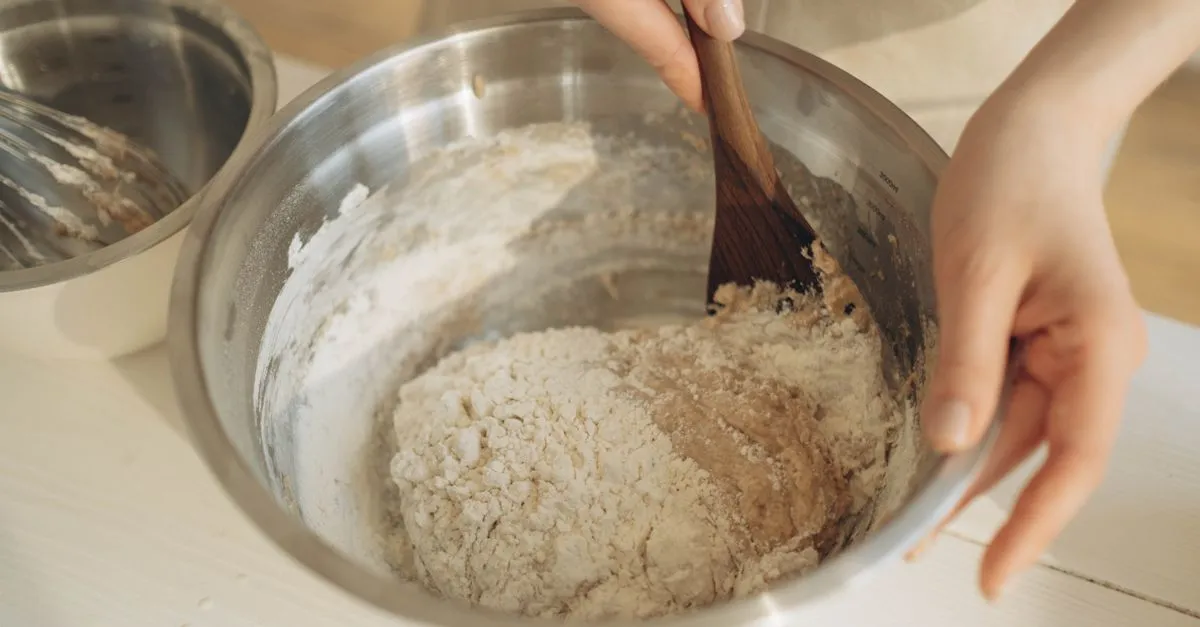
A Danish dough whisk’s open flat-coil head moves through shaggy, wet dough with far less resistance than a spoon because the coil parts the dough instead of dragging a solid mass through it. The tool — also called a Danish dough hook or, in its home country, a brødpisker — is three or four loops of thick stainless wire bent flat and mounted on a handle. Where a spoon presents a broad, dough-grabbing face and a stand mixer’s paddle or hook applies continuous mechanical shear, the whisk’s skeletal head slides between strands of dough, folding flour and water together while leaving air pockets and gluten strands mostly undisturbed.
That distinction matters most in the first few minutes of mixing a no-knead bread or any dough on the wetter end of the hydration spectrum. Wet dough at 75-100% hydration is stringy and clings to a spoon in one solid clump, forcing you to fight the same mass around the bowl. The dough whisk’s open geometry cuts through that clump repeatedly instead of pushing it, so shaggy flour-and-water dough comes together into a cohesive mass in 30-60 seconds of stirring rather than several minutes of scraping. It is a mixing tool for the “shaggy mass” stage only — it precedes kneading or, for no-knead methods, precedes bulk fermentation and stretch-and-folds entirely.
What to Look For in a Danish Dough Whisk
Head material and wire gauge. Every whisk worth buying uses stainless steel wire for the coil — it won’t rust, and food-grade stainless is what touches your dough. Thicker-gauge wire holds its shape through years of use; thin wire on bargain whisks can bend permanently against stiff dough and lose its flat profile.
Handle material. Wood handles (beechwood is standard) are traditional, comfortable, and what most Danish- and Polish-made whisks still use, but they should be hand-washed and occasionally oiled to prevent cracking or swelling. All-stainless or silicone-wrapped handles need zero maintenance and are fully dishwasher-safe, at a small cost in traditional feel and sometimes grip when hands are wet.
Head size. A large head (roughly 13-13.5” total length) clears a standard mixing bowl and handles a typical 3-4 cup flour batch in one sweep. A small or compact head (10-12”) is easier to store and maneuver in a smaller bowl but needs more passes for a full-size loaf. Match the size to your usual batch, not the biggest one you can find.
Loop count. Most whisks use a single flat loop or a double-loop (“double-eye”) head; double-loop versions clear thick or sticky dough with less clogging, since dough has two smaller openings to squeeze through instead of one large one that can pack solid.
Care. Hand-wash wood-handled whisks and dry them promptly — the whole point of choosing wood is comfort and tradition, and soaking or dishwashers will undo both. All-stainless and silicone-handle whisks tolerate the dishwasher without complaint, which is the main practical reason to pick one over the other.
The Ranking
| Rank | Whisk | Handle | Best For |
|---|---|---|---|
| 1 | Breadtopia Danish Dough Whisk (Large) | Beechwood | Overall / most bakers |
| 2 | ORBLUE Premium (Silicone Handle) | Silicone-wrapped steel | Grip comfort, dishwasher use |
| 3 | Zulay Kitchen 13-Inch | All stainless steel | Zero wood maintenance |
| 4 | Norpro 12-Inch | Beechwood | Small batches, tight storage |
| 5 | Sur La Table Stainless Steel | All stainless steel | Premium one-piece build |
1. Breadtopia Danish Dough Whisk (Large) — Best Overall
Breadtopia Danish Dough Whisk (Large)Breadtopia is a dedicated sourdough and home-milling retailer, and this whisk is the version most serious home bakers land on after trying cheaper alternatives. The beechwood handle and stiff stainless coil are made in Poland, where the flat-coil dough whisk design has been a standard kitchen tool for generations — this isn’t a novelty import, it’s the same basic object bakers there have used for decades. The 13.5” length clears a standard bowl in one sweep, and the coil holds its shape under repeated use with thicker dough. Hand-wash and let the handle air-dry; that’s the only real maintenance it asks for.
2. ORBLUE Premium Danish Dough Whisk with Silicone Covered-Handle — Best Grip Comfort
ORBLUE Premium Danish Dough Whisk with Silicone Covered-HandleORBLUE’s silicone-wrapped stainless handle solves the one real complaint about wood: wet or floury hands can slip on a smooth wood grip, and wood needs periodic oiling to avoid cracking. The silicone coating stays tacky when wet and goes straight into the dishwasher afterward with no wood-care ritual required. The stainless coil itself is comparable in stiffness to the wood-handled competition, so you’re trading a small amount of traditional feel for meaningfully less upkeep.
3. Zulay Kitchen 13-Inch Danish Dough Whisk — Best All-Stainless
Zulay Kitchen 13-Inch Danish Dough WhiskZulay’s stainless-steel version skips wood entirely — head and handle are one continuous metal build, which means no cracking, no swelling, no hand-washing rule to remember. The coil is slightly stiffer to the hand than a wood-handled whisk of the same size, which some bakers read as more solid feedback against thick dough and others read as marginally less comfortable over a long mixing session. Either way, it’s the pick if “dishwasher, every time, no exceptions” is the deciding factor.
4. Norpro 12-Inch Danish Dough Whisk — Best Compact Size
Norpro 12-Inch Danish Dough WhiskNorpro’s 12” whisk is a genuine size-down, not just a shorter version of the same tool — the coil head is proportionally smaller, which makes it easier to work in a narrower bowl and easier to store in a drawer instead of a crock. It’s the right call for bakers who mix single small loaves rather than double batches, or who are tight on kitchen storage. The beechwood handle carries the same hand-wash caveat as any wood-handled whisk.
5. Sur La Table Stainless Steel Dough Whisk — Best Premium Build
Sur La Table Stainless Steel Dough WhiskSur La Table’s version is a one-piece stainless design sold through a specialty cookware retailer rather than a baking-specific one, which shows in the finish — it reads and feels more like premium cookware than a rustic import. Functionally it does the same job as the other all-stainless entries here at a similar price, so the case for it is fit and finish and buying from a retailer you already trust, not a functional edge over the cheaper stainless options.
What to Actually Buy
If you bake sourdough or no-knead bread regularly and want the standard tool: the Breadtopia Large is the safe, proven choice — it’s what shows up most often in serious home-baking kitchens for a reason.
If you hate hand-washing wood or want dishwasher convenience: go all-stainless with the Zulay Kitchen or Sur La Table whisk, or split the difference with ORBLUE’s silicone-handled version.
If you bake small batches or have limited drawer space: the Norpro 12-inch is sized for that use case specifically, not just cheaper.
If you’re not sure you’ll use it enough to justify $15-20: don’t buy one yet. A sturdy wooden spoon or a bowl scraper handles the same shaggy-dough stage — slower and with more scraping, but it works. Pair whichever whisk you land on with a solid bread-baking equipment setup and a good bench workspace; the whisk earns its keep at the mixing stage, then hands off to your hands for shaping and folding.
What a Dough Whisk Won’t Do
A Danish dough whisk is built for loose, shaggy mixtures — it is not a substitute for kneading, and it is a poor tool for stiff, low-hydration, or heavily enriched doughs. Butter- and egg-rich doughs like brioche need the sustained mechanical development a stand mixer provides; trying to work that much fat and structure with a hand whisk just tires your wrist without developing the dough properly. Use the whisk to bring flour, water, and any pre-ferment together into a shaggy mass, then move to hand-kneading, stretch-and-folds, or a stand mixer depending on the dough and your method.
Best Danish Dough Whisks, Ranked
Handle material, head size, and what each one is actually built for
- 01
Breadtopia Danish Dough Whisk (Large)
The standard, proven pickBest OverallHandleBeechwoodHead Size13.5\" / Large", All-around bakers - 02
ORBLUE Premium (Silicone Handle)
No wood-care upkeepBest Grip ComfortHandleSilicone-wrapped steelHead Size13\" / Large", Grip + dishwasher use - 03
Zulay Kitchen 13-Inch
Dishwasher, every timeBest All-StainlessHandleAll stainless steelHead Size13\" / Large", Zero-maintenance bakers - 04
Norpro 12-Inch
Sized down, not just shorterBest CompactHandleBeechwoodHead Size12\" / Compact", Small batches, tight storage - 05
Sur La Table Stainless Steel
Specialty-retailer fit and finishBest Premium BuildHandleAll stainless steelHead Size~13\" / Large", Premium-finish buyers
This article contains affiliate links. If you buy through them, we earn a small commission at no extra cost to you. We only recommend products we have personally tested where possible or vetted through bakery and home-kitchen feedback.
— Jay Arr
Frequently Asked Questions
- What is a Danish dough whisk used for?
- A Danish dough whisk is used to mix shaggy, wet bread dough — combining flour, water, and levain or yeast into a cohesive mass before kneading or bulk fermentation. Its open flat-coil head cuts through sticky, high-hydration dough with less resistance than a spoon, without the overworking risk of a stand mixer. It's a mixing tool for the initial combine, not a kneading substitute.
- What is the best dough whisk to buy?
- The Breadtopia Danish Dough Whisk (Large) is the best all-around pick for most home bakers — a beechwood handle and stiff stainless coil at the standard 13.5" size that clears a normal mixing bowl. If you want zero wood maintenance, an all-stainless or silicone-handled version like ORBLUE's or Zulay Kitchen's is a close second.
- Is a Danish dough whisk better than a spoon?
- For shaggy, wet dough, yes — the whisk's open coil parts the dough instead of dragging a solid mass through it, so flour and water combine in seconds rather than minutes of scraping. For stiffer, low-hydration dough the advantage shrinks, since there's less liquid clinging and clumping for the coil to cut through.
- Can I use a Danish dough whisk instead of a stand mixer?
- For the initial mix of no-knead and high-hydration doughs, yes. For enriched doughs loaded with butter and eggs, such as brioche, no — those need the sustained mechanical development only a stand mixer provides. A dough whisk brings ingredients together; it doesn't develop gluten the way extended mixing or kneading does.
- Wood or stainless steel handle for a dough whisk?
- Wood (usually beechwood) is traditional and comfortable but needs hand-washing and occasional oiling to avoid cracking or swelling. All-stainless or silicone-wrapped handles are dishwasher-safe and maintenance-free, at a small cost in traditional feel. Both handle types work with the same stainless coil head.
- Do I really need a Danish dough whisk?
- No — it's a $10-20 convenience item, not essential equipment. A sturdy wooden spoon or a bowl scraper will get shaggy dough to the same combined state, just with more scraping and a few extra minutes. It earns its price if you mix wet, no-knead dough often enough that the time savings add up.