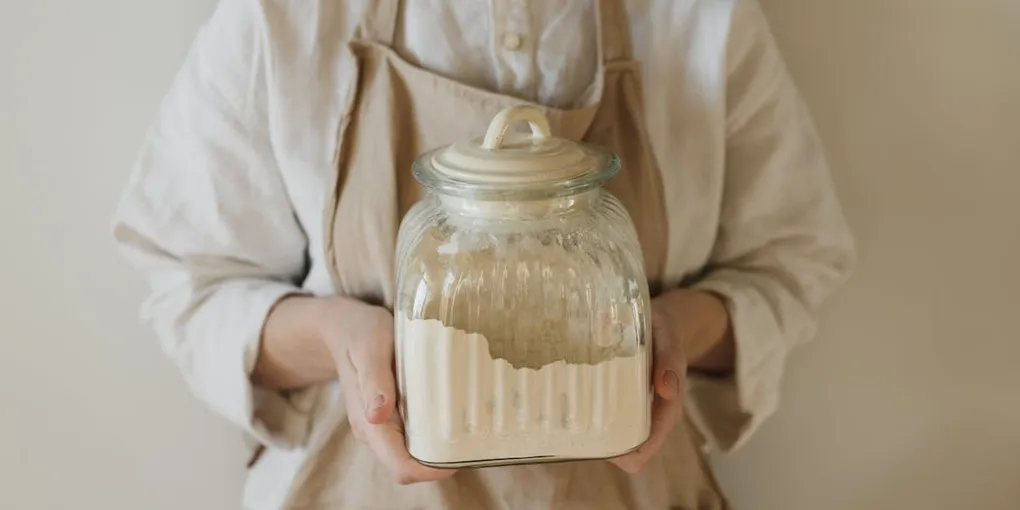
A sourdough starter is a living culture of wild yeast and lactic acid bacteria that leavens bread without commercial yeast. Building one from scratch takes 5-7 days and requires nothing more than flour, water, and patience.
The process is straightforward: mix flour and water, leave it at room temperature, and feed it daily. Wild yeast and bacteria — present on the flour, in the air, and on your hands — colonize the mixture, begin fermenting, and within a week you have a stable culture that can raise bread for decades.
Two methods dominate the professional literature. Hamelman’s method starts with rye flour (which has more surface organisms and available sugars) and transitions to white. Forkish’s method uses whole wheat throughout and is designed specifically for home bakers with no prior sourdough experience.
What You Need
- Flour: Whole rye or whole wheat (for the initial build), plus white bread flour (for ongoing feeding)
- Water: Room temperature or slightly warm. If your tap water is heavily chlorinated, let it sit uncovered for an hour or use filtered water.
- A jar or container: Glass or plastic, at least 1 quart. A clear container lets you watch the rise.
- A kitchen scale: Weight measurements matter here. A teaspoon of flour off in a bread recipe is minor; in a starter feeding, it’s significant. See our kitchen scale guide for recommendations.
- A warm spot: 75-80°F is ideal. The top of the refrigerator, inside the oven with the light on, or near a radiator all work.
Method 1: Hamelman’s Rye-to-White Build
Hamelman’s method is elegant and efficient. Rye flour jumpstarts the culture because rye has more available sugars and minerals than white flour, creating a more vigorous initial fermentation.
Day 1
Mix 100g whole rye flour with 125g water (125% hydration) and a small amount of honey (about 3g). The honey provides a quick burst of sugar for the initial organisms. Place in a warm spot (75-80°F) and cover loosely.
Days 2-3
Discard about half the culture. Feed with white flour at 100% hydration (equal weights flour and water). Feed twice per day, keeping the culture at 75°F.
By the end of day 2, you should see some bubbling. It may smell sharp or funky — this is normal. The initial colonizers are different from the stable organisms that will eventually dominate.
Days 4-5
Continue feeding with white flour at 100% hydration, twice per day at 75°F. The culture should be visibly active — bubbling throughout, rising between feedings, and developing a yeasty, slightly sour aroma.
Day 6+
The starter is ready when it reliably doubles in volume within 6-8 hours after feeding. At this point, it has a stable population of wild yeast and lactic acid bacteria.
Method 2: Forkish’s 5-Day Whole Wheat Build
Forkish’s method is the most prescriptive — exact weights, exact temperatures, exact timing. If you want to follow a recipe to the letter, this is the one.
Day 1
Combine 500g whole wheat flour and 500g water at 90°F. Mix thoroughly in a large container (12-quart is ideal — the culture expands significantly). Leave uncovered for 1-2 hours, then cover.
The large initial batch is intentional. Forkish uses volume to maintain thermal mass and give the organisms plenty of food.
Day 2
Discard three-quarters of the mixture. Add 500g whole wheat flour and 500g water at 90°F. Mix well, cover.
Day 3
Same as Day 2. By now, you should notice a “distinctly pungent sour porridge odor.” This is the culture establishing itself. Don’t be alarmed by unusual smells in the first few days — the bacterial population is still sorting itself out.
Day 4
Reserve only 200g of the culture (discard the rest — yes, it’s a lot of flour). Add 500g whole wheat flour and 500g water at 90°F. By the end of the day, the culture should be bubbly throughout.
Day 5
Discard all but 150g. Now transition to the maintenance feeding: 400g white flour + 100g whole wheat flour + 400g water at 85°F. This is your ongoing formula.
Forkish keeps whole wheat in the maintenance feeding deliberately: “The bran and outer layers of whole wheat have more available sugars and minerals, creating a more vigorous culture.”
The Scary Middle Days
Days 2-3 often produce a burst of activity followed by a lull. The initial bacterial colonizers generate gas and acid, the culture looks alive, and then it seems to go quiet. Many bakers panic here and throw the whole thing out.
Don’t. The lull is normal. The initial organisms are being outcompeted by the acid-tolerant wild yeast and lactic acid bacteria that will form your stable culture. Keep feeding on schedule. By day 4-5, the stable organisms take over and consistent activity returns.
Signs Your Starter Is Ready
All five major authors describe similar healthy-starter indicators:
Good signs:
- Doubles in volume within 6-8 hours of feeding
- Pleasantly sour, yeasty aroma — Hamelman describes “slightly alcoholic.” Robertson says “yogurt or mild cheese.” Forkish says “a hot rush of alcoholic perfume” when you lift the lid
- Gassy, weblike internal structure when you look through the side of the jar
- Passes the float test (see below)
Bad signs:
- Nail polish remover smell (ethanol dominance — the culture is over-fermented and starving)
- Strong vinegar smell (excessive acetic acid — too long between feedings)
- No activity at all after feeding (culture may be dead — start over or increase feeding frequency)
- Pink or orange discoloration (mold or unfriendly bacteria — discard and start over)
The Float Test
Robertson’s simple go/no-go test for baking readiness:
Drop a small spoonful of starter into a glass of water.
- Floats: Ready to use. The culture has produced enough CO2 to be buoyant.
- Sinks: Not ready. Give it more time before using it to bake.
The float test isn’t perfect for very high-hydration starters (they may sink despite being active), but for a standard 100% hydration culture, it’s reliable.
A Critical Warning About Commercial Yeast
Forkish is emphatic on this point: never add packaged yeast to your starter. “Commercial yeast is more vigorous than wild yeasts, so adding even a small amount of packaged yeast to start or to maintain a levain culture will ultimately result in the commercial yeast dominating and eventually starving out the wild yeasts.”
If you want to augment rise for a specific bread, add commercial yeast to the final dough — not to the culture itself.
Storage and Revival
Daily Use
If you bake multiple times per week, keep the starter at room temperature and feed daily. This is the simplest approach.
Occasional Use
If you bake once a week or less, store the starter in the refrigerator. Forkish recommends storing about 500g of levain in a nonperforated plastic bag, coated with a film of water, refrigerated for up to 1 month.
Waking Up a Refrigerated Starter
Forkish’s two-step restoration process:
Night before baking: Remove from fridge. Retain 200g, discard the rest. Feed with 400g white flour + 100g whole wheat + 400g water at 95°F. Rest in a warm spot overnight.
Morning of baking: Feed again — discard all but 100g, same feeding ratio. Wait 6-8 hours. Use when ripe (passes float test, domed and bubbly).
The two-step process is important. A single feeding after cold storage often isn’t enough to bring the culture to full strength. The first feeding wakes up the organisms; the second brings them to peak activity.
Temperature: The Invisible Variable
Temperature is the single biggest factor in how quickly your starter develops. Wild yeast and lactic acid bacteria thrive at 75-85°F (24-29°C). Below 70°F, activity slows dramatically, and a starter that would be ready in 5 days might take 10.
Ideal temperature: 75-80°F throughout the build. Hamelman specifies 75°F; Forkish uses warmer water (85-90°F) to compensate for ambient kitchen temperatures.
Finding a warm spot:
- Top of the refrigerator (warm air rises from the compressor)
- Inside the oven with just the light on (typically adds 5-10°F above room temperature)
- Near a radiator or heating vent (not directly on it)
- In a microwave with the door closed and a cup of hot water alongside (replace the water every few hours)
Cold kitchen (below 68°F): Your starter will still develop, but expect it to take 8-10 days instead of 5-7. Use the warmest water your method specifies and find the warmest spot in your home.
Hot kitchen (above 85°F): Fermentation will be fast, possibly too fast. Feed twice a day instead of once to prevent the culture from over-fermenting and getting too acidic. Use cooler water (75-80°F).
The Microbiology (Briefly)
You don’t need to know the microbiology to build a starter, but understanding it helps you troubleshoot. For the full science, see sourdough starter science.
A sourdough culture contains two categories of organisms: wild yeast (which produces CO2 for leavening) and lactic acid bacteria (which produces acid for flavor and preservation).
The key organisms identified by Hamelman:
- Fructilactobacillus sanfranciscensis (the dominant bacterium in many traditional sourdoughs, which prefers maltose)
- Kazachstania exigua / K. humilis (wild yeasts that also prefer maltose)
- Saccharomyces cerevisiae (common yeast that prefers glucose, leaving maltose for the other organisms)
An important fact that contradicts popular mythology: the organisms are not tied to geography. San Francisco sourdough doesn’t contain special Bay Area bacteria. The microbial population is determined by the baker’s maintenance practices, the flour used, and the local environment.
What Flour to Use
For the initial build: Whole rye (Hamelman) or whole wheat (Forkish). Both have more microbial diversity and available nutrients than white flour. Rye is especially effective — Hamelman notes that an established rye culture needs only 20g of rye flour per day to maintain.
For ongoing feeding: A mix of white bread flour and whole wheat (Forkish uses 80/20) works well. Pure white flour works too, but the culture may be less vigorous.
Avoid bleached flour for starter building. The chemical treatment can inhibit microbial growth.
What to Do with Discard
In the first week, you’ll discard significant amounts of starter. This feels wasteful, but the discard ratio is important — it refreshes the food supply and prevents acid from building up to toxic levels.
Discard isn’t waste — it’s unbaked batter. Use it in pancakes, waffles, crackers, pizza dough, or banana bread. It won’t provide leavening (it’s spent), but it adds flavor and tenderness.
Transitioning to Your First Bake
Once your starter reliably doubles within 6-8 hours and passes the float test, you’re ready to bake. Feed it 6-8 hours before you plan to mix your dough. Use it when it’s domed, bubbly, and passes the float test.
Your first loaf will probably not be perfect. That’s fine. Each bake teaches you how your specific starter behaves in your specific kitchen at your specific temperatures. The starter will also improve over its first few weeks — the microbial ecosystem continues stabilizing and the flavor deepens.
For your first bake, start with our beginner sourdough bread guide. Once you’re comfortable, graduate to sourdough country bread.
For everything about ongoing feeding, timing, and maintenance, see our complete sourdough feeding schedule guide. If your starter stops cooperating, see sourdough starter not rising.
Frequently Asked Questions
- How long does it take to make a sourdough starter?
- Most starters become reliably active in 5-14 days. Temperature is the biggest variable — a warm kitchen (75-80°F) produces a working starter faster than a cool one. Some starters take up to 21 days in cold environments.
- What's the best flour for a sourdough starter?
- Whole rye flour is the best for the initial build — it has the most wild organisms, minerals, and available sugars. Whole wheat is a close second. Once established, maintain with a mix of white bread flour and 10-20% whole wheat.
- Do I need to buy a sourdough starter?
- No. You can build one from scratch with just flour and water in 1-2 weeks. Purchased starters save time, but homemade starters work just as well once established. The organisms are determined by your maintenance practices, not where the starter originated.
- Why does my new starter smell bad?
- Unusual smells in days 1-4 are normal. The initial bacterial colonizers produce different compounds than the stable sourdough organisms. Keep feeding on schedule. By day 5-7, the smell should transition to a pleasant, yeasty sourness.
- Can I use all-purpose flour for my sourdough starter?
- Yes, but unbleached only. Bleached flour has been chemically treated in a way that can inhibit microbial growth. For the initial build, adding some whole wheat or rye flour gives the organisms more food and minerals to work with.