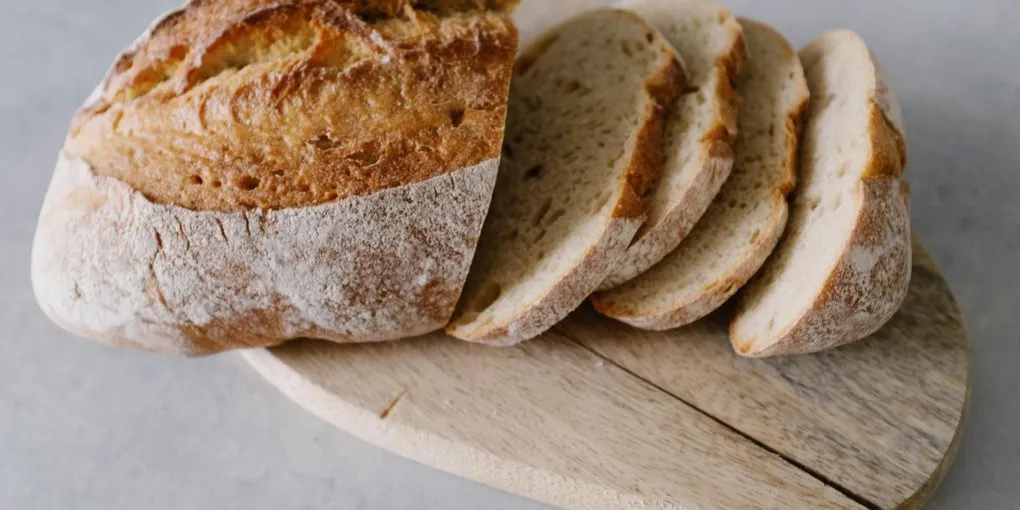
Yes, you can bake sourdough in a single day using warm fermentation. Build a young leaven at 6 AM, mix at 10-11 AM, bulk ferment 3-4 hours at 78-82 degrees F with folds, shape at 2:30 PM, proof 2-3 hours, and bake by 5:15 PM. Total: about 13 hours from first step to cooling loaf. The schedule works only if your kitchen holds 75-82 degrees F — cooler kitchens extend bulk fermentation past the practical envelope.
Most sourdough recipes span two days or more. Build the leaven tonight, mix the dough tomorrow morning, shape in the afternoon, retard overnight, bake the next day. It works, but it requires planning across multiple days and multiple schedule interruptions.
Same-day sourdough compresses the process into a single day. You build the leaven early in the morning, mix mid-morning, bulk ferment through the afternoon, shape and proof, and bake by evening. Fresh sourdough for dinner.
The trade-off is real: you lose some flavor complexity from the overnight cold retard, and the schedule demands a warm kitchen. But the bread is excellent — open crumb, good crust, genuine sourdough character — and you finish in one day.
The Key: Warm Fermentation
Warm temperature accelerates fermentation enough to complete the entire process in one day. Chad Robertson’s Tartine country bread — arguably the most influential sourdough recipe of the last two decades — is built around a warm bulk fermentation of 3-4 hours at 78-82 degrees Fahrenheit.
At those temperatures, the wild yeast and lactic acid bacteria in your leaven are highly active. The dough ferments fast enough to develop structure, flavor, and gas production within a single afternoon.
The temperature rules:
- 78 degrees Fahrenheit (25 degrees Celsius): Standard pace. Bulk fermentation takes 3-4 hours.
- Below 75 degrees Fahrenheit (24 degrees Celsius): Slow. Bulk extends to 5-6+ hours, pushing your schedule late.
- Above 82 degrees Fahrenheit (28 degrees Celsius): Fast. Risk of over-fermentation — the dough can peak and collapse before you finish shaping.
Your kitchen temperature determines whether same-day sourdough is feasible. In a 65-degree kitchen, it is not practical without a proofing box or warm spot. In a 75-80-degree kitchen, it works naturally.
Same-Day Sourdough: Your Hour-by-Hour Schedule
Warm-fermentation method at 78-82 degrees F
Build Leaven
1 tbsp starter + 200g flour + 200g water at 80 degrees F.
Mix
Float test passes. Autolyse 25-40 min, add salt and leaven.
Bulk
78-82 degrees F. Fold every 30 min for first 2 hours. Target 20-30% rise.
Pre-shape
Turn out, divide if needed, gently round. Cover.
Bench Rest
Rest 20-30 min. Gluten relaxes before final shape.
Shape + Proof
Final shape into banneton. Proof 2-3 hours at room temp.
Preheat
Dutch oven with lid at 500 degrees F for 20+ minutes.
Bake
Lid on 20 min at 500 degrees F. Lid off 20-25 min at 450 degrees F.
Cool
Wire rack. Wait 1-2 hours minimum before slicing.
Eat
Fresh sourdough for dinner.
Illustrative stages. Watch the dough's readiness cues as well as the clock.
Schedule assumes a 75-82 degrees F kitchen. Cooler kitchens extend bulk fermentation and push bake time later.
jayarrbread.comThe Same-Day Schedule
The schedule below assumes a warm kitchen (75-80 degrees Fahrenheit) and an active, healthy sourdough starter that doubles within 6-8 hours of feeding.
6:00 AM — Build the Leaven
Take 1 tablespoon of mature starter. Mix with 200g bread flour and 200g water at 80 degrees Fahrenheit in a clean jar or container. Cover and leave in a warm spot.
Robertson’s young leaven concept is essential here. You want the leaven active but not over-ripe — use it when it passes the float test (drop a spoonful in water; it should float), which typically takes 4-6 hours at warm temperature.
Using a small seed of starter (1 tablespoon) into a large flour/water build means the leaven is young and active when ready — the yeast is vigorous but acid has not accumulated heavily. This produces bread with complex wheat flavor rather than aggressive sourness.
Try It Yourself
The Starter Clock
Track your sourdough starter fermentation — see when it peaks, when to use it, and what flavor to expect.
Open Tool10:00-11:00 AM — Mix the Dough
The float test. Check your leaven around 10:00 AM. If a small spoonful floats in water, proceed. If it sinks, give it another hour.
Formula (baker’s percentages):
| Ingredient | Baker’s % | Weight |
|---|---|---|
| Bread flour (white) | 90% | 900g |
| Whole wheat flour | 10% | 100g |
| Water | 75% | 750g |
| Salt | 2% | 20g |
| Leaven | 20% (of total flour) | 200g |
Autolyse: Combine flours and 700g of the water (reserve 50g). Mix until no dry flour remains. Rest 25-40 minutes. Robertson adds the leaven dispersed in the water for the autolyse; you can also add it after the rest.
Add salt and leaven. Dissolve salt in the reserved 50g of warm water. Add to the autolysed dough along with the leaven (if not already added). Mix using the pincer method — reach under the dough, stretch up, fold over, rotate, repeat. Then squeeze through the dough with thumb and forefinger five or six times. Fold over a few more times. Total mixing: 3-5 minutes.
The dough should feel shaggy but cohesive. It will develop structure during bulk fermentation through folding.
11:00 AM - 2:30 PM — Bulk Fermentation
Bulk fermentation is the heart of the process. Target 3-4 hours at 78-82 degrees Fahrenheit.
Folding schedule:
- Fold every 30 minutes for the first 2 hours (4 sets of folds)
- Each fold: stretch the dough up from one side, fold over to the opposite side. Rotate 90 degrees, repeat. Four stretches = one complete stretch-and-fold.
- After 4 sets of folds, leave the dough undisturbed for the remaining 1-2 hours
What to look for by the end of bulk:
- Dough has increased in volume by 20-30% (Robertson’s target — not doubled, not tripled)
- Surface is domed and slightly jiggly
- The dough holds its shape when the container is tilted
- Air bubbles visible around the edges and on the surface
- The dough feels airy and alive — noticeably lighter than when you started
Critical warning from Ken Forkish: “Don’t fold during the last hour of bulk fermentation.” Folding late deflates the gas your yeast spent hours producing.
Over-fermentation risk: At temperatures above 82 degrees Fahrenheit, fermentation accelerates dangerously. If you see the dough pooling flat, losing structure, or smelling strongly of alcohol, you have gone too far. Shape immediately and bake — the bread will be edible but may lack oven spring. See overproofed vs underproofed for how to tell the difference in the finished crumb.
2:30 PM — Pre-shape
Gently turn the dough out onto an unfloured surface. Robertson shapes on an unfloured surface — the stickiness provides traction for building surface tension. Use a bench scraper to help.
Divide if making two loaves. Gently round each piece into a rough ball, building some surface tension. Cover with a towel.
2:50 PM — Bench Rest
Let the pre-shaped rounds rest 20-30 minutes. This allows the gluten to relax, making final shaping easier.
3:15 PM — Final Shape
Lightly flour the top of the dough round. Flip it floured-side down. Shape into a boule (round) or batard (oval):
Boule: Fold the edges toward the center — bottom up, top down, left over, right over. Flip seam-side down. Cup hands around the dough and rotate on the counter, using the friction to tighten the outer skin.
Batard: Similar folds, then gently elongate. Seal the seam with the heel of your hand.
Transfer seam-side up into a floured proofing basket (banneton). Robertson uses a mix of rice flour and wheat flour for dusting — rice flour prevents sticking better than wheat flour alone.
3:15-5:15 PM — Final Proof
Proof at room temperature for 2-3 hours if baking same-day. Alternatively, if your schedule needs flexibility, refrigerate the shaped loaf and bake within 1-3 hours from the fridge — no warming needed.
The poke test: Press a floured finger gently into the dough:
- Springs back immediately → under-proofed, wait longer
- Springs back slowly, leaving a slight indent → ready to bake
- Does not spring back → over-proofed, bake immediately
4:45 PM — Preheat
Place your Dutch oven (with lid) in the oven. Preheat to 500 degrees Fahrenheit for at least 20 minutes — Robertson’s protocol. Forkish preheats at 475 degrees Fahrenheit for 45 minutes. Either works; the Dutch oven must be thoroughly hot.
5:15 PM — Score and Bake
Turn the proofed loaf out of the banneton onto a piece of parchment paper. Score with a sharp lame or razor blade — a single curved slash is Robertson’s signature, but a cross or ear pattern works too.
Carefully lower the loaf (on parchment) into the screaming-hot Dutch oven.
Baking protocol:
- Lid on: 20 minutes at 500 degrees Fahrenheit. The sealed environment creates steam from the dough’s own moisture — this drives oven spring and develops the crust’s glassy sheen.
- Lid off: Reduce to 450 degrees Fahrenheit. Bake 20-25 minutes until the crust reaches deep mahogany. Robertson: “Go darker.”
- Internal temperature: Target 200-212 degrees Fahrenheit.
5:55 PM — Cool
Remove the loaf from the Dutch oven. Set on a wire rack. Listen for the crust to crackle and “sing” as it cools — this is normal and indicates a well-baked crust.
Wait at least 1-2 hours before slicing. Robertson recommends 2-4 hours. The crumb is still setting during this time. Cutting too early compresses the still-gelling starch and produces a gummy texture.
Dinner by 7:30 PM with bread that started at 6:00 AM.
Managing Temperature
Temperature is the make-or-break variable for same-day sourdough. Here are ways to maintain 78-82 degrees Fahrenheit:
- Oven with light on: Many ovens reach 78-85 degrees Fahrenheit with just the oven light running. Check with a thermometer.
- Microwave with hot water: Place the dough container in the microwave alongside a cup of hot water. The enclosed space stays warm.
- Proofing box: A dedicated proofing box with temperature control is the most reliable solution.
- Warm room: In summer, a warm kitchen may naturally hit the target.
- Water temperature: Start with 80 degrees Fahrenheit water for the autolyse to front-load warmth into the dough.
Monitor dough temperature, not just ambient temperature. The dough’s internal temperature is what drives fermentation. Use a probe thermometer to check.
How Temperature Changes Your Schedule
Why the 78-82 degrees F window is the same-day sweet spot
| Kitchen Temp | 01Bulk Duration | 02Risk |
|---|---|---|
| Below 75 degrees FToo slow | 5-6+ hours | Schedule slips past dinner |
| 78-82 degrees FSweet spot | 3-4 hours | Minimal — ideal activity |
| Above 82 degrees FToo fast | Under 3 hours | Over-fermentation, collapse |
Measure dough temperature, not just ambient — a probe thermometer inside the dough gives the real number.
jayarrbread.comHow Same-Day Compares to Overnight
| Factor | Same-Day | Overnight Cold Retard |
|---|---|---|
| Total time | 12-14 hours (one day) | 24-36 hours (two days) |
| Flavor complexity | Good — wheat-forward, mild tang | Excellent — deeper, more developed |
| Crust color | Very good | Excellent (sugars continue developing in cold) |
| Crumb structure | Open, airy | Slightly more open (longer fermentation) |
| Sourness | Mild to moderate | Moderate to pronounced |
| Scoring ease | Moderate (room-temp dough is softer) | Easier (cold dough holds score lines crisply) |
| Schedule flexibility | Low — tight windows | High — can bake anytime the next day |
Same-day sourdough is not lesser sourdough. It is a different expression — one that prioritizes wheat flavor and subtle fermentation over deep, developed complexity. Both approaches produce excellent bread. If you want the two-day version with overnight cold retard, see beginner sourdough bread or the more advanced sourdough country bread. For a broader scheduling framework, see bread baking schedule. And for how wild leaven differs from a packet of commercial yeast, see our sourdough vs yeast bread comparison.
Troubleshooting Same-Day Sourdough
Dough did not rise enough during bulk. Your kitchen was too cool or your leaven was not active enough. Next time: warmer environment (aim for 80 degrees Fahrenheit), and make sure your leaven confidently passes the float test before mixing.
Dough collapsed or felt very slack after bulk. Over-fermented — the dough went too long or too warm. Shape immediately and bake. Next time: shorter bulk or slightly cooler environment.
Flat loaf with no oven spring. Either over-proofed (too long at room temperature before baking) or the leaven was past its peak. Use younger leaven and tighten the proofing window.
Dense, tight crumb with no holes. Under-fermented. The bulk was too short or too cool. Extend next time by 30-60 minutes or raise the temperature.
Try It Yourself
The Baker's Bench
Scale the same-day formula up or down and get exact weights for any batch size or hydration target.
Open ToolThe Bottom Line
Same-day sourdough requires three things: an active starter, a warm kitchen, and attention to timing. The schedule is tight but achievable — morning leaven build, midday mix, afternoon bulk, evening bake. The bread sacrifices some of the depth that overnight fermentation provides, but it gains freshness and immediacy.
Fresh sourdough for dinner, start to finish in one day. That is a good day.
Frequently Asked Questions
- Can you really make sourdough bread in one day?
- Yes. By using warm fermentation (78-82 degrees Fahrenheit), you can compress the entire process — leaven build, mix, bulk fermentation, shape, proof, and bake — into about 12-14 hours. Build the leaven at 6:00 AM, mix around 10:30 AM, and bake by 5:30 PM. The key requirement is maintaining warm temperatures throughout, which keeps yeast and bacteria highly active.
- Does same-day sourdough taste as good as overnight sourdough?
- It tastes different, not worse. Same-day sourdough is wheat-forward with mild tang and subtle fermentation character. Overnight cold-retarded sourdough has deeper, more developed flavor complexity and often more pronounced sourness. Both are excellent. Same-day is ideal when you want fresh bread today rather than planning across two days.
- What temperature should my kitchen be for same-day sourdough?
- Target 75-82 degrees Fahrenheit. At 78-82 degrees Fahrenheit, bulk fermentation takes 3-4 hours. Below 75 degrees Fahrenheit, fermentation slows to 5-6+ hours, making the schedule impractical. Above 82 degrees Fahrenheit, you risk over-fermentation. If your kitchen is cool, use your oven with the light on (often reaches 78-85 degrees Fahrenheit), a microwave with hot water, or a proofing box.
- How do I know when bulk fermentation is done?
- Look for a 20-30% volume increase (not doubled or tripled), a domed and slightly jiggly surface, visible air bubbles around the edges, and dough that holds its shape when the container is tilted. The dough should feel airy and noticeably lighter than at the start. The poke test also works: press a floured finger into the surface — it should spring back slowly, leaving a slight indent.
- Can I cold retard same-day sourdough if I run out of time?
- Absolutely. If you cannot bake in the evening, shape the dough and place it in a proofing basket in the refrigerator. Bake it straight from the fridge the next morning — no warming needed. Ken Forkish confirms that chilled loaves do not need to come to room temperature first. This gives you the scheduling flexibility of a two-day process while still keeping the active work to one day.
- Do I need to change the formula if my leaven takes longer than 4-6 hours?
- No, the formula stays the same — just delay the mix until the leaven passes the float test. A slower-rising leaven usually means the starter is under-fed or the room is cool. Next time, feed the starter more often in the days leading up to the bake, and build the leaven somewhere warm like a turned-off oven with the light on.