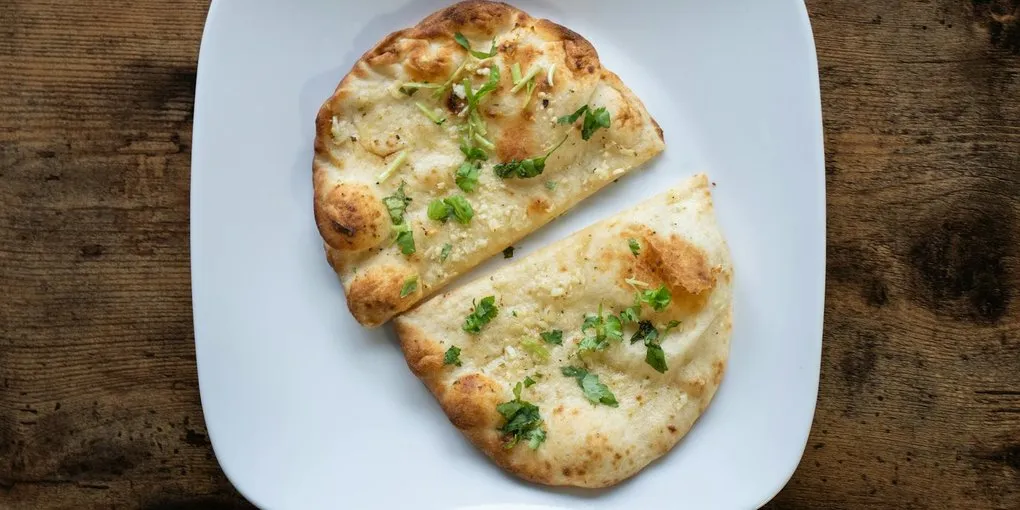
Homemade naan uses yogurt-enriched dough (all-purpose flour, Greek yogurt, warm water, oil, yeast, and baking powder), proofed for 1-1.5 hours, then cooked on a ripping-hot cast-iron skillet at 500-550F for 2-3 minutes per piece. The double leavening (yeast + baking powder) creates dramatic puffing on the skillet, and a garlic butter brush finishes each piece. Total time: about 2 hours, with 1 hour hands-off.
Naan is a leavened flatbread cooked at very high heat. In a tandoor oven, that heat reaches up to 700 degrees F — the dough slaps onto the clay wall and bakes in 60-90 seconds. At home, a ripping-hot cast-iron skillet or griddle at 500-550F gets you close. Not identical, but remarkably close.
The dough is enriched with yogurt, which adds acidity, fat, and tenderness. A small amount of oil or ghee keeps things pliable. The result is a bread that puffs dramatically on the skillet, chars in spots, and stays soft and foldable after cooling — the perfect vehicle for scooping curry, dal, or anything with a sauce worth soaking up.
From mixing bowl to garlic-buttered flatbread on your plate: about 2 hours, with 1 hour of that being hands-off proofing.
Why Yogurt Makes Better Naan
Yogurt does three things in naan dough that water alone cannot.
Acid tenderizes the gluten. The lactic acid in yogurt weakens gluten bonds, making the dough more extensible and less elastic. This means the naan stretches easily during shaping without snapping back, and the baked bread stays soft and pliable instead of turning chewy and tough. It is the same principle that makes sourdough bread more extensible than straight-yeast bread — acid relaxes the gluten network.
Fat adds richness. Even low-fat yogurt contains enough milk fat to coat gluten strands and tenderize the crumb. Full-fat yogurt (recommended) contributes more noticeably — the naan feels richer, almost buttery, before you even brush it with actual butter.
Moisture control. Yogurt is roughly 85% water by weight, but the proteins and solids in it make the dough feel less wet than the same weight of plain water would. This lets you run a higher effective hydration (softer, more tender bread) without the dough becoming unmanageable.
Greek yogurt works best — it is thicker, higher in protein, and lower in free water than regular yogurt. If using regular yogurt, reduce the added water by about 20g.
The Recipe
Yield: 8 naan
Ingredients
| Ingredient | Weight | Baker’s % |
|---|---|---|
| All-purpose flour | 400g | 100% |
| Plain Greek yogurt (full-fat) | 120g | 30% |
| Water, warm (95-100F) | 140g | 35% |
| Olive oil or melted ghee | 20g | 5% |
| Sugar | 10g | 2.5% |
| Salt | 8g | 2% |
| Instant dry yeast | 4g | 1% |
| Baking powder | 3g | 0.75% |
For the garlic butter finish:
- 60g unsalted butter, melted
- 3-4 cloves garlic, minced or microplaned
- Pinch of flaky salt
- Fresh cilantro, chopped (optional)
Total hydration: ~61% (counting yogurt’s water content at ~85% and the added water). The dough feels softer than that number suggests because the yogurt proteins and fat lubricate it.
Why all-purpose flour, not bread flour? Naan should be tender, not chewy. All-purpose flour (10-11.5% protein) produces a softer crumb with less gluten resistance. Bread flour works in a pinch, but the naan will be slightly tougher and more elastic — less of the soft, pillowy quality you want. For more on flour protein levels, see our bread flour guide.
Why baking powder AND yeast? The yeast provides the primary lift during proofing. The baking powder provides a second burst of lift from chemical leavening when the dough hits the hot skillet — double-acting baking powder reacts to both moisture (during mixing) and heat (on the skillet). This double leavening is what gives naan its dramatic puff, creating the characteristic large bubbles on the surface.
Try It Yourself
The Baker's Bench
Scale this naan formula for any batch size and calculate hydration with the Baker's Bench tool.
Open ToolEquipment
- Kitchen scale
- Mixing bowl (stand mixer optional — this dough is easy to hand-mix)
- Cast-iron skillet, heavy griddle, or carbon steel pan
- Rolling pin (or just your hands)
- Tongs
- Pastry brush
Method
Step 1: Mix the Dough
Combine flour, sugar, yeast, baking powder, and salt in a large bowl. Add the warm water, yogurt, and oil. Mix with a wooden spoon until a shaggy dough forms, then turn out onto a clean surface and knead for 5-7 minutes until smooth, soft, and slightly tacky.
This dough comes together quickly — the yogurt and oil make it pliable almost immediately. Do not over-knead. You want a soft, extensible dough, not a tight, elastic one. If it is too sticky, add flour 10g at a time. If it feels too stiff, add water 10g at a time.
A stand mixer works (low speed 2 minutes, medium 4 minutes), but hand kneading is just as easy for this enriched, moderate-hydration dough.
Step 2: Bulk Fermentation (1-1.5 hours)
Place the dough in a lightly oiled bowl, cover, and let rise at room temperature (75-78F) until doubled. About 1-1.5 hours. The yogurt’s acidity slightly slows yeast activity compared to a neutral dough, so be patient if your kitchen is cool. For more on how temperature affects fermentation, see the bulk fermentation guide.
Step 3: Divide and Shape
Divide the dough into 8 equal pieces (about 88-90g each). Shape each piece into a smooth ball.
Working with one ball at a time (keep the rest covered), flatten on a lightly floured surface and roll or stretch into an oval or teardrop shape, about 7-8 inches long and 1/4 inch thick. Naan is traditionally oblong, not perfectly round — the teardrop shape is classic.
Rolling vs. hand-stretching: Rolling produces more even thickness. Hand-stretching (hold the dough up and let gravity pull it while rotating) produces thinner spots that char and puff more dramatically. Both are authentic. If you are doing garlic naan, hand-stretching gives you more surface area for butter.
Do not let the shaped naan sit too long before cooking — 2-3 minutes max. If they rest on the counter, they will stick and lose their shape when you try to pick them up. Work in batches: shape one, cook one.
Step 4: Cook on High Heat
Heat a cast-iron skillet over high heat for at least 5 minutes. You want it scorching hot — 500-550F surface temperature. This is the flatbread baking range. High heat drives rapid oven spring: the yeast and baking powder produce a final burst of CO2, water in the dough flashes to steam, and the naan puffs within seconds.
No oil on the skillet. The dry, hot surface produces the characteristic charred spots (leopard spotting) through direct contact Maillard reaction. Oil creates a barrier and you get even browning instead of char spots.
Lay a shaped naan onto the hot, dry skillet. Within 30-60 seconds, you will see bubbles forming on the surface — small ones first, then larger ones. The bottom is cooking and charring in spots. After about 90 seconds, the bottom should be spotted dark brown with golden areas between.
Flip method 1 — Tongs: Flip with tongs and cook the second side for 60-90 seconds. Faster, but the naan lies flat.
Flip method 2 — Direct flame (gas stove only): Using tongs, hold the naan directly over the gas flame for 10-15 seconds per side after the initial skillet cook. This produces dramatic char and puffing — closest to tandoor results. Watch it carefully. The line between perfectly charred and actually burned is 5 seconds.
Total cook time per naan: 2-3 minutes. Work quickly — you can have all 8 done in 20 minutes.
Step 5: Garlic Butter Finish
While the naan cook, melt butter in a small saucepan and add the minced garlic. Cook for 30 seconds — just enough to take the raw edge off the garlic without browning it.
As each naan comes off the skillet, brush generously with garlic butter and sprinkle with flaky salt and chopped cilantro. The hot surface absorbs the butter instantly.
Stack finished naan on a plate and cover with a clean kitchen towel — this traps steam and keeps them soft and pliable. Uncovered naan stiffen within minutes as they cool.
Flatbread Field Guide
How naan stacks up against pita, chapati, tortilla, and focaccia
Naan
- Leavening
- Yeast + Baking Powder
- Enrichment
- Yogurt, Oil/Ghee
- Hydration
- 60-65%
- Cook Temp
- 500-550°F (skillet)
- Cook Time
- 2-3 min
- Soft, pliable, charred spots. Indian origin, traditionally tandoor-baked.
Pita
- Leavening
- Yeast
- Enrichment
- None (lean)
- Hydration
- 60-65%
- Cook Temp
- 475-500°F (oven)
- Cook Time
- 3-5 min
- Forms a pocket from steam inflation. Chewy, lean. Middle Eastern origin.
Chapati / Roti
- Leavening
- None
- Enrichment
- None (lean)
- Hydration
- 60-65%
- Cook Temp
- 400-450°F (tawa)
- Cook Time
- 1-2 min
- Unleavened, puffed over direct flame. Thin, flexible. South Asian staple.
Flour Tortilla
- Leavening
- None (or baking powder)
- Enrichment
- Lard or Oil
- Hydration
- 55-60%
- Cook Temp
- 375-425°F (comal)
- Cook Time
- 1-2 min
- Very thin, pliable. No yeast puffing. Mexican origin.
Focaccia
- Leavening
- Yeast
- Enrichment
- Olive Oil (generous)
- Hydration
- 75-80%
- Cook Temp
- 425-450°F (oven)
- Cook Time
- 20-25 min
- Thick slab bread, dimpled, oven-baked in a pan. Italian origin.
Cook temperatures are surface/environment temps. Higher heat = faster cook = more dramatic puffing.
jayarrbread.comWhy High Heat Matters for Flatbreads
Flatbreads like naan, pita, and pizza cook at the highest temperatures in bread baking — 500-700F is the standard range. The physics are different from oven bread.
At these temperatures, three things happen almost simultaneously:
-
Rapid oven spring. The extreme heat causes instant gas expansion inside the dough. CO2 and steam inflate the flatbread like a balloon. This is why naan puffs dramatically — the gas cells expand faster than the crust can set, creating large bubbles. In a tandoor at up to 700 degrees F, whole pita breads inflate into perfect spheres in 30 seconds.
-
Maillard reaction on contact. The dough surface in direct contact with the 500F+ skillet undergoes the Maillard reaction almost instantly — amino acids and reducing sugars combining to produce brown pigments and hundreds of flavor compounds. This happens in spots where contact pressure is highest, creating the characteristic leopard-spot pattern of charred and golden areas.
-
Quick cook-through. Because the dough is thin (1/4 inch), the interior cooks in 2-3 minutes total. There is no risk of a raw center — the heat penetrates the thin dough completely before the exterior burns. This speed is why flatbreads are among the oldest breads in human history — no oven required, just fire and a hot surface.
Naan vs. Other Flatbreads
Naan occupies a specific place in the flatbread family. Understanding where it sits helps you adapt the technique for other breads.
Naan: Leavened (yeast + baking powder), enriched (yogurt, oil/ghee), cooked on a surface at 500-550F. Soft, pliable, tears easily. Indian origin, traditionally cooked in a tandoor.
Pita: Leavened (yeast only), lean (no enrichment), baked in an oven at 500 degrees F+. The extreme oven heat inflates the pocket — the top and bottom layers separate as steam inflates the interior. Leaner and chewier than naan.
Chapati/roti: Unleavened, lean (just flour, water, salt), cooked on a dry tawa (flat griddle) then puffed over direct flame. Thin, flexible, no browning from fat or sugar. The simplest flatbread — flour and water.
Flour tortilla: Unleavened (sometimes baking powder), enriched with lard or oil, cooked on a dry griddle at moderate heat. Thinner and more pliable than naan, less charred, no yeast puffing.
Focaccia: Leavened, enriched with olive oil, baked in an oven at 425-450F. Thicker than naan (3/4 to 1 inch), baked in a pan, dimpled surface. More of a slab bread than a flatbread — the oven does the work, not a skillet.
Arepa: Unleavened, naturally gluten-free, made from precooked corn flour and cooked on a dry griddle. Thick and stuffable (Venezuelan) or thin and grilled (Colombian) — a corn flatbread rather than a wheat one.
Variations
Plain naan: Skip the garlic butter. Brush with plain melted butter or ghee and sprinkle with salt. Lets the yogurt and char flavors come through.
Cheese naan (keema naan): Roll out halfway, place a tablespoon of shredded mozzarella or paneer on one half, fold over, seal edges, roll gently to even thickness. Cook as usual. The cheese melts inside.
Peshwari naan: Fill with a mixture of ground almonds, shredded coconut, and sugar. Fold, seal, roll thin, cook. Sweet, rich, and outstanding with mild curries.
Herb naan: Press fresh herbs (chopped cilantro, mint, or green onion) into the surface before cooking. The herbs char slightly on the skillet and add freshness.
Storing Naan
Naan is at its best within 30 minutes of cooking. The yogurt and oil in the dough slow staling compared to lean flatbreads, but the thinness means moisture escapes quickly.
Same day: Stack in a towel-lined container. They will stay pliable for 3-4 hours.
Next day: Reheat on a hot skillet for 20-30 seconds per side, or wrap in foil and warm in a 350F oven for 5 minutes. Microwaving makes them rubbery — avoid it.
Freezing: Stack with parchment between layers, wrap tightly, freeze for up to 2 months. Reheat from frozen directly on a hot skillet — 30-45 seconds per side. Brush with butter again after reheating.
For more on bread freshness and the science of staling, see our bread storage guide.
Troubleshooting
Naan is tough and chewy: Too much flour, or bread flour instead of all-purpose. Reduce flour by 20g or switch to AP flour. Also check that you are not over-kneading — 5-7 minutes is sufficient.
No puffing on the skillet: The skillet was not hot enough, or the dough was rolled too thick. Get the skillet screaming hot (5 minutes on high) and roll the naan to 1/4 inch or thinner. Also verify yeast activity — if the dough did not rise during bulk fermentation, the yeast may be dead.
Burned before cooked through: Skillet too hot (unlikely with 1/4-inch dough, but possible). Reduce heat slightly. Or the naan was rolled too thick — thicker dough needs more time, which means more char.
Dry and stiff after cooling: Not enough yogurt or oil in the dough, or left uncovered too long. Stack warm naan and cover immediately with a towel. The trapped steam keeps them pliable.
Sticking to the skillet: The skillet had oil or residue on it. Use a dry, clean skillet. The dry surface provides the traction for char spots. If the dough is sticking, it is too wet — add a light dusting of flour to the surface before placing on the skillet.
For general baking troubleshooting, see our bread troubleshooting guide.
Frequently Asked Questions
- Can I make naan without yogurt?
- You can, but the texture will be different. Yogurt contributes acidity (which tenderizes gluten for a softer, more pliable bread), fat (which adds richness), and protein (which helps with browning). Without it, the naan will be chewier and less tender -- closer to pita. If you substitute, use sour cream or buttermilk for the closest match. Plain water works for a dairy-free version, but add an extra tablespoon of oil to compensate for the lost fat.
- Why does my naan not puff up on the skillet?
- Three likely causes: the skillet is not hot enough (needs 5+ minutes on high heat to reach 500F+), the dough was rolled too thick (should be about 1/4 inch), or the yeast was not active (check that the dough actually doubled during bulk fermentation). The baking powder in the recipe provides extra lift from chemical leavening, but it needs high heat to activate fully. A cold or lukewarm skillet will not trigger the dramatic puffing.
- Do I need a tandoor oven to make real naan?
- A tandoor reaches 700-900F and cooks naan in 60-90 seconds, which home equipment cannot replicate exactly. But a cast-iron skillet preheated on high for 5 minutes reaches 500-550F -- hot enough for excellent results. The main differences: tandoor naan has char on one side from the clay wall and stays slightly more moist from the enclosed environment. Skillet naan chars on both sides and is marginally drier. The flavor and texture are remarkably close.
- What is the difference between naan and pita bread?
- Naan is enriched (yogurt, oil/ghee, sometimes egg), uses both yeast and baking powder for double leavening, and is cooked on a surface at 500F+. Pita is lean (just flour, water, salt, yeast), uses only yeast, and is baked in an oven at 475-500F. Pita's extreme oven heat creates a pocket -- the top and bottom layers separate from steam inflation. Naan puffs with large bubbles but does not form a pocket because the skillet contact holds the bottom layer in place.
- Can I make naan dough ahead of time?
- Yes. After the dough has completed its bulk fermentation, punch it down, wrap tightly, and refrigerate for up to 24 hours. The cold slows yeast activity nearly to zero. Pull it out 30 minutes before you want to cook, divide and shape, then proceed as normal. The overnight rest develops slightly more complex flavor through slow fermentation -- similar to the cold retard used for artisan bread.