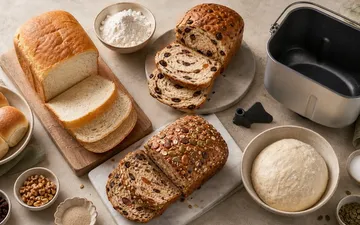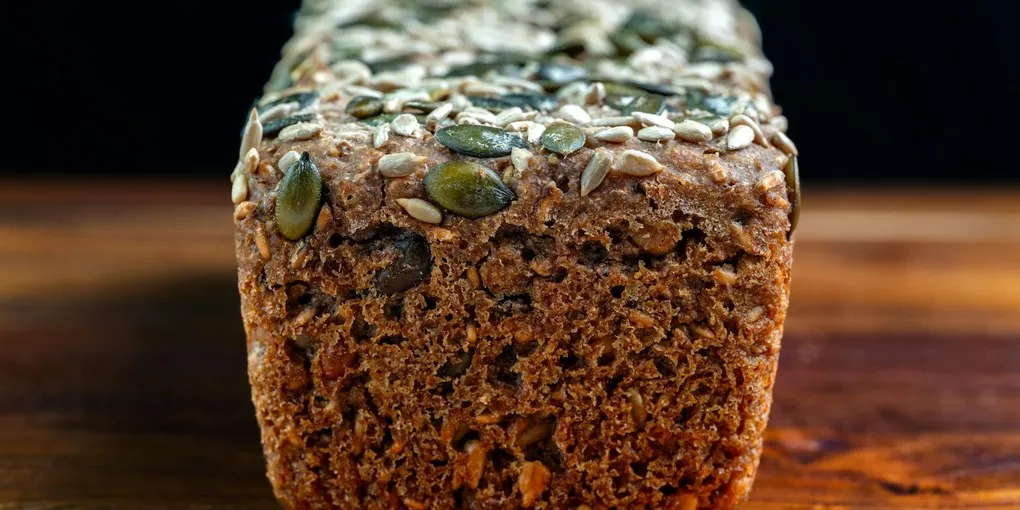
High-protein bread combines three strategies: a high-protein flour (13%+), a small addition of vital wheat gluten (2-4% of flour weight), and protein-rich add-ins like seeds, eggs, and milk. The recipe below delivers about 8g of protein per slice — roughly double a standard commercial sandwich slice (3-4g) — without protein powder. Adding protein powder directly to dough is possible but tricky: it absorbs water aggressively and can produce a gummy crumb.
Try It Yourself
The Baker's Shelf
Use the Flour Library to compare protein content across brands, and the Hydration Adjuster to compensate when you switch to a higher-protein flour.
Open ToolHigh-protein bread has become one of the most searched baking topics in 2026, driven by the broader trend of protein-focused eating. But there’s a gap between what most people mean when they search for “high-protein bread” and what actually works in baking. Not all protein creates good bread, adding protein powder doesn’t automatically make better bread, and the flour you choose matters more than any supplement you stir in.
This guide covers what protein means in the context of bread baking, which flours and ingredients genuinely boost protein content, and how to bake a loaf that delivers more protein per slice without turning into a brick.
Protein in Flour: What It Actually Does
Wheat flour protein serves two completely different functions depending on context. Nutritionally, protein contributes amino acids. Functionally, wheat protein forms gluten — the elastic network that traps gas and gives bread its structure.
Wheat contains two classes of protein that matter for bread. Glutenin is a large polymeric protein linked by disulfide bonds that provides elasticity — the tendency to spring back after stretching. Gliadin is a smaller monomeric protein that acts as a molecular lubricant within the glutenin network, providing extensibility — the ability to stretch without tearing. Together, they form gluten when hydrated and worked.
The balance between glutenin and gliadin determines dough behavior. Too much glutenin relative to gliadin produces a tight, resistant dough. Too much gliadin creates a slack, sticky mass. Bread flour is selected for an appropriate balance of both. For a deeper dive into the mechanics, see our how gluten works guide.
Flour Protein Content by Wheat Class
Not all wheat protein is created equal. The United States grows six classes of wheat, and their protein content ranges from under 8% to over 15%.
Hard Red Spring wheat is the protein champion — 11-15% protein, grown in states with fierce winters like North Dakota. This is what most high-protein bread flour is milled from.
Hard Red Winter wheat grows in gentler climates like Kansas and delivers moderate protein — typically 10-13%.
Hard White Winter wheat has a lighter color with similar protein to hard red varieties.
Durum wheat actually has the highest protein of all wheat classes (roughly 14-15%), but it’s not suitable for bread. Its gluten quality is wrong for gas retention, and dough risks breakdown during mixing. Durum is for pasta.
Soft White varieties (both winter and spring) run low protein — 7-9% — and are used for pastry, cake, and crackers, not bread.
For bread baking, focus on the hard red and hard white classes. A typical bread flour will be 11.5-13% protein. “High-gluten” flour marketed to bagel and pizza makers often runs 13-14.5%. For a full discussion of how that 2-3 point protein gap changes your dough, see bread flour vs all-purpose, and for brand-by-brand protein numbers, see our best bread flour brands ranking.
Protein Content by Wheat Class
Where high-protein bread flours actually come from
High-Gluten Bread Flour
Hard red spring wheat — ideal for bagels, pizza, and high-protein bread
Standard Bread Flour
Hard red spring or winter — the everyday bread flour
Hard White Wheat Flour
Lighter color with similar protein to hard red
All-Purpose Flour
Blend of hard and soft wheat — compromise for mixed uses
Whole Wheat Flour
High total protein but bran weakens the gluten network
Pastry / Cake Flour
Soft wheat — not suitable for bread
Durum wheat (14-15%) has the highest total protein but is unsuitable for bread — its gluten quality cannot retain fermentation gas.
jayarrbread.comThe Protein-Hydration Connection
Higher protein flour absorbs more water. This is one of the most practical facts in baking. If you switch from an 11.5% protein flour to a 12.5% protein flour at the same hydration percentage, the dough will be noticeably stiffer. You have to increase hydration to compensate.
This matters for high-protein bread because you’re working with flour that’s hungrier for water. A dough that’s supposed to be 70% hydration might feel like 65% hydration when you switch to a high-protein flour.
The rule: When switching flours, always adjust hydration based on the feel of the dough, not the recipe number. Hold back 5-10% of your water and add it gradually until the dough reaches the consistency you want.
There’s also a geographic factor. American wheat flour holds more water and has a different quality of gluten-forming proteins than French or Italian flour. A high-hydration dough in France would contain about 5% less water than an American high-hydration dough at the same described percentage.
For the full mechanics of why this happens, see our hydration guide. And if you’re wondering what to do when the recipe calls for bread flour and your pantry has something else, see bread flour substitutes.
Maximizing Protein: Ingredients That Actually Work
Vital Wheat Gluten
The most effective way to boost bread protein without changing texture. Vital wheat gluten is concentrated gluten protein — typically 75-80% protein by weight. Adding 1-2 tablespoons (8-16g) per 500g of flour increases total protein by 1-2 percentage points while strengthening the gluten network.
This is particularly useful when working with whole wheat or alternative grain flours that have weaker gluten. The added vital wheat gluten compensates for the structural damage that bran causes to gluten strands.
Don’t overdo it. More than 5% vital wheat gluten (relative to flour weight) produces a tough, rubbery crumb. The bread will have plenty of protein but won’t be pleasant to eat.
Eggs
One large egg adds about 6g of protein to a loaf. Eggs also contribute fat (which tenderizes), lecithin (a natural emulsifier), and browning capacity. Two eggs in a loaf of bread is reasonable; beyond that, you’re making brioche.
Milk and Yogurt
Replacing water with whole milk adds roughly 3g of protein per 100g of liquid. Greek yogurt is even higher — about 10g protein per 100g. Either can replace some or all of the water in a recipe, though yogurt’s acidity will affect fermentation rate (slightly faster due to lowered pH).
Seeds and Nuts
Adding seeds (sunflower, pumpkin, flax, hemp) or nuts (walnuts, almonds) boosts total protein per slice. Hemp seeds are particularly protein-dense at about 31g per 100g. Add 50-100g of seeds per 500g of flour for a meaningful protein boost.
Seeds don’t contribute to gluten structure — they’re passengers, not builders. They can actually weaken the dough slightly by physically interrupting the gluten network, similar to how bran punctures gluten strands in whole wheat flour.
Protein Powder: A Cautionary Note
Whey and plant protein powders can be added to bread dough, but they create challenges. Protein powder absorbs water aggressively, requiring significant hydration increases. It can produce a gummy, dense crumb if used in excess. And most protein powders have strong flavors that compete with the bread.
If you want to try it, start with no more than 30g of protein powder per 500g of flour, and increase water by at least 15-20g to compensate for the absorption. Unflavored whey isolate integrates best. Plant-based powders (pea, soy) tend to produce off-flavors in baked goods.
Protein Boost per Ingredient
Added to 500g of flour — protein gain and effect on dough
| Ingredient | 01Amount to Add | 02Protein Added | 03Impact on Dough |
|---|---|---|---|
| Vital wheat gluten | 20g (4%) | +16g | Strengthens gluten, slightly tighter crumb |
| 1 large egg | ~50g | +6g | Tenderizes, browns, emulsifies |
| Whole milk (replacing water) | 300g | +10g | Softer crumb, better browning |
| Hemp seeds | 50g | +16g | Neutral flavor, slight crumb interruption |
| Sunflower seeds | 50g | +10g | Nutty flavor, visible texture |
| Greek yogurt (partial water sub) | 100g | +10g | Tangier, slightly faster fermentation |
| Whey protein isolate | 30g | +25g | Absorbs water, risk of gummy crumb |
Protein additions from seeds and whey isolate are total protein, not gluten-forming protein — they don't strengthen dough structure.
jayarrbread.comThe Recipe: High-Protein Sandwich Loaf
This recipe maximizes protein per slice using flour selection, vital wheat gluten, seeds, and milk — without sacrificing the soft, sliceable texture you want in a sandwich bread.
Yield: 1 loaf (about 950g)
Ingredients
| Ingredient | Weight | Baker’s % | Protein Contribution |
|---|---|---|---|
| High-gluten bread flour (13-14% protein) | 450g | 90% | ~59g |
| Whole wheat flour | 50g | 10% | ~7g |
| Vital wheat gluten | 20g | 4% | ~16g |
| Whole milk, warm | 320g | 64% | ~10g |
| Mixed seeds (sunflower, pumpkin, hemp) | 75g | 15% | ~15g |
| Unsalted butter, softened | 25g | 5% | — |
| Honey | 20g | 4% | — |
| Salt | 10g | 2% | — |
| Instant dry yeast | 5g | 1% | — |
| 1 large egg | ~50g | 10% | ~6g |
Estimated total protein: ~113g per loaf, or about 8g per slice (14 slices)
A typical commercial sandwich bread slice has 3-4g of protein. This recipe roughly doubles that.
Method
-
Autolyse (20 minutes): Combine both flours, vital wheat gluten, and milk in a large bowl. Mix until no dry flour remains. Cover and rest 20 minutes. This gives the extra protein time to hydrate — high-protein doughs benefit significantly from autolyse because the additional glutenin and gliadin need time to absorb water and begin forming cross-links.
-
Mix (10-12 minutes): Add salt, yeast, honey, and egg. Mix on low speed 2 minutes to incorporate, then medium speed 8-10 minutes until the dough is smooth and elastic. Add butter in pieces and mix until incorporated, about 2 more minutes. Add seeds on low speed just until distributed.
-
Bulk ferment (2 hours at 75-78F): The dough should roughly double. One fold at the 1-hour mark.
-
Shape: Press into a rectangle, fold into thirds, roll tightly. Place seam-down in a greased 9x5 loaf pan.
-
Final proof (60-90 minutes): Let rise until the dough crowns 1 inch above the pan rim.
-
Bake: 375F (190C) for 32-38 minutes until internal temperature reads 195F (90C). The honey and milk will produce a rich golden brown crust.
-
Cool: Remove from pan immediately. Cool on a wire rack for at least 1 hour.
For formula scaling, see baker’s percentages. For help identifying doneness, see how to tell when bread is done. And for the full list of gear you need to make this work consistently, see our bread baking equipment guide.
Managing High-Protein Dough
High-protein doughs behave differently. Here’s what to expect:
Stiffer dough feel. Even at the same hydration percentage, a 14% protein flour absorbs more water than an 11% protein flour. The dough will feel tighter. Don’t panic — add water in 10g increments until it feels workable.
Stronger gluten. More protein means a more elastic, springy dough. It will resist shaping more than a standard dough. Let it rest longer between pre-shape and final shape — 20-30 minutes instead of 15.
Longer mixing time. The extra glutenin takes longer to fully hydrate and develop. Budget 10-12 minutes of mixing where a standard dough might take 8.
Better oven spring. The stronger gluten network holds gas more efficiently, often producing a taller, more domed loaf.
What About Ancient Grains?
Spelt, einkorn, and emmer are sometimes marketed as high-protein alternatives, but their protein quality is different from modern wheat. Spelt has weaker gluten that requires lower hydration and gentler handling. Einkorn, the oldest cultivated wheat, has very different gluten behavior that doesn’t map to modern bread-making techniques.
These grains have nutritional merits, but if your primary goal is maximizing functional protein in bread — protein that builds structure and delivers amino acids — modern hard wheat varieties are still the best tool for the job. For guides on working with these grains directly, see baking with einkorn and our ancient grains bread guide.
The Bottom Line
The most effective path to high-protein bread combines three strategies: start with a high-protein bread flour (13%+), add a small amount of vital wheat gluten (2-4%), and include protein-rich add-ins (seeds, eggs, milk). This approach doubles the protein of standard bread without requiring protein powder or dramatic technique changes.
The bread still tastes like bread. It slices, toasts, and makes sandwiches like bread. It just happens to deliver 7-9g of protein per slice instead of 3-4g.
Frequently Asked Questions
- Does higher protein flour automatically make higher protein bread?
- Higher protein flour contributes more protein per slice, but the relationship isn't linear. A flour with 14% protein vs 11% protein adds about 15g more protein per 500g of flour — roughly 1g extra per slice. The bigger gains come from adding protein-rich ingredients like vital wheat gluten, seeds, eggs, and milk on top of choosing a high-protein flour.
- Can I just add protein powder to any bread recipe?
- You can, but proceed carefully. Protein powder absorbs water aggressively and can produce a dense, gummy crumb if you don't increase hydration to compensate. Start with no more than 30g per 500g of flour and add 15-20g extra water. Unflavored whey isolate works best — plant-based protein powders tend to introduce off-flavors.
- Is high-protein bread better for you than regular bread?
- It depends on your dietary needs. If you're trying to increase protein intake, a bread that delivers 7-9g per slice instead of 3-4g makes a meaningful difference across multiple slices per day. But bread is primarily a carbohydrate source regardless of protein content. It's not a protein substitute — it's bread that happens to have more protein.
- Why does my high-protein dough feel so stiff?
- Higher protein flour absorbs more water than lower protein flour at the same hydration percentage. A dough made with 14% protein flour will feel significantly stiffer than the same recipe made with 11% flour. Add water in 10g increments until the dough reaches a workable consistency. Don't rely on the recipe number — adjust by feel.