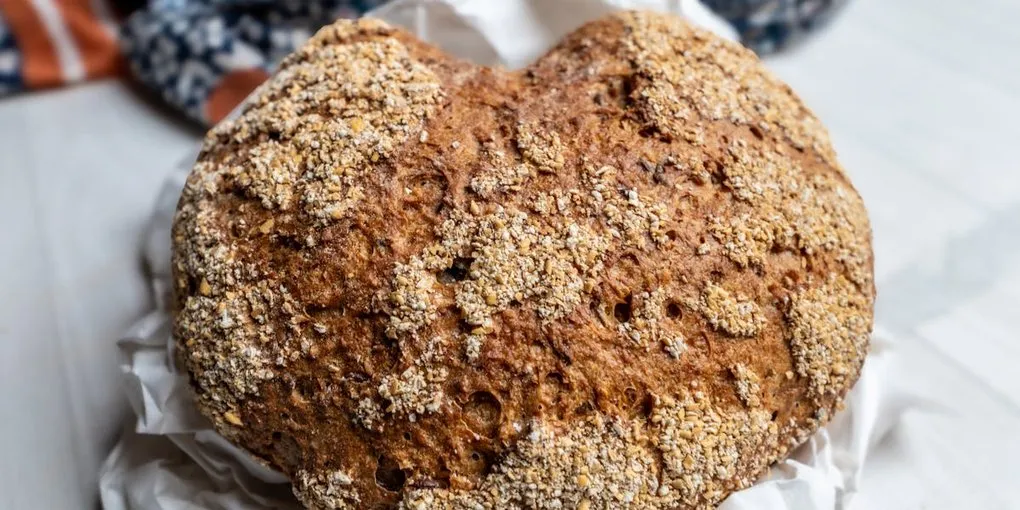
Einkorn is the oldest cultivated wheat, with weaker gluten that demands lower hydration (60-65%), shorter mixing, shorter fermentation (target 50-75% volume increase, not a full double), and gentle shaping. The reward is a golden crumb with a rich, buttery, nutty flavor that modern wheat cannot match. Bake in a loaf pan for the most forgiving results.
Before you buy or bake
- A gluten-free claim is not a wheat-free claim
- These are two different questions and they need two different label checks. Under US rules a food may carry a compliant gluten-free claim and still contain processed wheat starch, provided the finished gluten level is below the regulatory limit and wheat is declared as an allergen. If you are managing a wheat allergy, read the allergen declaration for wheat and follow your allergist’s guidance — a gluten-free claim, certified or not, is not evidence that wheat is absent.
Try It Yourself
The Baker's Bench
Get the exact recipe for your bread style, schedule, and number of loaves — with baker's percentages and a complete timeline.
Open ToolEinkorn is the oldest cultivated wheat on earth. Originating in the Fertile Crescent around 16,000 BC, it is the grain that launched agriculture itself. Today, einkorn occupies a tiny niche in commercial farming, but it has experienced a revival among bakers drawn to its rich flavor, golden color, and potential nutritional benefits.
Baking with einkorn is rewarding but different. Its gluten is weaker than modern wheat, its hydration needs are lower, and its fermentation behavior requires adjustments. This guide covers everything you need to know.
What Makes Einkorn Different
Einkorn (Triticum monococcum) is a diploid wheat with only two sets of chromosomes. Modern bread wheat (Triticum aestivum) is a hexaploid with six sets. This genetic simplicity gives einkorn fundamentally different proteins and baking characteristics.
The Gluten Question
Einkorn contains gluten. It is not a gluten-free grain. The structure of einkorn gluten differs from modern wheat gluten because its gliadin-to-glutenin ratio is higher. Gliadin provides extensibility (stretching), while glutenin provides elasticity (springing back). With more gliadin relative to glutenin, einkorn dough stretches easily but does not hold its shape well.
In practice, this means einkorn dough:
- Stretches easily but does not snap back
- Feels sticky and soft, even at lower hydration
- Cannot support the same oven spring as modern wheat dough
- Tends to spread rather than rise tall
This is similar in principle to what happens with spelt and other ancient grains with weaker gluten, but einkorn’s gluten is even more fragile.
Flavor and Color
Einkorn’s most immediately noticeable quality is its color. The flour ranges from pale gold to deep yellow, significantly darker than modern white flour. This comes from high levels of carotenoid pigments, the same compounds that give carrots their orange color. These carotenoids produce a distinctly golden crumb.
The flavor is rich, buttery, and nutty. Many bakers describe it as having an almost pastry-like quality, sweeter and more complex than modern wheat. This makes einkorn naturally suited to enriched and sweet breads, where its flavor complements butter, honey, and eggs.
Sourcing Einkorn Flour
Einkorn production remains limited. You will not find it at most grocery stores. Specialty suppliers include:
- Jovial Foods — the largest US supplier, offering both whole einkorn and all-purpose einkorn flour
- Bluebird Grain Farms — Pacific Northwest heritage grain operation
- Local stone mills — increasingly common at farmers markets
Einkorn flour costs significantly more than conventional flour, typically 3-5 times the price per pound. This reflects its lower yield per acre and the difficulty of dehulling the tightly enclosed kernel.
Whole vs. all-purpose einkorn: Jovial offers both. Their all-purpose einkorn has the bran sifted out and behaves more predictably. Whole einkorn flour adds even more flavor but makes the already-fragile gluten weaker.
Adjusting Your Technique for Einkorn
Einkorn Technique Adjustments
Key differences from modern wheat at a glance
Hydration
Einkorn absorbs less water than modern wheat
Mixing
Fragile gluten develops fast, breaks down fast
Autolyse
Extended rest reduces need for mechanical mixing
Bulk fermentation
Weaker gluten cannot tolerate extended fermentation
Shaping
Aggressive shaping destroys the gluten network
Best format
Pan support eliminates shaping difficulty
Start with all-purpose einkorn flour for the most predictable results.
jayarrbread.comLower Your Hydration
Einkorn flour absorbs less water than modern wheat flour. Where a standard bread recipe might call for 70-75% hydration, einkorn works best at 60-65%. Start low and add water gradually. It is far easier to add water than to rescue an over-hydrated einkorn dough.
The dough will still feel soft and sticky even at lower hydration. This is the gliadin-heavy gluten doing its thing, not a sign that you need more flour.
Reduce Mixing Time
Einkorn’s fragile gluten network develops quickly and breaks down just as fast. Over-mixing is a real danger. If you are using a stand mixer, limit second-speed mixing to 3-4 minutes. For hand mixing, use gentle folding techniques rather than aggressive kneading.
The windowpane test works with einkorn, but the window will be thicker and less transparent than with modern wheat. You are looking for a cohesive, stretchy sheet, not a paper-thin membrane.
Extend the Autolyse
A longer autolyse benefits einkorn more than almost any other flour. Because the gluten develops slowly through hydration alone, giving the flour 45-60 minutes to absorb water before adding salt reduces the need for mechanical mixing.
Mix flour and water only, rest for 45-60 minutes, then add salt and any preferment. This is one situation where patience directly translates to better gluten development.
Gentle Shaping
Aggressive shaping destroys einkorn’s delicate gluten network. Use minimal pre-shaping, a generous bench rest (20-30 minutes), and gentle final shaping. Do not try to create the same tight surface tension you would with a modern wheat boule.
Einkorn loaves will be flatter and wider than wheat loaves. Accept this. Fighting it by over-shaping only makes things worse. Baking in a loaf pan eliminates the shaping challenge entirely and is a great option for beginners.
Shorter Fermentation
Einkorn’s weaker gluten network cannot withstand the same fermentation duration as modern wheat. The acids and proteases active during fermentation gradually break down gluten proteins, and einkorn starts with less structural capacity.
For yeasted einkorn bread, target a bulk fermentation that produces a 50-75% volume increase rather than the doubled or tripled volume you might target with wheat.
For sourdough einkorn, use a young, mild leaven and keep bulk fermentation short. Extended fermentation produces an overly acidic dough that the fragile gluten cannot support.
A Basic Einkorn Bread Recipe
This is a straightforward loaf-pan recipe designed to showcase einkorn’s flavor without fighting its structural limitations.
Basic Einkorn Loaf
A gentle process for einkorn's fragile gluten
- 01
Autolyse
45-60 minMix 500g einkorn AP flour + 310g water (62%). Rest covered.
- 02
Mix
2-3 minAdd 10g salt + 4g instant yeast + 20g honey (optional). Pincer method, gentle.
- 03
Bulk Ferment
2-2.5 hrs at 75-78 FFold gently every 30 min for the first hour only. Target 50-75% volume increase.
- 04
Shape
GentleTurn out, shape into a log, place seam-down in a greased 9x5 loaf pan.
- 05
Proof
45-60 minUntil dough crowns about 1 inch above the rim of the pan.
- 06
Bake
375 F, 35-40 minUntil internal temperature reaches 200 F. The crust will be deeply golden.
- 07
Cool
1 hour minimumRemove from pan immediately. Cool on a wire rack before slicing.
For whole einkorn flour: increase hydration to 65% and extend the autolyse to 60 minutes.
jayarrbread.comFormula (baker’s percentages):
| Ingredient | Baker’s % | Weight |
|---|---|---|
| Einkorn all-purpose flour | 100% | 500g |
| Water | 62% | 310g |
| Salt | 2% | 10g |
| Instant yeast | 0.8% | 4g |
| Honey (optional) | 4% | 20g |
Notes: The honey is optional but complements einkorn’s natural sweetness beautifully. If using whole einkorn flour, increase hydration to 65% and extend the autolyse to 60 minutes.
Einkorn Sourdough
Sourdough einkorn is more challenging because the acid produced during fermentation further weakens the already-fragile gluten. Success depends on using a young leaven and keeping fermentation short.
Robertson’s concept of a “young leaven” applies perfectly here. Use your leaven when the yeast is active but before acid has accumulated. Seed a fresh build with a small amount of mature starter and use it when it passes the float test, typically 6-8 hours later.
Keep the bulk fermentation to 3 hours maximum. Fold gently twice in the first hour, then leave it undisturbed. Shape into a loaf pan rather than a free-standing boule.
The result will be milder in sourdough flavor than a wheat sourdough. The shorter fermentation and young leaven produce a bread that tastes more of grain than of acid.
Blending Einkorn with Modern Wheat
Many bakers get excellent results by blending einkorn with conventional bread flour. This gives you einkorn’s flavor and color with modern wheat’s structural support.
Einkorn Blending Spectrum
How einkorn percentage changes dough behavior and flavor
| Einkorn % | 01Character | 02Technique Adjustment |
|---|---|---|
| 10-25% | Subtle golden color and nutty flavor | Handles like normal bread dough |
| 25-50% | Distinct einkorn character, slightly softer | Moderate adjustment — reduce hydration slightly |
| 50-75% | Einkorn-forward flavor, noticeable spread | Lower hydration, gentle handling required |
| 100% | Full einkorn experience | All technique adjustments above |
Start at 25-30% einkorn for your first blend. You get the flavor payoff without the structural headaches.
jayarrbread.comEinkorn’s Nutritional Profile
Einkorn’s revival is partly driven by interest in its nutritional profile. Compared to modern wheat, einkorn tends to have:
- Higher carotenoid content (lutein especially), responsible for the golden color
- Higher protein content by percentage, though total yield per acre is much lower
- Different gliadin structure, which some studies suggest may be easier to digest, though this is NOT the same as being safe for celiac disease
- Higher levels of certain minerals including zinc and manganese
Important: Einkorn is NOT safe for people with celiac disease. It contains gluten. Some people with non-celiac gluten sensitivity report better tolerance, but this is anecdotal and varies by individual.
Where Einkorn Shines
Einkorn’s natural sweetness, buttery flavor, and golden color make it particularly well-suited for:
- Pancakes and waffles — where its weak gluten is actually an advantage (tender texture)
- Muffins and quick breads — same logic; less gluten means a more tender crumb
- Pasta — einkorn makes excellent fresh pasta with rich color
- Flatbreads and crackers — no oven spring needed
- Enriched breads — the flavor pairs naturally with butter, eggs, and honey, similar to what makes brioche and challah work so well
- Blended sourdough — 20-30% einkorn in a wheat sourdough adds complexity without structural compromise
The Bottom Line
Einkorn demands adjustment, not apology. It is a genuinely different flour with genuinely different strengths: outstanding flavor, beautiful color, and a connection to the oldest chapter of human agriculture. Treat it on its own terms. Lower hydration, gentler handling, shorter fermentation, and honest expectations about shape and rise.
The bread will be flatter. It will be denser. And it will taste better than almost anything you have baked with modern wheat.
Frequently Asked Questions
- Is einkorn flour gluten-free?
- No. Einkorn contains gluten and is not safe for people with celiac disease. Its gluten structure differs from modern wheat — the gliadin-to-glutenin ratio is higher, making the dough more extensible and less elastic — but it is still gluten. Some people with non-celiac gluten sensitivity report better tolerance, but this varies by individual and is not clinically established.
- Why is my einkorn bread so flat?
- Einkorn's gluten is weaker than modern wheat, so loaves naturally spread more and rise less. To minimize this: reduce hydration to 60-65%, avoid over-mixing, keep fermentation short (target 50-75% volume increase instead of doubling), and shape gently. Baking in a loaf pan rather than free-standing eliminates the spreading issue entirely.
- Can I substitute einkorn flour 1:1 in regular bread recipes?
- Not without adjustments. Einkorn absorbs less water, so you need to reduce hydration by about 10-15 percentage points. It also requires shorter mixing, shorter fermentation, and gentler shaping. A better approach is to start by replacing 25-30% of your regular flour with einkorn — this gives you the flavor benefit without major technique changes.
- What does einkorn bread taste like?
- Einkorn has a distinctly rich, buttery, nutty flavor — sweeter and more complex than modern wheat. The crumb has a golden-yellow color from high carotenoid content. Many bakers describe an almost pastry-like quality. This makes einkorn naturally suited to enriched breads, pancakes, and recipes where its sweetness and richness are assets.
- How should I store einkorn flour?
- Because einkorn — especially whole einkorn — contains more oils than modern wheat, it can go rancid faster. Store in an airtight container in a cool, dark place. For longer storage beyond a month, refrigerate or freeze the flour in a sealed bag. Bring to room temperature before baking for accurate hydration.