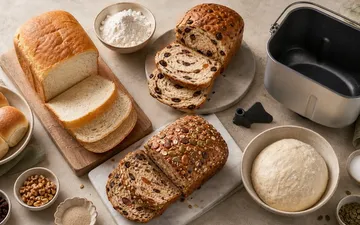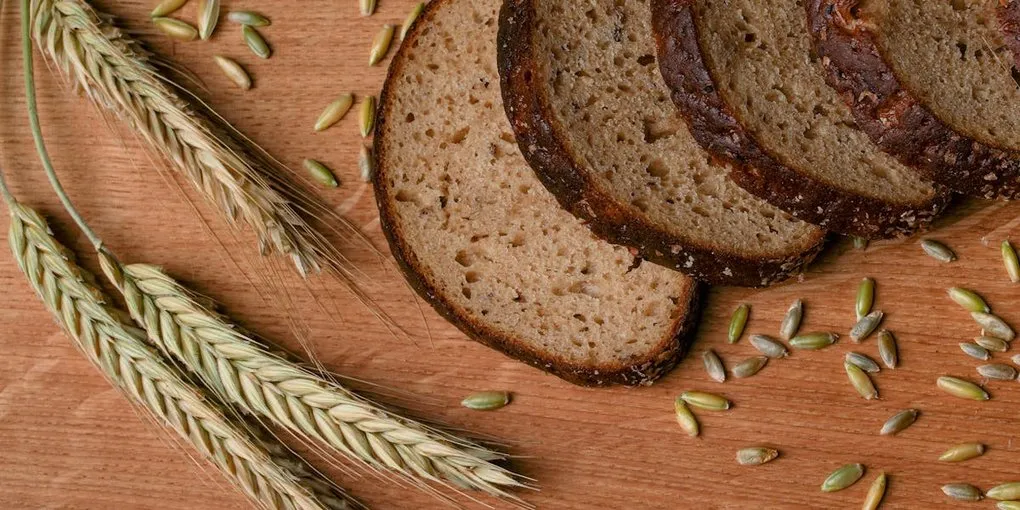
Ancient grains like emmer, kamut, triticale, and fonio have weaker gluten than modern bread wheat, which means lower hydration, shorter mixing, shorter bulk fermentation, and blending with bread flour at 20-50% for the best results. Start with kamut at 30% in a sandwich loaf -- it is the most forgiving ancient grain and produces a golden, buttery bread that most people immediately enjoy.
Before you buy or bake
- Naturally gluten-free is not the same as gluten-free
- Rice, buckwheat, sorghum, teff, millet, and oats carry no gluten as crops, but they are routinely grown, stored, transported, and milled alongside wheat. The grain being naturally gluten-free is necessary and not sufficient — what matters is the finished bag. Buy flours that carry a gluten-free label, and note that several major brands decline to label some naturally gluten-free flours precisely because of supply-chain cross-contact.
- A gluten-free claim is not a wheat-free claim
- These are two different questions and they need two different label checks. Under US rules a food may carry a compliant gluten-free claim and still contain processed wheat starch, provided the finished gluten level is below the regulatory limit and wheat is declared as an allergen. If you are managing a wheat allergy, read the allergen declaration for wheat and follow your allergist’s guidance — a gluten-free claim, certified or not, is not evidence that wheat is absent.
Ancient grains are domesticated cereals that have remained largely unchanged by modern breeding programs. Where modern bread wheat has been optimized for high protein content and strong gluten, ancient grains kept their original genetics — which means different flavors, different textures, and different rules in the dough.
We’ve already covered einkorn and spelt in dedicated guides. This article covers the rest: emmer, kamut (khorasan wheat), triticale, and fonio. Each has its own personality in bread, and each requires specific adjustments to technique.
Why Ancient Grains Behave Differently
The fundamental issue with every ancient grain is gluten. Modern bread wheat — the hard red spring and hard red winter varieties that make up most bread flour — has been selected over thousands of years for strong, elastic gluten networks that trap gas efficiently and produce tall, open-crumbed loaves.
Ancient grains have weaker gluten. Their glutenin and gliadin proteins form a less robust network, which means less gas retention, less oven spring, and denser crumb. This isn’t a defect — it’s simply different. The tradeoff is flavor. Ancient grains bring nutty, sweet, earthy, and buttery notes that modern wheat can’t match.
The general principles for baking with any ancient grain:
- Lower hydration to compensate for weaker gluten. The dough can’t hold as much water without becoming slack.
- Gentle mixing. Extended kneading damages the fragile gluten network. Short mix times or stretch-and-fold methods work better.
- Shorter bulk fermentation. Weaker gluten degrades faster under protease activity. Don’t push fermentation as long as you would with bread flour.
- Blend with bread flour when starting out. A 20-50% ancient grain substitution gives you the flavor benefits while maintaining enough structural integrity for a liftable loaf.
Ancient Grains for Bread Baking
Protein, gluten strength, flavor, and how to use each grain
| Grain | 01Protein % | 02Gluten Strength | 03Flavor Profile | 04Hydration Adjust | 05Best Application |
|---|---|---|---|---|---|
| Emmer (Farro) | 10-13% | Weak -- extensible, low elasticity | Nutty, sweet, earthy | Reduce 5-8% | Hearth loaves, flatbreads, pasta |
| Kamut (Khorasan) | 12-15% | Moderate -- best of the ancient grains | Buttery, golden, slightly sweet | Reduce 3-5% | Sandwich bread, country loaves, sourdough |
| Triticale | 10-13% | Very weak -- wheat-rye hybrid | Complex, between wheat and rye | Reduce 8-10% | Flavor accent at 15-25%, pan breads |
| Fonio | 7-10% | None -- gluten-free | Light, nutty, earthy-sweet | N/A (blending rules differ) | 10-15% addition, GF flatbreads |
| Einkorn | 12-15% | Weak -- sticky, extensible | Sweet, honey-like | Reduce 5-10% | Pancakes, flatbreads, low-rise loaves |
| Spelt | 11-15% | Weak-moderate -- tears if overworked | Sweet, mild, mellow | Reduce 3-5% | Hearth loaves, sandwich bread blends |
Start at 20-30% substitution blended with bread flour. Reduce hydration 1-2% for every 10% of bread flour replaced. Einkorn and spelt included for comparison -- see their dedicated guides.
jayarrbread.comEmmer (Farro)
Emmer is one of the oldest cultivated wheats, contemporary with einkorn. As Hamelman notes, emmer “surpassed [einkorn] as a cultivated crop” — it was the dominant grain of the ancient Mediterranean and Near East. Today it’s marketed as farro in Italian cooking (though “farro” can also refer to einkorn or spelt depending on the region — check the label).
Flavor and Character
Emmer has a rich, nutty sweetness with an earthy undertone. The crumb tends to be creamy-tan in color, denser than white wheat bread but not heavy. It makes particularly good flatbreads, pasta, and hearth loaves where a close crumb is an asset rather than a compromise.
Baking Adjustments
| Parameter | Bread Flour Standard | Emmer Adjustment |
|---|---|---|
| Hydration | 70-75% | Reduce to 62-68% |
| Mixing | 8-12 min second speed | 4-6 min second speed, or stretch-and-fold |
| Bulk fermentation | 3-5 hours | 2-3.5 hours |
| Protein content | 11-13% | 10-13% (variable, but gluten quality is weaker) |
Emmer’s protein content can look comparable to bread flour on paper, but the protein quality is different. The glutenin subunits don’t cross-link as aggressively, producing a more extensible, less elastic dough. It stretches easily but doesn’t spring back well — the opposite of a tight bread flour dough.
Best Applications
- Hearth loaves blended with 30-50% bread flour
- Flatbreads (100% emmer works well — no need for strong gluten)
- Pasta (the traditional farro use in Italy)
- Porridge breads where cracked emmer is soaked and added to a wheat-based dough
Try It Yourself
The Baker's Shelf
Quick-reference tools: Flour Library, Hydration Adjuster, Yeast Converter, Temperature Calculator, and more.
Open ToolKamut (Khorasan Wheat)
Kamut is the brand name for khorasan wheat, an ancient grain with kernels roughly twice the size of modern wheat. It’s the most baking-friendly ancient grain — higher protein than most, a naturally golden color, and a buttery, almost sweet flavor that makes converts out of people who think whole grains taste like cardboard.
Flavor and Character
Kamut bread has a distinctive golden crumb, a smooth, buttery flavor, and a slight sweetness that works in both savory and sweet applications. The texture is tender but not crumbly. Of all the ancient grains, kamut produces bread that’s closest to what most people expect bread to taste and feel like.
Baking Adjustments
| Parameter | Bread Flour Standard | Kamut Adjustment |
|---|---|---|
| Hydration | 70-75% | Reduce to 65-70% |
| Mixing | 8-12 min second speed | 5-8 min second speed |
| Bulk fermentation | 3-5 hours | 2.5-4 hours |
| Protein content | 11-13% | 12-15% (higher than most ancient grains) |
Kamut’s higher protein content is misleading if you equate protein with gluten strength. The protein is abundant, but the gluten it forms is softer and more extensible than modern wheat gluten. You get a workable dough, but it won’t hold high hydrations or produce the dramatic oven spring of a bread flour boule.
Best Applications
- Sandwich bread (blended 40-50% kamut, rest bread flour) — the golden color and buttery flavor are ideal
- Country loaves at 30-40% kamut
- Sourdough — kamut’s natural sugars feed the culture well and produce a mild, sweet fermented flavor
- 100% kamut flatbreads and pizza doughs
Triticale
Triticale is a hybrid of rye and wheat. The first wheat-rye cross was reported by Scottish botanist A.S. Wilson in 1875, though those hybrids were sterile; the first fertile wheat-rye hybrid wasn’t produced until 1888 by German breeder W. Rimpau, and the first commercial varieties only became available in 1970. As Hamelman notes, triticale offers high yields but very low gluten quality — poor for bread-making and used mostly as livestock feed. That’s the honest assessment, and no amount of technique can fully compensate for triticale’s fundamental gluten deficiency.
Why It’s Worth Mentioning Anyway
Triticale isn’t useless in bread. It has a distinctive, complex flavor — somewhere between wheat’s mild sweetness and rye’s deep, earthy tang. In small quantities blended with strong bread flour, it adds a flavor dimension you can’t get from either parent grain alone.
Baking Adjustments
| Parameter | Bread Flour Standard | Triticale Adjustment |
|---|---|---|
| Hydration | 70-75% | Reduce to 60-65% |
| Mixing | 8-12 min second speed | 3-5 min, gentle — treat more like rye |
| Bulk fermentation | 3-5 hours | 2-3 hours |
| Protein content | 11-13% | 10-13% (gluten quality is very poor) |
The mixing guidance is important. Like rye, triticale doesn’t benefit from extended mixing. The gluten network that forms is fragile, and prolonged kneading degrades it. Mix until just combined, then rely on folds during bulk fermentation for whatever structure you can build.
Best Applications
- Blended at 15-25% with bread flour for flavor complexity
- Pan breads where the tin provides structural support
- Flatbreads and crackers where rise isn’t critical
- Porridge additions to wheat-based doughs
Honest Limitations
If you’re looking for an open crumb, tall oven spring, or a sliceable sandwich loaf, triticale alone won’t get you there. It’s a flavor ingredient, not a structural one. Keep it under 25% of total flour and pair it with strong bread flour.
Fonio
Fonio is a West African grain that’s gaining traction in artisan bakeries and gluten-free baking. It’s one of the oldest cultivated cereals in Africa — possibly older than wheat — and it’s naturally gluten-free, which puts it in a completely different category from the other grains in this guide.
One sourcing caveat if you are baking for celiac disease: naturally gluten-free grain is not the same as a gluten-free product. Fonio flour is largely imported, is not commonly certified, and is subject to the same shared-milling cross-contact that affects teff and oats. Buy fonio that carries a gluten-free label rather than relying on the botany.
Flavor and Character
Fonio has a light, slightly nutty flavor with an earthy sweetness. The texture is fine-grained, closer to couscous than to wheat flour. It cooks quickly and absorbs liquid readily.
Baking Considerations
Because fonio is gluten-free, it cannot form the elastic network that traps gas in wheat bread. Using fonio in bread requires either:
- Blending with wheat flour (10-20% fonio, rest bread flour) — the wheat provides structure, the fonio provides flavor and texture interest
- Gluten-free bread techniques — using xanthan gum, psyllium husk, or other binders to create structure in place of gluten
At 10-15% substitution in a wheat-based dough, fonio adds a subtle nuttiness and a slightly sandy, interesting texture to the crumb without meaningfully weakening the structure. Above 20%, you’ll notice the dough becoming less elastic and the final bread getting denser.
Best Applications
- 10-15% addition to hearth loaves for texture and flavor
- Gluten-free flatbreads (100% fonio, bound with psyllium or eggs)
- Porridge breads where cooked fonio is folded into a wheat dough
- Trending in 2026 as a menu item in artisan bakeries specializing in African and fusion cuisines
Blending Guidelines: How Much Ancient Grain to Use
The safest approach when starting with any ancient grain is to blend it with bread flour. Here’s a general framework:
| Substitution Level | Structural Impact | Flavor Impact | Best For |
|---|---|---|---|
| 10-20% | Minimal — bread behaves mostly like wheat | Subtle — detectable but not dominant | First experiments, sandwich bread |
| 20-35% | Moderate — slightly denser crumb, less oven spring | Noticeable — the grain’s character comes through | Hearth loaves, sourdough |
| 35-50% | Significant — must reduce hydration 5-8%, shorter mix | Dominant — the ancient grain IS the flavor | Dedicated ancient grain breads |
| 50-75% | Major — expect flat, dense bread without pan support | Very strong | Flatbreads, pan loaves |
| 75-100% | Full ancient grain character — limited rise, dense crumb | Complete | Flatbreads, crackers, porridge |
Hydration adjustment rule of thumb: For every 10% of bread flour replaced with an ancient grain, reduce hydration by 1-2%. A 70% hydration bread flour dough becomes roughly 66-68% when you substitute 20% of the flour with emmer. Always adjust by feel — the dough should be slightly tacky but workable, not slack or sticky.
Sourdough note: Ancient grain flours tend to ferment slightly faster than modern wheat because they contain more accessible sugars and their protein is more susceptible to protease activity. Watch the dough, not the clock. If you’re using a levain, Robertson’s young leaven approach works especially well — use it before peak acidity to avoid breaking down the already-fragile gluten network with too much acid.
Sourcing and Storage
Ancient grain flours are less shelf-stable than modern white flour because they typically contain more germ and bran (higher extraction rates). The oils in the germ go rancid over time.
Storage rules:
- Buy from suppliers with high turnover — freshness matters more with ancient grains
- Store in airtight containers in a cool, dark place
- Whole-grain ancient flours: use within 2-3 months, or freeze for up to 6 months
- If the flour smells musty, bitter, or like old paint, it’s rancid — don’t bake with it
Milling your own: If you have access to a home grain mill, ancient grains are excellent candidates for fresh milling. The flavor difference between freshly milled emmer and a bag that’s been sitting on a shelf for months is dramatic.
Where to Go from Here
If you’re new to ancient grains, start with kamut at 30% in your regular sandwich bread recipe or sourdough country bread. Kamut is the most forgiving ancient grain and produces results that most people immediately enjoy.
From there, try emmer in a hearth loaf, experiment with small amounts of triticale for flavor complexity, and explore fonio if you’re interested in gluten-free or cross-cultural baking. Teff, the tiny Ethiopian grain, is another naturally gluten-free option — see our teff injera recipe. One caution for celiac and gluten-sensitive readers: most ancient grains — einkorn, emmer, spelt, kamut — are still wheat species and contain gluten, and triticale is a wheat x rye hybrid carrying gluten proteins from both parents. If you need truly celiac-safe bread rather than a wheat alternative, buy it rather than bake it; see our guide to the best gluten-free bread brands.
The broader world of alternative grain baking includes einkorn, spelt, and rye — each with their own dedicated guides on this site.
Frequently Asked Questions
- Can I substitute ancient grain flour 1:1 for bread flour?
- Not without adjustments. Ancient grains have weaker gluten than modern bread wheat, so a direct 1:1 swap produces a denser, flatter loaf. Reduce hydration by 1-2% for every 10% of bread flour you replace, shorten mixing time, and expect a tighter crumb. Start with a 20-30% substitution and increase from there as you learn how the grain behaves in your kitchen.
- What's the difference between emmer and spelt?
- Both are ancient wheats with weaker gluten than modern bread flour, but they behave differently. Emmer has a nuttier, more earthy flavor and produces a denser crumb. Spelt has a slightly sweet, mellow flavor and is more extensible -- spelt dough stretches easily but tears if overworked. Spelt also absorbs water less aggressively, so it needs lower hydration than emmer. Both work well blended with bread flour at 30-50%.
- Is kamut good for sourdough bread?
- Kamut is one of the best ancient grains for sourdough. Its natural sugars feed the culture well, and the buttery, slightly sweet flavor pairs beautifully with mild sourdough tang. Use it at 30-50% of total flour blended with bread flour, reduce hydration by about 3-5% compared to an all-bread-flour recipe, and use a young levain (before peak acidity) to avoid breaking down kamut's softer gluten with too much acid.
- What ancient grain is closest to regular bread flour?
- Kamut (khorasan wheat) is the most baking-friendly ancient grain. It has higher protein than most ancient grains (12-15%), produces a workable dough, and yields bread with a golden crumb and buttery flavor that most people enjoy immediately. It won't match bread flour's oven spring or open crumb, but it comes the closest.
- Is triticale worth using in bread?
- Only as a minor ingredient for flavor. Triticale is a wheat-rye hybrid with very poor gluten -- Hamelman classifies it as mostly livestock feed. At 15-25% blended with strong bread flour, it adds an interesting complexity somewhere between wheat sweetness and rye earthiness. Above 25%, the structural compromises outweigh the flavor benefits. It's best in pan breads and flatbreads where the shape is supported.