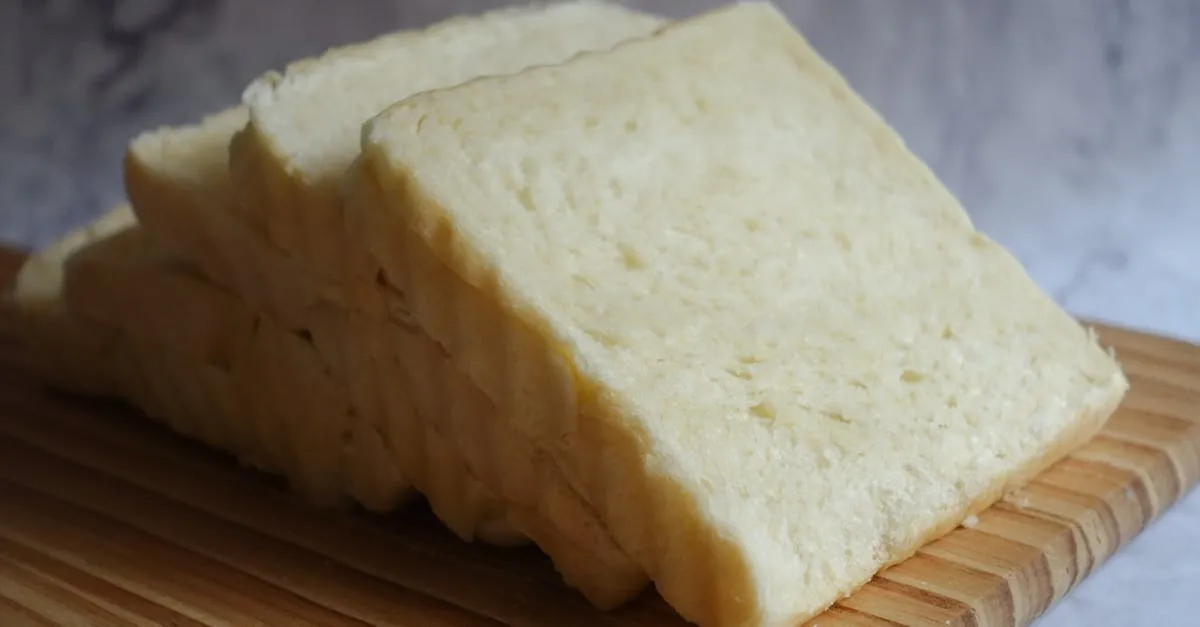
Homemade sandwich bread uses butter, milk, egg, and a touch of sugar to produce a soft, fine-grained crumb that stays fresh for 4-5 days. Mix until the dough passes the windowpane test, bulk ferment for 1.5-2 hours, shape into a 9x5 pan, proof until it crowns 1 inch above the rim, and bake at 375°F to an internal temperature of 190-195°F.
Try It Yourself
The Baker's Bench
Plug in this sandwich bread formula and get a scaled recipe for any number of loaves, with a complete baking timeline.
Open ToolA good sandwich bread is soft without being spongy, has enough structure to hold fillings without collapsing, and stays fresh longer than two days. Store-bought bread achieves this with dough conditioners and preservatives. You can achieve it with butter, milk, a short list of real ingredients, and about 4 hours of mostly hands-off time.
This is an enriched dough — meaning it contains fat (butter), dairy (milk), and sugar beyond what a lean artisan loaf would use. Those additions tenderize the crumb, extend shelf life, and create the soft, fine-grained texture that makes bread sandwich-worthy.
Why Enriched Dough Works for Sandwich Bread
Enriched doughs behave differently from lean doughs, and understanding that difference is the key to a great sandwich loaf. Fat coats gluten strands, shortening them and producing a softer, more tender crumb. Sugar feeds yeast and contributes to browning via the Maillard reaction — amino acids and reducing sugars reacting above 250°F (120°C) to produce golden color and flavor compounds. Milk adds protein and lactose, both of which boost browning and contribute a subtle sweetness.
The tradeoff is that fat slows gluten development. Butter physically interferes with the cross-linking of glutenin and gliadin proteins that form the gluten network. That’s why enriched doughs need more mixing time than lean doughs, and why this recipe calls for adding the butter after the flour and liquid are already combined.
Enriched vs Lean Bread Dough
How fat, sugar, and dairy change everything about dough behavior
| Property | 01Lean Dough | 02Enriched Dough (Sandwich) |
|---|---|---|
| Fat | 0% | 5-15% (butter, oil, eggs) |
| Sugar | 0% | 4-12% |
| Hydration | 65-80% | 55-65% |
| Bake temp | 460-500°F | 350-380°F |
| Crumb texture | Open, irregular, chewy | Fine, even, soft |
| Shelf life | 2-3 days | 4-5 days |
| Crust | Thick, crisp | Thin, soft |
| Oven spring | Dramatic (scoring + steam) | Moderate (pan constrains) |
Enriched bake temperatures per Hamelman: 380°F for enriched doughs vs 460-480°F for lean.
jayarrbread.comFor more on how gluten proteins interact and why fat changes dough behavior, see how gluten works in bread.
The Recipe
Yield: 1 standard 9x5-inch loaf (about 900g)
Ingredients
| Ingredient | Weight | Baker’s % |
|---|---|---|
| Bread flour | 500g | 100% |
| Whole milk, warm (90-95°F) | 300g | 60% |
| Unsalted butter, softened | 40g | 8% |
| Sugar | 30g | 6% |
| Salt | 10g | 2% |
| Instant dry yeast | 6g | 1.2% |
| 1 large egg | ~50g | 10% |
Total hydration: About 62% (counting milk as the primary liquid). This is on the lower end of the 55-65% hydration range that produces a smooth, shapeable dough ideal for sandwich loaves.
For help scaling this formula to different loaf sizes, see our baker’s percentages guide.
Equipment
- Kitchen scale (weight measurement is non-negotiable for consistent bread)
- Stand mixer with dough hook, or strong arms and a clean counter
- 9x5-inch loaf pan
- Probe thermometer
Method
Step 1: Warm the Milk
Heat milk to 90-95°F (32-35°C). This is warm to the touch but not hot. The thermal death point for commercial yeast is 116-140°F (47-60°C) depending on exposure time — water above that range kills yeast outright.
If you’re using a stand mixer, the friction from mixing will add 24-28°F to the dough temperature. Factor this in: if your kitchen is 72°F and your flour is 72°F, milk at 90°F will give you a final dough temperature around 76-78°F — right in the sweet spot for enriched bread. For more on calculating this precisely, see desired dough temperature.
Step 2: Mix the Dough
Combine flour, sugar, yeast, and salt in a large bowl or stand mixer bowl. Add the warm milk and egg. Mix on low speed (or by hand) for 2-3 minutes until a shaggy dough forms and no dry flour remains.
Add the softened butter in pieces. Continue mixing on medium speed for 8-10 minutes. The dough will go through a sticky, messy phase — this is normal. Keep mixing. It will eventually pull away from the sides of the bowl and become smooth and elastic.
How to know it’s ready: Pull off a small piece and stretch it gently between your fingers. If it stretches thin enough to see light through without tearing, gluten development is sufficient. This is the windowpane test — Hamelman describes it as “coaxing the dough out into a thin, almost transparent, sheet.” For sandwich bread, you want a well-developed gluten network — not quite as much as a baguette, but more than a rustic country loaf.
For more on mixing methods and the windowpane test, see our kneading guide.
Step 3: Bulk Fermentation
Shape the dough into a rough ball, place in a lightly oiled container, and cover. Let rise at room temperature (75-78°F) for 1.5-2 hours, until roughly doubled in size.
Enriched doughs ferment slightly slower than lean doughs because fat and sugar both affect yeast activity. Sugar above 10% of flour weight begins to inhibit yeast through osmotic stress — it pulls water away from yeast cells. At 6%, you’re well below that threshold.
One fold at the 45-minute mark helps organize the gluten structure without deflating too much gas. For a deeper look at what’s happening during this phase, see our bulk fermentation guide.
Step 4: Shape
Turn the dough out onto a lightly floured surface. Press into a rough rectangle about 8 inches wide. Fold the top third down and the bottom third up, like a letter. Roll tightly from one short end to the other, sealing the seam with the heel of your hand.
Place seam-side down in a greased 9x5 loaf pan. The dough should fill the pan about halfway.
Step 5: Final Proof
Cover and let rise until the dough crowns about 1 inch above the rim of the pan. This takes 45-75 minutes depending on temperature.
The poke test works here too: Press a floured finger gently into the dough. If it springs back slowly, leaving a slight indent, it’s ready. If it springs back immediately, give it more time. If it doesn’t spring back at all, bake immediately — it’s starting to over-proof. For more on reading proofing readiness, see our poke test guide.
Step 6: Bake
Preheat oven to 375°F (190°C). Enriched breads bake at lower temperatures than lean breads — Hamelman recommends 380°F for enriched doughs. The sugar and milk proteins brown faster than lean dough via the Maillard reaction, so a hotter oven risks a dark crust before the interior is done.
Optional: brush the top with an egg wash (1 egg beaten with 1 tablespoon water) for a glossy, golden finish.
Bake for 30-35 minutes. The bread is done when the internal temperature reads 190-195°F (88-90°C) on a probe thermometer. The crust should be golden brown all over.
Step 7: Cool
Remove from the pan immediately and cool on a wire rack. If you leave it in the pan, steam trapped underneath will make the bottom crust soggy.
Wait at least 1 hour before slicing. The crumb is still setting as it cools — cutting too soon compresses the still-gelling starch, producing a gummy texture even though the bread is fully baked.
Why This Bread Stays Soft
Three factors keep enriched sandwich bread soft longer than lean bread, and all of them are working in this recipe.
-
Fat slows retrogradation. Staling isn’t about bread drying out — it’s about starch molecules re-crystallizing after baking. This process is called retrogradation. Fat physically interferes with starch re-crystallization, slowing the process.
-
Sugar retains moisture. Sugar is hygroscopic — it holds onto water. Bread with sugar in the dough stays moist longer because the sugar molecules resist giving up their bound water.
-
Egg protein strengthens structure. The egg adds protein that helps the crumb maintain its soft, springy texture even as the bread ages.
This loaf stays soft and sliceable for 4-5 days stored in a plastic bag at room temperature. Never store it in the refrigerator — the 2-4°C temperature range is precisely where starch retrogradation is fastest, meaning your bread goes stale faster in the fridge than on the counter.
For the full science of staling and storage, see our bread storage and freshness guide.
Sandwich Bread -- Start to Finish
About 4 hours total, mostly hands-off waiting
- 01
Mix
15 minCombine ingredients, knead 8-10 minutes until windowpane
- 02
Bulk Ferment
1.5-2 hrsRise at 75-78°F until doubled, fold once at 45 minutes
- 03
Shape
5 minLetter fold, roll tight, place seam-down in loaf pan
- 04
Final Proof
45-75 minRise until dough crowns 1 inch above pan rim
- 05
Bake
30-35 min375°F until internal temp reads 190-195°F
- 06
Cool
1 hr minimumWire rack, resist slicing until crumb fully sets
Times assume 75-78°F room temperature. Cooler kitchens will extend fermentation and proofing.
jayarrbread.comUnderstanding the Ingredients
Every ingredient in this recipe has a specific role, and understanding those roles is what separates bakers who follow recipes from bakers who can adjust them.
Bread flour (500g / 100%): Bread flour has 11-13% protein, compared to 9-11% for all-purpose. That extra protein means more glutenin and gliadin — the two protein classes that form the gluten network when hydrated. For sandwich bread, you want a well-developed gluten network to create the springy, sliceable texture that holds up to being smeared with peanut butter. All-purpose will work but produces a slightly softer, less structured loaf. For the differences in detail, see bread flour vs all-purpose.
Milk (300g / 60%): Milk serves as the primary liquid. Its fat and protein contribute tenderness and browning that water alone can’t provide. The lactose in milk — a sugar that yeast can’t ferment — remains in the dough through baking, where it participates in the Maillard reaction to create golden color and complex flavor. This is why milk bread browns more evenly and at lower temperatures than lean water-based dough.
Butter (40g / 8%): Fat tenderizes by coating gluten strands and interrupting the network. This shortening effect is what makes the crumb soft rather than chewy. At 8%, the butter is enough to soften without making the bread cake-like. Enriched doughs like brioche go as high as 50% butter — at that level, the bread is practically pastry. See our brioche guide for that end of the spectrum.
Sugar (30g / 6%): Feeds yeast during early fermentation until natural amylase enzyme activity takes over and breaks starch into maltose for ongoing yeast food. Contributes browning. Retains moisture during storage. At 6%, the sweetness is subtle — you taste it as “not savory” rather than as overt sweetness. Above 10% sugar, osmotic pressure begins to inhibit yeast activity.
Egg (~50g / 10%): Adds structure (protein coagulates during baking, reinforcing the crumb), richness (fat from the yolk), color (lecithin in the yolk produces a golden crumb), and emulsification (lecithin helps fat and water coexist in the dough). The egg is optional — sandwich bread works without it — but it produces a noticeably better texture and longer shelf life.
Desired Dough Temperature
Getting the dough temperature right is more important than most beginners realize. For enriched bread, Hamelman targets 76-78°F (24-26°C) as the desired dough temperature (DDT). Too cold and fermentation drags. Too warm and the butter softens excessively, making the dough greasy and hard to handle.
The formula for a stand (planetary) mixer:
DDT x 4 - (air temp + flour temp + liquid temp + friction factor) = adjustment needed
The friction factor for a planetary stand mixer is 24-28°F. In practice, this means your milk should be warm but not hot — 90-95°F compensates for the flour and ambient temperature being lower than the DDT target.
If your kitchen is cold (below 68°F), use warmer milk. If it’s warm (above 78°F), use cooler milk. The dough thermometer reading immediately after mixing tells you whether you nailed it. For the complete breakdown, see our desired dough temperature guide.
Variations
Whole wheat sandwich bread: Replace up to 50% of the bread flour with whole wheat flour. Increase milk by 20-30g — whole wheat flour absorbs significantly more water than white flour due to bran. Robertson raises hydration to 80% for whole wheat loaves; for a sandwich bread where you want a tighter crumb, aim for 65-68% total hydration. See our whole wheat flour guide for flour selection.
Milk bread (tangzhong method): Cook 35g of flour with 175g of milk or water into a paste (tangzhong) before adding to the dough. This pre-gelatinized starch holds extra moisture, producing an even softer, more pillowy bread. The cooked starch traps water that would otherwise evaporate during baking.
Honey wheat: Replace sugar with honey (same weight) and use 50% whole wheat flour. Add 1 tablespoon of oil in addition to the butter. The honey adds a distinctive floral sweetness and slightly more moisture retention than granulated sugar.
Oat sandwich bread: Replace 15-20% of the bread flour with rolled oats. Soak the oats in the warm milk for 15 minutes before mixing to soften them. The oats add a gentle sweetness and visible texture without significantly weakening the gluten network.
Sourdough sandwich bread: Swap commercial yeast for natural leaven. Our sourdough sandwich loaf uses the same pan-loaf shaping with a young, mild levain for a gentle tang and a longer shelf life.
Troubleshooting
Bread is dense with small, tight holes: Under-fermented. The bulk fermentation or final proof was too short. Next time, let the dough rise longer or move it to a warmer spot.
Crust is too dark but interior is raw: Oven too hot. Tent with foil for the last 10 minutes if the crust is browning too quickly. Drop the temperature to 350°F.
Loaf collapsed or has a concave top: Over-proofed. The dough expanded beyond what the gluten network could support, then collapsed. Shape and proof for less time next time. See overproofed vs underproofed for visual diagnosis.
Bread is crumbly, falls apart when sliced: Not enough gluten development during mixing, or too much fat. Make sure you’re mixing until the dough passes the windowpane test.
For more troubleshooting, see our bread troubleshooting guide and why bread is dense.
Frequently Asked Questions
- Can I use all-purpose flour instead of bread flour?
- You can, but the result will be slightly less structured. Bread flour has 11-13% protein compared to all-purpose at 9-11%. The higher protein produces more gluten, which gives sandwich bread its springy, sliceable texture. If using all-purpose, reduce mixing time slightly to avoid overworking the weaker gluten network.
- Why does my homemade sandwich bread go stale faster than store-bought?
- Store-bought bread contains dough conditioners, emulsifiers, and preservatives that artificially extend shelf life. Your homemade bread relies on butter, sugar, and egg to slow staling naturally. Expect 4-5 days of freshness in a sealed plastic bag at room temperature. For longer storage, slice and freeze.
- Can I make this bread without a stand mixer?
- Yes. Mix by hand using a wooden spoon until the dough comes together, then knead on a lightly floured surface for 10-12 minutes. The butter incorporation phase is messier by hand -- the dough will feel greasy and shaggy before it comes together. Keep kneading. It will smooth out.
- What's the best way to slice homemade bread evenly?
- Use a serrated bread knife and let the knife do the work -- don't press down. A bread slicing guide (a wooden or plastic frame that holds the loaf) helps if you want consistent thickness. Always wait at least 1 hour after baking before slicing, or the crumb will compress and tear.
- Can I freeze sandwich bread dough?
- Yes. Shape the dough, place it in the loaf pan, wrap tightly with plastic, and freeze. When ready to bake, thaw overnight in the refrigerator, then let it proof at room temperature until it crowns 1 inch above the pan rim. Bake as directed. The dough will take longer to proof after freezing.
- Why does my sandwich bread have a dense, gummy center?
- Two common causes: under-baking or slicing too soon. Use a probe thermometer and confirm the internal temperature reaches 190-195°F before pulling the loaf. Then cool for at least 1 hour on a wire rack before cutting. The starch is still gelling as the bread cools -- cutting early compresses it.