Tangzhong is a water roux technique where you cook a small portion of a bread recipe's flour and liquid to 150°F (65°C), gelatinizing the starch so it holds several times its weight in water. Added to the dough, this pre-gelatinized paste increases effective hydration without making the dough slack — producing bread with a pillowy crumb that stays soft 1-2 days longer than the direct method.
Tangzhong is a technique for making bread that stays soft and moist for days after baking. The method is simple: cook a small portion of the recipe’s flour and liquid together into a thick paste before adding it to the dough. That cooked paste — called a tangzhong or water roux — transforms how the bread holds moisture, producing a crumb that’s pillowy, slightly stretchy, and resistant to going stale.
The technique was popularized through Chinese and Taiwanese bakeries, notably by baker Yvonne Chen, and became the foundation of the impossibly soft milk breads found across East Asia. A related Japanese method called yudane uses boiling water poured over flour rather than stovetop cooking, achieving a similar effect through a different process. Both methods pre-gelatinize starch, but tangzhong offers more precise temperature control.
The applications go far beyond milk bread — tangzhong works in any enriched bread where softness and moisture retention matter. The science behind it is starch gelatinization, the same chemistry that happens inside every loaf during baking. Tangzhong just front-loads part of that process, and the results are measurably different from standard mixing methods.
The Starch Science
Wheat starch granules begin gelatinizing at 140-158°F (60-70°C). At this temperature range, the granules absorb water, swell irreversibly, and burst open, releasing amylose chains that form a viscous gel. This is the same process that thickens gravy, sets pudding, and transforms raw bread dough into set crumb during baking.
In tangzhong, you deliberately gelatinize a portion of the flour’s starch before it ever enters the dough. By heating flour and liquid to 150°F (65°C) — right at the gelatinization onset window — you create a paste where the starch granules have already absorbed and locked in water.
Here’s why that matters: gelatinized starch holds significantly more water than raw starch. Raw flour absorbs roughly its own weight in water. Gelatinized starch absorbs several times its weight. When you add pre-gelatinized tangzhong paste to your dough, you’re adding flour that’s carrying far more water than it normally could — effectively increasing the dough’s hydration without making it wetter or slacker to handle.
The result is a dough that feels normal during mixing and shaping but contains more total moisture. That extra locked-in moisture translates directly to a softer crumb, a moister texture, and bread that stays fresh longer.
How Tangzhong Delays Staling
Bread goes stale not because it dries out, but because of retrogradation — the process where starch molecules that gelatinized during baking slowly re-crystallize as the bread cools and sits. Those crystals exclude water, which migrates from the crumb to the crust. The bread becomes firm and dry because of internal water redistribution, not evaporation. For more on this process, see our guide on why bread goes stale.
Retrogradation is temperature-dependent. It’s fastest at refrigerator temperatures (35-40°F / 2-4°C) — which is why you should never store fresh bread in the fridge. It proceeds at a moderate rate at room temperature, and stops completely below freezing. Heating bread back to 140°F (60°C) melts the crystals and temporarily reverses staling — which is why toasting revives day-old bread.
Tangzhong fights retrogradation on two fronts. First, the pre-gelatinized starch holds more water more tightly than raw starch, so there’s more available moisture in the crumb to begin with. Second, the gelatinized starch structure resists re-crystallization slightly longer than starch that gelatinized for the first time during baking. The net effect: tangzhong bread stays noticeably softer for 1-2 days longer than identical bread made with the direct method.
This is why tangzhong is standard practice in commercial bakeries producing packaged sliced bread in East Asia. The shelf life extension is real and meaningful.
For more on staling science and storage methods, see our bread storage and freshness guide.
Tangzhong vs. Direct Method
Same ingredients, different technique — how the results compare
| 01Tangzhong Method | 02Direct Method | |
|---|---|---|
| Day 1 Crumb | Extremely soft, cotton-like pull-apart texture | Soft, standard bread texture |
| Day 3 Crumb | Still soft, compresses without crumbling | Noticeably firmer, beginning to dry |
| Day 5 Crumb | Slightly firm, still sliceable for sandwiches | Dry and crumbly — toast territory |
| Moisture Retention | High — pre-gelatinized starch locks in water | Standard — starch gelatinizes only during baking |
| Crumb Structure | Fine, uniform, elastic | More open, visible gluten strands |
| Staling Resistance | Delays retrogradation 1-2 days | Standard retrogradation rate |
| Dough Handling | Stickier during mixing, normal after gluten develops | Standard consistency throughout |
| Extra Prep Time | ~10 min (cook roux, cool) | None |
| Best Fortangzhong | Milk bread, rolls, cinnamon rolls, buns | All bread types including lean/crusty |
Tangzhong ratio: 1 part flour to 5 parts liquid by weight, heated to 150°F (65°C). The technique is not suitable for lean breads where crisp crust and open crumb are desired.
jayarrbread.comMaking the Tangzhong
The standard ratio is 1 part flour to 5 parts liquid by weight. For a typical bread recipe using 500g total flour, the tangzhong uses about 40g flour and 200g liquid (milk or water, depending on the recipe).
Method
- Combine 40g bread flour and 200g liquid (milk for milk bread, water for lean applications) in a small saucepan.
- Whisk smooth over medium-low heat. Stir constantly — the mixture scorches easily.
- Heat until the mixture reaches 150°F (65°C) on a probe thermometer and has thickened into a paste with visible lines when you drag a whisk or spatula through it.
- Transfer to a bowl, press plastic wrap directly onto the surface (prevents a skin), and cool to room temperature.
The whole process takes about 5 minutes. The tangzhong can be made up to 24 hours ahead and refrigerated. Bring to room temperature before using.
Visual cues: The tangzhong is ready when it’s thick enough to hold the trail of a whisk for a few seconds before flowing back together. It should look like a loose, glossy paste — not runny like warm milk, and not stiff like mashed potatoes. If you overshoot to 180°F+, the starch is over-gelatinized and the paste becomes gummy. Start over — it takes 5 minutes.
Temperature precision matters. The target is 150°F (65°C), right at the onset of wheat starch gelatinization (140-158°F / 60-70°C). Going too low means the starch hasn’t gelatinized — you just have warm flour paste that adds nothing. Going too high risks over-gelatinization, which produces a gummy, overly thick paste that makes the bread dense rather than soft.
Try It Yourself
The Baker's Shelf
Quick-reference tools: Flour Library, Hydration Adjuster, Yeast Converter, Temperature Calculator, and more.
Open ToolMilk Bread Recipe (Tangzhong Method)
Tangzhong’s showcase application is Japanese milk bread — shokupan — the impossibly soft, pull-apart loaf that made this technique famous. We’ve given the full formula, the three-strand shaping, and the variations their own home so they have room to breathe: see the full Japanese milk bread recipe, built on the exact tangzhong you just made above. Cook the roux to 150°F (65°C), cool it, and the recipe takes it from there.
Tangzhong vs. Direct Method
The tangzhong method adds about 10 minutes of prep (making the roux) and produces measurably different bread from the same basic formula.
Moisture retention. Tangzhong bread retains more moisture in the crumb for longer. By day 3, a direct-method loaf has noticeably firmer crumb. A tangzhong loaf at day 3 is still soft enough to compress without crumbling.
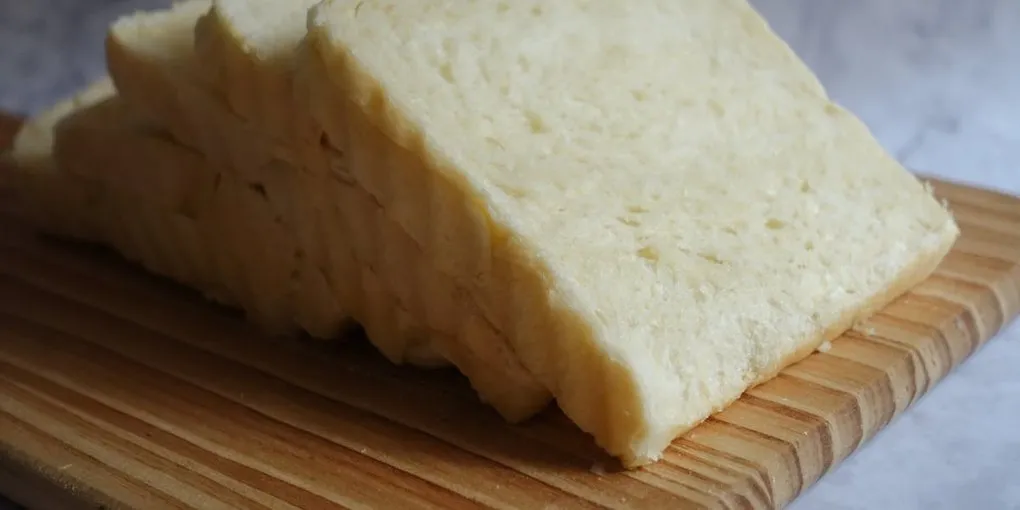
Texture. The crumb of tangzhong bread has a characteristic pull-apart quality — slightly elastic, with a fine, cotton-like structure. Direct-method bread has a more standard bread texture, with more visible gluten strands and a less uniform crumb.
Shelf life. Tangzhong bread stays fresh 1-2 days longer than equivalent direct-method bread. The pre-gelatinized starch resists retrogradation longer, and the higher locked-in moisture gives the crumb more buffer before it feels dry.
Handling. The dough is stickier during mixing due to the extra water held by the tangzhong paste. But once the gluten develops, it handles normally. Shaping is no harder than any enriched dough.
Prep time. The tangzhong adds about 10 minutes of active time (cooking the roux) and requires cooling before use. If you make it the night before, the total active time increase on baking day is zero.
Applications Beyond Milk Bread
Tangzhong is not limited to milk bread. Any enriched bread that benefits from softness and moisture retention is a candidate.
Sandwich bread. A standard sandwich loaf made with tangzhong stays sliceable and soft through the workweek. No more stale sandwiches by Thursday. For a naturally leavened everyday loaf, see our sourdough sandwich bread.
Dinner rolls. Tangzhong dinner rolls come out of the oven pillowy and stay soft for the entire meal — and the next day. They reheat beautifully with a quick flash in a 300°F oven.
Cinnamon rolls. The dough already contains sugar, butter, and eggs. Adding tangzhong makes the rolls even softer and more tender, and they survive being reheated the next morning without drying out. The pre-gelatinized starch ensures the crumb stays moist even under a heavy layer of frosting.
Burger buns. Soft, slightly sweet buns that hold together under a juicy burger without going soggy (the tangzhong-bound moisture stays inside the crumb rather than being displaced by burger juices).
Brioche. High-fat doughs benefit from tangzhong because the extra water provides more steam during baking, producing a lighter crumb. The butter-rich formula already resists staling somewhat (fats slow retrogradation), and tangzhong extends that effect further.
The tangzhong method does not work well for lean breads (baguettes, sourdough country loaves) where you want a crusty exterior, an open crumb, and a chewy texture. The extra moisture and pre-gelatinized starch produce a soft, tight crumb that conflicts with the goals of lean bread baking.
Troubleshooting
Tangzhong is lumpy. Whisk more aggressively during cooking, or blend the cooled paste in a food processor. Lumps mean uneven gelatinization — some starch cooked, some didn’t. Starting with a thorough whisk before turning on the heat helps prevent this.
Bread is gummy. The tangzhong was heated past 180°F, over-gelatinizing the starch. Or the bread was under-baked — tangzhong bread’s extra moisture means it needs to reach 190°F internal to fully set. Or you sliced too soon. Wait at least 30 minutes.
Dough is extremely sticky during mixing. Expected. Tangzhong adds more water than a direct method. Let the mixer do the work for 8-10 minutes on medium speed. The dough will eventually clear the bowl sides. If it’s still unmanageably wet after full mixing, add bread flour 10g at a time.
Bread didn’t stay soft longer than usual. Check your tangzhong temperature during cooking — it needs to reach 150°F (65°C) for the starch to gelatinize. Below that threshold, the flour paste adds nothing. Also verify the ratio: 1 part flour to 5 parts liquid by weight. Too little tangzhong relative to the total dough means the effect is diluted.
Tangzhong formed a skin on top. Press plastic wrap directly onto the surface while cooling. The skin is dried gelatinized starch and won’t rehydrate. Scrape it off and use the rest, or start over — it takes 5 minutes.
For more on hydration and dough consistency, see our hydration guide.
Frequently Asked Questions
- What temperature should the tangzhong reach?
- Heat the flour-liquid mixture to 150°F (65°C), which is the onset of wheat starch gelatinization (140-158°F / 60-70°C). At this temperature, starch granules absorb water, swell, and burst open, forming a viscous gel that locks in far more moisture than raw flour can hold. Below 140°F, the starch hasn't gelatinized and you just have warm flour paste. Above 180°F, the starch over-gelatinizes and becomes gummy, producing dense bread rather than soft bread. Use a probe thermometer.
- What is the flour-to-liquid ratio for tangzhong?
- The standard ratio is 1 part flour to 5 parts liquid by weight. For a recipe with 500g total flour, a typical tangzhong uses 40g flour and 200g liquid (milk or water). This proportion pre-gelatinizes enough starch to meaningfully affect the crumb's moisture retention without making the dough unworkably wet. The tangzhong flour counts toward the recipe's total flour weight.
- How much longer does tangzhong bread stay fresh?
- Tangzhong bread stays noticeably soft for 1-2 days longer than equivalent bread made with the direct method. Pre-gelatinized starch holds more water and resists retrogradation (the starch re-crystallization that causes staling) longer than starch that gelatinized during baking. By day 3, a direct-method loaf has firm crumb. A tangzhong loaf at day 3 is still soft enough to compress without crumbling. Both benefit from proper storage — sealed bag at room temperature, never in the refrigerator.
- Can I use tangzhong in sourdough or lean bread?
- Tangzhong doesn't suit lean breads like sourdough country loaves or baguettes. Those breads depend on a crusty exterior, open crumb, and chewy texture — all qualities that tangzhong works against. The pre-gelatinized starch produces a soft, tight crumb and retains moisture that prevents crisp crust formation. Tangzhong is designed for enriched breads: milk bread, sandwich loaves, dinner rolls, cinnamon rolls, and burger buns, where softness and moisture retention are the goals.
- Can I make the tangzhong ahead of time?
- Yes. Cook the tangzhong, transfer to a bowl, press plastic wrap directly onto the surface to prevent a skin, and refrigerate for up to 24 hours. Bring to room temperature before adding to the dough. Cold tangzhong mixed into the dough will lower the overall dough temperature, which slows fermentation. Room temperature tangzhong integrates more smoothly and keeps your desired dough temperature on target.