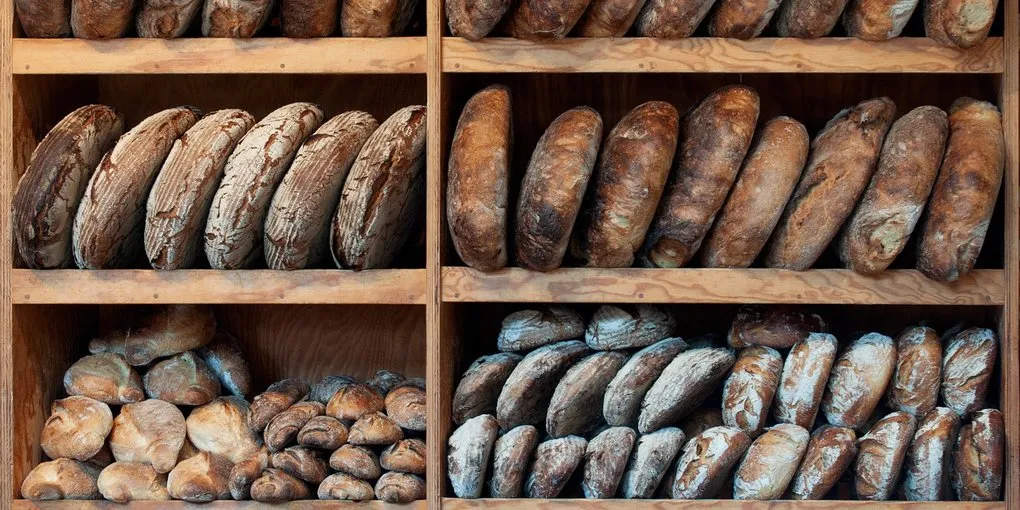
Almost all traditional bread contains gluten, because almost all bread is made from wheat, rye, or barley. Spelt, einkorn, emmer, khorasan, durum, and semolina are all wheat and all contain gluten. Rye and barley contain their own gluten proteins. Sourdough contains gluten. A few breads are made from naturally gluten-free grains -- 100% teff injera, true corn tortillas, some rice- and buckwheat-based flatbreads -- but naturally gluten-free grain does not make a finished loaf safe. Shared equipment, added wheat gluten, and barley malt all reintroduce gluten. Two different questions follow from here, and they need different answers: for celiac disease, rely on the regulated gluten-free claim rather than the grain on the front of the bag. For a wheat allergy, a gluten-free claim is not the relevant signal at all -- a gluten-free product may legally contain processed wheat starch -- so read the allergen declaration for wheat and follow your allergist's guidance.
Before you buy or bake
- A gluten-free claim is not a wheat-free claim
- These are two different questions and they need two different label checks. Under US rules a food may carry a compliant gluten-free claim and still contain processed wheat starch, provided the finished gluten level is below the regulatory limit and wheat is declared as an allergen. If you are managing a wheat allergy, read the allergen declaration for wheat and follow your allergist’s guidance — a gluten-free claim, certified or not, is not evidence that wheat is absent.
- Naturally gluten-free is not the same as gluten-free
- Rice, buckwheat, sorghum, teff, millet, and oats carry no gluten as crops, but they are routinely grown, stored, transported, and milled alongside wheat. The grain being naturally gluten-free is necessary and not sufficient — what matters is the finished bag. Buy flours that carry a gluten-free label, and note that several major brands decline to label some naturally gluten-free flours precisely because of supply-chain cross-contact.
This is an ingredient identification guide, not medical advice. If you are managing celiac disease, a wheat allergy, or another diagnosed condition, follow the guidance of your healthcare provider.
“Is this bread gluten-free?” is a harder question than it looks, because the bakery aisle is full of breads that sound gluten-free and are not. Rye sounds like an alternative to wheat. Spelt sounds ancient and therefore different. Sourdough sounds like fermentation has handled the problem. Multigrain sounds healthy in a way that implies wheat-free.
None of those are true. Here is the actual map.
The Short Answer: Three Grains Carry Gluten
Gluten in the dietary sense means the storage proteins found in three grain families:
- Wheat — and every variety and relative of wheat
- Rye — contains secalin
- Barley — contains hordein
If a bread is built on any of those, it contains gluten. That covers the overwhelming majority of bread made anywhere in the world.
The trap is that “wheat” covers far more than the word suggests.
Everything on This List Is Wheat
These all appear on labels and menus as though they were alternatives to wheat. They are wheat, botanically and immunologically, and they all contain gluten:
- Spelt — an ancient wheat species with weaker gluten than modern wheat, but gluten nonetheless
- Einkorn — the oldest cultivated wheat, still wheat
- Emmer (farro) — contemporary with einkorn, still wheat
- Khorasan (Kamut) — a wheat variety
- Durum and semolina — hard wheat, the highest-protein class of all
- Triticale — a rye-and-wheat hybrid, so it carries both
Spelt and einkorn cause particular confusion because their gluten genuinely behaves differently in a dough. Spelt has weaker gluten and needs lower hydration to compensate; einkorn behaves differently again. Bakers reasonably describe these as “easier to work with” or “different” — and that gets flattened online into “easier to digest,” and from there into “safe,” which it is not. A weaker gluten network is still a gluten network. Our ancient grains guide covers how these grains actually behave at the bench.
Rye and Barley Are Not Wheat-Free Alternatives Either
Rye bread is not a gluten-free bread. Rye contains very little of the gluten-forming protein that builds structure in wheat dough — rye’s structure comes from pentosans, water-binding carbohydrates, which is why rye dough behaves so differently and why high-rye breads must be acidified. But “low in gluten-forming protein” is a baking property, not a safety property. Rye contains secalin, and it is unsafe for celiac disease.
Barley shows up less often as a bread grain and more often as malt — barley malt, malt extract, malt syrup, malt flavoring. Malt appears in commercial breads, bagels, and many breakfast cereals, and it carries gluten. Diastatic malt is a standard bread-baking additive for crust color. It is a common way gluten enters a product whose main flour looks innocent.
Bread Grains and Gluten
What contains gluten, what doesn't, and what still isn't safe
| 01Contains gluten? | 02Notes for celiac / wheat allergy | |
|---|---|---|
| Wheat (bread, AP, whole wheat) | Yes | The primary gluten source in bread |
| Spelt, einkorn, emmer, khorasan | Yes -- all are wheat | Weaker gluten is a baking trait, not a safety trait |
| Durum / semolina | Yes -- highest-protein wheat | Common in pasta and some breads |
| Rye | Yes (secalin) | Low gluten-forming protein, still unsafe |
| Barley / malt | Yes (hordein) | Malt is a hidden source in many breads and bagels |
| Triticale | Yes -- rye x wheat hybrid | Carries proteins from both parents |
| Sourdough (wheat/rye/barley) | Yes | Fermentation reduces gluten; never eliminates it |
| Teff, corn, rice, buckwheat, millet, sorghum | No -- naturally gluten-free grains | The grain is safe; the finished product may not be |
| Oats | No gluten, but routinely cross-contacted | Only oats carrying a gluten-free claim |
Naturally gluten-free grain is a necessary condition, not a sufficient one. Shared milling and baking equipment, added vital wheat gluten, and barley malt all reintroduce gluten into products built on safe grains.
jayarrbread.comBreads That Are Genuinely Made From Gluten-Free Grains
A handful of the world’s traditional breads are built on grains that never contained gluten:
- Injera, when made from 100% teff. Teff is naturally gluten-free, and injera’s structure comes from a multi-day wild ferment and trapped CO₂ rather than from a gluten network. The catch is that a great deal of injera — including much of what is served in restaurants — is made with teff blended with wheat or barley flour for cost and handling. 100% teff is a specific claim you have to verify. See our injera and Ethiopian bread culture guide.
- Corn tortillas, when made from nixtamalized corn masa and nothing else. Flour tortillas are wheat. Some “corn” tortillas blend in wheat flour.
- Arepas, made from precooked cornmeal.
- Various rice- and buckwheat-based flatbreads. Buckwheat, despite the name, is not wheat or even a grass — it is a seed, and it contains no gluten.
Note the pattern: these are overwhelmingly flatbreads and griddle breads. That is not a coincidence. A tall, open-crumbed risen loaf is the specific thing gluten makes possible, which is why gluten-free versions of that format require engineered blends of starches and binders rather than a single traditional grain. Our guide to how gluten-free bread works covers the structural problem and how commercial GF loaves solve it.
The Four Traps
Trap 1: Sourdough. Long fermentation partially degrades gluten proteins. It does not eliminate them and does not reliably reach the under-20-parts-per-million threshold required for a gluten-free label. Wheat, rye, and barley sourdough all contain gluten and are all unsafe for celiac disease. This is the single most dangerous misconception in home baking, and we address it directly in is sourdough gluten-free?.
Trap 2: “Wheat-free” is not “gluten-free.” A rye loaf is wheat-free and full of gluten. The two phrases mean different things and only one of them is a regulated claim.
Trap 3: Added vital wheat gluten. Rye breads, multigrain loaves, and many “seeded” or “artisan” supermarket breads have vital wheat gluten added for structure. A bread whose headline grain is spelt, rye, or oats may still list wheat gluten in the ingredients.
Trap 4: Cross-contact. A bread made entirely from gluten-free grains may still not meet the gluten-free standard if it was milled, mixed, proofed, or baked on shared equipment. Airborne flour dust settles for hours. This is why the regulated gluten-free claim — which is about the finished product’s gluten level, not just its recipe — tells you more than an ingredient list does.
What About Oats?
Oats do not contain gluten. They are, however, one of the most commonly cross-contacted crops in the food system — routinely grown in rotation with wheat, and harvested, transported, stored, and milled on shared equipment. Standard oats and standard oat bread should not be treated as gluten-free.
Oats grown and processed under a controlled protocol and carrying a gluten-free claim are available and are considered acceptable for most people with celiac disease. (Third-party certification is optional and stricter; the regulated claim is what the law requires.) A minority appear to react to avenin, an oat protein, which is a reason to introduce oats in consultation with a clinician rather than assuming tolerance.
The Rules That Actually Work — and They Are Different Rules
Reading grain names is not a reliable safety method for either celiac disease or wheat allergy. Too many products are built on safe grains and compromised by malt, added gluten, or shared equipment. But the two conditions need different labels checked, and treating them as one rule is how people get hurt.
For celiac disease: rely on the gluten-free claim. In the US, “gluten-free” is a regulated claim — any food carrying it must contain less than 20 parts per million of gluten, which accounts for cross-contact in a way an ingredient list does not. Separately, optional third-party certification programs exist and generally apply a stricter limit than the regulation requires. Certification is not necessary for a product to be compliant, but preferring certified products is a reasonable conservative habit, especially for staples eaten daily.
For a wheat allergy: the gluten-free claim is the wrong signal. This is the distinction that matters most on this page. A food can legally carry a compliant gluten-free claim and still contain processed wheat starch, provided the finished gluten level is below the regulatory limit and wheat is declared as an allergen. Gluten-free is a statement about a protein fraction; it is not a statement that wheat is absent. Someone with a wheat allergy reacts to wheat proteins, not to “gluten” as a regulatory category, so the relevant checks are the allergen declaration (“contains wheat”), a wheat-free claim where offered, and their allergist’s specific guidance. Do not treat a gluten-free label — certified or not — as proof that a product contains no wheat.
For a home baker cooking for either. A shared kitchen is a question of controls rather than an automatic disqualification. Rigorous separation — dedicated or thoroughly cleaned equipment, separate flour storage, cleaned surfaces, and crucially no wheat flour being handled in the air around the same bake — can make a shared home kitchen workable. What you cannot do is assume it. When those controls cannot be genuinely assured, offering a sealed labeled product is the safer and more honest choice than a home-baked loaf and a reassurance. Our gluten-free bread brands guide covers what is worth buying, and the celiac vs. gluten sensitivity guide covers the kitchen protocols in more detail.
Frequently Asked Questions
- Are there any breads that are naturally gluten-free?
- Yes, though fewer than most people expect, and they are mostly flatbreads. Injera made from 100% teff, true corn tortillas made only from nixtamalized corn masa, arepas from precooked cornmeal, and various rice- or buckwheat-based flatbreads are built on grains that contain no gluten. Tall risen loaves are the harder case, because an open crumb is specifically what a gluten network makes possible. Note that a naturally gluten-free grain does not make a finished product safe -- shared equipment, barley malt, and added wheat gluten all reintroduce gluten.
- Is rye bread gluten-free?
- No. Rye contains a gluten protein called secalin and is unsafe for celiac disease. The confusion comes from baking: rye has very little of the gluten-forming protein that builds structure in wheat dough, and rye's structure comes largely from pentosans instead. That makes rye behave very differently at the bench, but low gluten-forming protein is a baking characteristic, not a safety characteristic. Many rye breads also have vital wheat gluten added for structure.
- Are bagels gluten-free?
- Standard bagels are not. They are made from high-protein wheat flour -- gluten is precisely what gives a bagel its chew -- and many are also boiled in water with barley malt, adding a second gluten source. Bagels made from gluten-free flour blends and carrying a gluten-free claim do exist as a separate product category, and those are the ones appropriate for celiac disease. Certification by a third-party program is optional and generally applies a stricter limit than the regulation requires -- a reasonable conservative preference, but the regulated gluten-free claim is the legal standard.
- Is spelt bread safe if I can't eat wheat?
- Not for celiac disease. Spelt is a species of wheat and contains gluten. It has a weaker gluten structure than modern bread wheat, which changes how the dough behaves and is why bakers describe it as different to work with, but that is a baking property rather than a safety one. For a wheat allergy, spelt is wheat and should be treated as such unless an allergist has specifically said otherwise. The same applies to einkorn, emmer, farro, and khorasan.
- Is sourdough bread gluten-free?
- No. Long fermentation partially breaks down gluten proteins, but it does not eliminate them and does not reliably reach the under-20-parts-per-million threshold required for gluten-free labeling. Wheat, rye, and barley sourdough all contain gluten and are all unsafe for anyone with celiac disease, regardless of how long the dough fermented. Some people with non-celiac digestive symptoms report tolerating long-fermented bread better, which may be related to reduced fructans rather than reduced gluten.
- Is oat bread gluten-free?
- Oats contain no gluten, but they are among the most commonly cross-contacted crops -- frequently rotated with wheat and processed on shared equipment -- so standard oat bread should not be treated as gluten-free. Bread made with gluten-free-labeled oats and no other gluten grain can be, provided the rest of the process is controlled. Most supermarket oat breads also contain wheat flour as the primary structural ingredient, with oats added for flavor and texture.
- Does 'wheat-free' mean 'gluten-free'?
- No, and treating them as synonyms is a common and consequential error. Rye and barley breads are wheat-free and contain gluten. Wheat-free is a useful label for someone with a wheat allergy specifically, since their trigger is wheat protein rather than gluten as a class. For celiac disease, wheat-free is not sufficient -- you need a gluten-free claim, which is a regulated term covering wheat, rye, and barley together.