Sourdough discard waffles are crispier than buttermilk waffles because discard is more acidic (pH 3.5-4.5 versus about 4.5). When baking soda meets that extra acid the next morning, it releases more CO2, so the waffle puffs higher and crisps its shell harder against the iron. Mix a flour-discard-milk sponge the night before, then beat in eggs, butter, and the baking-soda-and-salt kicker and cook right away.
The best waffle you will ever make starts with a jar of sourdough discard and five minutes the night before. The acid in the discard reacts with baking soda the next morning to produce an extra kick of lift — a chemistry trick that buttermilk waffle recipes lean on but cannot match, because discard is dramatically more acidic than buttermilk. That is the whole thesis of this recipe. More acid, more lift, more crackle.
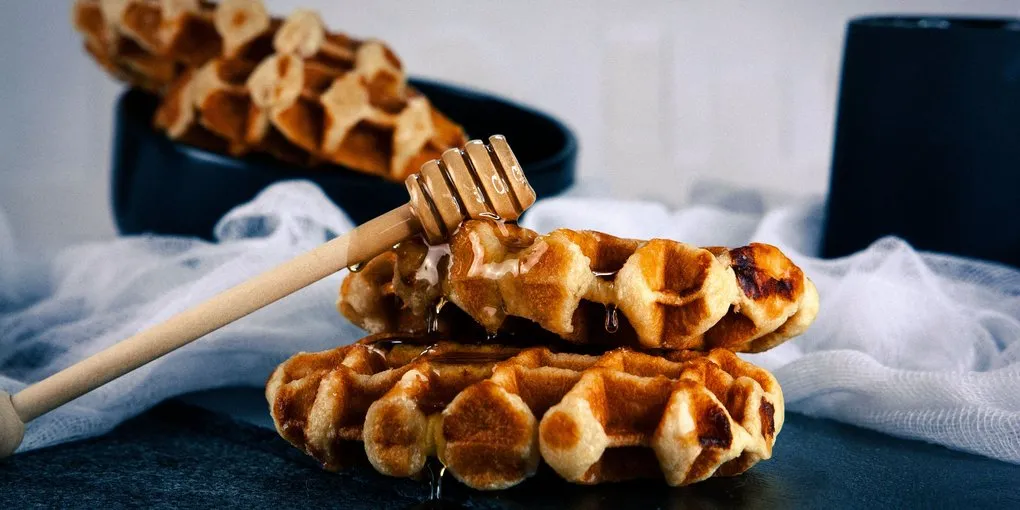
These are not subtle waffles. They are crisp on the shell, tender in the middle, and carry an unmistakable tang that reads as “artisanal” without any effort. They also freeze well, meaning a Sunday-morning batch can feed the week from the toaster.
The method is overnight-ferment: flour, discard, milk, and a little sugar the night before. The next morning, you beat in eggs, melted butter, and the baking-soda-and-salt kicker. From mix-in to plate is ten minutes.
What Makes Discard Different
Discard is mature starter at 100 percent hydration — equal weights of flour and water — and it sits between pH 3.5 and 4.5. That acidity is the load-bearing feature of this recipe. Lactic acid bacteria in sourdough cultures produce both lactic acid (mild, creamy) and acetic acid (sharper, vinegary). The balance depends on temperature and age: warmer fermentation favors lactic, cool or extended fermentation favors acetic. Refrigerated discard tends toward a more acetic profile.
For waffles, three things happen:
- Baking-soda lift. Baking soda (sodium bicarbonate) needs an acid partner to produce CO2. Buttermilk sits around pH 4.5 and gives modest lift. Discard at pH 3.5 produces dramatically more CO2 when baking soda meets it in the bowl — this is why discard waffles puff higher in the iron.
- Overnight ferment develops flavor. The 8 to 12 hours of pre-ferment time lets the bacteria work on the starch and protein in the added flour, building a deeper, more complex tang than you get by just stirring discard into a same-day batter.
- Tenderizing effect. Acid weakens gluten (proteases work on peptide bonds and acid accelerates that process), so the interior is tender while the shell crisps hard. High-protein flour in a discard batter still produces a soft, shreddable crumb — no tough spots.
Ingredients
Makes 6 to 8 waffles (standard 7-inch Belgian iron).
Night before:
| Ingredient | Grams | US measure |
|---|---|---|
| All-purpose flour | 240 g | 2 cups |
| Sourdough discard, 100 percent hydration | 200 g | 3/4 cup + 1 tbsp |
| Whole milk | 240 g | 1 cup |
| Granulated sugar | 15 g | 1 tbsp |
Morning:
| Ingredient | Grams | US measure |
|---|---|---|
| Large eggs | 100 g | 2 eggs |
| Unsalted butter, melted | 56 g | 4 tbsp |
| Baking soda | 4 g | 3/4 tsp |
| Fine sea salt | 4 g | 3/4 tsp |
| Vanilla extract | 5 g | 1 tsp |
Method
Step 1 — Night before: mix the sponge. In a large bowl (at least double the volume of the ingredients — this sponge will grow), whisk 240 g flour, 200 g discard, 240 g milk, and 15 g sugar until smooth. Cover with plastic wrap or a plate. Leave on the counter overnight at 65 to 72 F for 8 to 12 hours. Do not refrigerate — the warmth is what lets the bacteria and remaining yeast develop flavor.
Step 2 — Morning: check the sponge. The sponge should be bubbly, domed, and smell pleasantly sour and yeasty. A thin layer of liquid on top is hooch (alcohol from wild yeast) — stir it in. If the sponge smells nail-polish-remover strong, it over-fermented; it will still taste fine but proceed briskly to the bake.
Step 3 — Preheat the waffle iron. Set to medium-high. The iron should be fully preheated before you add the egg-soda mixture, because the lift from baking soda starts deflating the minute you mix it in.
Step 4 — Add the wet ingredients. Whisk 100 g eggs, 56 g melted butter, and 5 g vanilla in a separate bowl. Pour into the sponge and whisk to combine — 15 seconds, no more. Do not worry about small lumps.
Step 5 — Add the baking soda and salt. Sprinkle 4 g baking soda and 4 g salt over the batter and fold them in with a rubber spatula. Do not over-mix. You will see the batter visibly puff and bubble within 10 to 15 seconds — this is the acid-base reaction producing CO2. Move quickly.
Step 6 — Cook immediately. Ladle batter onto the preheated iron, close, and cook 3 to 5 minutes per waffle or until deeply golden-brown. Do not lift the lid early — the waffle will tear. Modern irons have indicator lights; older ones are done when steam slows dramatically.
Doneness cues: dark golden shell (not pale), crisp edges that crackle when pressed, steam reduced to a whisper. Pale waffles have not developed enough Maillard color; cook 60 seconds longer. Soggy centers mean too much batter — use slightly less next waffle.
Step 7 — Hold or serve. Serve immediately, or hold on a rack in a 200 F oven for up to 20 minutes while you cook the batch. Do not stack waffles on a plate — steam from underneath softens the shell.
Overnight Discard Waffles: 12-Hour Timeline
Why acid plus baking soda beats buttermilk every time
- 01
Night: mix the sponge
5 minutesWhisk flour, discard, milk, sugar. Cover, leave on counter at 65-72F.
Do not refrigerate -- warmth lets bacteria build flavor overnight. - 02
Overnight ferment
8-12 hoursSponge bubbles, domes, and develops a pleasantly sour, yeasty aroma.
A layer of hooch on top is normal -- just stir it in. - 03
Morning: preheat iron
Start hereSet the waffle iron to medium-high. Fully preheat before mixing in wet ingredients.
The baking-soda lift starts the moment it meets the batter -- waste no time. - 04
Add eggs, butter, vanilla
1 minuteWhisk in and combine for 15 seconds max. Lumps are fine.
Over-whisking develops gluten and toughens the waffle. - 05
Add baking soda + salt
15 secondsFold in. Batter visibly puffs within seconds -- this is your CO2.
Move quickly to the iron before the lift deflates. - 06
Cook
3-5 minutes per waffleLadle onto the preheated iron. Do not lift the lid early.
Done: dark golden shell, steam reduced to a whisper, crackling edges.
Sourdough discard (pH 3.5-4.5)
- Stronger CO2 reaction with baking soda
- Higher shell lift, crisper texture
- Deeper tang from the 12-hour ferment
- Acid-weakened gluten = tender interior
Buttermilk (pH ~4.5)
- Milder CO2 reaction, softer lift
- Less-crisp shell, faintly tangy
- No overnight flavor development
- Tender but less shreddable crumb
Discard acidity is the load-bearing feature: more acid reacting with baking soda means more CO2, higher lift, and a crispier shell. Classic buttermilk waffles cannot match it.
jayarrbread.comNotes and Variations
Whole-wheat discard. Works well. The waffles are darker and slightly heartier. Reduce the added flour to 220 g because whole-wheat discard absorbs more liquid. Flavor is earthier and pairs beautifully with maple syrup and bacon.
No time for overnight? Same-morning version: mix everything at once, let the combined batter rest 30 minutes on the counter before the baking-soda-and-salt step. You lose depth of flavor but keep the lift chemistry. The iron is still preheated at the end of the rest.
Thicker or thinner. Belgian irons want a thick batter (this recipe is the target). For thinner American waffles, thin with 30 to 50 g extra milk and cook longer on a lower setting.
Savory variation. Omit sugar and vanilla. Add 50 g grated sharp cheddar and 30 g sliced scallion after the baking-soda step. These are extraordinary with a fried egg and hot sauce.
Chocolate-chip version. Fold 80 g mini chocolate chips in after the baking-soda step. Cook slightly shorter — chocolate burns.
Freezing. Cool waffles completely on a rack. Freeze flat on a tray, then stack in a zip-top bag with parchment between. Reheat in a toaster on medium — they crisp up as good as fresh.
Storage of leftovers. Do not refrigerate — they go rubbery in hours. Freeze or eat same day. Day-old frozen waffles toasted on medium are indistinguishable from fresh.
For the discard jar itself, see our sourdough discard recipes roundup, how to make sourdough starter, and the sourdough feeding schedule.
Frequently Asked Questions
- Why are discard waffles crispier than buttermilk waffles?
- Acid. Buttermilk sits around pH 4.5. Sourdough discard sits between pH 3.5 and 4.5 and is often a full point more acidic than buttermilk. When baking soda meets that acid, it produces more CO2, so the waffle puffs harder and crisps the shell against the iron more aggressively. The acid also weakens gluten slightly, which keeps the interior tender.
- Can I use starter that hasn't been fed?
- Yes -- discard is, by definition, unfed starter. That is the whole premise of the recipe. Fed, peaked starter works too but the flavor is milder and less tangy.
- How old can my discard be?
- Up to about 7 days refrigerated. Older discard leans more acetic (sharper, vinegary) -- still delicious, but noticeably sour. If you see hooch (clear-to-brown liquid on top), stir it in. Pink, black, or fuzzy mold means toss it.
- Does this work with whole-wheat discard?
- Yes. Reduce the added flour by 20 g because whole-wheat absorbs more liquid. The waffles are darker and a little heartier, with an earthier flavor that pairs beautifully with maple syrup.
- Can I freeze these waffles?
- Yes, and they are excellent frozen. Cool completely on a rack, freeze flat on a tray, then transfer to a zip-top bag with parchment between layers. Reheat in a toaster on medium -- the shell crisps up as well as fresh. Good for 2 months in the freezer.