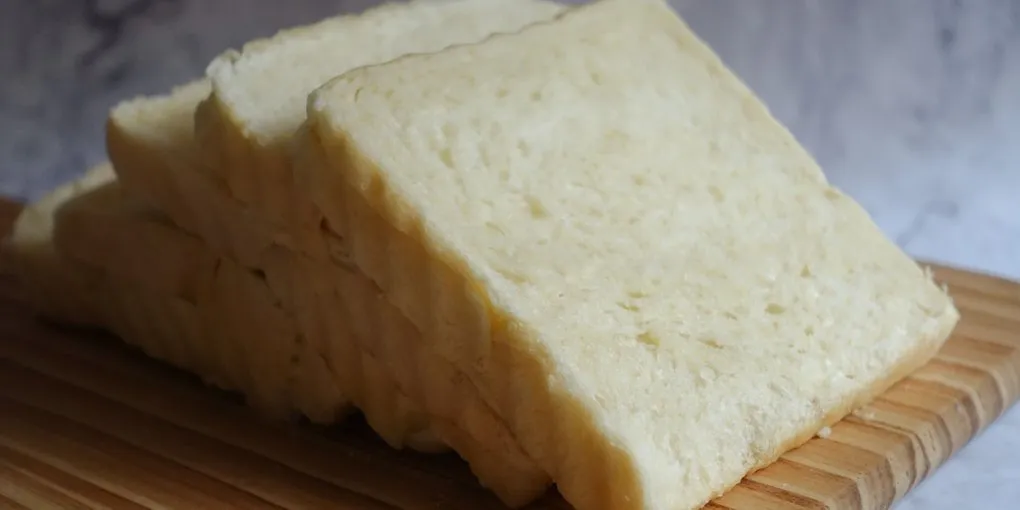
Sourdough sandwich bread is a soft, sliceable pan loaf leavened entirely with natural starter instead of commercial yeast. Three adjustments make sourdough work in a sandwich format: lower hydration (65-68%) for a tight, even crumb; butter and sugar to soften the texture and slow staling; and a young, mild levain used before peak acidity so the flavor is gently tangy, not sharp. It stays fresh 5 to 6 days and toasts beautifully.
Sourdough doesn’t have to mean crusty artisan boules. This is a soft, sliceable sandwich loaf — the kind you can use for PB&J, grilled cheese, or toast every morning — made entirely with natural leaven instead of commercial yeast. The crumb is tender and even. The flavor is mild and slightly tangy, not aggressively sour. It holds together for sandwiches without crumbling and toasts beautifully.
The trick to making sourdough work in a sandwich bread format is controlling three things: hydration, enrichments, and levain maturity. Lower hydration keeps the crumb tight and sliceable. A small amount of butter and sugar softens the texture. And using a young, active levain — before it reaches peak acidity — gives you lift without sourness.
If you already make our yeasted sandwich bread, this recipe uses the same shaping and pan-baking approach with a sourdough twist.
Why This Works: The Science of Soft Sourdough
Sandwich bread needs a tight, even crumb that holds up to slicing and spreading. Artisan sourdough aims for the opposite — open, irregular holes. The adjustments that bridge this gap:
Lower hydration (65-68%). Standard sourdough country bread runs 72-80% hydration for an open crumb. Dropping to 65-68% produces a dough that’s firmer, easier to shape, and bakes into a crumb with small, uniform holes that won’t let mustard drip through.
Enrichments. Butter and sugar soften the crumb and slow staling. Enriched doughs resist the retrogradation process — the starch re-crystallization that makes lean bread go stale in 2-3 days. This loaf stays soft for 5-6 days at room temperature.
Liquid levain at 100% hydration. A levain maintained at 100% hydration (equal parts flour and water) produces more lactic acid relative to acetic acid. Lactic acid tastes mild, creamy, and yogurt-like. Acetic acid — favored by stiff, cool starters — tastes sharp and vinegary. For kid-friendly sandwich bread, you want lactic dominance.
Young leaven. The most distinctive move in soft-sourdough technique: use the leaven before it reaches peak acidity. Seed a fresh levain with a small amount of mature starter, let it ferment 8-12 hours until it passes the float test, and use it while the yeast is active but the acid hasn’t fully accumulated. The result is bread with complex fermented flavor but without aggressive tang.
The Recipe
Yield: 1 loaf (9x5 inch pan)
Levain Build (Night Before)
| Ingredient | Weight |
|---|---|
| Mature sourdough starter | 15g (about 1 tablespoon) |
| Bread flour | 75g |
| Water, 78-80 degrees F | 75g |
Mix in a clean jar, cover loosely, and leave at room temperature (75-78 degrees F) overnight. After 8-12 hours, the levain should have doubled, look puffy and domed, and pass the float test — a small spoonful dropped in water should float.
If it sinks, it’s not ready. Give it more time in a warm spot.
Final Dough
| Ingredient | Weight | Baker’s % |
|---|---|---|
| Bread flour | 450g | 100% |
| Water, 85 degrees F | 250g | 55.5% |
| Ripe levain (from above) | 150g | 33% |
| Unsalted butter, softened | 30g | 6.7% |
| Sugar | 20g | 4.4% |
| Salt | 9g | 2% |
Total hydration (accounting for levain water): approximately 67%. The levain contributes both flour and water to the final dough — 75g of each. So the effective flour total is 525g (450g + 75g from levain) and the effective water total is 325g (250g + 75g from levain). That puts you at 62% from water alone, plus the butter’s moisture brings it to about 65-67%.
Try It Yourself
The Baker's Bench
Scale this loaf up or down and get the full timeline -- the Baker's Bench keeps every weight and baker's percentage intact.
Open ToolEquipment
- Kitchen scale
- Stand mixer with dough hook, or strong hands
- 9x5 inch loaf pan
- Probe thermometer
- Plastic wrap or damp towel
Method
Step 1: Autolyse (20-30 Minutes)
Combine the bread flour and water in a stand mixer bowl or large mixing bowl. Stir until no dry flour remains. Cover and rest for 20-30 minutes.
This autolyse lets the flour fully hydrate and gluten begins forming without mechanical energy. It reduces the mixing time needed afterward and improves the crumb texture. All five major bread authors agree on the value of autolyse — it’s one of the most consistent principles in the literature.
Step 2: Mix the Dough
Add the ripe levain, softened butter, sugar, and salt to the autolysed dough.
Stand mixer: Mix on low speed for 2-3 minutes until everything is incorporated. Increase to medium speed and mix for 5-7 minutes. The dough should pull away from the sides of the bowl, feel smooth and slightly tacky, and pass a moderate windowpane test.
By hand: Use the pincer method — squeeze through the dough with thumb and forefinger, fold over, rotate the bowl, repeat. Continue for 6-8 minutes until the dough is smooth and cohesive. Then do 3-4 stretch-and-folds in the bowl.
Check the dough temperature with a probe thermometer. You’re targeting 76-78 degrees F. The butter and sugar in this dough slow fermentation slightly compared to lean bread, so a warm DDT helps keep things moving.
Step 3: Bulk Fermentation (8-12 Hours, Overnight)
Place the dough in a lightly oiled container. This is a long, slow bulk fermentation — similar to an overnight approach but using natural leaven instead of commercial yeast.
Folding schedule:
- Fold #1 at 30 minutes after mixing
- Fold #2 at 60 minutes
- Fold #3 at 90 minutes (optional — only if the dough still feels slack)
- Leave undisturbed for the remaining bulk
For each fold: reach under the dough, stretch up, fold over. Rotate 90 degrees, repeat on all four sides.
Don’t fold during the last several hours. The dough needs undisturbed time to accumulate gas — no folds in the last hour of bulk.
After 8-12 hours (overnight), the dough should have roughly doubled in volume. It will look puffy, slightly domed, and feel airy when you tilt the container. You’ll see bubbles around the edges and on the surface.
Temperature note: In a 72-75 degree F kitchen, expect 10-12 hours. In a 78 degree F kitchen, closer to 8 hours. If your kitchen runs cold in winter, find a warmer spot — the oven with just the light on, or on top of the refrigerator.
Sourdough Sandwich Bread -- From Starter to Slice
~24 hour timeline, under 45 minutes hands-on
Build Levain
1 Tbsp starter + 75g flour + 75g water. Cover, rest at room temp overnight.
Levain Ready
Doubled, puffy, passes float test. Use before peak acidity for mild flavor.
Autolyse
Flour + water only, rest 20-30 min. Gluten begins forming without mixing.
Mix Dough
Add levain, butter, sugar, salt. Mix 5-7 min until smooth. Target DDT 76-78F.
Folds (3 sets)
Stretch-and-fold every 30 min. Then leave undisturbed for the bulk.
Bulk Fermentation
8-12 hours at room temp. Dough doubles. Bubbles visible on surface and edges.
Shape & Pan
Degas gently, letter fold, place seam-down in greased 9x5 pan.
Final Proof
2-4 hours until dough crests 1 inch above pan rim. Poke test: slow, partial return.
Bake
375F for 35-40 min. Deep golden brown, internal temp 190-195F.
Cool & Slice
Cool on rack 1 hour minimum. Slice with serrated knife. Stays fresh 4-5 days.
Illustrative stages. Watch the dough's readiness cues as well as the clock.
The wide proofing window (2-4 hours) is a major advantage of sourdough over commercial yeast, where the window can be as narrow as 10-15 minutes.
jayarrbread.comStep 4: Shape and Pan
Lightly flour your work surface. Turn the dough out and gently press to release the largest gas bubbles. You want to retain some gas for a light crumb but eliminate the big pockets that would create holes in sandwich bread.
Shaping for a pan loaf:
- Pat the dough into a rough rectangle, about 8 inches wide and 10 inches long.
- Fold the top third down toward the center.
- Fold the bottom third up and over the first fold, like a letter.
- Seal the seam with the heel of your hand.
- Roll gently to even the shape, then place seam-side down in a greased 9x5 inch loaf pan.
The dough should fill about half the pan. If it’s significantly less, the loaf will be short. If it’s more than two-thirds, you may have too much dough for the pan.
Step 5: Final Proof (2-4 Hours)
Cover the pan with plastic wrap or a damp towel. Let the dough rise until it crests about 1 inch above the rim of the pan. This takes 2-4 hours at room temperature, depending on how active your levain was and how warm your kitchen is.
The wide proofing window is one of the advantages of sourdough over commercial yeast. Levain breads evolve more slowly, giving you a window of 2 or more hours between under-proofed and over-proofed. With a straight yeasted dough, that window can be as narrow as 10-15 minutes.
The poke test works here too. Press a floured finger gently into the dough near the edge of the pan. It should spring back slowly and partially, leaving a slight indent. If it bounces back immediately, it needs more time. If it doesn’t spring back at all, bake immediately.
About 30 minutes before you expect the proof to be done, preheat your oven to 375-380 degrees F.
Try It Yourself
The Starter Clock
Not sure your levain is at the young, mild peak this loaf wants? The Starter Clock tracks fermentation so you catch it before the acid climbs.
Open ToolStep 6: Bake
Bake at 375-380 degrees F for 35-40 minutes. Enriched doughs bake at lower temperatures than lean artisan loaves — around 380 degrees F for enriched breads like challah, and this sandwich loaf falls in the same range.
The loaf is done when:
- The top is deep golden brown
- The internal temperature reads 190-195 degrees F on a probe thermometer
- It sounds hollow when tapped on the bottom (remove from pan to test)
If the top is browning too quickly before the internal temperature is reached, tent loosely with foil for the last 10 minutes.
Step 7: Cool and Slice
Remove from the pan immediately and cool on a wire rack for at least 1 hour before slicing. The crumb is still setting as it cools — cutting too early will produce a gummy, compressed interior even if the bake was perfect.
For the cleanest slices, use a serrated knife and let the blade do the work without pressing down. This loaf slices cleanly because the low hydration and enrichments produce a tight, even crumb.
Storage
This bread keeps well thanks to the combination of sourdough acidity and enrichments:
- Room temperature in a plastic bag: 5-6 days (the acids inhibit mold growth)
- Frozen: 2-3 months. Slice before freezing so you can pull individual slices for toast.
Never store this bread in the refrigerator. The 2-4 degree C temperature range accelerates retrogradation — the starch re-crystallization that makes bread go stale. Bread goes stale faster in the fridge than on the counter. For more on this, see our bread storage guide.
Variations
Whole wheat sourdough sandwich bread: Replace 20-30% of the bread flour with whole wheat flour (see our whole wheat bread recipe for the hydration and autolyse adjustments whole grain demands). Increase water by 15-20g to compensate for bran absorption. Bulk fermentation may be slightly faster due to the more active enzyme activity in whole grain flour.
Honey oat sourdough sandwich bread: Replace the sugar with 30g honey. Add 40g rolled oats to the dough during mixing and press additional oats onto the top before baking.
Milk sourdough sandwich bread: Replace half the water (125g) with whole milk for an even softer, richer crumb. Warm the milk to 85 degrees F before adding.
Troubleshooting
Loaf is too sour: Your levain was too mature when you used it. Build the levain with less starter (1 tablespoon instead of more) and use it earlier — as soon as it passes the float test, before the surface starts to recede. Warmer bulk fermentation temperatures also favor mild lactic acid over sharp acetic acid.
Loaf didn’t rise enough: The levain may not have been active enough. Verify with the float test before mixing. If the levain was fine, the bulk fermentation may need more time — try a warmer spot. With sourdough, patience is the most common fix.
Crumb is dense and gummy: Either under-baked (check internal temperature — it should hit 190-195 degrees F) or cut too soon (wait a full hour minimum before slicing).
Crumb has large, irregular holes: Too much gas retention during shaping. For sandwich bread, press out the biggest bubbles before shaping the loaf. You want small, even holes.
For a full troubleshooting reference, see our bread troubleshooting guide. For more sourdough guidance, start with our beginner sourdough guide.
Frequently Asked Questions
- How do I make sourdough sandwich bread less sour?
- Three adjustments reduce sourness: First, use a young levain -- build it the night before with just 1 tablespoon of mature starter and use it as soon as it passes the float test, before peak acidity. Second, maintain your starter at 100% hydration (equal flour and water), which favors mild lactic acid over sharp acetic acid. Third, keep bulk fermentation warm (75-78 degrees F) rather than cool, since warmth also promotes lactic over acetic acid production.
- Can I use sourdough discard for sandwich bread?
- You can, but the results differ. Discard adds flavor and some acidity but little to no leavening power -- the yeast in old discard is largely inactive. If using discard, add 2-3 grams of instant yeast to compensate for the missing lift. The bread will have sourdough flavor but will rise on a yeasted timeline (2-4 hours) rather than the 8-12 hour sourdough schedule.
- Why is my sourdough sandwich bread dense?
- The three most common causes: inactive levain (always verify with the float test before mixing), insufficient bulk fermentation (the dough should roughly double -- give it more time or find a warmer spot), or under-baking (internal temperature should reach 190-195 degrees F). Sourdough rises more slowly than commercial yeast, so patience is the most frequent fix.
- How long does sourdough sandwich bread stay fresh?
- Sourdough sandwich bread stays fresh for 4-5 days at room temperature in a plastic bag -- about 2 days longer than yeasted sandwich bread. The organic acids from fermentation inhibit mold growth, and the butter and sugar slow starch retrogradation (the process that makes bread go stale). For longer storage, slice and freeze -- it keeps for 2-3 months and toasts directly from frozen.
- Can I make this recipe with whole wheat flour?
- Yes. Replace 20-30% of the bread flour with whole wheat flour and increase the water by 15-20 grams to compensate for the bran's extra absorption. The crumb will be slightly denser and the flavor nuttier. Bulk fermentation may run slightly faster due to increased enzyme activity in whole grain flour. Keep the enrichments (butter, sugar) the same -- they'll help offset the density that whole wheat adds.