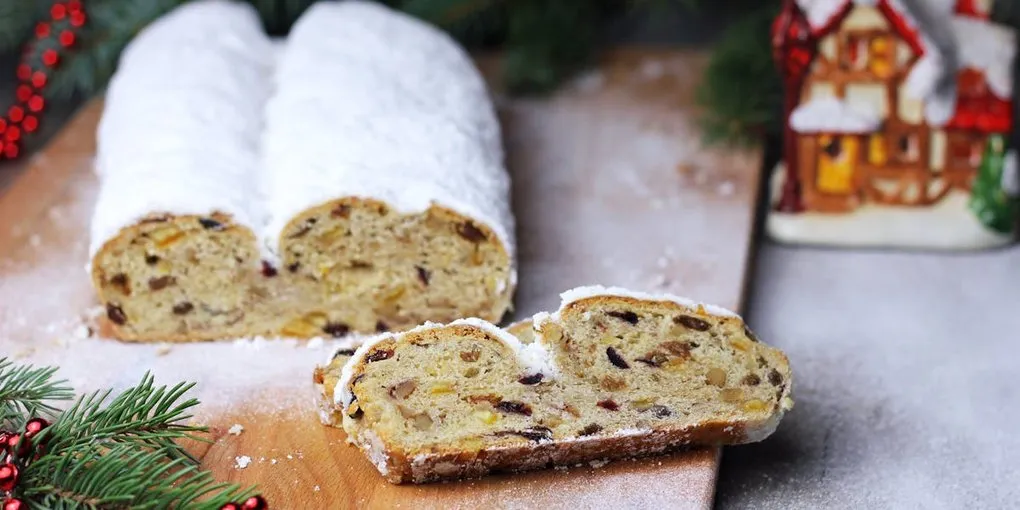
Stollen is a dense German Christmas bread made with 50% butter, 50% milk, and 130% rum-soaked fruits and nuts (all relative to flour weight). The fruit must soak in rum for a minimum of 2 weeks before baking. After baking at 410F, the hot loaf is dipped in melted butter and rolled in sugar. Then you wrap it and wait 2-4 weeks -- the butter migrates through the crumb, the rum permeates the dough, and the spices mellow into something extraordinary.
Stollen is a dense, rich, fruit-laden bread that improves with age — the opposite of how most baked goods work. Made with 50% butter, 50% milk (relative to flour), and an extraordinary 130% fruits, nuts, and rum by weight, it’s one of the most heavily enriched breads in any tradition. You don’t eat stollen the day you bake it. You wrap it, store it, and wait two to four weeks while the butter migrates through the crumb, the rum-soaked fruits release their flavor, and the whole thing mellows into something that tastes like Christmas distilled into a loaf.
This is a multi-week project. The fruit must soak in rum for a minimum of two weeks before baking. Plan accordingly.
Try It Yourself
The Baker's Bench
Scale the stollen formula up or down with the Baker's Bench tool -- it handles enriched dough percentages and calculates butter, milk, and fruit weights for any batch size.
Open ToolThe Formula
Hamelman’s stollen formula is the reference:
Baker’s Percentages
- Bread flour: 100% (500g)
- Butter (cold): 50% (250g)
- Whole milk (cold): 50% (250g)
- Mixed dried fruits: ~100% (500g — raisins, currants, candied citrus peel)
- Rum-soaked component: fruits are soaked in rum, so this is included in the fruit weight
- Almonds (blanched, slivered or sliced): ~30% (150g)
- Sugar: 15% (75g)
- Salt: 1.5% (7.5g)
- Instant yeast: 3% (15g)
- Almond extract: 1 tsp
- Lemon zest: from 2 lemons
- Mace or nutmeg: 1/2 tsp
- Cardamom: 1/4 tsp
Total fruit and nut load: approximately 130% of flour weight. This is not a typo. Stollen is more fruit than dough. The bread is essentially a vehicle for the rum-soaked fruit.
Step 1: The Rum Fruit Soak (2+ Weeks Before Baking)
This is the single most important step, and it happens weeks before you touch flour.
Combine in a large jar or container:
- 300g golden and dark raisins (mixed)
- 100g dried currants
- 100g candied citrus peel (orange and lemon, diced)
- Dark rum — enough to cover the fruit completely (approximately 200-250ml)
Seal the container and store at room temperature. Minimum soak time: 2 weeks. Some bakers soak for a month or longer. The rum penetrates the dried fruit, rehydrating it deeply and infusing it with flavor. The fruit also plumps significantly, which is why the total weight increases.
Stir or shake the jar every few days. If the fruit absorbs all the rum (it often does in the first few days), add more to keep it covered.
Do not skip this or shortcut the timing. Fruit soaked for 30 minutes versus fruit soaked for 2 weeks produces fundamentally different results. Quick-soaked raisins are wet on the outside and dry on the inside. Long-soaked fruit is uniformly saturated, soft, and deeply flavored.
The Day Before Baking: Drain
Drain the fruit in a colander, reserving the rum (you can use it for the butter glaze or drink it — baker’s prerogative). Spread the fruit on a towel and pat gently to remove excess surface moisture. Too much liquid will make the dough unmanageably wet.
Toast the almonds lightly in a dry pan or 350°F oven for 5-8 minutes until fragrant. Let cool completely. Toss the drained fruit and toasted almonds together and set aside.
Step 2: The Enriched Dough
Stollen dough follows the same principles as brioche: cold ingredients, extended mixing, butter added after gluten development. The enrichment levels are nearly identical — 50% butter is as rich as it gets. The same science applies: fat inhibits gluten development, so you build the gluten network first, then incorporate cold butter gradually.
Mixing
-
Warm the milk slightly — just enough to activate the yeast, around 80-85°F. Dissolve the yeast in the milk with a pinch of sugar and let it bloom for 5 minutes.
-
Combine dry ingredients: flour, remaining sugar, salt, mace/cardamom, and lemon zest in the stand mixer bowl.
-
Add the milk-yeast mixture and the egg equivalent (stollen traditionally omits eggs, relying on the extreme butter content for richness — if your recipe calls for an egg, add it here). Mix on low speed with the dough hook for 3-4 minutes until a shaggy dough forms.
-
Add the cold butter. Cut into tablespoon-sized pieces. With the mixer on medium-low, add one piece at a time. The same rules as brioche apply: the butter must be cold to be mechanically dispersed rather than melting and coating the gluten. This will take 8-10 minutes.
-
Continue mixing on medium speed for another 3-5 minutes until the dough is smooth, elastic, and pulls cleanly from the bowl. Total mixing time: 15+ minutes. Monitor dough temperature — keep it below 78°F.
Adding the Fruit and Nuts
Turn the mixer to its lowest speed and add the drained rum fruit and toasted almonds. Mix just until evenly distributed — 1-2 minutes. The fruit will try to tear the gluten network apart, which is expected. You’re not developing gluten at this stage, just incorporating. Some bakers fold the fruit in by hand on the counter, which gives you more control.
Bulk Fermentation
Transfer to a covered container. Ferment at room temperature (72-75°F) for 1.5-2 hours. The massive enrichment slows fermentation significantly — yeast activity is inhibited by the high sugar and fat content. Don’t expect a dramatic rise — 50% increase in volume is fine. The fruit load also weighs the dough down physically. One gentle fold at the 45-minute mark helps redistribute the fruit.
Stollen: The Full Project Timeline
This bread starts weeks before it reaches the oven
Soak Fruit in Rum
Cover raisins, currants, and candied peel in dark rum. Seal and store at room temperature. Stir every few days. Add rum if fruit absorbs it all.
Bake Day
Drain fruit. Mix enriched dough (50% butter, 50% milk). Add fruit and nuts. Shape the traditional fold. Bake at 410°F.
Butter Dip + Sugar Coat
Brush or dip hot stollen in 150g melted butter. Roll in granulated sugar, then dust with powdered sugar.
Wrap and Wait
Wrap tightly in plastic + foil. Store at 60-65°F. Butter migrates through crumb, rum flavor permeates dough, spices mellow.
Slice and Serve
Thin slices (1/3 to 1/2 inch). Serve with coffee or tea. Re-press cut faces together and re-wrap between servings.
Illustrative stages. Watch the dough's readiness cues as well as the clock.
Start soaking fruit in early November for Christmas stollen. Most German bakers consider a 4-week fruit soak the minimum for proper flavor. Total project span: 6-8 weeks from start to table.
jayarrbread.comStep 3: Shaping
Stollen has a distinctive shape — an off-center fold that suggests a swaddled blanket (traditionally representing the Christ child in swaddling clothes, though this origin story is debated).
-
Turn the dough out onto a lightly floured surface. Gently press or roll into an oval about 12 inches long and 8 inches wide, roughly 3/4 inch thick.
-
Make the fold. Using a rolling pin or your hands, create a shallow groove down the center lengthwise. Fold one long side over past the center, so it covers about 2/3 of the other side — but not all the way to the far edge. The bottom layer should be visible beneath the top fold. Press the folded edge gently to seal.
-
Transfer to a parchment-lined sheet pan. The stollen bakes freestanding, not in a pan.
Proofing
Cover loosely and proof for 45-60 minutes at room temperature. Again, don’t expect a dramatic rise. The butter and fruit keep this dough from being a vigorous riser. A modest 30-40% increase is sufficient. The same principle applies as with all enriched doughs: the poke test works, but enriched dough has a narrower proofing window than lean bread.
Step 4: Baking
Stollen bakes at 410°F (210°C) — higher than most enriched breads (Hamelman specifies 380°F for brioche and challah). Despite the sugar content, the dense fruit mass needs that heat to bake through. The thick layer of fruit and butter insulates the interior.
Bake for 35-45 minutes. The crust should be golden brown, and internal temperature should reach 190-195°F. Because the loaf is dense and heavy, getting heat to the center takes longer than you’d expect. Start checking at 30 minutes but be prepared to go the full 45.
If the top browns too fast (likely with all that sugar), tent with foil after 25 minutes.
Step 5: The Butter Dip and Sugar Coat
This is the iconic stollen finish and it’s non-negotiable. The butter and sugar coating serves as a moisture barrier that extends shelf life and creates the characteristic sweet, rich exterior.
-
Melt 150g of butter (yes, more butter). As soon as the stollen comes out of the oven, brush or dip it generously with the melted butter. The hot bread absorbs it greedily. Apply multiple coats — the goal is to saturate the surface.
-
Roll in sugar. While the butter is still warm and tacky, roll the stollen in granulated sugar, then dust heavily with powdered sugar. Some bakers do two rounds: sugar while warm, then powdered sugar after it cools.
The butter coating is not just for flavor. It creates a fat barrier that prevents moisture loss and keeps the stollen fresh during the aging period. This is different from how most breads store and age — stollen’s butter-and-sugar shell effectively seals the crumb.
Step 6: Aging
Wrap the cooled, sugar-coated stollen tightly in plastic wrap, then again in aluminum foil. Store at cool room temperature (60-65°F is ideal — a basement, garage, or cool pantry).
Wait 2-4 weeks before eating. This is the hardest part.
During aging, the butter continues to migrate through the crumb, the rum flavor from the fruit permeates the surrounding dough, and the spices mellow and integrate. Freshly baked stollen is good. Stollen that has aged for three weeks is transcendent — the flavors merge in ways that don’t happen overnight.
The butter-and-sugar coating prevents the bread from drying out during this period. A well-wrapped stollen will keep for 4-6 weeks at cool room temperature.
The Full Timeline
| When | Task |
|---|---|
| 4+ weeks before serving | Soak fruits in rum |
| 2 weeks before serving (minimum) | Fruits are ready; mix, shape, bake stollen |
| Same day as baking | Butter dip, sugar coat, wrap tightly |
| 2-4 weeks after baking | Unwrap and slice |
This means if you want stollen for Christmas Day, you should start soaking fruit by early November and bake by early December at the latest. Most German bakers soak the fruit in October. If you’re organizing your baking schedule around the holidays, stollen needs to be at the top of your planning list.
Slicing and Serving
Cut stollen in thin slices — 1/3 to 1/2 inch thick. The bread is extremely rich and dense; thin slices are the correct portion. Slice from the center outward, then press the two cut faces back together and re-wrap. This keeps the interior from drying out as you work through the loaf.
Stollen is traditionally served with coffee or tea, not as a dessert course. It’s a morning bread, a mid-afternoon treat with a cup of something warm. The sweetness is restrained compared to American quick breads or cakes — it’s closer to a fruit bread than a confection.
Marzipan Core (Optional but Traditional)
Many German bakers place a log of marzipan down the center of the dough before folding. This creates a rich almond paste core that you discover when you slice through the center — a luxurious surprise.
Roll 150g of marzipan (homemade or store-bought) into a rope about 10 inches long. Lay it down the center of the oval before making the fold. The fold wraps around the marzipan, enclosing it completely. During baking and aging, the marzipan softens and absorbs the surrounding flavors.
This is not mandatory, but it’s the version that wins Christmas morning. If you’re going through the effort of a multi-week stollen project, the marzipan core is worth including.
Dresdner Christstollen vs. Other Varieties
Dresdner Stollen (Dresden Stollen) is the most famous variety and carries a protected designation — only stollen baked in Dresden using specific methods can carry the name. The recipe above follows the Dresdner tradition: high butter, rum-soaked fruit, the butter-dip finish.
Other regional varieties include:
- Mohnstollen — poppy seed filling instead of fruit
- Quarkstollen — uses quark cheese in the dough for a lighter, moister crumb
- Mandelstollen — almond-heavy, less fruit
All follow the same enriched dough principles and butter-dip finish. The technique transfers across varieties. If you’ve made babka or brioche, the enriched dough fundamentals are the same — cold butter, gluten before fat, extended mixing.
Common Problems
Dough is unmanageably sticky after adding fruit. The fruit introduced too much residual liquid. Drain more aggressively and pat the fruit drier with towels before incorporating. A small amount of additional flour (1-2 tablespoons) can rescue the dough if needed.
Fruit burns on the surface. Fruit exposed on the exterior will char at 410°F. Tuck visible fruits below the surface before baking, and tent with foil early if you see scorching.
Stollen is dry after aging. The butter coating wasn’t generous enough, or the wrapping wasn’t airtight. The melted butter application needs to be aggressive — the surface should glisten. And the foil wrap must be tight with no air pockets.
Not enough flavor after aging. The fruit soak was too short. Two weeks is the minimum; four weeks is better. Stollen where the fruit was soaked overnight tastes like bread with raisins. Stollen where the fruit soaked for a month tastes like stollen.
For broader troubleshooting of enriched doughs, the bread troubleshooting guide covers most failure modes.
Is Stollen Worth the Effort?
Stollen is not a weekend impulse bake. It’s a seasonal project that demands planning weeks in advance, uses substantial amounts of butter and dried fruit, and then asks you to wait weeks more before eating. It’s impractical by any reasonable measure.
It’s also irreplaceable. No other bread does what stollen does — the dense, butter-saturated crumb studded with rum-soaked fruit, wrapped in a sugar shell, improving quietly in a dark cupboard while you go about your life. The payoff is proportional to the investment. When you slice into a properly aged stollen three weeks after baking and find that the flavors have merged into something you couldn’t have tasted on day one, you understand why German bakers have been making this bread for five centuries.
Frequently Asked Questions
- Can I use something other than rum to soak the fruit?
- Brandy, bourbon, or Amaretto all work well and produce slightly different flavor profiles. Brandy gives a more rounded warmth, bourbon adds vanilla and caramel notes, and Amaretto doubles down on the almond character already in the dough. Orange liqueur (Grand Marnier, Cointreau) pairs beautifully with the candied citrus peel. Non-alcoholic options include strong brewed black tea or warmed apple cider -- they will rehydrate the fruit effectively but won't produce the same depth of flavor or preservation benefit that spirits provide.
- Why does stollen need to age, and can I skip the aging?
- You can eat stollen the day you bake it, but you'll be eating a different and lesser product. Aging allows the butter in the crumb and the butter coating to redistribute throughout the bread, the rum from the fruit to permeate the surrounding dough, and the spices to mellow and integrate. Fresh stollen tastes like enriched bread with fruit in it. Aged stollen tastes like a unified, complex whole where no single element dominates. The minimum improvement window is about 1 week; the ideal is 2-4 weeks.
- How long does stollen keep?
- A properly made and properly wrapped stollen keeps for 4-6 weeks at cool room temperature (60-65F). The triple defense of butter coating, sugar coating, and tight wrapping prevents moisture loss and mold. In warm climates above 72F, shelf life is shorter -- consider refrigerating at that point. Stollen is an exception to the general rule against refrigerating bread because its extreme butter content and sugar coating protect it from the starch retrogradation that makes lean bread go stale in the fridge.
- I don't have candied citrus peel. What can I substitute?
- Make your own -- peel strips from 2 oranges and 2 lemons, scrape off most of the white pith, and simmer in simple syrup (equal parts sugar and water) for 30-45 minutes until translucent. Drain and dice. This produces a fresher, more intensely flavored product than most commercial candied peel. Alternatively, increase the raisin and currant quantities to compensate for the missing peel weight, and add extra lemon and orange zest to the dough for the citrus flavor.
- Can I freeze stollen instead of aging at room temperature?
- Freezing stops the aging process, so it is not a substitute for room-temperature maturation. The best approach: age the stollen for 2-4 weeks at room temperature first, then freeze individual portions or half-loaves for longer storage. Wrap tightly in plastic then foil before freezing. It will keep frozen for 3+ months. Thaw at room temperature, still wrapped, and dust with fresh powdered sugar before serving.