Bolillos are crusty Mexican rolls — a Mexican adaptation of the French baguette, brought to Mexico under Emperor Maximilian I (1864-1867). Make a lean 60% hydration dough from 500g bread flour, 310g water, 5g instant yeast, 10g salt, 10g sugar, and 15g oil or lard. Autolyse 20 minutes, knead 5 minutes, bulk ferment 2-2.5 hours at 75F. Divide into 8 pieces of 103g, preshape, then shape into 18-20 cm football spindles. Proof 45-60 minutes, score with a single lengthwise cut, and bake on a preheated stone at 450F with steam for 18-22 minutes until 205F internal. Total time about 3.5 hours.
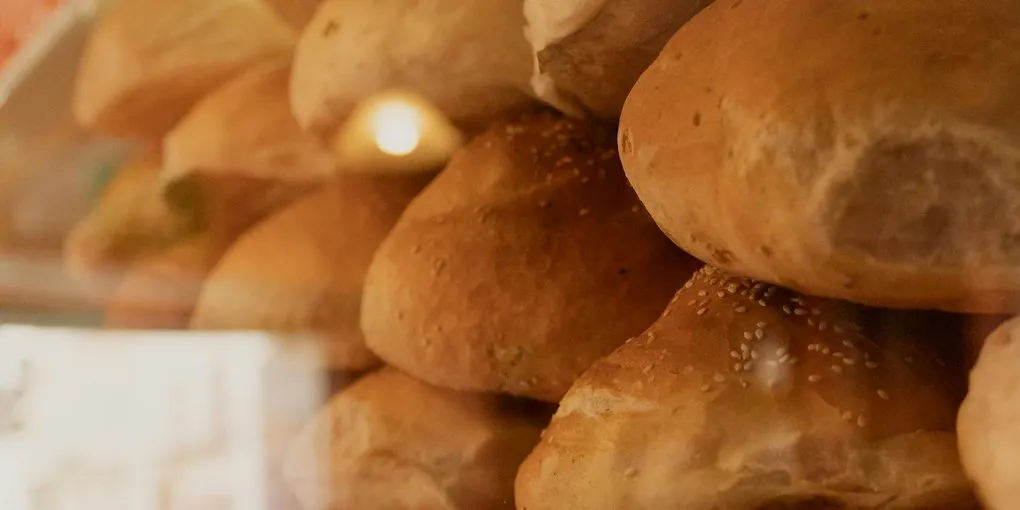
Bolillos are the crackly-crusted oval rolls stacked behind the counter of every Mexican panaderia, sold by the dozen for the price of a single artisan roll in an American bakery. Split one open, pull out a handful of soft interior, and you have the vessel for a torta, a pambazo, or a bowl of thick chicken soup. The crust shatters when you squeeze it. The crumb is white and soft, slightly sweet from long fermentation rather than added sugar. The shape is pointed at both ends, with a single lengthwise score down the spine that opens into a brown, blistered ear in the oven.
Most American home bakers have never baked one, which is strange — the technique is easier than a baguette and the payoff is enormous. Warm bolillos straight from the home oven cost roughly USD 0.20 each in ingredients and outclass anything a supermarket sells. This recipe uses baker’s percentages, grams, and three home-oven steam methods so you can pick whichever fits your kitchen.
The French Connection: How Bolillos Became Mexican
Bolillos are not Indigenous Mexican bread. They are a Mexican adaptation of the French baguette, introduced by French and Belgian bakers attached to the court of Emperor Maximilian I during the Second Mexican Empire (1864-1867). Maximilian, born Ferdinand Maximilian Joseph Maria von Habsburg-Lothringen, was installed as Emperor of Mexico under French military backing; his consort, Charlotte of Belgium — known in Mexico as Empress Carlota — accompanied him with a household that included European bakers. When Maximilian’s regime collapsed in 1867 (he was executed by firing squad at Cerro de las Campanas), the bakers and their techniques stayed.
The most-cited individual is a Belgian baker named Camille Pirotte, who reportedly arrived with Carlota’s household and worked in Guadalajara. Pirotte’s name survives, in folk etymology at least, in the word birote — the related, denser, sour-tasting roll specific to Jalisco that is used for tortas ahogadas. Mexican food historians treat the single-baker story as legend more than verified history; the broader fact — that French baking methods reached Mexico through Maximilian’s court and stuck — is well documented. French influence on Mexican bread intensified again under Porfirio Díaz (1876-1911), when Parisian-style cafes and bakeries became fashionable in Mexico City.
The name bolillo is the diminutive of bolo, the Spanish word for a bowling pin or skittle. The shape — tapered at both ends, fattest in the middle — looks like a small wooden pin. The same word bolillo also names a lacemaker’s bobbin, which is shaped the same way; the bobbin is a parallel meaning, not the source. In Jalisco the same roll is called birote, with a sourer flavor and harder crust used specifically for tortas ahogadas. In northern and central Mexico the bolillo’s flatter cousin is the telera — wider, softer-crusted, with two parallel scores that produce a three-lobed top. Telera is the predominant torta roll in Mexico City; bolillo and telera are interchangeable for most sandwich purposes. The cemita, by contrast, is its own bread entirely: a sesame-seeded enriched roll from Puebla, named after the archaic Spanish word for bran, that anchors the cemita poblana sandwich.
What makes a bolillo a bolillo and not a baguette: lower hydration (around 60-62% vs a baguette’s 65-75%), a tender interior from a small amount of fat in the dough, a shorter and fatter spindle shape, and a baking approach that prioritizes a thin crackling shell over the chewy open crumb of French hearth bread. The French-influenced technique stays — autolyse, long bulk ferment, sharp score, steam — but the outcome is unmistakably Mexican.
Bolillo in Seven Stages
French technique, Mexican roll — about 4 hours start to finish
1. Autolyse
- Duration
- 20 min
- Ingredients
- Flour + water only
- Goal
- Hydrate gluten
- No yeast, no salt, no fat yet
- Dough looks shaggy and rough
- Enzymes wake up; gluten starts forming without work
2. Final Mix
- Duration
- 5 min
- Add
- Yeast, salt, sugar, fat
- Target temp
- 75-78F (24-26C)
- Knead 4-5 min until smooth and slightly tacky
- Dough peels cleanly from the bowl
- No windowpane needed at this stage
3. Bulk Ferment
- Duration
- 2-2.5 hr
- Temp
- 75F (24C)
- Folds
- 2 sets at 30 + 60 min
- Stretch-and-fold builds gluten gently
- Dough should roughly double
- Cooler/longer = deeper flavor
4. Divide & Preshape
- Duration
- 15 min
- Pieces
- 8 of ~103g
- Bench rest
- 15 min seam-down
- Round each piece tight
- Rest under a cloth
- Gluten relaxes for final shape
5. Final Shape
- Duration
- 10 min
- Length
- 18-20 cm
- Style
- Football, pointed tips
- Fold thirds in, seal each fold
- Roll under palms, taper toward ends
- Build real surface tension
6. Final Proof
- Duration
- 45-60 min
- Temp
- 75F (24C)
- Test
- Slow springback
- Floured couche or parchment
- Cover loosely with damp cloth
- Indent should fill almost fully
7. Score & Bake
- Duration
- 18-22 min
- Oven
- 450F (232C)
- Internal
- 205F (96C)
- Single shallow lengthwise score, 30 degree angle
- Steam in for first 10-12 min
- Cool 20 min for full crust to develop
The bake is short. The crust crackle develops during cooling, when the thin shell dehydrates.
jayarrbread.comIngredients
This formula yields 8 bolillos at roughly 100g each. Scale freely; baker’s percentages are anchored to 500g total flour.
| Ingredient | Grams | Baker’s % | US measure |
|---|---|---|---|
| Bread flour (11-13% protein) | 500 | 100% | 4 cups + 1 Tbsp |
| Water (cool, 65F / 18C) | 310 | 62% | 1 1/3 cups |
| Instant yeast | 5 | 1% | 1 1/2 tsp |
| Fine sea salt | 10 | 2% | 1 3/4 tsp |
| Sugar | 10 | 2% | 2 tsp |
| Neutral oil or softened lard | 15 | 3% | 1 Tbsp |
Flour. Bread flour at 11-13% protein gives the chewy-but-soft crumb that bolillos are known for. All-purpose at 10-11% works if that is what you have, but reduce water by 10g because lower-protein flour absorbs less. For a deeper rabbit hole on protein and brand selection, see our bread flour brand guide.
Water and hydration. 62% is the right starting hydration. The same lean-dough physics governs hydration in bread here as elsewhere: enough water to develop gluten and produce internal steam, not so much that the dough collapses during shaping. Cool water (65F / 18C) keeps fermentation from racing during a longer bulk.
Fat. Traditional Mexican panaderias use manteca (pork lard), and the difference is real — lard tenderizes the crumb and rounds out the flavor in a way neutral oil cannot quite match. Plant-based alternatives work fine. Ricky Bayless’s bolillo recipe famously uses no fat at all and a much higher hydration; that is a defensible variant, but the fat-enriched lower-hydration formula here is closer to the everyday panaderia loaf you would buy in Mexico City.
Sugar. 2% sugar is not for sweetness — it feeds yeast activity and accelerates Maillard browning on the crust. The crumb itself reads savory.
Salt. Standard 2% baker’s percentage. For why this number is non-negotiable in lean doughs, see our salt in bread guide.
Method
Stage 1 — Mix and autolyse (20 minutes)
Combine flour and water in a large bowl. Mix with your hand or a spatula until no dry flour remains — the dough will look shaggy and rough, which is correct. Cover and let rest 20 minutes. This is the autolyse: flour proteins hydrate, enzymes begin converting starch to sugars, and gluten starts forming without any work from you.
Stage 2 — Final mix (5 minutes)
Sprinkle the yeast, salt, and sugar over the autolysed dough. Add the oil or softened lard. Mix by folding and squeezing the dough in the bowl for 4-5 minutes, or knead on a lightly oiled counter for the same time. You are looking for a smooth, slightly tacky dough that peels cleanly from the bowl. It will not pass a windowpane test yet — do not chase that. Target dough temperature: 75-78F / 24-26C.
Stage 3 — Bulk fermentation (2 to 2.5 hours at 75F)
Transfer to a lightly oiled container. Rest 30 minutes, then perform one set of stretch-and-folds (grab a corner, pull it up and over the top, rotate 90 degrees, repeat four times). Wait 30 minutes and do a second set. Let rest undisturbed for the remaining 1 to 1.5 hours. The dough should roughly double and feel pillowy.
A longer, cooler bulk (3-4 hours at 70F) deepens flavor. Panaderias that bake at dawn often do an overnight retard of the shaped bolillos in the refrigerator — if you want to try that, reduce yeast to 0.5%, proof shaped rolls in the fridge overnight, then bake cold straight from the refrigerator.
Stage 4 — Divide and preshape (15 minutes)
Turn the dough out onto a lightly floured counter. Divide into 8 pieces of about 103g each. Preshape each piece into a tight round by pulling the edges up and pinching them together at the top, then flipping and rolling under your cupped palm to build surface tension. Rest 15 minutes, seam-side down, covered with a cloth. For a refresher on the rounding move, see our shaping guide.
Stage 5 — Final shape (the bolillo spindle)
This is the signature move. Flip a preshaped round seam-side up. Pat it into a rough oval, about 15 cm long. Fold the top third down toward the center and seal with the heel of your hand. Rotate and fold the bottom third up to meet the first fold, sealing again. Now you have a tight log. Roll it under both palms, keeping even pressure in the middle and tapering toward the ends by spreading your hands outward. The target is a football shape — thick in the middle, pointed at both ends, 18-20 cm long.
Place shaped bolillos seam-side down on a floured couche or parchment, with pleats of cloth between rolls to hold them upright.
Stage 6 — Final proof (45-60 minutes at 75F)
Cover loosely with a damp cloth. The bolillos are ready when they pass the poke test: press gently with a floured fingertip; the indent should spring back slowly and almost fully, not immediately and not at all.
Stage 7 — Score and bake
Preheat your oven to 450F (232C) with a baking stone or steel on the middle rack, plus your chosen steam setup, for at least 45 minutes. A stone or steel is not optional — bottom heat is what gives bolillos their shelf life and produces the geometry of the blistered ear.
Transfer bolillos to a floured peel or parchment-lined tray. Score each one with a single long, shallow cut down the lengthwise spine, nearly end-to-end, using a razor or very sharp knife held at about a 30-degree angle. About 1 cm deep. A straight cut (not curved) is traditional. For the broader scoring physics — why blade angle, depth, and dough condition matter — see our scoring guide.
Load into the oven. Steam immediately (see three methods below). Bake 18-22 minutes, rotating the stone once at the 10-minute mark, until the crust is rich golden brown with visible blisters and the scored ear is deeply colored. Internal temperature: 205F / 96C. For broader doneness checks beyond temperature, see how to tell when bread is done.
Cool on a rack at least 20 minutes. The crackling crust develops during cooling, as the thin shell dehydrates and contracts.
Three Home-Oven Steam Methods
Steam in the first 10-12 minutes is what produces the thin, shattering bolillo crust. The same dynamics that govern steam in bread baking apply: water vapor delays surface drying so the dough can expand fully, then evaporates so the crust can set. Each of the three methods below works; pick one based on your oven and your tolerance for setup.
Three Home-Oven Steam Methods
Pick one. Each gives the bolillo crust its crackle.
- 01
Lava rocks (most effective)
Higher setup, best resultsPreheat a cast-iron skillet filled with a single layer of lava rocks on the oven floor for 45 minutes. Pour 1 cup boiling water onto the rocks at loading and close the door fast.
Thermal mass holds the water and flashes it to steam over 5-6 minutes. Best home approximation of a steam-injection deck oven. - 02
Boiling water in a hot pan
Standard, well-known methodPreheat a heavy-bottomed sheet pan on the bottom rack. At loading, pour 1 cup boiling water into the hot pan and close the door immediately.
Steam dissipates in 3-4 minutes — less forgiving than lava rocks, but reliable and requires no special equipment. - 03
Ice cubes on a preheated tray
Safest, slightly less steamSame setup as the boiling-water method but use 1 cup of ice cubes instead. Cubes melt and release steam more gradually and are safer to handle.
Slightly less total steam than boiling water; still produces a good crackle. The default if you are nervous about pouring boiling water into a hot oven.
If you bake bread regularly, the lava-rock setup is worth the one-time effort. For occasional bakers, ice cubes are the safest gateway.
jayarrbread.comHow Bolillo Compares to Other Lean Yeasted Breads
Bolillo sits in the lean, lightly enriched corner of the wheat-bread family. Knowing where it falls helps you adapt technique when you make its neighbors.
Bolillo (this recipe): Lean dough, 60-62% hydration, small amount of fat (3% lard or oil) and sugar (2%), bread flour, single lengthwise score, baked at 450F with steam to 205F internal. Crackly thin shell, soft white crumb, football shape with pointed ends.
Baguette: Strictly lean — flour, water, salt, yeast — at 65-75% hydration. Often built on a poolish or pre-ferment for flavor. Long, thin, multiple curved scores, baked hotter (475-500F) with steam. Open chewy crumb, brittle crust, longer than a bolillo.
Telera: Bolillo’s flatter cousin — same lean-with-a-touch-of-fat dough, often slightly softer hydration, shaped flat with two parallel scores that create three lobes. Softer crust by design (proofed flatter and not slashed deeply). The predominant torta roll in Mexico City.
Birote (Jalisco): Sourer, harder-crusted bolillo cousin specific to Guadalajara. Said to depend on Jalisco’s altitude and water for its character; commonly used for tortas ahogadas dipped in spicy tomato salsa.
Cemita: A different bread entirely. Egg-and-milk enriched dough, sesame-seeded crust, round shape — the canonical bread for cemitas poblanas, the Puebla sandwich with avocado, pápalo, and Oaxaca cheese. Not a torta roll.
The unifying physics is steam-driven oven spring: a thin crust, set quickly by surface gelatinization in a humid oven, that allows the interior to expand before dehydrating into a hard shell. Bolillo, baguette, and telera all use the same mechanism with slightly different flour, hydration, and shaping choices.
If you have made our pita bread or naan, you already know the home-oven steam routine for a thin-crusted bread; bolillo applies the same trick to a yeasted roll.
Troubleshooting
Crust is soft and chewy, not crackly. Not enough steam, or you left the bread in too long after the steam dissipated. Try the lava-rock method. Also check your oven temperature with a separate thermometer — many home ovens run 25F below their dial setting.
Crumb is dense, not airy. Underproofed or underfermented. Next time extend bulk by 30-45 minutes or let the final proof go longer. Also check the water temperature — cold water and cold dough slow fermentation dramatically. For more on dense-loaf debugging, see why is my bread dense.
Bolillos spread sideways instead of rising up. Final shape was not tight enough. Re-watch the shaping step — you need real surface tension, which comes from the fold-and-roll sequence. A slack shape will relax outward during proof.
Score opened unevenly or not at all. Razor was too dull, angle was wrong, or dough was overproofed. A scored bolillo should open into a clean ear within the first 5 minutes of baking. If yours does not, score deeper (about 1 cm) next time and ensure the final proof is springback, not collapse. For oven-spring physics generally, see our oven spring guide.
Crust blisters are missing. Blisters come from rapid surface expansion under steam on well-hydrated dough. Check your hydration (should feel tacky, not dry) and your steam timing (steam must hit the loaf in the first 60 seconds of baking).
The bolillo tastes bland. Extend bulk fermentation. Flavor comes from time, not ingredients at this formula. A 3-4 hour cool bulk, or an overnight cold proof of shaped rolls, doubles the flavor complexity. The same Maillard reaction chemistry that browns the crust also drives flavor depth — both reward longer fermentation.
Storage
Bolillos are at peak texture within 4 hours of baking. For same-day eating, keep them in a paper bag at room temperature — never plastic, which traps moisture and kills the crust. For next-day eating, cool completely and freeze in a zip-top bag; they hold for 1 month. To revive, mist a frozen bolillo lightly with water and bake at 375F (190C) for 6-8 minutes. The crust comes back crackling. Microwaving is not recommended — it turns the crumb rubbery and softens the crust permanently.
Frequently Asked Questions
- What is the difference between a bolillo and a telera?
- Both are French-influenced Mexican wheat rolls and both descend from baguette technique adapted to the Mexican palate. A bolillo is football-shaped with pointed ends and a single lengthwise score that opens into a brown ear in the oven; the crust is hard and crackly. A telera is flatter and wider, with two parallel scores pressed into the top before baking that produce a three-lobed surface; the crust is softer by design (proofed flatter, scored shallower, sometimes slightly more enriched). Telera is the predominant torta roll in Mexico City; bolillo is the more general-purpose roll, eaten with meals, used for tortas, pambazos, dipped into birria, or split for molletes. The two doughs are similar enough that some panaderias use the same mix and shape both rolls from it.
- Is the cemita made from a bolillo or a telera?
- Neither. The cemita poblana sandwich uses a cemita roll, which is a different bread entirely: a sesame-seed-coated, slightly enriched roll (eggs and milk in the dough) native to Puebla. The name traces to acemite, the archaic Spanish word for bran, which traveled from Aramaic via Greek semidalis. A cemita is round and soft on the inside; a bolillo is football-shaped and crackly. Substituting one for the other will not give you an authentic cemita poblana — the sesame seeds and the slightly enriched crumb are part of what defines the sandwich.
- Can I make bolillos with all-purpose flour instead of bread flour?
- Yes, but reduce the water by about 10g (2% hydration) because all-purpose flour at 10-11% protein absorbs less water than bread flour. The crumb will be slightly softer and less chewy, which is closer to the style some home panaderias actually use. If you only have all-purpose, it is better to bake a softer bolillo than not bake at all — and many Mexican home bakers do exactly this. A small amount of vital wheat gluten (1-2% of flour weight) added to all-purpose closes most of the gap if you want chewier results.
- Why are my bolillos missing the brown ear on top?
- The ear is the lip of dough that curls back during oven spring, exposing softer interior crumb to direct heat. You need three things for a good ear: a sharp shallow score at a 30-degree angle (not straight down), enough steam in the first 5 minutes to keep the dough surface extensible, and a dough that is correctly proofed (springback, not collapse). If any one of those is missing, the score will open weakly or close up entirely during baking. Also: a sharper blade matters more than people think. A blunt razor drags through the dough and tears it instead of slicing cleanly, which closes the score before the bread can spring.
- Do I really need a baking stone, or can I use a sheet pan?
- You need bottom heat to get the signature crackly bolillo crust and the thin-shell structure. A baking stone or thick baking steel is best; a heavy cast-iron griddle preheated on the middle rack is a reasonable substitute. A thin aluminum sheet pan will not hold enough heat — your bolillos will be pale on the bottom and the crust will feel leathery rather than crackly. If a stone is not in the budget, an unglazed quarry tile from a home improvement store costs under USD 5 and works well; just preheat it 45 minutes minimum.
- How do I store and reheat bolillos?
- Bolillos are at peak texture within 4 hours of baking. For same-day eating, keep them in a paper bag at room temperature — never plastic, which traps moisture and kills the crust. For next-day eating, cool completely and freeze in a zip-top bag; they hold for 1 month. To revive, mist the frozen bolillo lightly with water and bake at 375F / 190C for 6-8 minutes. The crust comes back crackling. Microwaving is not recommended — it turns the crumb rubbery and softens the crust permanently.
- Is a bolillo basically just a small baguette?
- Closely related, but not the same bread. A baguette is strictly lean (flour, water, salt, yeast) at 65-75% hydration, often built on a poolish, with multiple curved scores and a chewy open crumb baked at 475-500F. A bolillo is shorter, fatter, lower hydration (around 60-62%), enriched with a small amount of fat (3% lard or oil) and sugar (2%), with a single straight score and a tighter, slightly sweeter crumb baked at 450F. The result is a roll built for tortas — sturdy enough to hold filling, crackly enough to provide texture, soft enough inside to soak up sauce. Mexican bakers took the French technique and tuned the bread for a different food culture.
Bolillos are the everyday crusty roll of Mexican home and street food, and they are the cleanest expression of how a borrowed European technique becomes its own thing. Master the lean dough, the autolyse, the football spindle shape, and the home-oven steam, and the panaderia roll on your kitchen counter is a thirty-cent ingredient bill from now on.