Sourdough and commercial yeast both leaven bread with carbon dioxide, but sourdough also contains lactic acid bacteria that commercial yeast lacks. Those bacteria produce organic acids that give sourdough its tangy flavor, chewier crumb, and longer shelf life (5-6 days versus 2-3 for straight yeasted bread). Commercial yeast is faster, more predictable, and needs no maintenance. Neither is inherently better -- choose commercial yeast for speed and reliability, sourdough for flavor depth and keeping quality.
Before you buy or bake
- A gluten-free claim is not a wheat-free claim
- These are two different questions and they need two different label checks. Under US rules a food may carry a compliant gluten-free claim and still contain processed wheat starch, provided the finished gluten level is below the regulatory limit and wheat is declared as an allergen. If you are managing a wheat allergy, read the allergen declaration for wheat and follow your allergist’s guidance — a gluten-free claim, certified or not, is not evidence that wheat is absent.
Sourdough and commercial yeast both make bread rise. They both produce carbon dioxide that inflates gas cells in dough. They both require flour, water, salt, and time. But the organisms doing the work, the chemistry they produce, the flavors they create, and the bread that comes out of the oven are fundamentally different.
This isn’t a “which is better” article. Both have genuine advantages. The point is to understand what’s actually different so you can choose the right tool for the bread you want to bake.
The Organisms
Commercial yeast is a single species: Saccharomyces cerevisiae. It’s been isolated, purified, and industrially produced for consistent, predictable performance. Every packet of instant dry yeast contains billions of the same organism, bred to produce CO2 aggressively and reliably.
Commercial yeast comes in three forms:
- Fresh (compressed) yeast: About 70% moisture. The professional standard. Highly perishable.
- Active dry yeast: 5-7% moisture. Must be dissolved in warm water before use. Use 40% of the weight of fresh yeast.
- Instant dry yeast: 5-7% moisture. Can be added directly to flour. Use 33% of the weight of fresh yeast.
Sourdough is a complex ecosystem. A mature sourdough starter contains both wild yeast and lactic acid bacteria (LAB) in a symbiotic culture. Key organisms include Fructilactobacillus sanfranciscensis (a LAB that prefers maltose), wild yeasts like Kazachstania exigua and K. humilis, and sometimes Saccharomyces cerevisiae itself.
The critical difference: sourdough contains bacteria that commercial yeast does not. Those bacteria produce organic acids — lactic acid and acetic acid — that fundamentally change the bread’s flavor, texture, and keeping qualities.
What's Inside: Sourdough vs Commercial Yeast
Same job -- leaven the dough -- but very different biology
| Property | 01Commercial Yeast | 02Sourdough Culture |
|---|---|---|
| Organisms | Saccharomyces cerevisiae (single species) | Wild yeast + lactic acid bacteria (multiple species) |
| CO2 production | Fast, aggressive, predictable | Slower, variable, culture-dependent |
| Acid production | None (yeast only) | Lactic acid + acetic acid (from bacteria) |
| Flavor compounds | Ethanol, esters (with long fermentation) | Ethanol, esters, organic acids, aldehydes |
| Predictability | High -- same organism every time | Variable -- depends on culture health and feeding |
| Leavening shelf life | Months (dry) / weeks (fresh) | Indefinite with regular feeding |
The presence of bacteria -- not just yeast -- is what separates sourdough from a commercial-yeast dough.
jayarrbread.comOne important misconception: the organisms in a sourdough starter are not tied to geography. San Francisco sourdough isn’t special because of Bay Area air. The organisms are determined by the baker’s maintenance practices, the flour used, and the local environment — not by mysterious regional microbes.
For more on sourdough microbiology, see our sourdough starter science guide.
The Chemistry
Both sourdough and commercial yeast perform alcoholic fermentation — the same fundamental reaction:
C6H12O6 -> 2 C2H5OH + 2 CO2
Glucose yields ethanol and carbon dioxide. The CO2 is the leavening gas. The ethanol contributes flavor precursors and evaporates during baking at 172F (78C).
But sourdough cultures do more than just this. The lactic acid bacteria perform additional fermentation pathways:
Homofermentative LAB produce mainly lactic acid from glucose.
Heterofermentative LAB produce lactic acid, acetic acid, ethanol, and CO2 from glucose. They’re metabolically versatile and produce a wider range of flavor compounds.
This dual fermentation — yeast making CO2 and ethanol, bacteria making organic acids — is what gives sourdough bread its distinctive character. Commercial yeast bread has only the yeast pathway.
Flavor
The flavor difference between sourdough and yeasted bread comes down to organic acids.
Lactic acid (CH3CHOHCOOH) produces a mild, creamy, yogurt-like tang. It’s favored by warm temperatures (75-85F), high-hydration starter cultures (100%+), and shorter fermentation times.
Acetic acid (CH3COOH) produces a sharp, tangy, vinegary flavor. It’s favored by cooler temperatures (65-70F), stiffer starter cultures (60% hydration), and longer or cold fermentation.
All five major bread authors agree on this lactic-acetic relationship. It’s one of the most consistent principles in the bread science literature.
Commercial yeast bread can develop complex flavors too — but through different pathways. Long, slow fermentation with minimal yeast (like Forkish’s Overnight White, which uses just 0.08% instant yeast over 12-14 hours) produces extraordinary flavor complexity through extended enzyme activity, ester formation, and alcohol accumulation. Pre-ferments like poolish and biga add another layer by pre-fermenting a portion of the flour overnight.
The flavor isn’t inherently “better” with either method. It’s different. Sourdough adds tang and fermented depth. Well-made yeasted bread with long fermentation adds sweet, nutty, wheaty complexity. Quick-rise yeasted bread (1-2 hours with heavy yeast) tastes like flour and not much else. For the mechanics of how fermentation builds these flavors, see our fermentation science guide.
Rise and Timing
Commercial yeast rises faster and more predictably. The fermentation rate scales directly with the amount of yeast:
| Instant Yeast % | Approximate Bulk Time (75F) |
|---|---|
| 0.08% | 12-14 hours |
| 0.3-0.5% | 4-6 hours |
| 0.5-1.0% | 1.5-3 hours |
| 1.0-1.5% | 1-1.5 hours |
Sourdough is slower and less predictable. A typical sourdough bulk fermentation runs 3-5 hours at room temperature, and the exact timing depends on the starter’s vigor, the ambient temperature, the flour type, and how recently the starter was fed. Robertson targets a 20-30% volume increase in 3-4 hours at 78-82F. Forkish’s overnight levain doughs can run 12-15 hours.
The wider proofing window is one of sourdough’s practical advantages. Forkish notes that straight doughs with commercial yeast have a proofing window as narrow as 10-15 minutes — miss it and you’ve over-proofed. Levain breads have a much wider window, sometimes 2+ hours, because their fermentation is less vigorous and evolves more slowly.
Temperature sensitivity: Yeast approximately doubles its fermentation rate with every 17F (8C) increase in temperature. A dough that rises in 2 hours at 70F will rise in about 1 hour at 87F and take about 4 hours at 53F. Both sourdough and commercial yeast follow this pattern, but sourdough cultures are more complex and less predictable because multiple organisms with different temperature preferences are working simultaneously.
Texture and Crumb
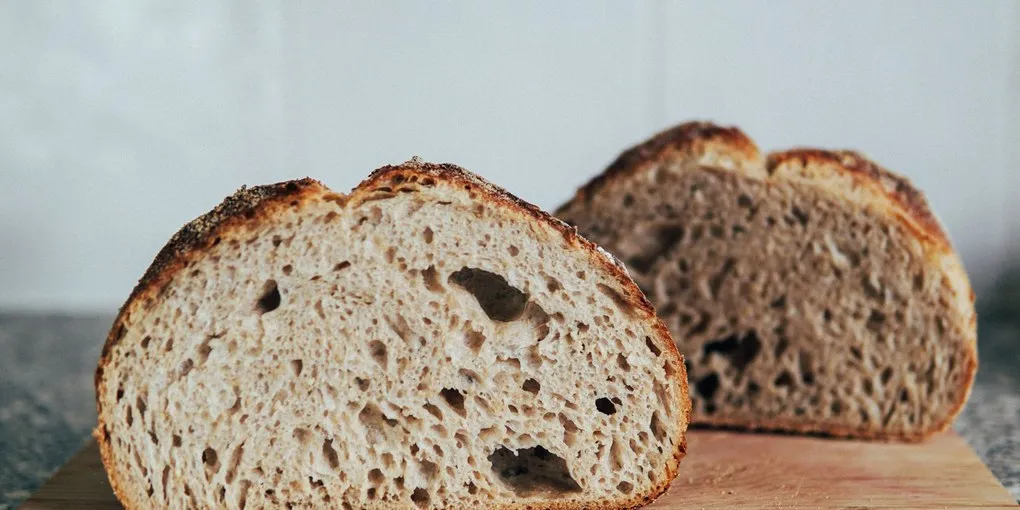
Sourdough bread typically has a more open, irregular crumb with a chewy texture. The acids produced during fermentation affect gluten behavior — they strengthen the network in certain ways but also make it more extensible, allowing larger, more irregular gas cells to form.
Commercial yeast bread can produce any crumb structure depending on technique and hydration. A high-hydration, long-fermented yeasted dough (like Forkish’s Saturday White at 72% hydration, tripled over 5 hours) produces an open, artisan crumb. A lower-hydration enriched dough produces the fine, even crumb of sandwich bread.
The acids in sourdough also slightly tenderize the crumb by breaking down some gluten over the long fermentation. This contributes to the characteristic chew of sourdough — it’s elastic and toothsome rather than soft and pillowy.
Shelf Life
Sourdough bread lasts significantly longer than straight yeasted bread. Forkish provides clear timelines:
- Straight doughs (commercial yeast only): 2-3 days
- Pre-ferment breads: 4-5 days
- Levain breads: 5-6 days
The reason is pH. The organic acids in sourdough lower the bread’s pH, which inhibits mold growth and slows staling. Both Hamelman and Buehler confirm that sourdough’s lower pH extends shelf life compared to yeasted bread.
Remember: staling isn’t about bread drying out. It’s retrogradation — starch molecules that gelatinized during baking slowly re-crystallize. The acids in sourdough interfere with this process, keeping the crumb softer longer.
And regardless of bread type: never store bread in the refrigerator. The 2-4C temperature range maximizes retrogradation speed. Bread goes stale faster in the fridge than at room temperature. For long-term storage, freeze it. Our bread storage and freshness guide covers the details.
Nutrition
Sourdough has some documented nutritional advantages:
Phytic acid reduction: Whole grain flour contains phytic acid, which binds minerals (iron, zinc, calcium) and reduces their bioavailability. The acidic environment in sourdough fermentation breaks down phytic acid more effectively than commercial yeast fermentation, which may make those minerals more available for absorption.
Gluten modification: The long, acidic fermentation of sourdough partially breaks down gluten proteins. Some people who experience digestive discomfort with commercial yeast bread report that they may tolerate long-fermented sourdough better. This is not the same as being safe for celiac disease — sourdough bread still contains significant gluten.
Glycemic response: Some research suggests that the organic acids in sourdough may slow gastric emptying, potentially producing a lower glycemic response compared to equivalent yeasted bread. The evidence is promising but not yet definitive, and individual responses vary.
Commercial yeast bread has its own nutritional merits — it’s still whole-grain if made with whole-grain flour, and the shorter fermentation preserves certain heat-sensitive nutrients that longer sourdough fermentation may degrade. As always, treat these as general observations, not medical advice; if you have a specific dietary condition, consult a professional.
Crust and Baking Behavior
Sourdough and yeasted breads behave differently in the oven.
Oven spring: Sourdough loaves typically have slightly less dramatic oven spring than yeasted loaves, because the acidic dough has already partially relaxed the gluten during its longer fermentation. However, well-managed sourdough (especially with a young leaven) can spring beautifully. Yeasted doughs with short fermentation have tighter, more elastic gluten and can produce explosive oven spring.
Crust character: Sourdough develops a thicker, more complex crust. The organic acids produce additional Maillard reaction substrates (amino acids released by protease activity during the long fermentation), resulting in deeper color and more nuanced flavor. Robertson and Forkish both insist on baking dark — “deep mahogany” rather than pale gold.
Scoring behavior: Sourdough dough that’s been cold-retarded overnight scores cleanly because the cold firms the surface. Yeasted doughs at room temperature can be stickier and harder to score with precision.
Steam requirements are the same for both. Whether using commercial yeast or sourdough, steam in the first 10-15 minutes of baking is critical for oven spring and crust quality. The Dutch oven method — preheating a heavy cast-iron vessel and baking with the lid on — works equally well for both leavening approaches.
The Maintenance Question
One practical difference that doesn’t show up in side-by-side comparisons: sourdough requires ongoing commitment. A sourdough starter is a living culture that needs daily feeding when kept at room temperature. Skip a few days and it weakens. Neglect it for a week and it may die.
Commercial yeast sits in a packet in your pantry or freezer, ready whenever you are. No feeding schedule, no maintenance, no guilt.
This isn’t a trivial consideration. If you bake once a week or less, maintaining a sourdough starter means producing daily discard that you either use (see our sourdough discard recipes) or throw away. If you bake 3-4 times a week, the starter integrates naturally into your schedule.
The compromise: refrigerating the starter. A well-fed starter can survive 2-4 weeks in the fridge without feeding. Pull it out the night before you want to bake, give it two feedings, and it’s ready. This makes sourdough practical even for occasional bakers.
Practical Considerations
When to Use Commercial Yeast
- You need bread today, not tomorrow
- You’re baking enriched doughs (brioche, challah) where you want lift without tang
- You want predictable, repeatable timing
- You’re a beginner learning the fundamentals of dough handling
- You bake infrequently and don’t want to maintain a living culture
When to Use Sourdough
- You want maximum flavor complexity and depth
- You prefer a longer shelf life without additives
- You enjoy the process and schedule flexibility of a slower bake
- You want the nutritional edge of long fermentation
- You bake regularly enough to justify maintaining a starter
The Hybrid Approach
You don’t have to choose one or the other. Robertson uses both natural leaven and poolish in his baguettes and enriched breads — natural leaven for flavor complexity, commercial yeast in the poolish for reliable oven spring. Forkish warns against adding commercial yeast to the starter culture itself (it will dominate and eventually starve out the wild yeasts), but adding it to the final dough is a legitimate technique.
A small amount of commercial yeast (0.1-0.2%) added to a sourdough formula provides insurance — the wild leaven handles flavor, and the commercial yeast guarantees rise. Many professional bakeries use this approach quietly. It’s not cheating. It’s practical.
The Bottom Line
Commercial yeast is a precision tool — fast, predictable, consistent. Sourdough is an ecosystem — slower, more complex, more rewarding in flavor but more demanding in maintenance. Neither is inherently superior. The best approach depends on what you’re baking, how often you bake, and how much you enjoy the process versus the product.
If you’re just starting out, begin with commercial yeast. Learn to handle dough, understand fermentation timing, and develop your instincts. Then, when you’re ready for the next challenge, build a sourdough starter and discover what a few billion bacteria can add to your bread.
For building your own sourdough starter, see our how to make a sourdough starter guide, and when you’re ready to bake with it, our beginner sourdough bread recipe walks through your first loaf.
Frequently Asked Questions
- Is sourdough bread healthier than regular bread?
- Sourdough has some documented advantages: its acidic fermentation breaks down phytic acid (which may improve mineral absorption), partially degrades gluten proteins (which some people find easier to digest), and may produce a lower glycemic response. But 'healthier' depends on context. Both sourdough and yeasted bread provide carbohydrates, protein, and fiber (if whole grain). The biggest nutritional differences come from flour choice, not leavening method. None of this is medical advice.
- Can people with gluten intolerance eat sourdough?
- Some people who experience digestive discomfort with commercial yeast bread report that they tolerate long-fermented sourdough better, because the acids partially break down gluten proteins. However, sourdough bread still contains significant gluten and is not safe for people with celiac disease. If you suspect gluten sensitivity, consult a medical professional rather than relying on fermentation to solve the problem.
- Why does sourdough take so much longer to rise?
- Sourdough cultures contain fewer yeast cells per gram than commercial yeast, and those wild yeasts produce CO2 more slowly. A packet of instant yeast contains billions of a single aggressive species. A tablespoon of sourdough starter contains a mixed community of wild yeasts and bacteria that work at their own pace. The tradeoff is flavor -- slower fermentation means more time for organic acids and complex compounds to develop.
- Can I add commercial yeast to sourdough bread?
- Yes -- to the final dough, not to the starter culture itself. Adding commercial yeast to the starter will cause it to dominate and eventually starve out the wild yeasts. But adding a small amount (0.1-0.2%) to the final dough provides insurance for rise while the sourdough handles flavor. Many professional bakeries use this hybrid approach.
- Does sourdough bread always taste sour?
- Not necessarily. The sourness depends on fermentation conditions. A young leaven (used before peak acidity, as Robertson recommends), warm fermentation temperatures (75-85F), and shorter bulk times all favor lactic acid over acetic acid, producing bread with complex wheat flavor and subtle tang rather than aggressive sourness. The 'sour' in sourdough describes the process, not the mandatory flavor.