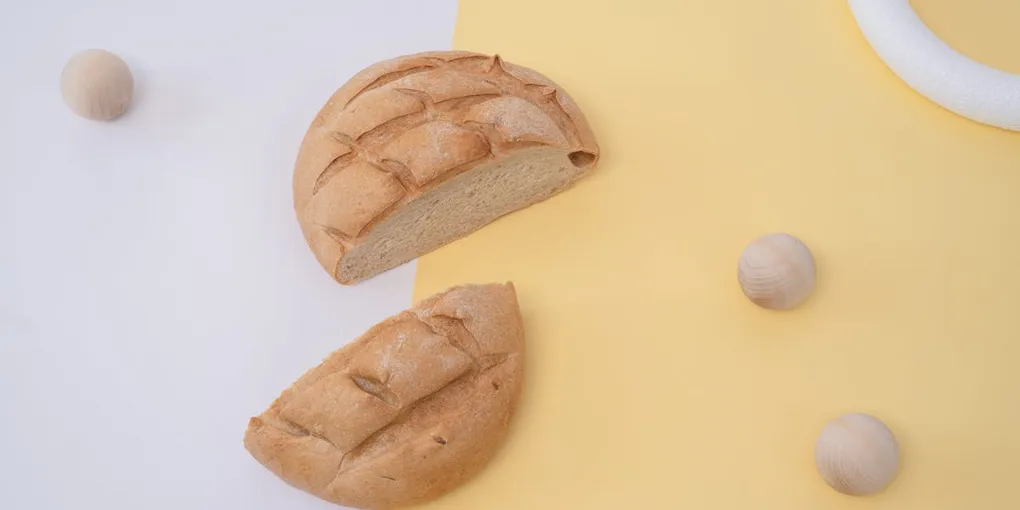
You waited days for your starter to ripen, spent hours on the bulk fermentation, shaped carefully, scored with confidence — and when you cut the loaf, the crumb is gummy, wet, and compresses under the knife. It sticks to the blade. It doesn’t look like bread inside.
This is one of the most frustrating problems in sourdough baking. But the good news is that gummy sourdough has a very short list of causes, and the most common one is the easiest to fix: you cut the bread too soon.
The Most Common Cause: Cutting Too Early
After baking, the interior crumb continues to set as it cools. The starch inside the loaf gelatinized during baking — it absorbed water and swelled into a gel — but it hasn’t finished firming up when the bread comes out of the oven. Cutting before cooling is complete compresses the still-gelling starch, producing gummy, dense texture even if the bake was perfect.
This is not a small effect. A perfectly baked loaf sliced at 20 minutes will feel gummy and wet. The same loaf sliced at 2 hours will be open, airy, and dry to the touch.
The bread is literally still cooking inside after you take it out of the oven. Internal temperature continues redistributing. Moisture migrates from the center outward. The starch network finishes setting.
How Long to Wait
Different bakers give different minimums:
| Source | Recommended Cooling Time |
|---|---|
| Robertson | 2-4 hours for country loaves |
| Hamelman | 24-48 hours for sourdough; 12-24 hours for rye |
| Forkish | 20 minutes minimum |
Robertson’s crust “sings” as it cools — crackling sounds as the crust contracts and releases steam. This is normal and a sign of a good bake. Wait until the singing stops, at minimum.
For sourdough country loaves, 2 hours is the practical minimum. Larger loaves need longer. And if you’re baking rye bread, patience becomes non-negotiable.
Rye Bread: A Special Case
Rye bread that’s gummy inside is almost always a cutting issue, not a baking issue. Rye starch gelatinizes at lower temperatures than wheat starch, and rye contains almost no gluten — its structure comes from pentosans, water-binding carbohydrates that form a gel. That gel needs significantly more time to set than a wheat crumb.
Hamelman’s recommended resting times before slicing rye bread:
| Rye Percentage | Minimum Rest Before Slicing |
|---|---|
| 40% | Same day is fine |
| 66% | 12 hours |
| 80% | 24 hours minimum |
| 90% | 24 hours minimum |
| 100% (Vollkornbrot) | 48-72 hours |
A 100% rye loaf sliced at 4 hours will be gummy regardless of how well it was baked. At 48 hours, the same loaf will have a moist, sliceable, fully set crumb. This isn’t a defect in your technique — it’s the physics of rye starch.
The Second Cause: Under-Baking
After cutting too early, under-baking is the next most likely culprit. The interior of a sourdough loaf needs to reach at least 200-212°F (93-100°C) for the crumb to fully set. Robertson pushes this further, baking until internal temperature hits 212°F (100°C) to ensure all interior moisture has turned to steam and the crumb is fully structured.
Under-baking is the most common home-baker error, according to Robertson. The loaf looks done — golden brown, firm when tapped — but the interior hasn’t finished transforming. Both Robertson and Forkish insist on baking darker than your instincts suggest.
Robertson: “Deep mahogany/amber all over” — thoroughly caramelized, not merely golden.
Forkish: “At least once, you should try baking a loaf just shy of the point of burning it.”
How to Tell If Your Bread Is Under-Baked
- Use an instant-read thermometer. Insert into the center of the loaf. Below 200°F, the bread needs more time.
- Check the crust color. If it’s pale gold, it’s not done. You’re looking for deep brown.
- Tap the bottom. A fully baked loaf sounds hollow. A dull thud means the interior is still wet.
- Check weight. An experienced baker can feel when a loaf is lighter — the water has been driven off.
Common Under-Baking Mistakes
Removing the Dutch oven lid too late. If you leave the lid on for the full bake, the trapped steam prevents proper crust formation and browning. Robertson’s method: lid on for 20 minutes at 500°F (steam phase), then lid off for 20-25 minutes at 450-500°F (browning phase). The lid-off phase is where the interior finishes baking and the crust caramelizes.
Oven running cool. Home ovens are notoriously inaccurate. An oven set to 475°F might be running at 440°F. Use an oven thermometer to verify.
Pulling the loaf at first sign of browning. The crust will look done before the interior is done. Trust the thermometer and the color — dark brown, not golden.
For more on steam timing, see our guide on baking with steam.
The Third Cause: Gross Under-Fermentation
Robertson’s crumb diagnostics list “gummy, wet interior” as a possible sign of grossly under-fermented dough. This is less common than cutting too early or under-baking, but it happens.
Under-fermented dough hasn’t produced enough gas to create an open crumb structure. Without those gas cells, the interior is dense and the starch-to-air ratio is too high. The result is a heavy, gummy center that feels wet even when properly baked and properly cooled.
How to Diagnose Under-Fermentation
Look at the crumb pattern alongside the gumminess:
- Dense, tight, uniform small holes + gummy: Under-fermented. The dough didn’t develop enough gas cells during bulk fermentation.
- Dense center, open edges + gummy: Could be under-baked rather than under-fermented. The center didn’t reach full temperature.
- Open, airy holes + gummy: Almost certainly cut too early. The structure is there but the starch hasn’t set.
If under-fermentation is the issue, the fix is more time during bulk fermentation, a warmer environment, or verifying that your starter is actually active. The poke test is your best tool for judging proofing readiness before baking.
The Science: Why Cooling Matters So Much
Understanding what happens inside the loaf after baking explains why patience is non-negotiable.
During baking, starch granules in the flour absorb water and swell — a process called gelatinization. Wheat starch gelatinizes between 140-194°F (60-90°C). At this stage, the starch is a soft gel, not a firm crumb. It’s the same reason pudding is liquid when hot and firm when cool.
As the loaf cools, the gelatinized starch molecules begin to re-associate — forming a firmer matrix that gives the crumb its structure. This process takes hours, not minutes. When you cut into a hot or warm loaf, the knife compresses the soft gel and squeezes moisture out of the crumb. The compressed starch can’t recover its open structure, and the result looks and feels gummy even though the bake was sound.
The moisture component matters too. A freshly baked loaf has significant internal moisture that needs to redistribute as it cools. The center is wetter than the edges. During cooling, water migrates outward through the crumb and into the crust (which is why the crust softens slightly as the loaf cools). Cutting short-circuits this migration, trapping excess moisture in the sliced surfaces.
This is why Robertson specifies 2-4 hours and why Hamelman goes even further for sourdough (24-48 hours). The denser and wetter the loaf, the longer the process takes. For more on what happens after baking, see our guide on bread storage and freshness.
Less Common Causes
Starch Enzyme Overactivity
Flour contains alpha-amylase, an enzyme that cleaves starch chains at random internal points, producing dextrins. At normal levels, this is fine. But flour from sprouted grain or flour with added diastatic malt can have excessive amylase activity. The excess dextrins interfere with starch setting during baking, leaving a gummy crumb that no amount of cooling will fix.
The fix: If you suspect this, try a different batch of flour. Avoid adding diastatic malt unless you know you need it (0.5% of flour weight is the standard dose).
Excess Steam in the Second Half of Baking
Steam in the first 10-15 minutes of baking is essential for oven spring and crust development. But steam that stays in the oven during the second half prevents proper crust formation and can leave the interior wetter than it should be.
The fix: Remove the Dutch oven lid (or vent your steam tray) after 15-20 minutes. The remaining bake time should be dry heat.
The Gummy Sourdough Checklist
Work through this in order:
- Did you wait at least 2 hours before cutting? (4 hours is better.) If not, this is your answer.
- Is it rye bread? Wait 24-72 hours depending on rye percentage.
- What was the internal temperature when you pulled it? Below 200°F = under-baked.
- What color is the crust? Pale gold = under-baked. You want deep mahogany.
- What does the crumb pattern look like? Dense and tight = under-fermented. Open but gummy = cut too early.
Most of the time, the answer is step 1. The hardest part of baking bread is waiting.
For a comprehensive list of bread problems and fixes, see our bread troubleshooting guide. If your bread is dense rather than gummy, the causes are different — see why is my bread dense.
Frequently Asked Questions
- How long should sourdough cool before cutting?
- At minimum 2 hours for a standard country loaf. Larger loaves need 3-4 hours. Hamelman recommends 24-48 hours for full flavor development, though 2-4 hours is sufficient for crumb structure to set.
- Why is my sourdough gummy even after cooling completely?
- If the bread is gummy after full cooling, the cause is either under-baking (internal temperature didn't reach 200-210°F) or gross under-fermentation (not enough gas cells in the crumb). Check crust color — deep brown means well-baked; pale gold means pull it later next time.
- Does gummy sourdough mean my starter is bad?
- Usually not. Gummy interior is almost always about cutting too early or under-baking. A bad starter would produce a loaf that doesn't rise at all. If your loaf rose but has a gummy interior, the starter did its job.
- Can I rebake gummy sourdough bread?
- You can try slicing it and toasting the slices, which drives off moisture and firms the crumb. Putting a whole loaf back in the oven rarely fixes gumminess because the crust has already set and blocks further moisture escape.
- Why is rye bread always gummy?
- Rye structure comes from pentosans (water-binding gels) rather than gluten. These gels take much longer to set than wheat starch — up to 48-72 hours for 100% rye. A rye loaf that seems gummy at 4 hours will be perfectly set at 24-48 hours.