A real flour tortilla needs only four things: all-purpose flour, lard, salt, and hot water. The lard stays pliable at room temperature so the tortilla folds without cracking, and the hot water softens the gluten so the dough rolls thin without snapping back. Two rests -- five minutes after kneading and a critical fifteen minutes after shaping the balls -- are what make rolling easy. Cook 30 to 40 seconds a side on a dry, ripping-hot comal, then wrap the stack in a towel so the steam finishes them soft.
The first time you fold a warm, pliable, scratch-made flour tortilla around a spoonful of beans, you understand why the store-bought version has no defenders outside the freezer aisle. Real flour tortillas are one of the most forgiving recipes a home baker can make — four ingredients, twenty minutes of hands-on time, and a dry skillet are all you need. The reason so many home cooks never try is that the recipe has been surrounded by a fog of bad advice: oil instead of lard, cold water instead of hot, a machine tortilla press designed for corn masa instead of a wooden pin.
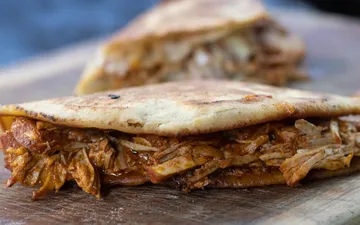
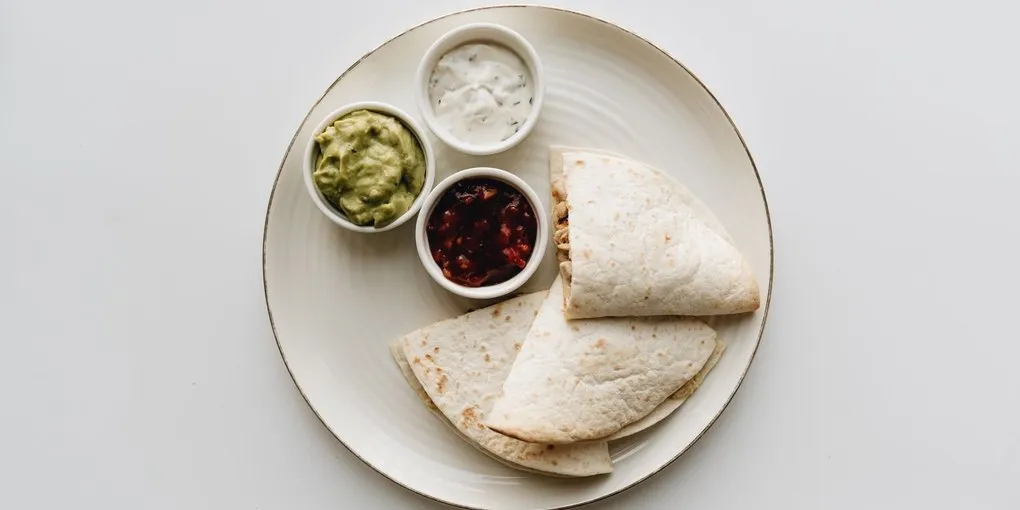
The traditional Northern Mexican flour tortilla — the one you eat in Sonora, Chihuahua, and Nuevo Leon — is made with lard, hot water, and only as much kneading as it takes to bring the dough together. The texture is soft, flexible, freckled with dark toasted spots, and durable enough to wrap a burrito without tearing. That is what this recipe produces.
This guide walks through the traditional lard-based formula, the two critical rest periods that make rolling easy, and the comal technique that gives you those signature char spots. It also cross-links to our companion recipe for bolillos, the crusty French-influenced Mexican bread that shares shelf space with tortillas on every Mexican breakfast table.
Cultural Context
Flour tortillas (tortillas de harina) are a Northern Mexican tradition, not a pan-Mexican one. Below a rough line drawn through central Mexico, the word tortilla means a corn tortilla; above it, flour dominates. The divide traces the geography of wheat cultivation: Spanish settlers introduced wheat in the sixteenth century, and it thrived in the arid northern states where corn struggled. By the nineteenth century, flour tortillas had become the everyday bread of ranching families in Sonora, Chihuahua, and Coahuila, with sister traditions in Texas, New Mexico, and Arizona.
The Sonoran tradition takes the tortilla to its theatrical extreme: tortillas de harina sobaqueras (often translated as “armpit tortillas,” from the way they are stretched across the forearm) can be thirty inches across, so thin you can read newsprint through them, and are used to wrap whole meals. The everyday home tortilla, which this recipe produces, is ten to twelve inches — large enough for a burrito, small enough to roll and cook in a single skillet.
Traditional home cooks use manteca de cerdo (rendered pork lard), and the difference is not subjective. Lard has a melting point close to human body temperature, so the finished tortilla stays pliable as it cools. Butter is too solid when cool; vegetable oil and shortening produce tortillas that are either greasy-tasting or brittle. Rick Bayless, in his foundational Authentic Mexican, is direct on this point: render your own leaf lard or buy good lard from a butcher — the “supermarket lard” sold in blocks next to the shortening is hydrogenated and will not give the right result. If lard is genuinely unavailable to you, see the substitution notes at the end of this recipe.
Ingredients
Recipe yields 12 tortillas, approximately 8 inches each.
| Ingredient | Grams | US Measure | Baker’s % |
|---|---|---|---|
| All-purpose flour | 500 g | 4 cups | 100% |
| Fine sea salt | 10 g | 2 tsp | 2% |
| Baking powder (optional) | 5 g | 1 tsp | 1% |
| Rendered lard, room temperature | 75 g | 6 Tbsp | 15% |
| Hot water (110-120°F / 43-49°C) | 300 g | 1¼ cups | 60% |
Flour note: All-purpose flour (10-11% protein) is correct here, not bread flour. The higher protein of bread flour produces tortillas that are too tough and springy to roll thin and fold pliably. An all-purpose flour in the 10-11% range (see our guide to bread flour vs all-purpose) gives a dough that develops just enough gluten to be durable but stays tender.
Lard note: Room-temperature lard, not melted. You want to cut it into the flour like pie dough, leaving small bits that create micro-layers of flakiness as the tortilla cooks. Melted fat coats the flour evenly and produces a denser, more cracker-like tortilla.
Baking powder note: Purists leave it out. Northern Mexican home cooks often include ½ to 1 teaspoon because it produces a slightly lighter, slightly puffed tortilla that handles refrigeration better. Both versions are traditional.
Water temperature: Hot water (not boiling, not merely warm) is the single most important rolling insurance. Hot water partially hydrates the flour and softens the gluten, which makes the dough dramatically easier to roll thin without snapping back.
Method
Step 1 — Mix the dough (5 minutes)
In a large bowl, whisk the flour, salt, and baking powder (if using) together. Add the room-temperature lard and work it into the flour with your fingertips, rubbing until the mixture looks like coarse cornmeal with pea-sized bits of lard visible throughout. A few larger pieces are fine and desirable.
Pour the hot water over the flour-lard mixture and stir with a wooden spoon or your hand until a shaggy dough forms. Turn the mass out onto a clean work surface.
Step 2 — Knead briefly (3-4 minutes)
Knead the dough for three to four minutes — just until it pulls together into a smooth, slightly tacky ball. This is a light knead, not a bread knead. Overworked tortilla dough develops too much gluten and becomes rubbery and hard to roll.
When done, the dough should feel soft, slightly warm from the hot water, and smooth on the outside but still yielding when you press a finger in.
Step 3 — First rest (5 minutes)
Cover the dough with a damp towel or plastic wrap and let it rest on the counter for at least five minutes. This rest is functional, not optional: it gives the gluten a chance to relax and the flour a chance to fully hydrate. Tortillas rolled from a dough that has not rested at all will snap back like a rubber band every time you try to stretch them.
Step 4 — Divide and shape into balls (5 minutes)
Weigh the dough (it should be around 890 g) and divide into 12 equal pieces (about 74 g each for 8-inch tortillas). Roll each piece between your palms into a tight, smooth ball. Place the balls on a lightly floured baking sheet.
Step 5 — Second rest (15 minutes, critical)
Cover the balls with a damp towel and let them rest another 15 minutes. This is the step most home recipes skip and most Mexican abuelas enforce absolutely. A just-shaped dough ball has tight, springy gluten from being compressed into a sphere. Fifteen minutes is long enough for that gluten to relax so the ball rolls out into a smooth, even round on the first try.
Skip this rest, and you spend twice as long fighting each tortilla.
Step 6 — Preheat the comal (during the rest)
Set a cast-iron skillet, comal, or heavy dry pan over medium-high heat. Preheat it for at least 5 minutes — you want it hot enough that a drop of water flicked onto the surface skates and evaporates in 1-2 seconds. Too cool a pan produces a pale, stiff, overly dry tortilla; a properly hot pan produces the signature dark-freckled surface and keeps the tortilla pliable.
Do not grease the pan. Flour tortillas cook on a dry surface.
Step 7 — Roll each tortilla (2 minutes per round with practice)
Lightly flour your work surface. Flatten one ball with your palm. Using a wooden rolling pin (not a heavy French-style pin — a thin tapered palote or a standard dowel pin works best), roll from the center outward, rotating the dough a quarter-turn after each stroke. Flip the tortilla over once partway through rolling.
Target thickness: approximately 2 mm (thin enough that the dough is translucent in a bright light but still holds together when lifted). Target diameter: 8 inches. The edges should be thin and the center not much thicker.
If the dough resists and snaps back, set it aside for another minute or two — the gluten needs more relaxation time. Never force a tortilla. If a single ball won’t roll thin, skip it, roll the next one, and come back.
Flour Tortilla Timeline
Four stages, about 50 minutes start to finish
1. Mix & Knead
- Time
- 8-10 min
- Temp
- Hot water 110-120F
- Target
- Smooth, tacky ball
- Cut lard into flour like pie dough.
- Knead only 3-4 min -- stop when smooth.
- Dough should feel warm and soft.
2. First Rest
- Time
- 5 min minimum
- Covered
- Damp towel
- Purpose
- Relax gluten
- Gives flour time to fully hydrate.
- Functional step, not optional.
- Shorter than the ball rest but still required.
3. Divide & Second Rest
- Pieces
- 12 balls, 74g each
- Rest time
- 15 min minimum
- Covered
- Damp towel
- Roll into tight smooth spheres.
- 15-min rest is the single most important step.
- Lets tight gluten from shaping relax.
4. Roll & Cook
- Thickness
- 2 mm
- Diameter
- 8 inches
- Cook time
- 30-40s per side
- Dry comal, medium-high heat.
- Water droplet should skate in 1-2 seconds.
- Wrap cooked tortillas in a towel immediately.
Hot water in the dough is what makes rolling easy. Skip the second rest and you will spend twice as long rolling each round.
jayarrbread.comStep 8 — Cook on the comal (90 seconds per tortilla)
Lay the rolled tortilla on the hot dry skillet. Cook for 30-40 seconds on the first side. You should see bubbles rising across the surface within 15-20 seconds — this is the sign the pan is hot enough. Flip when the underside has dark brown freckles and the surface is visibly bubbled.
Cook the second side for 30-40 seconds. The tortilla should puff slightly (sometimes dramatically). Flip back to the first side for a final 10-15 seconds if needed to set the char spots.
Transfer the cooked tortilla immediately to a clean kitchen towel and wrap it up. Steam from the cooking tortilla softens it as it cools — this is how you get the pliable texture. Tortillas left out uncovered stiffen within minutes.
Repeat with the remaining balls, stacking each new tortilla on top of the one below inside the towel.
Step 9 — Serve
Eat warm, wrapped in the towel at the table. Leftover tortillas keep in a zip-top bag at room temperature for a day or in the refrigerator for up to five days. Reheat on a dry skillet for 15-20 seconds per side.
Troubleshooting
Tortillas tough or chewy: Over-kneaded, or used bread flour instead of all-purpose. Knead only until smooth (3-4 minutes max) and use 10-11% protein flour.
Tortillas crack or tear when rolled: Dough too dry. Next batch, add water 15 g at a time until the dough is soft and slightly tacky. Humidity and flour age both affect water needs.
Tortillas snap back and won’t roll thin: Dough did not rest long enough. Cover and wait another 15-20 minutes. The 15-minute post-ball rest is non-negotiable.
Tortillas stiff and dry after cooking: Overcooked, or not wrapped immediately. Each side should cook 30-40 seconds, not a full minute; transfer to a towel immediately.
No char spots, pale all over: Comal not hot enough. Preheat 5+ minutes over medium-high; water droplets should skate and evaporate in 1-2 seconds.
Tortillas tear when folding a burrito: Rolled too thin, or cooked too long. Target 2 mm thickness and 30-40 seconds per side.
Ingredient substitutions
If lard is unavailable, use equal weights of either:
- Rendered beef tallow — closest substitute, similar melting behavior
- Butter — works but produces a richer, more European tortilla; better for breakfast tortillas than burrito wrappers
- Vegetable shortening — acceptable for texture but flavor is flat
- Neutral oil — use 60 g instead of 75 g; produces a softer, more bread-like tortilla but without the flakiness
Rick Bayless’s note on hydrogenated supermarket lard applies to the brick-wrapped “Farmer John” style lard — it will work but tastes slightly soapy. Rendered leaf lard from a butcher or good grocer is what traditional home cooks use.
Flour tortillas and bolillos are the two bread staples of a Northern Mexican kitchen, and both reward home baking with a quality you simply cannot buy. For more flatbread traditions, see our recipes for roti and chapati, paratha, and injera.
Frequently Asked Questions
- Where do I buy good lard for flour tortillas?
- A Mexican carniceria or butcher shop is the best source -- ask for manteca de cerdo or 'rendered leaf lard.' A good butcher in any tradition will also carry fresh rendered lard. Avoid the hydrogenated blocks sold next to shortening in large supermarkets; they contain hydrogenation stabilizers and taste faintly chemical. If you only have access to supermarket lard, look for small refrigerated tubs (brands like Fatworks or Epic) rather than the room-temperature bricks. You can also render your own lard at home from pork back fat or leaf fat -- one hour simmering cubed fat with a splash of water, strained through cheesecloth.
- Can I use bread flour or whole wheat flour?
- Bread flour produces a tortilla that is too tough and springy -- it fights back when you roll it and chews rubbery on the plate. Stick with all-purpose (10-11% protein). Whole wheat works for a nuttier, more rustic tortilla but you will need more water (around 65-70% hydration instead of 60%) because the bran absorbs water aggressively, and the finished tortilla will be less flexible. A 50/50 white-to-whole-wheat blend is a reasonable compromise.
- How long do homemade flour tortillas keep?
- Room temperature in a zip-top bag: 1 day. Refrigerator in an airtight bag: 4-5 days. Freezer with parchment between each tortilla: 2-3 months. Reheat on a dry skillet for 15-20 seconds per side to bring them back to pliable -- microwaving works but produces a slightly gummy texture unless you wrap them in a damp paper towel first.
- Why do my tortillas keep snapping back when I roll them?
- The dough has not rested long enough. When you shape a dough ball, you stress and tighten the gluten; it needs at least 15 minutes to relax before it will roll out thin without fighting you. If you are still getting snap-back after a 15-minute rest, cover and wait another 10 minutes. Warm dough rolls more easily than cold dough -- if your kitchen is cold, rest the covered dough balls somewhere warm like a sunny counter or near a preheating oven.
- Can I make flour tortillas vegan?
- Yes, with the understanding that you are losing the distinctive lard flavor and some of the signature pliability. Substitute vegetable shortening (same 75 g weight) for a close-ish texture, or use 60 g of a neutral oil like grapeseed for a softer, more bread-like tortilla. Coconut oil works but introduces a coconut flavor. Vegan tortillas should be eaten the same day they are made -- they stale faster than lard tortillas.